Categories
News/Blog

Canadians eating fewer animal products to save at the till as grocery prices rise

Household spending on food increasing

The Agri-Food Analytics Lab (AFAL) at Dalhousie University says Canadians are spending more money on food.

As grocery prices increase, more Canadians are turning to budget-friendly plant-based foods, according a recent article from CityNews Vancouver.

“The Agri-Food Analytics Lab (AFAL) at Dalhousie University says Canadians are spending more money on food.”

“Sylvain Charlebois, AFAL’s director, says that this has an impact on what Canadians choose to purchase at the supermarket, moving away from higher-priced items such as meat.”

“‘We are starting to see a shift towards different diets like vegetarianism, pescetarianism, and flexitarianism as well. That’s becoming more popular in Canada.'”

A 2023 report from the Vancouver Humane Society found that eating more plants could save an individual in the Lower Mainland 14% on groceries. The VHS’s PlantUniversity program offers resources, like budget-friendly recipes, to help people who are transitioning toward more plant-based eating thrive while enjoying healthy, delicious meals.

Read article
Plant-based recipes
Categories
News/Blog

CBC interview: Demand for veterinary assistance soars

The VHS’s McVitie Fund, which provides emergency veterinary assistance to pets in urgent need, has seen a huge increase in demand due to the rising cost of living. Communications Director Chantelle Archambault recently appeared on CBC Radio’s On The Coast to discuss the program as part of their coverage of rising demand for animal services.

What is the McVitie Fund?

The Vancouver Humane Society’s McVitie Fund program provides emergency funding for life-saving vet care for guardians who can’t afford it otherwise. 

When someone loses their job and then their cat escapes and runs into traffic, or if a person living on disability assistance takes in a dog from a late family member and then she suddenly gets a life-threatening infection, they may have nowhere else to turn. 

For many people, this program means their loved pets can get the care they need instead of making the impossible choice to give them up, see them suffer, or have them euthanized. 

Rising costs of living mean more people need help

Requests for veterinary assistance from the VHS’s McVitie Fund have reached unprecented levels.

So far this year, the VHS has received almost 1,200 applications for help from pet guardians. In the same period last year, the program had fewer than 800 applications. This is a 50% increase in demand over 2025.

And last year’s demand was already unprecendented—the program received more than 11 times as many applications in 2025 compared to 2020. 

The VHS team is deeply familiar with how the increasing cost of living over the past several years has impacted pet guardians. Many families are struggling to come up with the funds for frightening medical emergencies with their beloved companions, leading them to reach out for support.

How animal supporters are saving lives

Because veterinary care isn’t subsidized like human medical care in Canada, this program is entirely funded by donations from members of the VHS’s caring community.

Every dollar donated makes a difference to help a loved companion animal come home safe.

Listen to the interview
Support animals in need
Categories
News/Blog

165,000 chickens perish in Abbotsford’s deadliest barn fire in more than 10 years

VIDEO: 165,000 chickens perish in Abbotsford’s deadliest barn fire in more than 10 years – Abbotsford News

Devastating blaze on Gladwin Road on Thursday afternoon (May 21) kills tens of thousands of birds

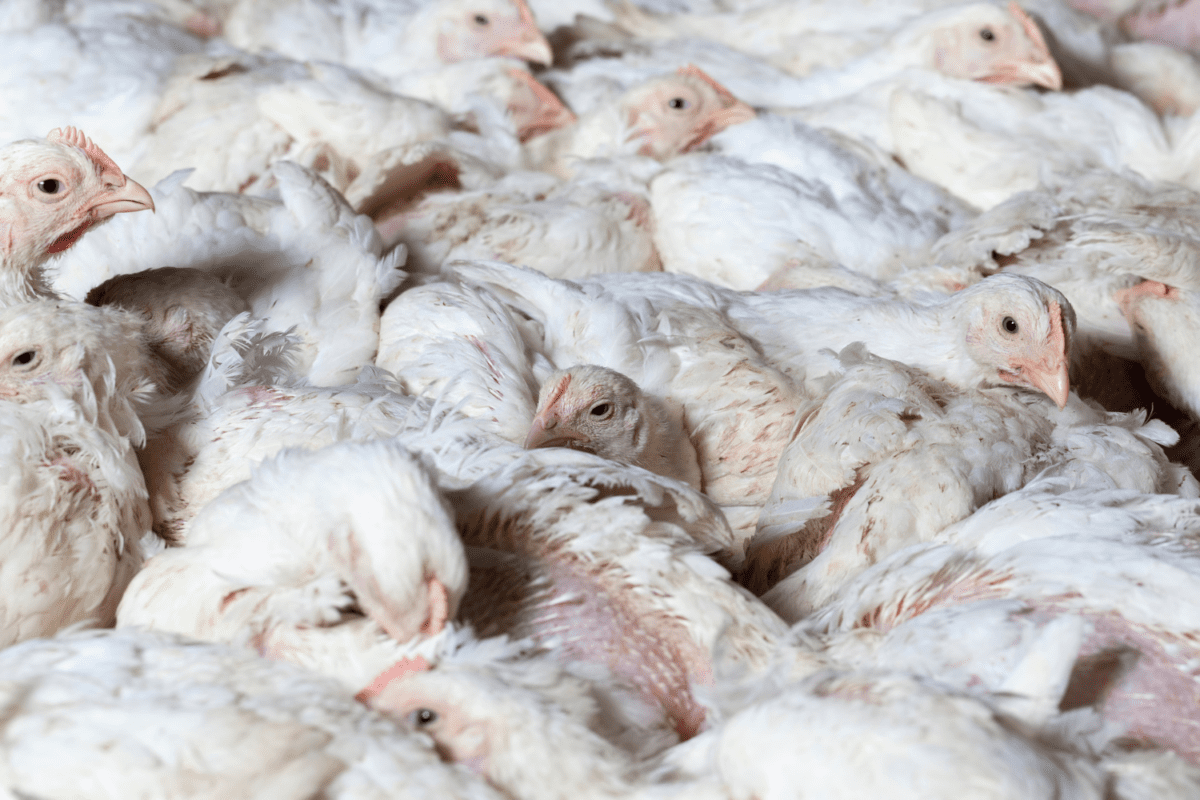
We are deeply saddened to hear of the devastating loss of 165,000 chickens in a barn fire in Abbotsford on Thursday, reportedly the deadliest barn fire in the community in more than a decade. Our thoughts are with the thousands of sentient beings who suffered and died in this tragedy.

Read the article
Take action

This heartbreaking incident also highlights the inherent animal welfare and safety risks of the industrial farming system.

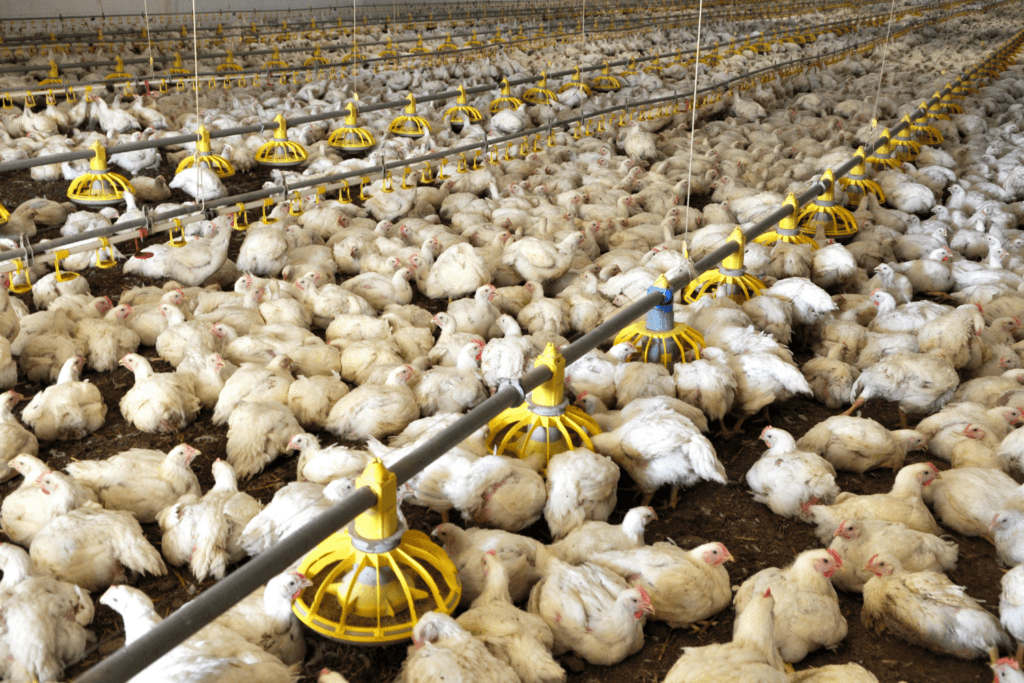
The average chicken farm in Canada confines approximately 36,000 birds in a single barn, making emergency evacuation during fires, floods, and other disasters virtually impossible. As a result, chickens are disproportionately affected in mass casualty incidents on farms across the country.

Beyond the dangers posed during emergencies, chickens raised in industrial systems experience routine stress and suffering while living in crowded, barren conditions that prevent them from expressing natural behaviours.

Tragedies like this are a stark reminder of the urgent need to move away from intensive factory farming systems. Each of us can help by reducing our consumption of animal products, choosing more plant-based meals, and advocating for stronger protections for farmed animals and a kinder, safer, and more sustainable food system.

We are grateful to the firefighters and emergency personnel who responded to this devastating incident, and to everyone who continues to speak up for farmed animals.

Categories
News/Blog

Fishes suffer “excruciating pain” for at least 10 minutes after catch

Fish suffer “excruciating pain” for at least 10 minutes after catch, activists call for reforms

Scientists learn that fish suffer around 10 minutes of “intense pain” when killed during the catch process by air asphyxiation.

A new study published in Scientific Reports and featured in an article from Earth.com spotlights the suffering of fishes when they are caught and killed for food.

While land animals killed for food in Canada must be stunned before slaughter, there is no such law around fishes. Wild-caught fishes are commonly killed by asphyxiation (slowly suffocating to death in the open air), which leads to immense fear and suffering.

The research found that “the average trout endures about ten minutes of pain that qualifies as hurtful, disabling, or excruciating. In some conditions, this could stretch beyond 20 minutes.”

Researchers evaluated stunning as an alternative to prolonged asphyxiation for fish. Their findings highlight flaws in both the stunning methods they evaluated.

  • “Electrical stunning, if properly used, could spare 60 to 1,200 minutes of suffering for every dollar spent … But implementation remains inconsistent. In many commercial settings, electrical stunning fails to reliably render fish unconscious.”
  • “Percussive stunning – a physical blow to the head – has shown better consistency in lab settings. But it’s difficult to scale.”

As we recognize that fishes are sentient animals who feel pain, experience fear, and try to avoid suffering, there is one method that can consistently protect their well-being: switching from fish to plant-based alternatives on our plates.

Read the article
Find plant-based recipes
Categories
News/Blog

New research spotlights cow intelligence

Cover image: Jo-Anne McArthur / We Animals Media

Cows Are Smarter Than You Think

Why do we underestimate cattle? Many choose to think of “edible” animals as unintelligent, but in the case of cattle, research proves otherwise.

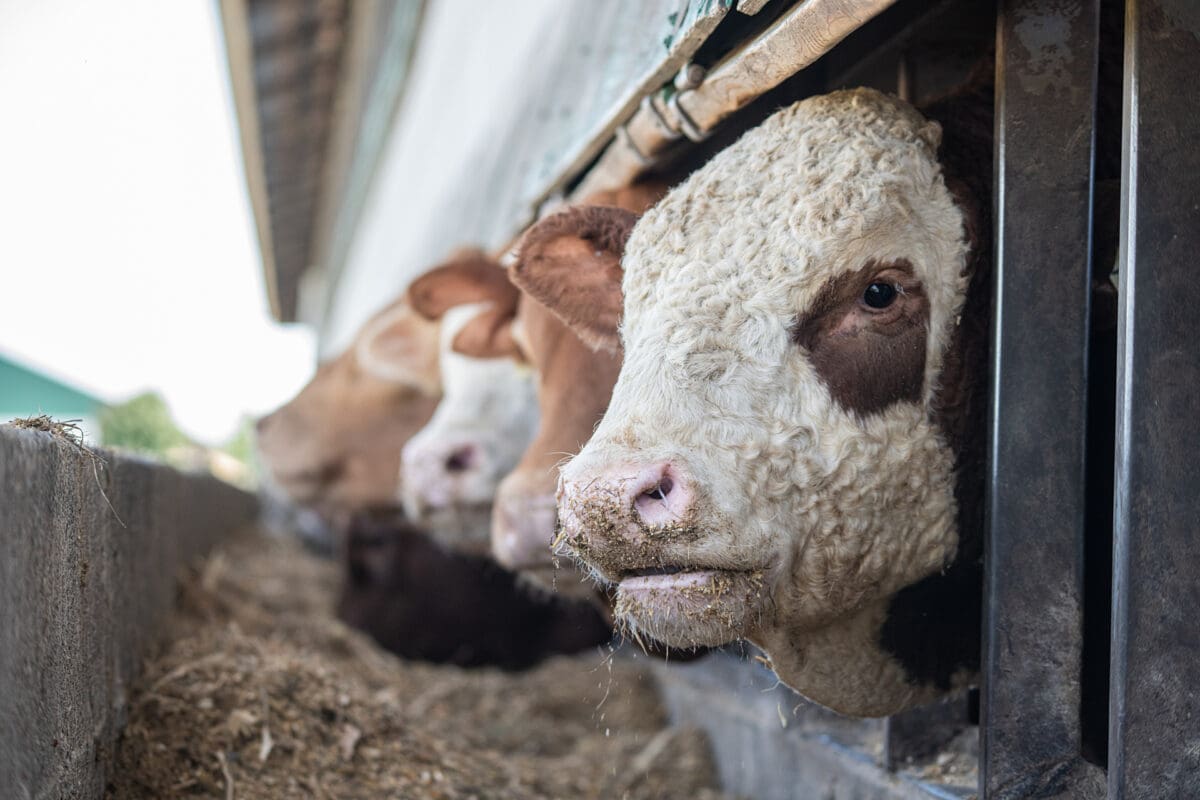
New research featured in Psychology Today is bringing cow intelligence into the spotlight, increasing awareness around these sensitive and sentient animals.

As animal allies, we know that animals think and feel, whether they share our homes like cats and dogs or are killed for food like cows, pigs, and chickens. However, awareness around farmed animal sentience remains sparse and cognitive dissonance is common.

Research on animal intelligence helps more people to understand that animals are capable of complex thinking, problem-solving, emotions, and even social relationships. As this evidence becomes more widely understood, it challenges outdated views of animals as simple or unfeeling and highlights their capacity to experience stress, pain, and well-being in meaningful ways.

This growing awareness encourages the public and decision-makers to reconsider how animals are treated, supporting a shift toward animal-free eating habits and stronger welfare standards.

Read the article in Psychology Today to learn what a free-living herd of domesticated cattle can teach us about cow intelligence and adaptability.

Read the article
Find plant-based recipes
Categories
News/Blog

Podcast: Animal advocacy and Vancouver Humane Society’s mission (Vegan Boss Radio)

All episodes

The Vancouver Humane Society’s Chantelle Archambault sat down with Shawna Barker from the Vegan Boss Radio podcast about Vancouver Humane Society’s mission, work, and some practical ways that animal allies can make a difference.

Note: This written discussion has been edited for length.

Advocacy and justice for animals

A long-haired Highland cow stands in a grassy field, gently nuzzling a small calf beside her.

Shawna: Hi everyone. Welcome to Vegan Boss Radio. I am your host, Shawna Barker, and I’m so glad you’re here today. Today’s episode is a very important one because we’re talking about animal advocacy, public awareness, and how real change actually happens, not just online, but at the policy and community level.

Today I’m joined by Chantelle Archambault, who has worked as the communications director at the Vancouver Humane Society since 2021. She is deeply passionate about justice for all, both humans and animals, and has spent her career working with nonprofit organizations focused on family services, social justice, advocacy, and creating safer spaces for marginalized communities.

Chantelle’s lifelong commitment to the ethical treatment of animals inspired her to volunteer with the Toronto Humane Society and eventually move across Canada to take on her current role at Vancouver Humane Society. She has appeared in media outlets, including the CBC, CTV, CityNews, and the Daily Hive.

In this conversation, we talk about the work that the Vancouver Humane Society does behind the scenes, including its past and current campaigns, how they raise public awareness around practices like rodeos and horse racing, and why these issues are often misunderstood or even normalized, in many cases.

Chantelle, thank you so much for being here today. I’m wondering what drew you to animal advocacy, and then how did that lead you to working with the Vancouver Humane Society?

Chantelle: Thanks so much for having me today. It’s interesting to be on this side of the question because I love asking this to our guests on the Vancouver Humane Society podcast, Informed Animal Ally, as well. I got into animal advocacy the way that I found a lot of people I speak with do as well. I’ve always been drawn to animals since I was a kid, making my dad wait before he drove to work on rainy days so I could pick up every single worm off the driveway so they wouldn’t get squished. I was putting the spiders out through the window in the classrooms so the other kids wouldn’t step on them.

When I was in university, I volunteered doing feline enrichment at the Toronto Humane Society. I worked at an organization that worked with marginalized communities affected by HIV and then at a Children’s and family organization. Those were both organizations that aligned with my values.

I care about justice for humans for all of the same reasons I care about justice for animals. But I always knew that my dream job would be to work in the animal sector doing communications, telling those stories from the animals because their voices are ignored so often.

Shawna: That’s so incredible. It sounds like it was very much meant to be. Maybe for listeners that are not familiar with the Vancouver Humane Society, could you share a little bit about the mission and the types of work that you do?

Chantelle: Yeah, absolutely. So, the Vancouver Humane Society’s mission is to expose and end animal suffering and exploitation, including supporting individuals, organizations, and governments in caring for the wellbeing of animals. So, we work in five main areas to do that.

There are already a lot of great rescues who do work in taking in pets who really need it. So, our goal is to support the guardians of animals who are loved, but just need some help to keep them cared for at home and out of the shelter rescue system. We offer emergency veterinary support for low-income guardians so that they can get their pets cared for and back home safe rather than having to watch their pets suffer or make the really difficult decision to either euthanize them or give them up to get the care they need. We do a lot of advocacy work around animals in captivity, zoos, aquariums, mobile petting zoos, exotic pets, and animals in entertainment. That includes things like rodeos, horse carriages, horse racing, and wildlife.

Recently, we’ve taken more of a support role on this one for other organizations that focus on wild animals like the fur bearers. But we’ve covered things like, wildlife culls, hunting and fishing, regulations for farming, rodent poisons, and then farmed animals. That is a major area because, I’m sure you know, farmed animal welfare is often considered the greatest animal welfare issue on the planet.

We work in plant-based advocacy to make plant-based eating more accessible and reduce the demand for animals to be farmed for food. And we also advocate for better policies and practices that address the worst harms animals face while they’re currently in the farming system.

Rodeos and horse racing

Three jockeys lean forward as their horses gallop closely together during a horse race.

Shawna: I was scrolling one of the Facebook groups for the Hastings Sunrise neighbourhood and I saw a petition to bring back Hastings horse racing track. How do people not see how much cruelty is involved there? What do you wish more people knew about those industries?

Chantelle: Yeah. There are so many misconceptions about those two industries, and what a lot of it comes down to is lack of choice. The main argument from those industries and their supporters is that those animals love their jobs, but animals aren’t like human athletes because they don’t have a choice.

Animals used in rodeo do the behaviours that rodeo announcers pass off as performing are actually natural fear responses. A racehorse isn’t like a human athlete who gets to go home and do what they want. At the end of the day, their whole life and full routine is controlled by their handlers who decide when they train, when they rest, when and if they get time to run free. Animals also don’t choose to get into those situations. They’re bred for those industries, and if they don’t do what they’re expected, they’re punished for it.

For rodeo and horse racing, we actually did an entire podcast episode just on this topic called Eight Arguments in Support of Rodeo and How to Respond, because there are so many, and we’ve run into them all the time.

For horse racing, the most common argument is that if we take away horse racing, those horses will have nowhere to go and they’ll be sent to slaughter. First of all, this shouldn’t be true anyway. Horses are only able to race for a fraction of their lives because it’s quite hard on their bodies. So, any responsible industry should have a retirement plan in place.

The best outcome is one where horses can spend their days as freely as possible, like in a sanctuary or being therapy horses. We advocated for the BC government to support that transition when Hastings racecourse in Vancouver closed down, as you mentioned. And the other side of that coin is that while the industry is arguing that we have to keep horse racing around, because there are so many racehorses who would have nowhere to go, they have still been breeding more animals into this industry.

Shawna: Have there been campaigns to stop the horse carriage rides in Victoria?

Chantelle: We have worked around the horse carriage rides in Victoria a little bit. Right now, we’re working on a horse carriage campaign in Vancouver. We’re trying to get horse carriages off of busy city streets.

Education for long-term change

An overhead view of a wooden table set with colorful plant-based dishes.

Shawna: Beyond the individual campaigns that VHS works on, are there examples of maybe systems-level work, maybe through getting policies changed, education or outreach to address long-term changes that will benefit animals?

Chantelle: Yeah, absolutely. Education is a really important part of the work we do because the only way we can make change for animals is if people know what the issues are and care enough to help make those changes.

One project I am really excited to share is our plant university program. We originally launched Plant University in 2022 as a home for our ongoing work making plant-based eating more accessible to individuals through personal education, like sharing recipes and also working with institutions.

To improve access to plant-based foods for instance, in the past we’ve worked with school cafeterias to help organize meatless Mondays, and that work has carried on over the past few years. We’ve developed a recipe library and shared reasons and tips to eat more plant-based foods with people all over Canada.

And we’ve also been working with businesses and institutions like long-term care homes more locally to help them transition part of their menus. We’ve also supported change at the government level. A couple years ago, we created a report for the City of Vancouver on how transitioning a percentage of the food they purchased to plant-based could save them money and help meet their environmental goals.

This last year, we transitioned the program to specifically target post-secondary students in the Lower Mainland. A lot of students are making food purchasing decisions on their own for the first time in their lives, and when we share all the benefits of choosing plant-based options along with tips for eating more plant-based foods like recipes and an on-campus food guide, there’s a much better chance we’ll see that translate into new habits these young folks will carry with them through the rest of their lives. So, we’ve been doing things like in-class presentations, outreach events, signage, and posters on campus.

Emotional toll of animal advocacy

A person wearing a cap and denim jacket gently embraces a dog.

Shawna: I know advocacy work can be really kind of emotionally heavy. I mean, you’re seeing and talking about like animals being mistreated all the time. Maybe for yourself or for your team, is there a way that you navigate feeling emotionally burnt out by doing this kind of work and how to stay motivated?

Chantelle: Yeah, it is really tough sometimes. We find different ways to share what’s happening through writing, but that means we need to watch the footage of what animals are going through behind the scenes at rodeos or in slaughterhouses. That does really get to you because you know that you can walk away from seeing this at the end of the day, but for so many animals, this is their whole lives.

I really try to ground myself by recognizing that I’m doing everything I can do to help. I’m doing advocacy, so fewer animals have to go through this. I am vegan, so I’m not directly contributing to animals going through what they go through in the farming system. And then I spend lots of time connecting with the world around me in different ways when I’m not working, talking to my loved ones, talking to my cat, taking my cat out into the backyard so she can live the best life that she can.

I know if I’m not able to take care of myself and reset, I’m not going to be as effective in actually doing this advocacy. So, taking time for ourselves is part of being a good animal advocate.

The role of public awareness

Close-up of a horse’s face, showing its eyes.

Shawna: You mentioned kind of the role that public awareness plays. Do you feel that the public awareness does play a huge role in actually like changing the laws in these practices?

Chantelle: Yeah, absolutely. Public awareness is huge. We live in a world where companies, for the most part, are going to do what’s most profitable. Governments, for the most part, are going to do what gets them re-elected.

So, when we raise public awareness, people change their behaviours and they speak up and it tells those leaders of companies and governments that compassion is the popular choice, that’s going to be more profitable or it’s going to get more people on their side before the next election. When we do see government representatives connect with an issue on a personal level, it’s often because they’ve heard from individuals in their community, not necessarily from someone who’s representing an organization.

Shawna: For increasing public awareness, what are the best strategies? Would you say on social media you have a good reach or is it door-to-door campaigns with petitions? I’m just wondering what is an effective way to get the word out?

Chantelle: I think there are so many different ways. If someone is individually doing this, I would say play to your strengths.

If you have an audience online, definitely online is a great way to reach people. If you’re out in your community and you’re connecting people one-on-one in groups, that’s a great way to reach people. If you’re at an event and you can bring like a plant-based dish, use that as an opener to talk about animal suffering in the farmed animal system. Like anything that you can do to get people talking and thinking, I think is a great way to educate people about the things animals go through. There are opportunities all the time, all around us.

Shawna: And then for Vancouver Humane Society specifically, are you reaching people in specific neighbourhoods directly or do you feel like a lot of the reach comes from posting videos and articles on social media?

Chantelle: The biggest two routes that we take are through our email list and organic social media posts.

There are people who are really deeply engaged and we have about 16,000 people on our email list. We send out things that they can share on social media, ways that they can take direct action, ways that they can speak up to their elected officials.

Shawna: Someone who maybe isn’t on your email list and deeply cares about animals but feels overwhelmed and is not sure where to start—what would you suggest as a way to support this work?

Chantelle: Yeah, I would say the most basic first step is to find an organization that really aligns with your values and subscribe to their email list.

We have so many quick actions, like emails to decision makers, petitions to sign, campaigns to share around. There are ways to get involved to varying degrees based on how much time you have to spend on advocacy work, from a ten second click to a more in-depth collaborative piece.

In a more general sense, I would advise people to get to know your government representatives at the local, provincial, and federal levels. Your city council members, your members of Legislative Assembly, your members of parliament.

Once you make a connection with them, you’re in a much better position to let them know that you care about animals or what you care about in general when a policy decision comes up that they’re involved with. You don’t need to be an expert, it can really just be about going to them and saying, hey, I care about animals, we are a community that loves animals. I really hope you’ll vote for better animal welfare when the opportunity comes up.

Shawna: And if someone wants to engage with anything that VHS is working on and but they don’t live in Vancouver or even British Columbia, are there ways to get involved or do you suggest they find other local humane societies?

Chantelle: I definitely suggest you always find local organizations that you can make a difference locally on issues that are near you, and likely near and dear to your heart. But you absolutely don’t need to live in Vancouver to get involved with our campaigns. We cover a whole range of campaigns from local issues to issues of national importance. Most of our quick actions can be taken by anyone in Canada and sometimes beyond.

I’d recommend you go to our website, vancouverhumane.ca and sign up for our email list to get all the updates. You can also follow us at Vancouver Humane Society on Facebook, LinkedIn, Instagram, or Blue Sky. Any of those ways is going to be a great first route to get involved.

Shawna: Okay. Amazing. Well, Chantelle, I want to thank you so much for sharing everything that Vancouver Humane Society is working on, and ways for people to get involved. I know you really are emphasizing people getting involved with their local officials and I think that is such an important way to help shed light and address some of the injustices going on towards animals in your community. Did you have any final thoughts or anything you wanted to share with our listeners?

Chantelle: I just wanted to thank you so much for having me on today and giving me the opportunity to share about this. I think this is a great podcast and it was a really great conversation and I am glad that we had the chance to talk today.

Categories
News/Blog

New animals at Happy Herd farm sanctuary highlight Giving Tuesday

  • The Vancouver Humane Society is partnering with The Happy Herd Farm Sanctuary to make life better for animals this Giving Tuesday!
  • The joint campaign is raising funds for life-saving work at both local organizations.
  • Giving Tuesday gifts will go to essential care needs like food and veterinary care for rescued farmed animals at The Happy Herd.
  • They will also support emergency veterinary care for companion animals in low-income homes across B.C. and vital advocacy to create a brighter future for all animals.

Read the latest story in the Langley Advance Times highlighting some of the animals at The Happy Herd and how you can help.

Read article
Support VHS and the Happy Herd

New animals at Happy Herd farm sanctuary highlight Giving Tuesday – Langley Advance Times

Vancouver Humane Society partners with Happy Herd to fundraise for the animal farm sanctuary

“At Happy Herd Farm Sanctuary in Aldergrove, the herd is growing and so is the need for support.”

“In recent weeks, the sanctuary has welcomed several new animals, each bringing their own story of survival.”

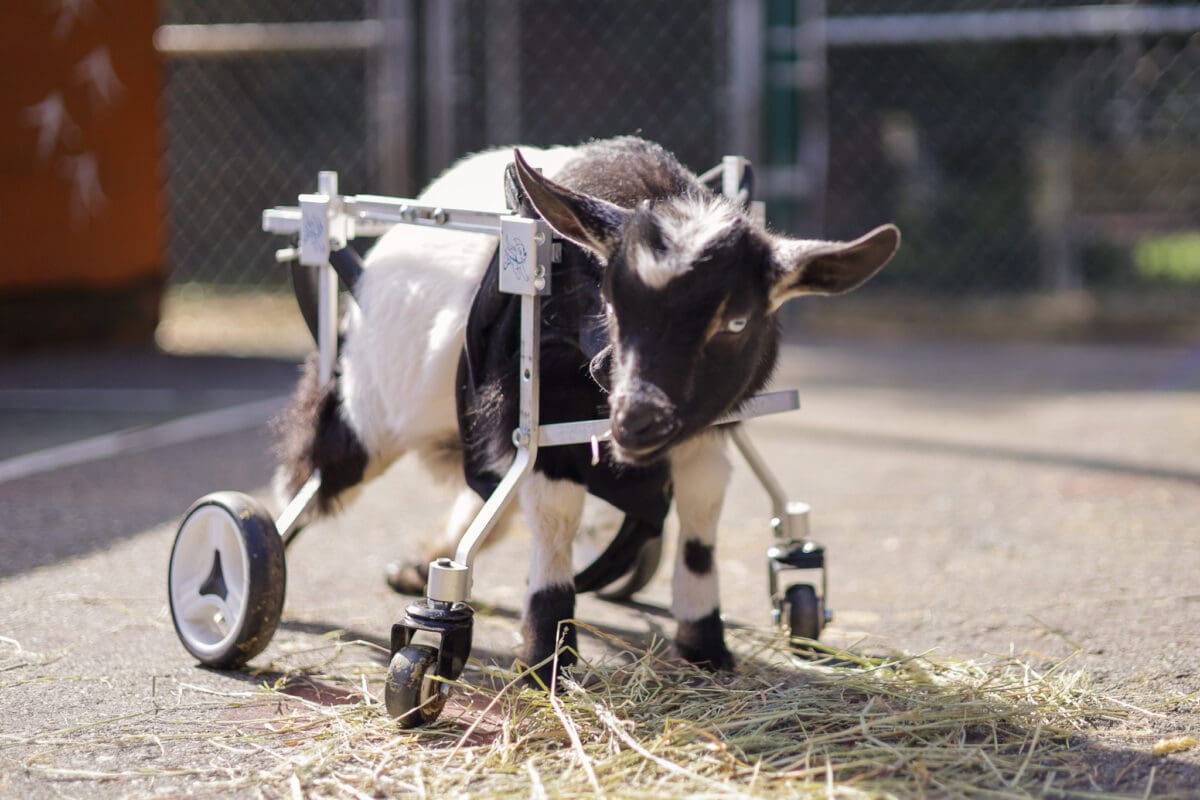
The sanctuary’s new animals include Cornish cross chickens “Angel and Daisy, who were raised in a horse stall, and Benji, who had been kept alone in a small cage.”

“Casper, a baby rooster, was found abandoned in a cardboard box.”

“He is understandably very scared, but every day his little personality shines through a little more,” said co-founder Diane Marsh.

Read article
Support VHS and the Happy Herd
Categories
News/Blog

Senator Plett incorrect about horse exports: Animal Justice

Photo: Canadian Horse Defence Coalition

In late March, The Hill Times published an opinion piece by Senator Don Plett, an appointed leader who has vocally defended Canada’s controversial live horse export industry and delayed the passing of life-saving Bill C-355. The piece defended the shipping of live horses from Canada on long journeys overseas for slaughter.

Senator Plett denounced animal advocates who are standing up for horses while making many misleading claims, ignoring recent exposes that revealed the underreporting of horse deaths in transit and the prevalence of journeys that exceed the legal time limit.

Earlier this week, The Hill Times published a second opinion piece by Kaitlyn Mitchell of Animal Justice setting the record straight.

Senator Plett incorrect about horse exports: Animal Justice

Senator Plett incorrect about horse exports: Animal Justice

Canada’s Politics and Government News Source Since 1989

Mitchell calls Senator Plett’s defence of the live horse export for slaughter industry “a bold move, given that the industry is seen as a national embarrassment to most, with nearly 80 per cent of Canadians of all political stripes supporting its timely end.”

The piece outlines several of Senator Plett’s misleading claims, including:

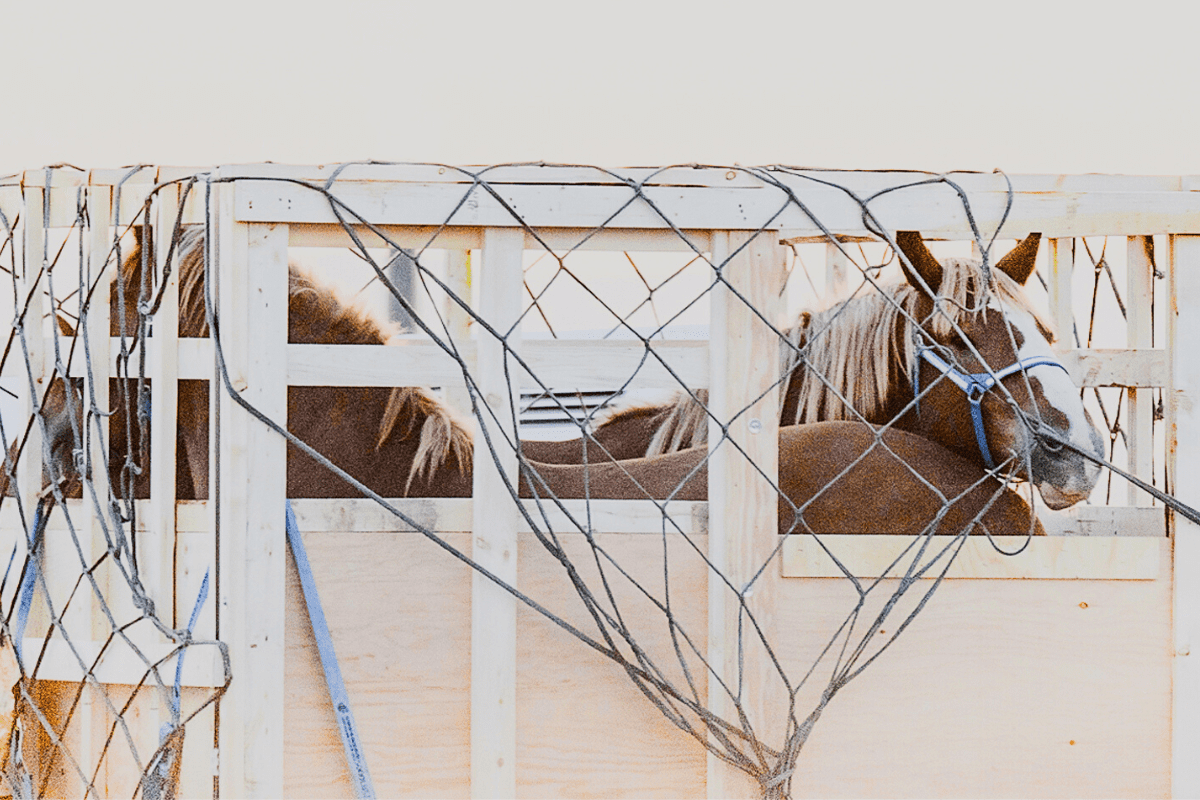
  • The claim that horses exported for slaughter have “ample room”. “This despite countless images captured at Canadian airports showing these horses crammed together in wooden crates as well as evidence given by the horse racing industry and others at parliamentary committee hearings on this issue last year.”
  • The claim that “qualified” attendants are present on flights. While sport horses often travel with multiple staff, Mitchell notes that “a single attendant on a flight of 100 or more horses packed into a cargo hold can do little to assist horses who may fall or become injured or stressed during transport.” Records show that these attendants routinely miss animal injuries, including a January 2024 incident involving four collapsed horses, one of whom was already dead and two of whom died after landing.
  • The claim that “virtually no deaths of horses during transport have been ‘reported to the CFIA'”. Mitchell outlines the underreporting of horse deaths: “Government of Japan data from June 2023-June 2024 alone shows that although no deaths or injuries were reported to the CFIA during this time, at least 22 horses died during or shortly after transport and more than 60 others suffered serious injuries and illness.”
Read article
Categories
News/Blog

Changes needed to stop “unprecedented” bird flu spread

“The ongoing spread of the highly pathogenic bird flu worldwide is reaching an “unprecedented” scale, a United Nations agency warned” earlier this month. The disease spreads easily on crowded poultry farms, which has led to 600 million farmed birds being killed.

Bird flu’s current spread is ‘unprecedented,’ UN agency warns

Bird flu’s current spread is ‘unprecedented,’ UN agency warns – National | Globalnews.ca

The ongoing spread of highly pathogenic bird flu worldwide is reaching an unprecedented scale, a United Nations agency warned Monday.

“Speaking at a conference in Rome, key members of the Food and Agriculture Organization of the United Nations (FAO) met to discuss the global outbreak of avian influenza.”

“Once limited to a few continents, avian flu has spread across all five continents since 2021, affecting more than 528 species, the FAO warned.”

“The virus is now present in 124 countries, causing the deaths of 47 million wild birds, while more than 600 million domestic birds have been culled (killed)”.

Read article

To address bird flu, reform chicken farming

An opinion piece by Eleanor Boyle, published in the Tyee earlier this year, suggests that scaling down the farming of birds for food will be necessary to control the spread of avian flu. Boyle notes that British Columbia, a hot spot for bird flu, is a great place to start shifting the food system.

“Though B.C. turns out less than 15 per cent of Canada’s chicken and eggs, the province accounts for more than 50 per cent of the nation’s recent avian flu-related bird kills and 81 per cent of the country’s now-infected barns.”

The high density of birds packed into barns and the close proximity of farm buildings are risk factors, the article notes. Research shows the disease spreads (and mutates) among crowded animals.

Although wild birds shed pathogens as they fly overhead, “historically, wild-bird pathogens were innocuous. Commercial poultry settings are where low-pathogenic strains tend to become high-pathogenic.”

“Compassion in World Farming says there’s such strong evidence that the poultry industry fuels avian flu that ‘only major farm reforms can end it.'”

Taking decisive action to shift toward more plant-based foods will mean less zoonotic disease risk and a brighter future for animal well-being and public health.

Read article

Categories
News/Blog

Beef industry blocked climate action for decades, report reveals

According to two papers recently published in the journals Environmental Research Letters and Climate Policy, the US beef industry knew of its role in climate change decades ago and “worked to obstruct efforts to encourage meat reduction for the sake of climate change”.

Media coverage

Beef industry put profits over planet

The new reports find that:

  • A beef industry document from 1989 laid out plans to influence public opinion and legislation in response to climate concerns.
  • The plan appears to be a blueprint for the industry’s actions to obstruct efforts that would reduce meat/beef consumption for the sake of climate protection.
  • Industry groups organized generously funded advertising campaigns to counter the messaging of environmental advocates.
  • The industry lobbied against sustainable diet change efforts including Meatless Mondays, official dietary guidelines, and the landmark EAT-Lancet report.

“The low-tech and immediately available option of halving US beef and veal consumption, resulting in a savings of 125–410 megatonnes (Mt) CO2eq per year over the 32 year period, could have been 24–80 times more effective in reducing GHG emissions in a single year than what was achieved cumulatively by reducing methane emissions (mainly in the oil and gas industries) over a similar timespan (1990–2022).” (Jennifer Jacquet et al 2025 Environ. Res. Lett. 20 031006)

According to reports, the beef industry’s lobbying and marketing efforts have silenced advocates, maintained a high public demand for meat, and slowed the development of sustainable food policies for decades; all while knowing the climate impacts of the industry.

Vox

A newly surfaced document reveals the beef industry’s secret climate plan

What the beef industry knew about its environmental impact – and how it spent decades blocking climate action.

In February 1989, the Environmental Protection Agency held a workshop on how to reduce climate emissions. A representative from the nation’s largest and oldest beef industry group — the National Cattlemen’s Association (NCA) — attended the workshop. Soon after, the organization developed a report to keep beef on family tables despite the growing knowledge around its climate impacts.

“The Cattlemen’s plan — an internal 17-page memo titled “Strategic Plan on the Environment” — went unnoticed for decades until two University of Miami researchers, Jennifer Jacquet and Loredana Loy, recently unearthed the document in the NCA’s archives.”

“Notably, the beef industry plan had barely a mention about addressing cattle pollution. Instead, it centered around how the public and policymakers would perceive that pollution.”

Read article