The Agri-Food Analytics Lab (AFAL) at Dalhousie University says Canadians are spending more money on food.
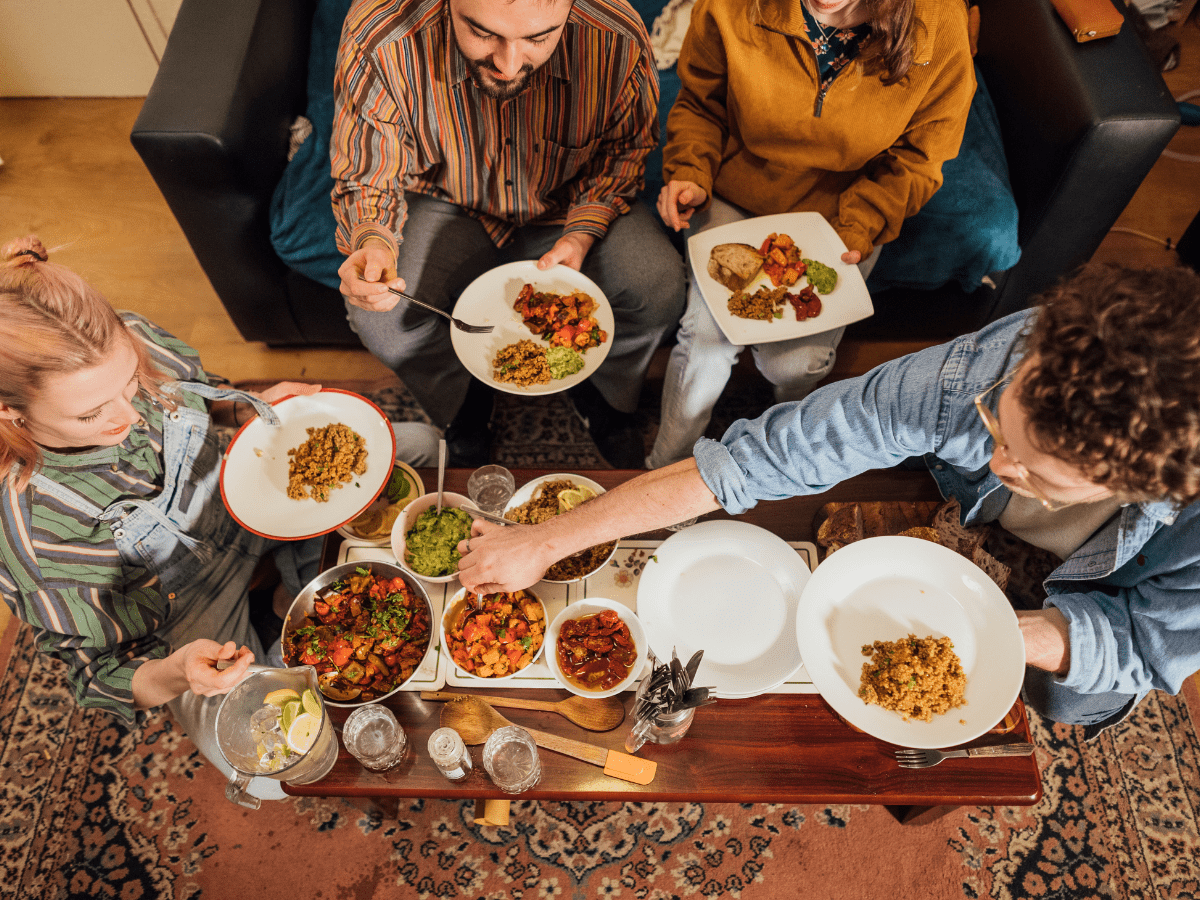
As grocery prices increase, more Canadians are turning to budget-friendly plant-based foods, according a recent article from CityNews Vancouver.
“The Agri-Food Analytics Lab (AFAL) at Dalhousie University says Canadians are spending more money on food.”
“Sylvain Charlebois, AFAL’s director, says that this has an impact on what Canadians choose to purchase at the supermarket, moving away from higher-priced items such as meat.”
“‘We are starting to see a shift towards different diets like vegetarianism, pescetarianism, and flexitarianism as well. That’s becoming more popular in Canada.'”
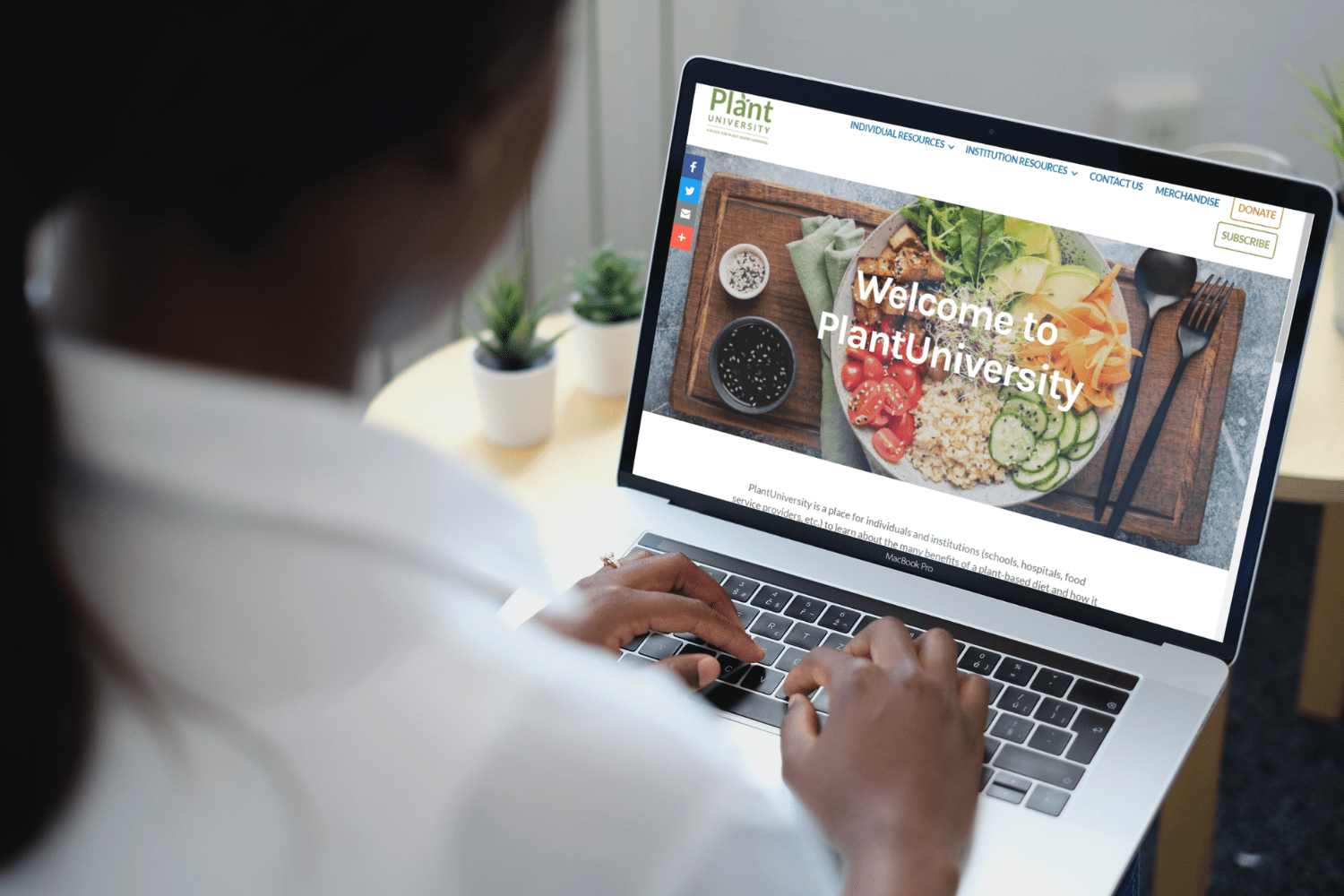
A 2023 report from the Vancouver Humane Society found that eating more plants could save an individual in the Lower Mainland 14% on groceries. The VHS’s PlantUniversity program offers resources, like budget-friendly recipes, to help people who are transitioning toward more plant-based eating thrive while enjoying healthy, delicious meals.
In this episode of The Informed Animal Ally podcast, Vancouver Humane Society Communications Director Chantelle Archambault and co-host, VHS Executive Director Amy Morris, are joined by PlantUniversity Coordinator Matthew Wattier. Together, they discuss the importance of plant-based advocacy on post-secondary campuses, PlantUniversity’s role in organizing the recent UBC VegFest, the challenges involved in coordinating a large-scale campus event, and what’s next for the program.
Note: This written discussion has been edited for length.
Chantelle: Hi and welcome back to the Informed Animal Ally from the Vancouver Humane Society. I’m Chantelle Archambault, the Communications Director here at the VHS. As always, I’m joined by my cohost, the VHS’s Executive Director Amy Morris.
Today we’re also joined by a special guest, the VHS’s PlantUniversity Coordinator Matthew Wattier. Matt joined VHS in June 2025 as our plant-based advocacy program, PlantUniversity, pivoted to focus on outreach to post-secondary students. He has a Bachelor’s degree in Business Administration from SFU. He has also worked closely with students and faculty at UBC, first as a coordinator for student-led educational projects for professors, and later as a communications professional for the Faculty of Applied Science.
Matt is passionate about addressing inequities for animals and humans alike, and places a strong focus on effectively campaigning for a transition to a plant-based lifestyle. He is fascinated by the science behind beliefs and persuasion, and hopes to work towards a more equitable society one conversation at a time. Thank you so much for joining us today, Matt.
Matt: Thank you Chantelle, it’s so great to be here!
Chantelle: Can you start by telling us a bit more about your background and what led you to this role as the PlantUniversity Coordinator for the Vancouver Humane Society?
Matt: Well, I’ve been lucky enough to work on some of the great campuses in the Lower Mainland over the years. I went to SFU for my business degree, and then went through their co-op program. The student-led educational projects were at a place called Emerging Media Lab at UBC. They are a sort of experimental space where students and professors use the latest technologies and see how they can apply them to a classroom setting. An example is utilizing AI to assist law school students in practicing for moot court.
My second co-op was with the Faculty of Applied Science at UBC, where we celebrated all the amazing research that the faculty there were working on. I’ve also been plant-based for over five years now, and have always been so fascinated by why people do what they do, and what causes them to change. That curiosity and familiarity with the campus ecosystem is what led me to this role.
Amy: Was there a specific moment or experience that first pushed you toward plant-based advocacy?
Matt: I have to first give credit to my older cousins who were eating plant-based to varying degrees when I was just a kid. When you don’t know anyone who does something unfamiliar, it’s easy to write off that behaviour as odd, but seeing my cousins thrive and advocate for plant-based at that age was a big deal towards normalizing it. I remember having a specific moment where I thought ‘wait- have I even thought about why I am eating meat, or am I just doing what everyone else is?’ That led me down a journey where I learned a lot about factory farming and the unfortunate conditions animals are subjected to for us to eat meat.
Eventually, I concluded that one of the best ways I could help animals was to limit the animal products I consumed, which quickly led to me going fully plant-based. I love a good-faith debate, and I really care that my actions align with my beliefs, so putting that towards advocacy seemed like a natural fit. I’ve helped a lot of my close friends and family see my perspective about why it’s a good idea to eat more plant-based, so expanding that further to folks I don’t know was the natural next step.
A history of plant-based advocacy at VHS
Chantelle: I’m so excited to have you on the team working on this project and also to be speaking about our PlantUniversity program again because our plant-based advocacy work is something I’m really passionate about.
As we’ve spoken about before on this podcast, eating plant-based is probably the best way you can make a personal impact in saving the lives of farmed animals every single day. Just to share a bit more about the program for people who may not be familiar, the VHS has been advocating to make plant-based eating more accessible for more than a decade.
From 2019-2022 we had two separate programs, one called Go Veg encouraging people to eat more plant-based foods and sharing resources to help people choose those animal-free foods more often, and another called Plant-Based Plates that worked on helping institutions like schools and hospitals shift their menus toward more plant-based options, which was an expansion from our work on Meatless Mondays. That work was going on even before Amy and I joined the organization—the Meatless Mondays program work was happening way back in 2015.
In 2022, we combined those two program areas into one large plant-based advocacy program, PlantUniversity. I’ve been working with the program since then and it’s been very exciting work sharing with people and institutions the benefits of transitioning to more plant-based foods and practical tips to actually do that.
All that background brings us to our pivot last year, when we brought our advocacy work into a more specific scope with the post-secondary campus project. This is exciting because everyone from the VHS who has worked on this project is actually on this call right now—I’ve been leading the strategy with Amy’s support, and Matt has been working on the ground to bring this advocacy work into schools day-to-day.
Matt, could you share about what PlantUniversity has been trying to achieve with our post-secondary campus project in the 2025-2026 school year?
Matt: So, with PlantUniversity, we’ve been aiming to connect with university students specifically to showcase why they should care about eating more plant-based. This has involved empowering student leaders on campus to advocate with their peers by sharing why they should consider plant-based, but also focusing a lot on how to break down barriers that students have that are preventing them from choosing plants.
We found through research and anecdotal experience that students tend to know that they should be eating a plant-forward diet, but have many reasons that get in the way of that, such as nutrition anxiety or not knowing what to cook. Finding ways to address these barriers, rather than just explaining the why, has been a big part of the PlantUniversity campaign this year.
Amy: Why are post-secondary students such an important demographic to reach with this kind of advocacy?
Matt: Post-secondary students are a really important demographic for a few reasons. First, they are very interested and engaged with social justice and advocacy, so moving toward plant-based feels like a natural next step as they already want to work towards a better world. These students are our future policymakers, so explaining how important plant-based eating is invests in the future of animal advocacy. Second, for many students, this is the first time in their lives when they are making decisions about what to eat, either by cooking or choosing options at a dining hall. Showing why and how to pick plants at this pivotal moment can shape food choices for a lifetime.
PlantUniversity at UBC VegFest
Amy: The program’s biggest event of the year was the first-ever UBC VegFest; you were a lead organizer who made that happen. Can you tell us about that event and who was involved?
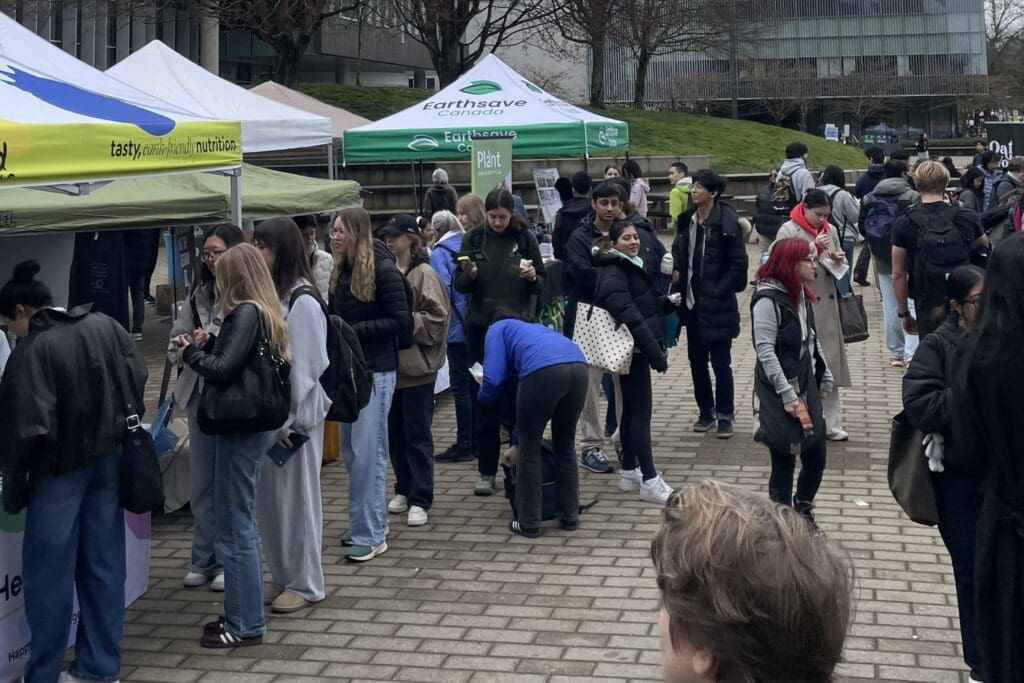
Matt: Yes! UBC VegFest was a really exciting event, which was a joint effort between PlantUniversity, the Vegans of UBC club, and the Alma Mater Society at UBC. It was part of Sustainability Week at UBC, and was an opportunity to showcase all of the amazing local brands working towards climate-friendly food solutions for our future. We also had advocacy groups to help students understand the climate impact of animal agriculture, what they can do, and what groups at UBC are already doing. It was a blast to work with so many local brands and school groups and the reception on campus was really great.
Chantelle: Absolutely, this was a massive event and truly a group effort to bring it together. Matt mentioned the co-hosts, and we also got support from TMRW Foods, Vegan Supply, and Seeds Sustainability Program at UBC in organizing and promoting the event. And then every single one of the 25 local food brands that attended offered free samples for people to try—that included brands you’ve likely heard of like Daiya, Oat Worthy, and Yoggu, and really exciting local favourites like Nora’s, Bonus Bakery, and Sai Plant Deli. Sai was selling plant-based chicken and they had a lineup around the corner for the entire six-hour event.
We’ll probably be having all these vendors back for future events, so if anyone is in the Vancouver and Okanagan areas and didn’t get a chance to go to the first event, you can follow PlantUniversity.ca and Vancouver Humane Society on social media to make sure you hear when the next ones are coming up.
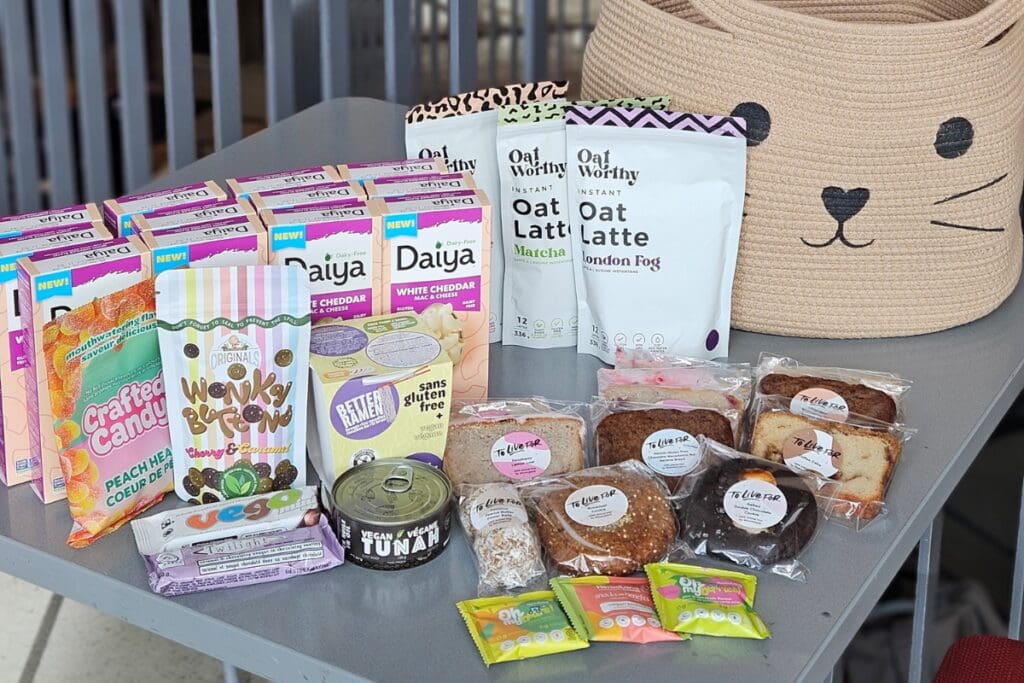
The winner of the UBC VegFest early bird draw showed off her gift basket, with items generously donated by Daiya, Oatworthy, Vegan Supply, To Live For, and Herbaland.
Amy: What kind of reach and response did you see from that event?
Matt: We had over 25 local brands showcase their products through samples and sales, and they gave away over 18,000 samples. We estimate that there were around 5,000 guests at the event, which was more than we could have ever imagined. The vendors were so happy to see the turnout, which is very important to show that an event is worth coming to when you are a small business who has to be considerate to where you put your time and energy. The students and other guests we surveyed also had a high opinion of the event, with almost everyone saying it improved their perception and consideration towards plant-based eating.
Chantelle: We knew it was a successful event based on the huge turnout when folks were there, but those surveys from the vendors and attendees were really exciting to see. Like Matt said, most people said the event changed their views on plant-based eating in a positive way, just 16% were neutral and no one had a negative change. Most people, about 59%, bought something at the event so we know people were interested in taking the food they tried at the event and carrying it into their routines afterwards. And a vast majority said they would recommend the event to a friend, at 96.1%.
We know this was reaching people beyond the vegan community as well so it was a great opportunity to encourage people to change their eating habits and expose them to plant-based foods and compassionate messages in a fun and welcoming way. About two-thirds of the attendees were not vegan. And about three-quarters were students, so the people in our target audience for the program who are in a stage of their lives where they’re forming opinions and habits that will make a difference to what kinds of foods they choose in the future. The rest of the attendees were faculty, staff, and members of the surrounding community.
Amy: For students and other advocates who would like to pull together something similar, what would be the first steps to getting the ball rolling on a VegFest event?
Matt: First, I think you are in a great position if you’re trying to put on an event at your campus! Student groups like your local AMS or Student Society are a great place to start. They often have privileges that make setting up an event easier than an external group. I would check there first and see what the process is for getting an event going. Students tend to love events that offer free food and bring life to campus, so creating a pitch of the event with those things in mind is a good plan. Once you get going there, look into funding opportunities for students. Universities love to promote projects, and often have grant money they’re trying to give to students. Especially if it pertains to sustainability or social justice initiatives, which a VegFest most certainly does!
Chantelle: Absolutely, working with clubs, sustainability programs, and student societies is a great way to go because they have a lot of knowledge about how the school community works. You may be able to work with local advocacy organizations, the way the VHS collaborated with the Vegans of UBC, who can help find different funding paths. And there are often grants available through the school, community organizations, or advocacy organizations for events that reach a lot of people and make a high impact like this.
Our campaign guide delves into all those partnerships, how to start reaching out to local businesses that may be willing to offer free samples to get their name out there, and how to market the event to make sure people actually come. Again, you can find all that in the Campus Advocacy section of PlantUniversity.ca
Amy: What were some of the biggest challenges or things to keep in mind as someone is planning an event like this?
Matt: One thing that is important to understand when working with small businesses is that it’s important that you make the event worth the effort for them. They are doing such amazing work and are often running with fewer resources and people than big companies, so creating a way where they can promote their brands without a ton of extra time or effort on their end will get a lot of real interest. There’s also a bit of a chicken-and-egg scenario where a university might want confirmed vendors first, and vendors might want a confirmed space before committing. Being honest with both parties about this scenario and levelling with them is the best way to get the commitment you need from both sides.
Chantelle: I want to add that I don’t know if this is a challenge, but it’s definitely something you want to keep in mind: You’ll really want to make the event visible.
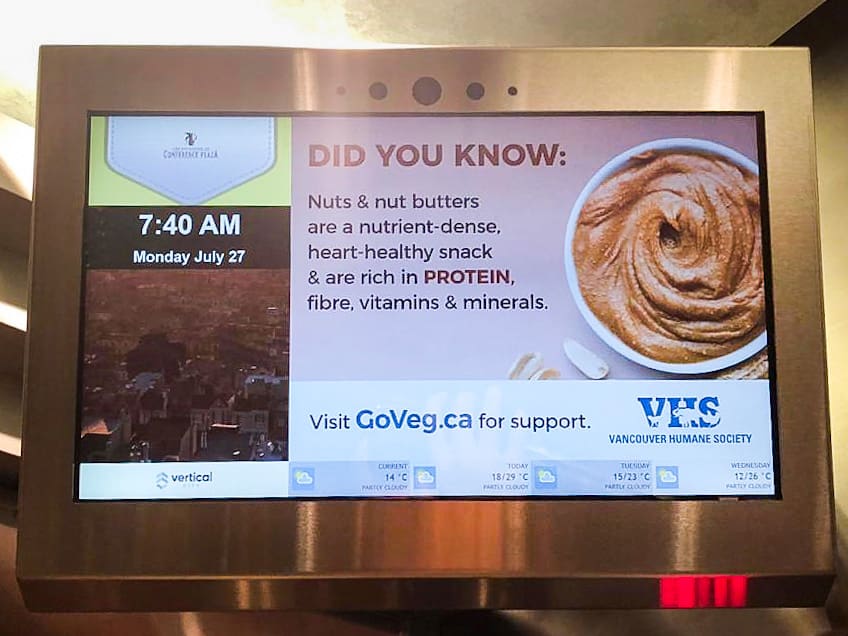
We were able to hold our VegFest in a very central location on campus where there was a lot of walk-through traffic, and we also had posters up all around campus; SEEDS at UBC helped us get promos for it on all the TV screens promoting upcoming activities around campus, and we had signage up all around the actual event so people knew what was happening. We posted it in all the local Facebook groups for the vegan community and local events and shared it with our email list and on social media. We basically shared it everywhere we could.
You can have an amazing event with the best food and the most impactful advocacy messages, but if people don’t know about it they’re not going to go. So, really making sure you promote the event very heavily and host it in a central and visible location if you can.
Amy: I’m so excited to see what happened with VegFest and really happy that we can share some of these insights with other people who may be starting to do work like this. But VegFest is just one part of a much more expansive project—can you walk us through some of the other advocacy work that happened on campuses this year?
Matt: We were excited to showcase a number of smaller advocacy events where students engaged with their peers, offering recipes, resources, and diving into great conversations about plant-based eating that created buzz around campus. We offered local free food and connected with so many great students, who just as we thought, really care about our message and were happy to have someone help them lean into plant-based more.
We also connected with students across Canada in the classroom, with guest lectures and talks at schools like SFU and University of Manitoba. We created guides on how to advocate, nutrition information, eating plant-based for cheap, recipe booklets, and more, all of which were showcased in person, on social media, and on our website. We expanded our online presence beyond that with collaborative posts with local brands and universities on social media, and blog posts on our website.
This all aligns with our goal to meet students in all avenues of student life—in the classroom, online, and around campus. Meeting students outside of just one place is shown to improve advocacy efforts, so we made sure to have a diverse approach.
Chantelle: You touched on this a bit, but how do those smaller outreach activities work together with something larger like VegFest to make change?
Matt: Smaller outreach activities create a great environment for one-on-one conversations with students. This is one of the best ways to explain your message and to create an open discussion. Making this deeper connection with students is important as it is personal. Combining this more personal approach with the larger, exciting events helps with that diverse advocacy as I mentioned before.
What’s next for PlantUniversity?
Amy: Can you both share a little bit about what’s next for PlantUniversity?
Matt: With the success of VegFest, we’re looking to do more events at different parts of the year, with more vendors, different advocacy groups, and even new focus areas. Connecting students with programs and guidance on how to handle food security is a big focus with costs rising. We are also looking towards advertising opportunities to the larger public, for big reach on messages and getting more people involved with PlantUniversity.
Amy: That’s awesome, I know people have loved our billboards and bus ads for many years.
Chantelle: I’m so excited for what’s next for PlantUniversity. We’ve got four years of the program under our belts now, so we’ve really been able to hone our advocacy to reach the most people with the most impactful messages possible and that’s what we’re focusing on for the next year. If you’re not following the Vancouver Humane Society and PlantUniversity.ca on social media already, I would really recommend you do so you can see what we’re up to and get in touch about how you can get involved with this type of advocacy work.
Matt: Great idea Chantelle! An easy introduction and the way to everyone’s heart is a good, home-cooked meal. Trying out a recipe at PlantUniversity.ca, or whatever looks exciting to you from another site, and sharing it with friends or colleagues is a great way to start. I find delicious food leads to great conversations and open-mindedness. From there, so many things can happen!
Chantelle: Amazing, thank you so much again to both of you for being here for this conversation. And thank you to everyone at home for listening. If you’d like to learn more about how to save farmed animal lives by advocating for a more plant-forward food system and some more considerations for this advocacy work, you can check out some of our previous episodes:
As always, we’re so grateful that you were able to join us for this conversation. We hope to see you again next month as we talk about more ways you can be an ally for animals.