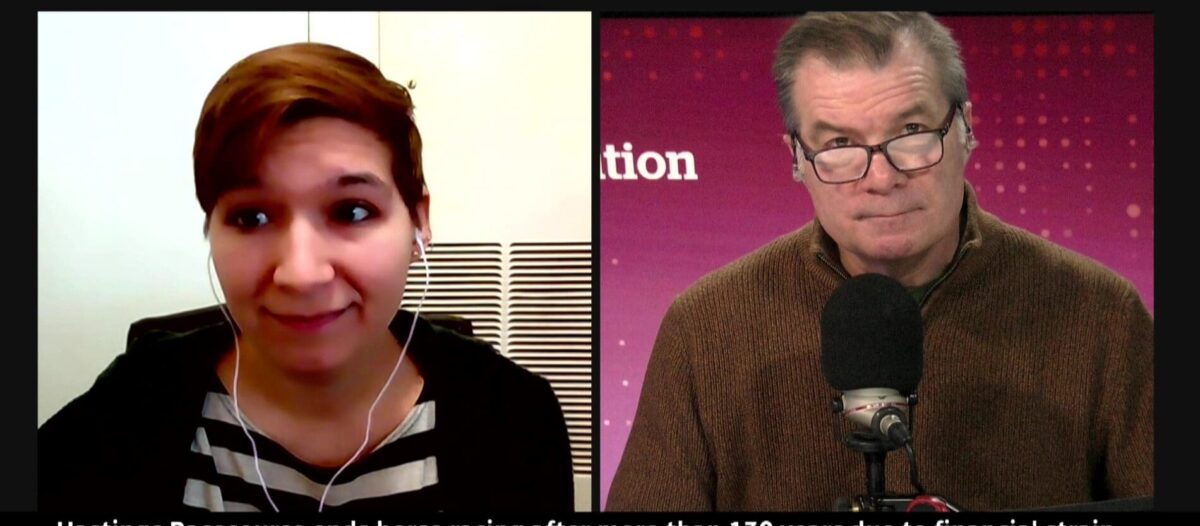
The Vancouver Humane Society’s Chantelle Archambault sat down with Shawna Barker from the Vegan Boss Radio podcast about Vancouver Humane Society’s mission, work, and some practical ways that animal allies can make a difference.
Note: This written discussion has been edited for length.
Advocacy and justice for animals
Shawna: Hi everyone. Welcome to Vegan Boss Radio. I am your host, Shawna Barker, and I’m so glad you’re here today. Today’s episode is a very important one because we’re talking about animal advocacy, public awareness, and how real change actually happens, not just online, but at the policy and community level.
Today I’m joined by Chantelle Archambault, who has worked as the communications director at the Vancouver Humane Society since 2021. She is deeply passionate about justice for all, both humans and animals, and has spent her career working with nonprofit organizations focused on family services, social justice, advocacy, and creating safer spaces for marginalized communities.
Chantelle’s lifelong commitment to the ethical treatment of animals inspired her to volunteer with the Toronto Humane Society and eventually move across Canada to take on her current role at Vancouver Humane Society. She has appeared in media outlets, including the CBC, CTV, CityNews, and the Daily Hive.
In this conversation, we talk about the work that the Vancouver Humane Society does behind the scenes, including its past and current campaigns, how they raise public awareness around practices like rodeos and horse racing, and why these issues are often misunderstood or even normalized, in many cases.
Chantelle, thank you so much for being here today. I’m wondering what drew you to animal advocacy, and then how did that lead you to working with the Vancouver Humane Society?
Chantelle: Thanks so much for having me today. It’s interesting to be on this side of the question because I love asking this to our guests on the Vancouver Humane Society podcast, Informed Animal Ally, as well. I got into animal advocacy the way that I found a lot of people I speak with do as well. I’ve always been drawn to animals since I was a kid, making my dad wait before he drove to work on rainy days so I could pick up every single worm off the driveway so they wouldn’t get squished. I was putting the spiders out through the window in the classrooms so the other kids wouldn’t step on them.
When I was in university, I volunteered doing feline enrichment at the Toronto Humane Society. I worked at an organization that worked with marginalized communities affected by HIV and then at a Children’s and family organization. Those were both organizations that aligned with my values.
I care about justice for humans for all of the same reasons I care about justice for animals. But I always knew that my dream job would be to work in the animal sector doing communications, telling those stories from the animals because their voices are ignored so often.
Shawna: That’s so incredible. It sounds like it was very much meant to be. Maybe for listeners that are not familiar with the Vancouver Humane Society, could you share a little bit about the mission and the types of work that you do?
Chantelle: Yeah, absolutely. So, the Vancouver Humane Society’s mission is to expose and end animal suffering and exploitation, including supporting individuals, organizations, and governments in caring for the wellbeing of animals. So, we work in five main areas to do that.
There are already a lot of great rescues who do work in taking in pets who really need it. So, our goal is to support the guardians of animals who are loved, but just need some help to keep them cared for at home and out of the shelter rescue system. We offer emergency veterinary support for low-income guardians so that they can get their pets cared for and back home safe rather than having to watch their pets suffer or make the really difficult decision to either euthanize them or give them up to get the care they need. We do a lot of advocacy work around animals in captivity, zoos, aquariums, mobile petting zoos, exotic pets, and animals in entertainment. That includes things like rodeos, horse carriages, horse racing, and wildlife.
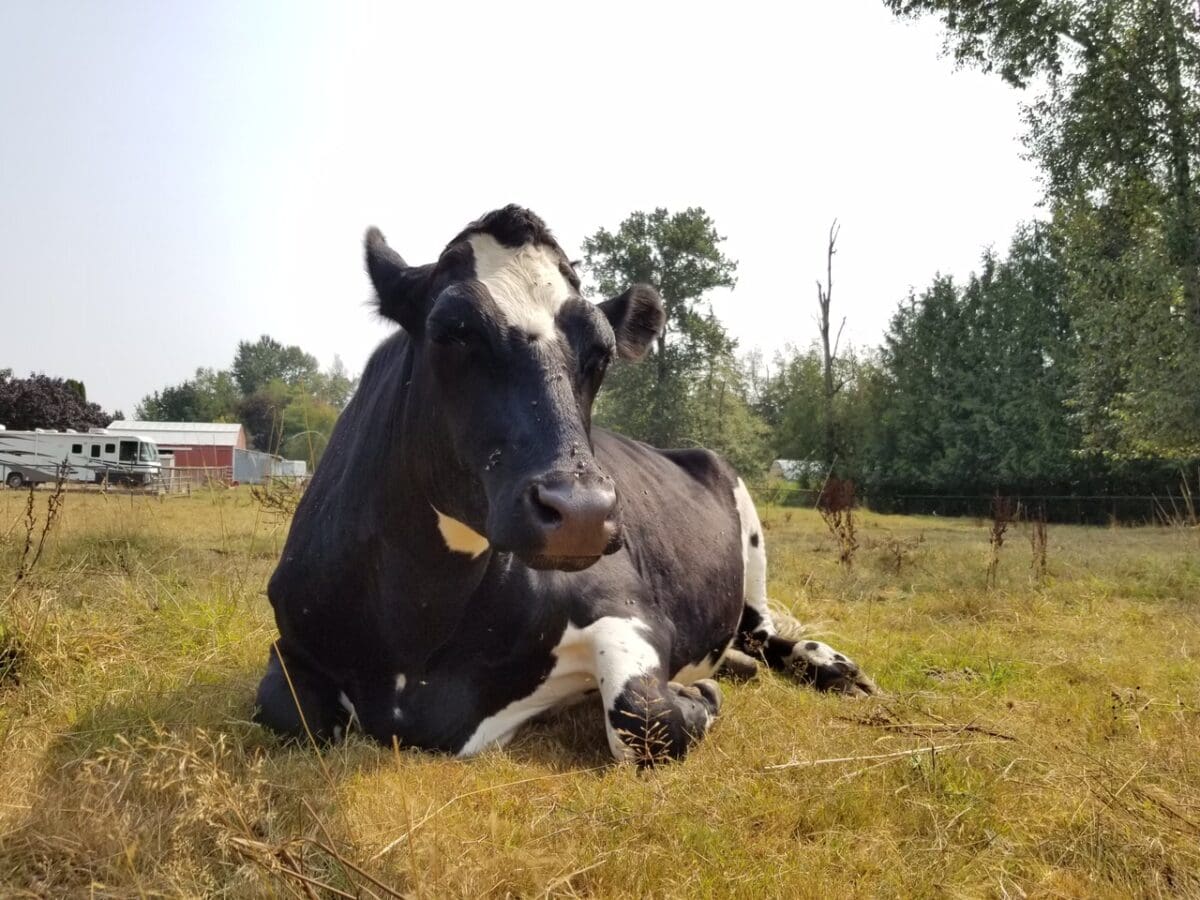
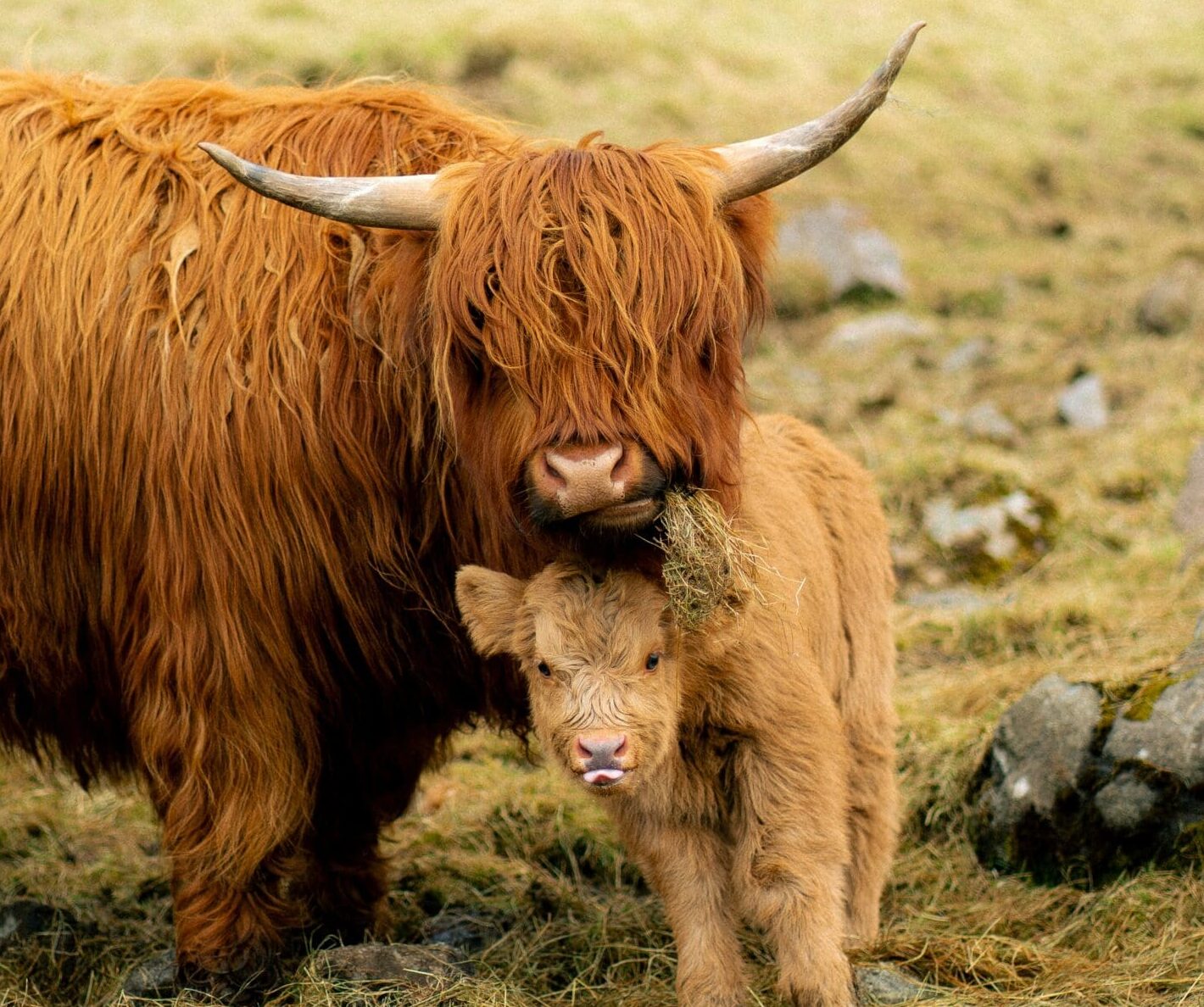
Recently, we’ve taken more of a support role on this one for other organizations that focus on wild animals like the fur bearers. But we’ve covered things like, wildlife culls, hunting and fishing, regulations for farming, rodent poisons, and then farmed animals. That is a major area because, I’m sure you know, farmed animal welfare is often considered the greatest animal welfare issue on the planet.
We work in plant-based advocacy to make plant-based eating more accessible and reduce the demand for animals to be farmed for food. And we also advocate for better policies and practices that address the worst harms animals face while they’re currently in the farming system.
Shawna: I was scrolling one of the Facebook groups for the Hastings Sunrise neighbourhood and I saw a petition to bring back Hastings horse racing track. How do people not see how much cruelty is involved there? What do you wish more people knew about those industries?
Chantelle: Yeah. There are so many misconceptions about those two industries, and what a lot of it comes down to is lack of choice. The main argument from those industries and their supporters is that those animals love their jobs, but animals aren’t like human athletes because they don’t have a choice.
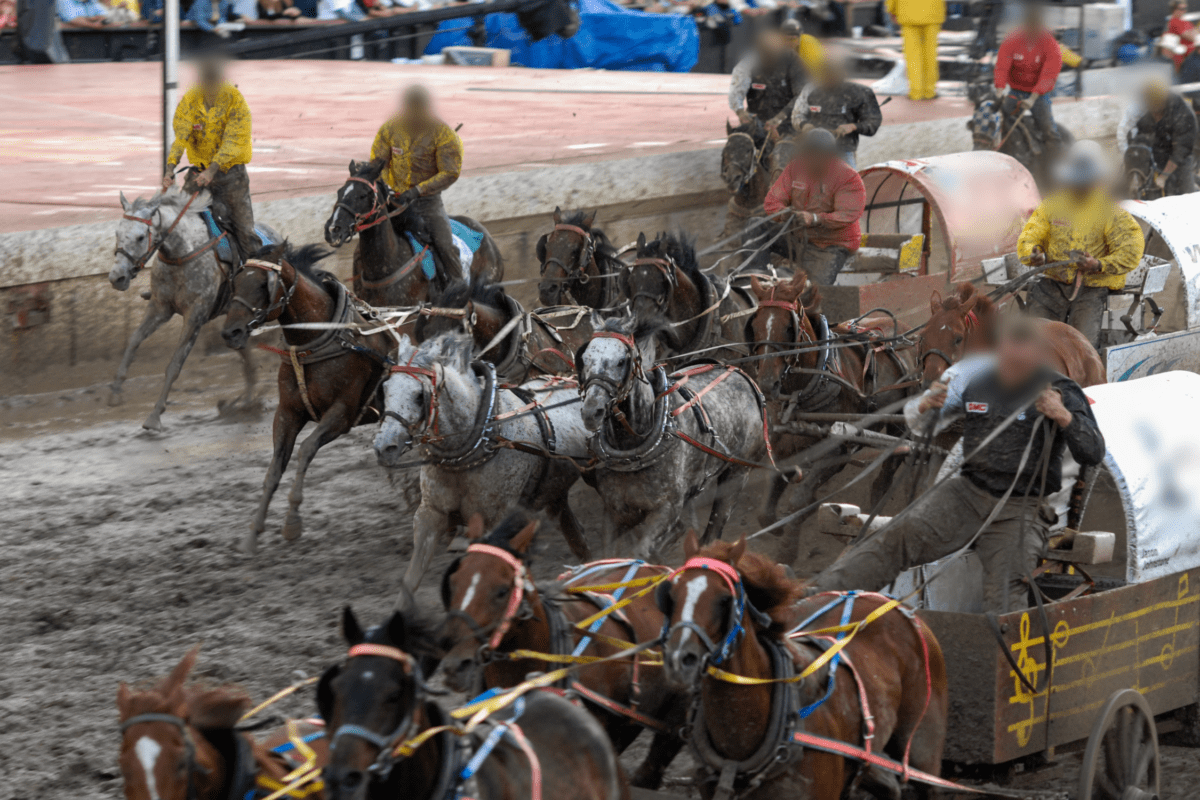
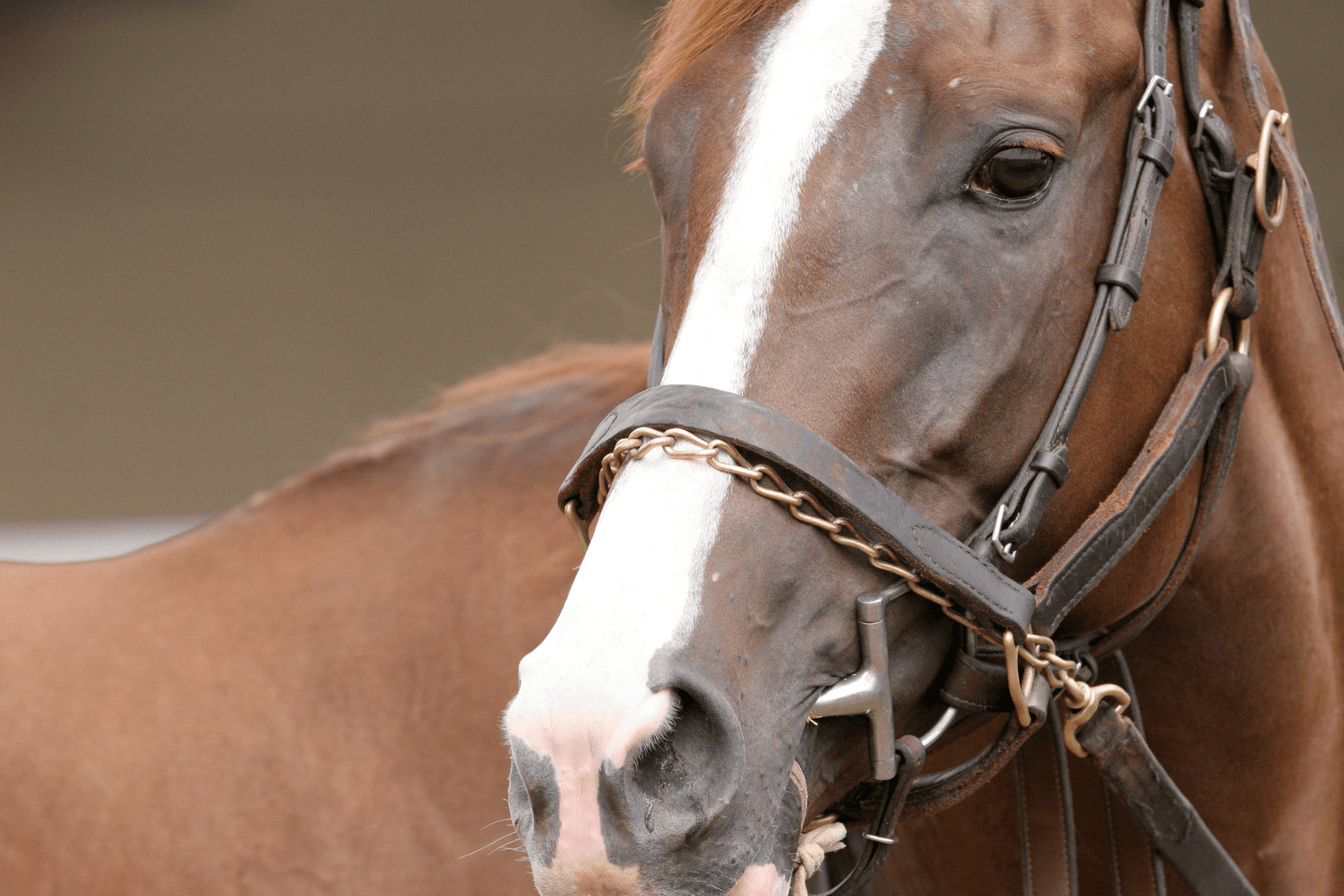
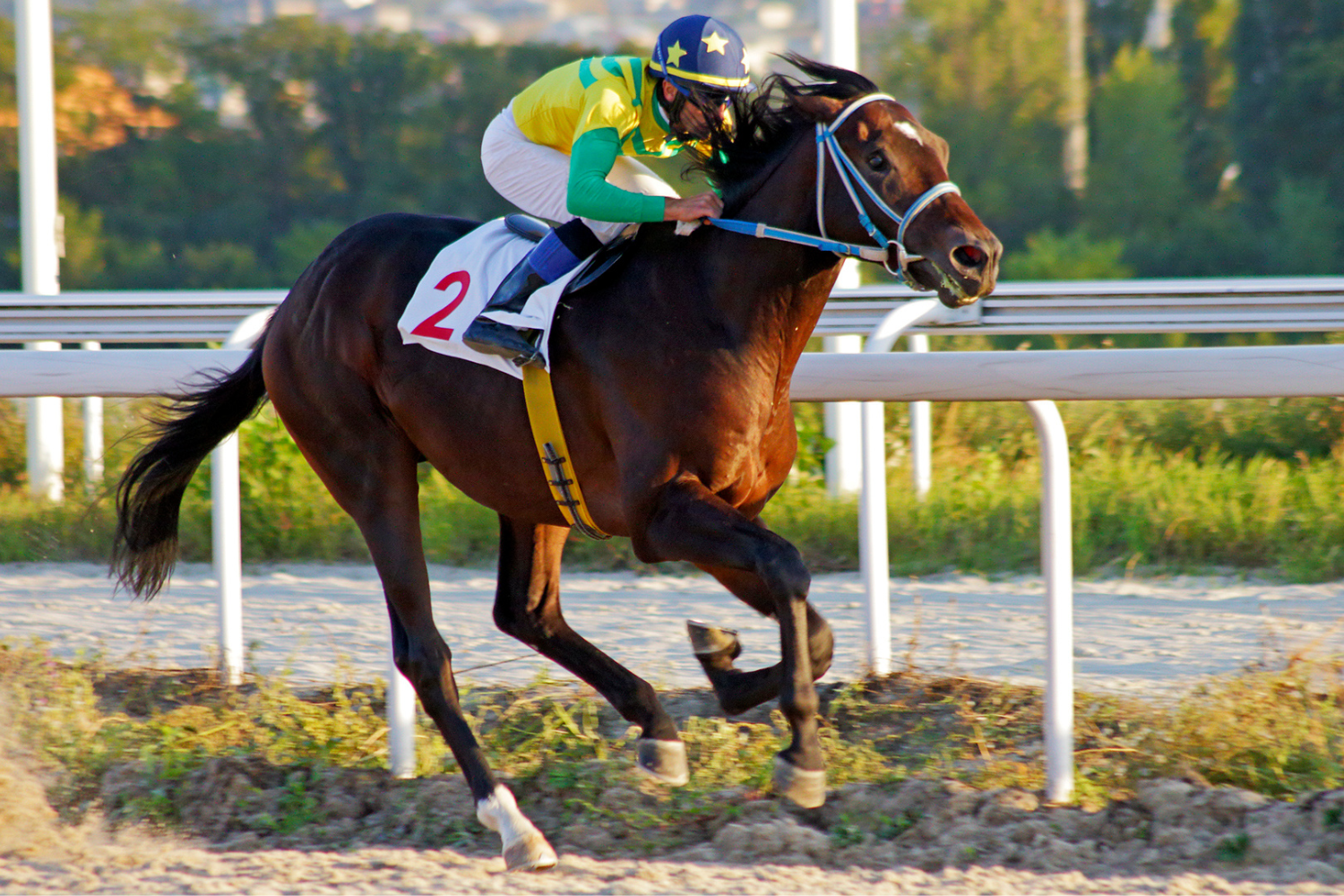
Animals used in rodeo do the behaviours that rodeo announcers pass off as performing are actually natural fear responses. A racehorse isn’t like a human athlete who gets to go home and do what they want. At the end of the day, their whole life and full routine is controlled by their handlers who decide when they train, when they rest, when and if they get time to run free. Animals also don’t choose to get into those situations. They’re bred for those industries, and if they don’t do what they’re expected, they’re punished for it.
For rodeo and horse racing, we actually did an entire podcast episode just on this topic called Eight Arguments in Support of Rodeo and How to Respond, because there are so many, and we’ve run into them all the time.
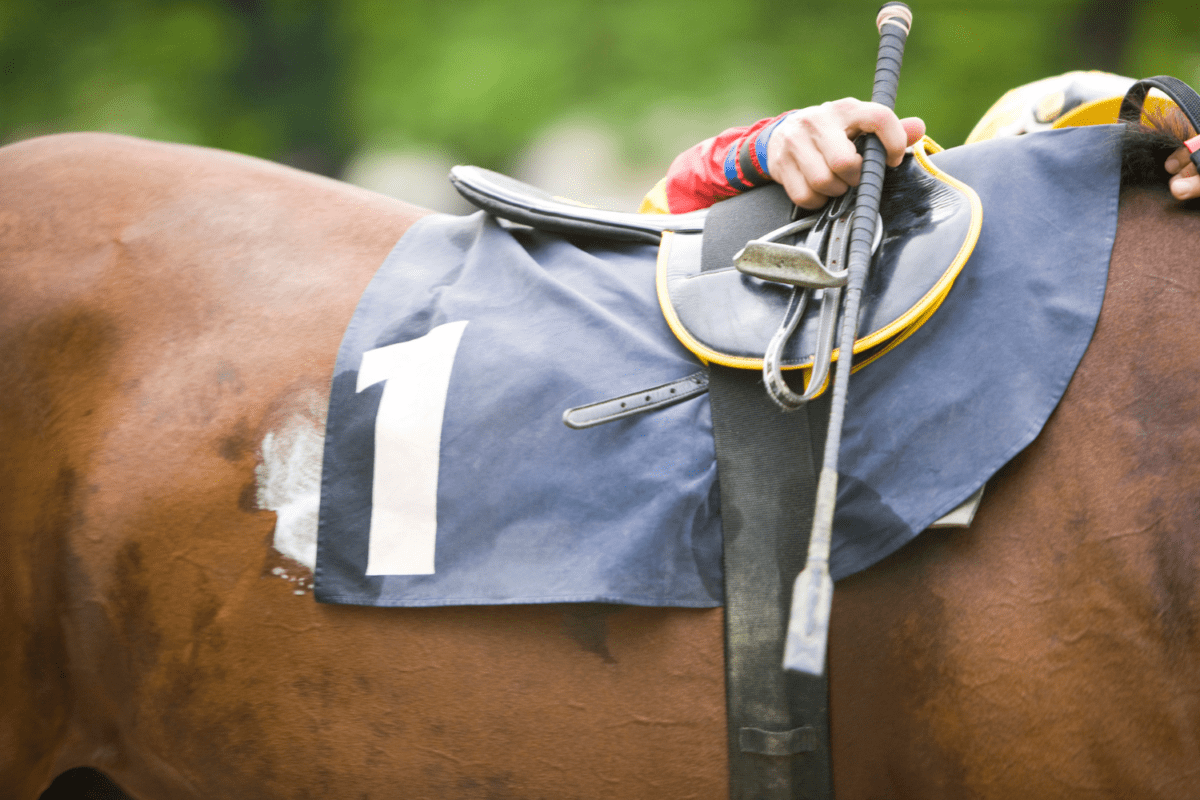
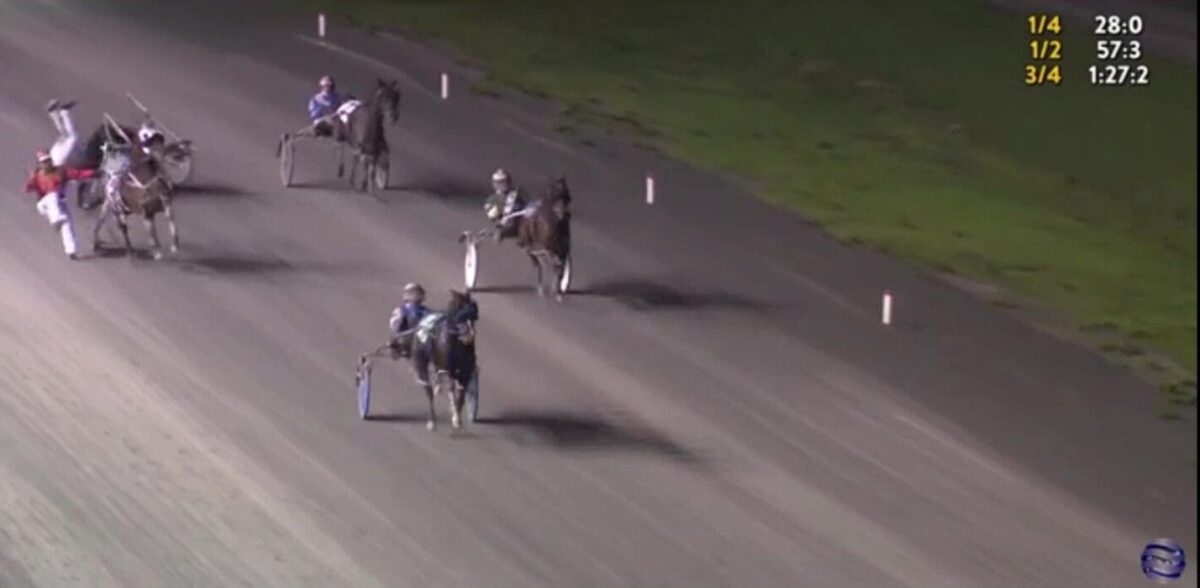
For horse racing, the most common argument is that if we take away horse racing, those horses will have nowhere to go and they’ll be sent to slaughter. First of all, this shouldn’t be true anyway. Horses are only able to race for a fraction of their lives because it’s quite hard on their bodies. So, any responsible industry should have a retirement plan in place.
The best outcome is one where horses can spend their days as freely as possible, like in a sanctuary or being therapy horses. We advocated for the BC government to support that transition when Hastings racecourse in Vancouver closed down, as you mentioned. And the other side of that coin is that while the industry is arguing that we have to keep horse racing around, because there are so many racehorses who would have nowhere to go, they have still been breeding more animals into this industry.
Shawna: Have there been campaigns to stop the horse carriage rides in Victoria?
Chantelle: We have worked around the horse carriage rides in Victoria a little bit. Right now, we’re working on a horse carriage campaign in Vancouver. We’re trying to get horse carriages off of busy city streets.
Education for long-term change
Shawna: Beyond the individual campaigns that VHS works on, are there examples of maybe systems-level work, maybe through getting policies changed, education or outreach to address long-term changes that will benefit animals?
Chantelle: Yeah, absolutely. Education is a really important part of the work we do because the only way we can make change for animals is if people know what the issues are and care enough to help make those changes.
One project I am really excited to share is our plant university program. We originally launched Plant University in 2022 as a home for our ongoing work making plant-based eating more accessible to individuals through personal education, like sharing recipes and also working with institutions.
To improve access to plant-based foods for instance, in the past we’ve worked with school cafeterias to help organize meatless Mondays, and that work has carried on over the past few years. We’ve developed a recipe library and shared reasons and tips to eat more plant-based foods with people all over Canada.
And we’ve also been working with businesses and institutions like long-term care homes more locally to help them transition part of their menus. We’ve also supported change at the government level. A couple years ago, we created a report for the City of Vancouver on how transitioning a percentage of the food they purchased to plant-based could save them money and help meet their environmental goals.
This last year, we transitioned the program to specifically target post-secondary students in the Lower Mainland. A lot of students are making food purchasing decisions on their own for the first time in their lives, and when we share all the benefits of choosing plant-based options along with tips for eating more plant-based foods like recipes and an on-campus food guide, there’s a much better chance we’ll see that translate into new habits these young folks will carry with them through the rest of their lives. So, we’ve been doing things like in-class presentations, outreach events, signage, and posters on campus.
Emotional toll of animal advocacy
Shawna: I know advocacy work can be really kind of emotionally heavy. I mean, you’re seeing and talking about like animals being mistreated all the time. Maybe for yourself or for your team, is there a way that you navigate feeling emotionally burnt out by doing this kind of work and how to stay motivated?
Chantelle: Yeah, it is really tough sometimes. We find different ways to share what’s happening through writing, but that means we need to watch the footage of what animals are going through behind the scenes at rodeos or in slaughterhouses. That does really get to you because you know that you can walk away from seeing this at the end of the day, but for so many animals, this is their whole lives.
I really try to ground myself by recognizing that I’m doing everything I can do to help. I’m doing advocacy, so fewer animals have to go through this. I am vegan, so I’m not directly contributing to animals going through what they go through in the farming system. And then I spend lots of time connecting with the world around me in different ways when I’m not working, talking to my loved ones, talking to my cat, taking my cat out into the backyard so she can live the best life that she can.
I know if I’m not able to take care of myself and reset, I’m not going to be as effective in actually doing this advocacy. So, taking time for ourselves is part of being a good animal advocate.
The role of public awareness
Shawna: You mentioned kind of the role that public awareness plays. Do you feel that the public awareness does play a huge role in actually like changing the laws in these practices?
Chantelle: Yeah, absolutely. Public awareness is huge. We live in a world where companies, for the most part, are going to do what’s most profitable. Governments, for the most part, are going to do what gets them re-elected.
So, when we raise public awareness, people change their behaviours and they speak up and it tells those leaders of companies and governments that compassion is the popular choice, that’s going to be more profitable or it’s going to get more people on their side before the next election. When we do see government representatives connect with an issue on a personal level, it’s often because they’ve heard from individuals in their community, not necessarily from someone who’s representing an organization.
Shawna: For increasing public awareness, what are the best strategies? Would you say on social media you have a good reach or is it door-to-door campaigns with petitions? I’m just wondering what is an effective way to get the word out?
Chantelle: I think there are so many different ways. If someone is individually doing this, I would say play to your strengths.
If you have an audience online, definitely online is a great way to reach people. If you’re out in your community and you’re connecting people one-on-one in groups, that’s a great way to reach people. If you’re at an event and you can bring like a plant-based dish, use that as an opener to talk about animal suffering in the farmed animal system. Like anything that you can do to get people talking and thinking, I think is a great way to educate people about the things animals go through. There are opportunities all the time, all around us.
Shawna: And then for Vancouver Humane Society specifically, are you reaching people in specific neighbourhoods directly or do you feel like a lot of the reach comes from posting videos and articles on social media?
Chantelle: The biggest two routes that we take are through our email list and organic social media posts.
There are people who are really deeply engaged and we have about 16,000 people on our email list. We send out things that they can share on social media, ways that they can take direct action, ways that they can speak up to their elected officials.
Shawna: Someone who maybe isn’t on your email list and deeply cares about animals but feels overwhelmed and is not sure where to start—what would you suggest as a way to support this work?
Chantelle: Yeah, I would say the most basic first step is to find an organization that really aligns with your values and subscribe to their email list.
We have so many quick actions, like emails to decision makers, petitions to sign, campaigns to share around. There are ways to get involved to varying degrees based on how much time you have to spend on advocacy work, from a ten second click to a more in-depth collaborative piece.
In a more general sense, I would advise people to get to know your government representatives at the local, provincial, and federal levels. Your city council members, your members of Legislative Assembly, your members of parliament.
Once you make a connection with them, you’re in a much better position to let them know that you care about animals or what you care about in general when a policy decision comes up that they’re involved with. You don’t need to be an expert, it can really just be about going to them and saying, hey, I care about animals, we are a community that loves animals. I really hope you’ll vote for better animal welfare when the opportunity comes up.
Shawna: And if someone wants to engage with anything that VHS is working on and but they don’t live in Vancouver or even British Columbia, are there ways to get involved or do you suggest they find other local humane societies?
Chantelle: I definitely suggest you always find local organizations that you can make a difference locally on issues that are near you, and likely near and dear to your heart. But you absolutely don’t need to live in Vancouver to get involved with our campaigns. We cover a whole range of campaigns from local issues to issues of national importance. Most of our quick actions can be taken by anyone in Canada and sometimes beyond.
I’d recommend you go to our website, vancouverhumane.ca and sign up for our email list to get all the updates. You can also follow us at Vancouver Humane Society on Facebook, LinkedIn, Instagram, or Blue Sky. Any of those ways is going to be a great first route to get involved.
Shawna: Okay. Amazing. Well, Chantelle, I want to thank you so much for sharing everything that Vancouver Humane Society is working on, and ways for people to get involved. I know you really are emphasizing people getting involved with their local officials and I think that is such an important way to help shed light and address some of the injustices going on towards animals in your community. Did you have any final thoughts or anything you wanted to share with our listeners?
Chantelle: I just wanted to thank you so much for having me on today and giving me the opportunity to share about this. I think this is a great podcast and it was a really great conversation and I am glad that we had the chance to talk today.