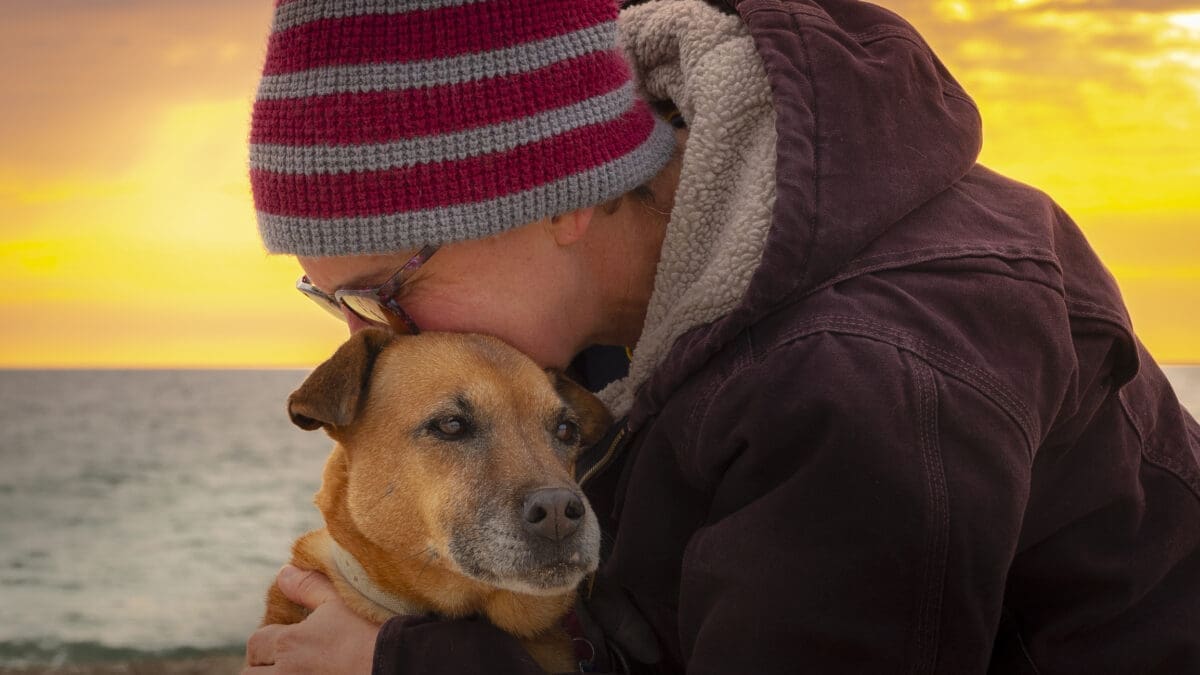
Close up photo of a woman hugging an older brown dog outdoors on the beach
The Vancouver Humane Society is proud to be part of a new province-wide collaborative: the Humane Societies of British Columbia. This initiative brings together seven independent humane societies to make it easier for people across BC to find trusted, local support for their animal family members, all in one place.
HumaneSocietiesBC.ca is a new resource hub that aims to help connect people to local services like veterinary assistance, pet food programs, behaviour support, and emergency care when they’re needed most.
We’ll also be joining together to share timely, life-saving information on pet health and care.
Around the world, meaningful progress is being made to end the practice of operating horse-drawn carriages on busy city streets.
In Cartagena, Colombia, where the city’s historic centre is a UNESCO World Heritage site, horse carriages are being replaced with electric ones amid growing concerns about horse welfare and safety.
In New York, the city’s new mayor has announced support for removing horse carriages from Central Park and working with stakeholders to end the practice.
Locally, the VHS’s campaign to remove horse carriages from high traffic streets in Vancouver has gathered more than 3,000 signatures and was recently featured in the Daily Hive. The campaign has been seen more than 330,000 times on social media.
TAKE ACTION: Sign the petition urging Vancouver City Council to prohibit horse carriages from busy city streets, and if you’ve already signed, please share it to help build momentum.
Below is a template message that will be sent to Mayor Sim & Vancouver City Council. Tip: personalize the subject and message for added impact, or send a message directly to: mayorandcouncil@vancouver.ca
Horse carriages & traffic don’t mix
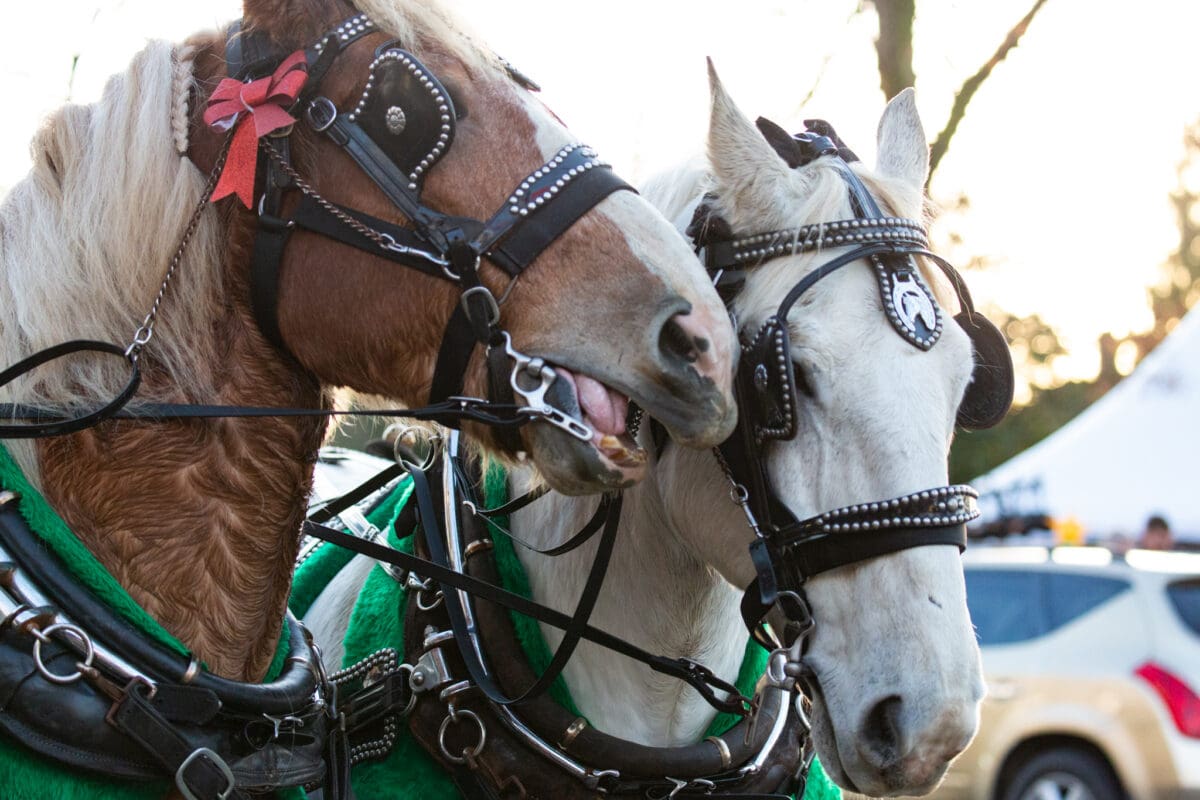
Horses are sensitive prey animals, not suited for navigating the increasingly crowded, noisy, and unpredictable streets of a modern city. Yet, Vancouver bylaws still allow horse-drawn carriages to operate on busy roads in high-traffic commercial areas throughout the city.
These urban environments are filled with loud noises, fast-moving traffic, hard pavement, vehicle exhaust, and crowds that can easily startle horses, no matter how experienced or well-trained they are.
Previous horse carriage incidents
Below are a few previous incidents that show how quickly things can become dangerous for the horses and the public when horse carriages operate in busy urban spaces.
Victoria, 2024: A horse is spooked after an equipment malfunction, resulting in the driver losing control of the horse, who proceeds to run and buck through an intersection. Passengers jumped out of the carriage before the horse collapsed on the concrete.
Victoria, 2023: A spooked horse flees for three blocks before tripping and falling over a bike lane curb. The incident resulted in the driver being thrown from the carriage and both the driver and horse suffered minor cuts.
Victoria, 2018: In downtown Victoria, a horse-drawn carriage rolled back and bumped into a bus that was following too closely. The impact caused both horses to fall, blocking traffic and requiring an emergency response. The horses remained on the ground for more than five minutes, during which members of the public attempted to assist. Those assisting were not directed to stay clear of the horses’ legs, putting themselves at risk of serious injury.
Victoria, 2018: A second incident occurred only a few months later, when horses were spooked and veered off course and crashed into a parked vehicle. Witnesses reported that the horses smashed the vehicle’s windows and even climbed onto its roof with their front hooves.
Vancouver, 2016: A loud car horn startled a team of horses pulling a carriage, causing them to bolt along Stanley Park’s seawall with passengers on board. The horses left the road, crossed a bike path, and smashed a park bench with the carriage before continuing for approximately 100 metres. The driver fell from the carriage, and several frightened passengers leapt off as it sped along. Multiple people were injured, and there were concerns that the horses could have plunged over the sea wall and into the water.
Holiday event observations in Vancouver
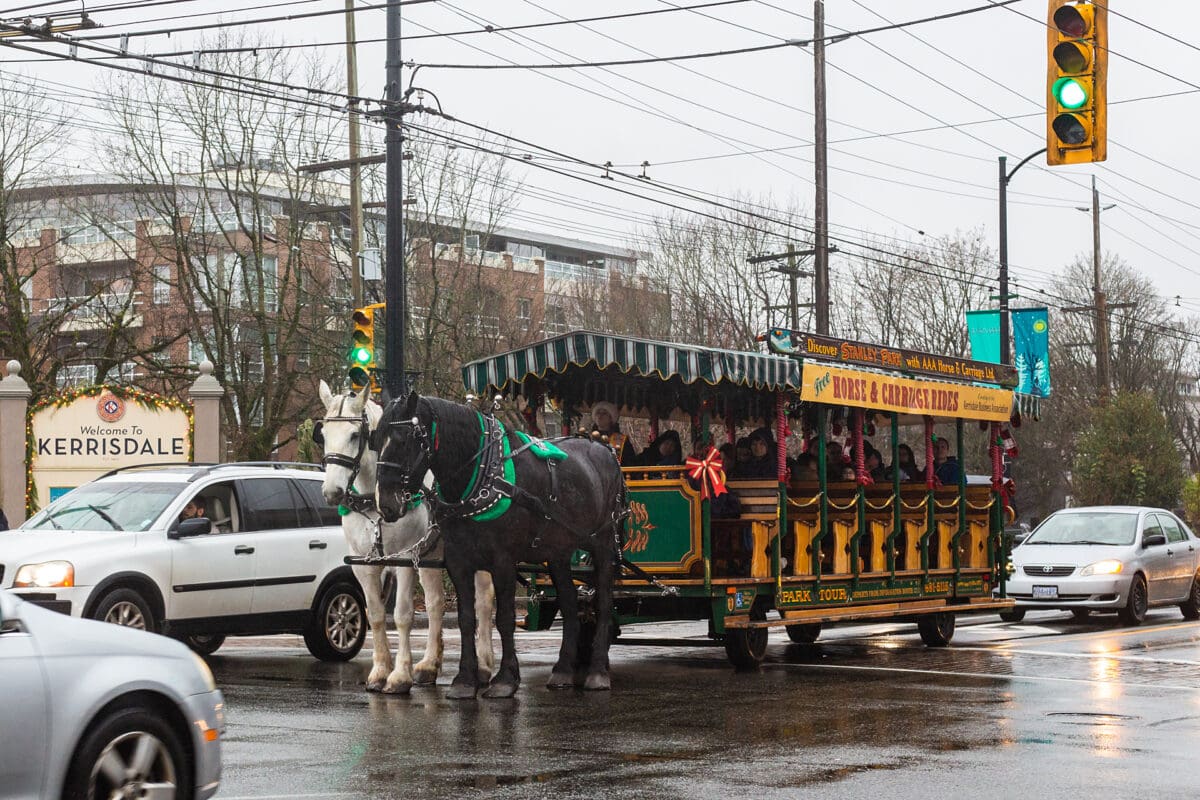
In recent years, the VHS has documented horse carriages at holiday events in busy commercial areas, such as Kerrisdale and Commercial Drive.
The footage shows recurring welfare concerns and safety risks, including:
Horses working in close proximity to moving vehicles;
Horse carriages turning across oncoming traffic at busy intersections;
Horses exposed to loud, sudden, and unpredictable noises and movement, such as sirens, car alarms, music, dogs, and bicycles;
Members of the public approaching and interacting with horses without supervision;
Horses showing possible signs of stress or agitation, including head shaking, bit chewing, and pawing.
Sign & share the petition
Join the VHS in urging Vancouver City Council to protect the well-being and safety of horses and the public by prohibiting horse-drawn carriages from busy city streets.
Season one of Fear Factor: House of Fear has ended, and a new special is set to air in May. Please scroll down for current actions and stay tuned for additional news. See the Current Campaigns page for more ways you can help animals.
A recently released Fear Factor: House of Fear episode was filmed in Metro Vancouver and involved local animal handlers.
The episode has raised serious animal welfare concerns and prompted the VHS to file cruelty complaints.
In futureepisodes yet to air, further incidents of stressful and inhumane treatment of animals are depicted.
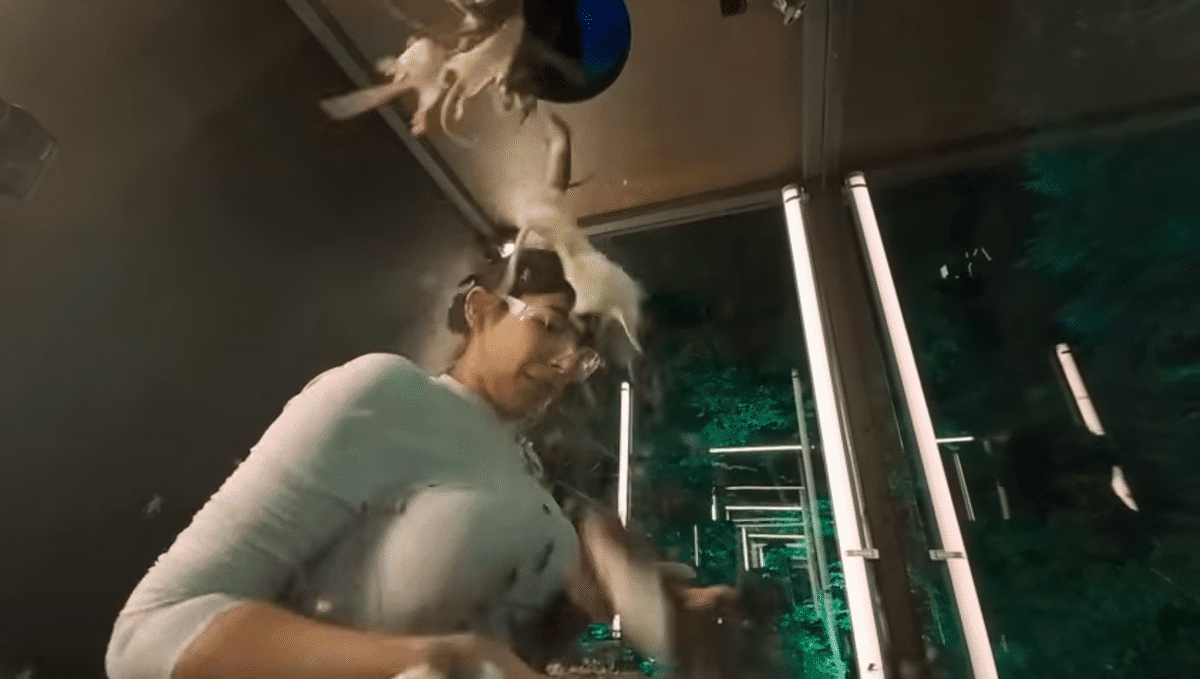
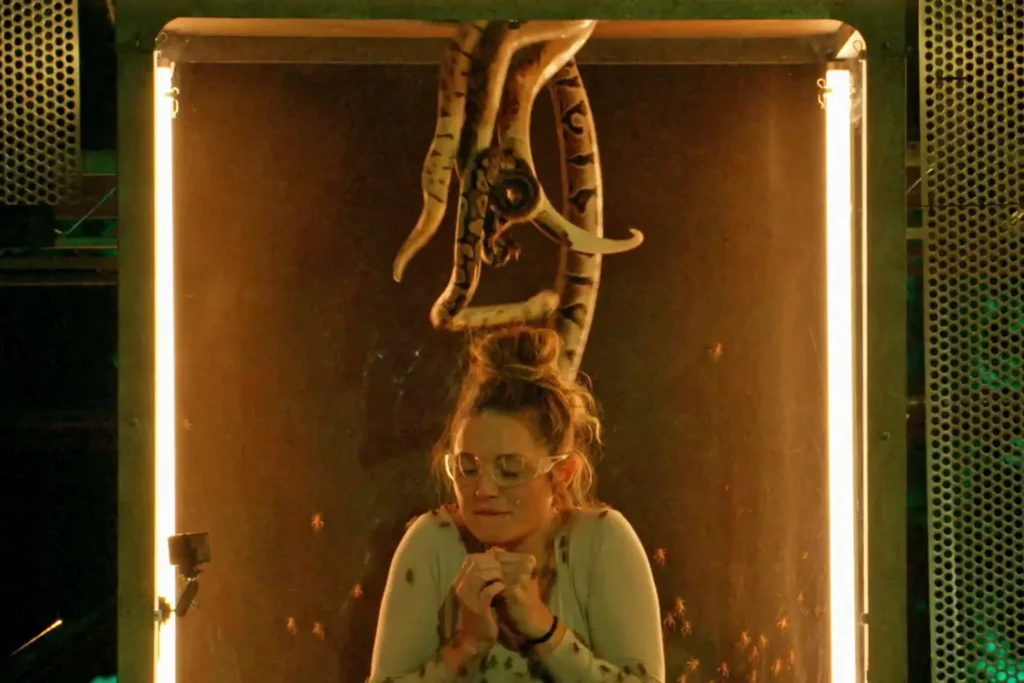
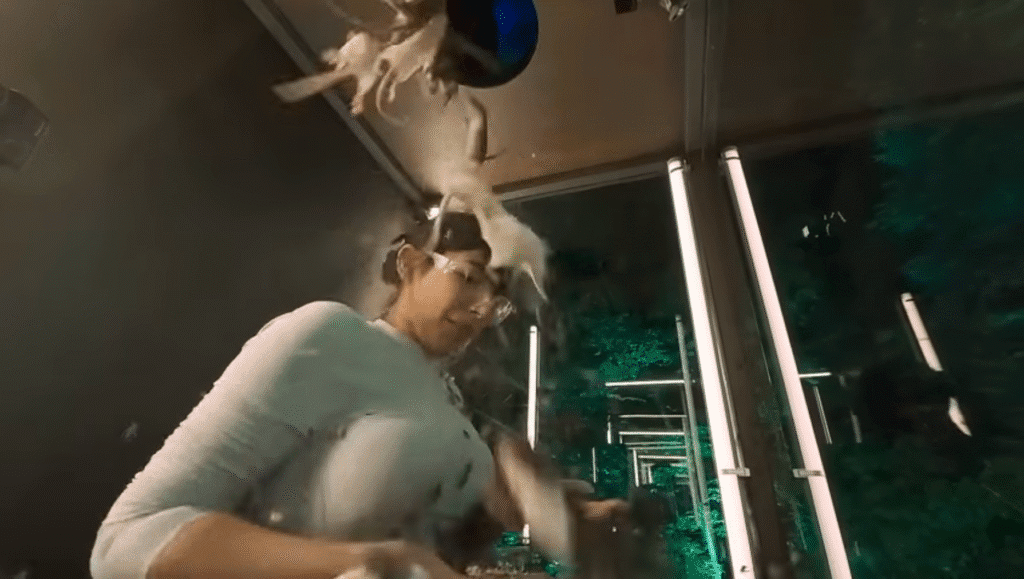
The first episode involved putting contestants in enclosed containers and dropping rats, pigeons, geckos, and snakes onto them from above.
The chaotic conditions presented a clear risk of significant stress, suffering, and injury for the animals.
Other episodes show further concerning treatment of animals, including a contestant in a closed container with snakes and a dead rat in the contestant’s mouth.
The Vancouver Humane Society (VHS) has filed a cruelty complaintwith the BC SPCA, and has written to various decision-makers, including the Canadian Broadcast Standards Council (CBSC); the show’s production company, Endemol Shine North America; and the show’s Canadian broadcaster, CTV.
The VHS is calling on CTV to stop airing Fear Factor: House of Fear.
TAKE ACTION: Join the VHS in filing complaints the show’s production company, Endemol Shine North America, and urge the show’s Canadian broadcaster, CTV, to stop airing Fear Factor: House of Fear.
Please see the update below regarding episode complaints submitted to the Canadian Broadcast Standards Council (CBSC).
Update from CBSC website: “The CBSC has received a large number of complaints concerning an episode of Fear Factor on CTV. To ensure that all complaints are dealt with efficiently and in a timely manner, the CBSC limits the number of complaints it will accept in respect of the same broadcast. The CBSC process does not vary based on the number of complaints made. The same consideration is given to one single valid complaint as to multiple complaints on the same matter. The CBSC is now dealing with the episode on CTV under its normal process. As a result, no further complaints will be accepted by the CBSC on this issue.”
Depicting animals as props in entertainment sends the wrong message about animal welfare.
Putting animals in stressful, high-risk situations is cruel and normalizes using animals for human entertainment at the expense of their welfare.
Credit: ‘Fear Factor: House of Fear.’
The practices shown contradict humane handling.
Animals are dropped into containers and onto frightened contestants and other animals, escalating panic and risk of injury. This does not model calm, careful, welfare-first handling, and it undermines the animals’ complex care needs. It’s especially troubling that local handlers would participate in, or endorse, this treatment.
Credit: ‘Fear Factor: House of Fear.’
The principles of One Health, One Welfare recognizes that human, environmental, and animal health and well-being are interconnected.
Fear Factor: House of Fear fails to uphold standards for:
Welfare: Animals and contestants are placed in highly stressful conditions without knowing what will happen next. One contestant is filmed repeatedly saying they want to leave the enclosure and is ignored, while animals cannot consent to their involvement in filming.
Health & safety: Both humans and animals are visibly distressed. Stressed animals are more likely to bite and scratch and to shed contagious viruses and pathogens that can pose a health risk to people. Concerningly, the contestant in the container with rats is filmed stating that the the rats were urinating and defecating in the enclosure, highlighting this risk. When people are in distress and afraid, they may throw or harm animals in attempts to get away from them.
Credit: ‘Fear Factor: House of Fear.’ Photo by Serguei Bachlakov VIA RealityBlurred.com
The Union of BC Municipalities (UBCM), which represents local governments across B.C., recently voted to endorse resolution NR75 – Mobile live animal programs
This resolution calls on the provincial government to regulate mobile live animal programs and to strengthen exotic animal rules.
Mobile live animal programs, such as travelling petting zoos, presentations and displays, or exotic animal events where animals can be purchased, are connected to animal welfare concerns and public health and safety risks.
2,450 messages were sent to UBCM delegates in support of resolution NR75. Thank you to everyone that advocated for stronger protections for animals!
What happens next?
This vote signals that this issue is important to municipalities across B.C. and that provincial leadership is needed to ensure the health, safety, and wellbeing of animals, people, and the environment.
Resolutions endorsed by the UBCM must be acknowledged and responded to by the provincial government.
Help us take the next step by telling the provincial government that this issue is important to you and requires provincial leadership!
TAKE ACTION: Add your name to the VHS’s campaign asking the provincial government to take meaningful action on this issue by implementing the UBCM’s recommendations.
Exotic animals are wild animals from other countries often imported to Canada through the exotic pet trade. These animals are not domesticated, even if bred in captivity, and their welfare can suffer when sold, bred, transported, or displayed. The exotic pet trade also poses risks to the environment and public health and safety.
Animal welfare issues
Mobile live animal programs (MLAPs) can take many forms, including travelling petting zoos, presentations, and expos where animals can be purchased. They involve the transport of animals to a location for display, public entertainment, or sale to the public, and feature a variety of different animals.
MLAPs often include exotic animals—wild animals from other countries imported to Canada—such as spiders, snakes, lizards, and tortoises.
Animals involved in MLAPs face many animal welfare risks, including:
Travel to and from events
The public handling of animals
Unregulated housing and breeding practices outside of events where they may face restricted movement due to lack of space
Limited behavioural opportunities
Abnormal social groupings, such as highly social animals being housed alone
Exposure to unnatural environmental conditions (lighting, temperature, substrate, sounds, odours)
The accidental or intentional release of exotic pets (e.g. when pets are no longer wanted but a new home cannot be found for them) can introduce invasive species to our ecosystems. Some invasive species who have impacted our local ecosystems include the red-eared slider turtle, goldfish, and American bullfrog.
Invasive species can threaten native wildlife, compromise habitats, and spread new diseases.
Public health & safety concerns
While the risk of disease transmission is always present when interacting with exotic animals, MLAPs increase risk due to:
The number of animals and variety of species
High amount of close human contact
Difficulties in following hygiene protocols (if present)
These risks are particularly prevalent at events marketed to children.
The transportation and frequent handling of animals at these events presents a significant risk factor for stress, and stressed animals may also be more likely to bite or scratch, compounding risks of disease transmission and physical harm.
Community impacts
Escaped or released animals and the surrender of unwanted exotic pets stress already overwhelmed shelters, rescues, and veterinary services, which may not have the resources and expertise to accommodate such a wide range of exotic species.
There have been many documented instances of escaped or released exotic pets in B.C. in recent years.
Outdated regulations leave exotic animals at risk
Currently, there are no provincial regulations in place that are specific to MLAPs and there is a lack of consistent and enforceable standards for keeping, breeding, displaying, and selling exotic pets.
B.C.’s Controlled Alien Species Regulation (CASR), introduced in 2009, has banned ownership of more than 1,000 dangerous species like tigers and venomous snakes that pose a threat to people, property, and wildlife.
However, the CASR does not address animal welfare or disease risks, making many exotic species that suffer in captivity or can spread zoonotic diseases still legal to own and trade.
Regulate mobile live animal programs to address animal welfare concerns and public health and safety risks;
Update the Controlled Alien Species Regulation to equally prioritize animal welfare considerations alongside public safety and prohibit the import of all exotic species.
TAKE ACTION: Add your name to the call to action to show your support for this resolution!
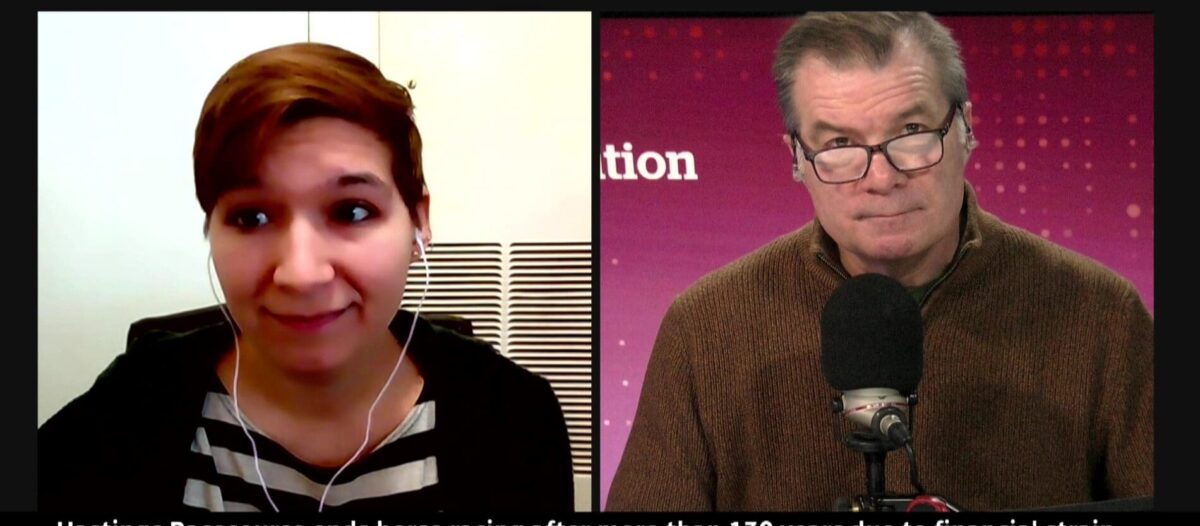
Chantelle Archambault from the Vancouver Humane Society discusses the closure of Hastings Racecourse in Vancouver, which was announced this past Friday. Originally aired on The Early Edition from CBC News; shared on The Informed Animal Ally podcast.
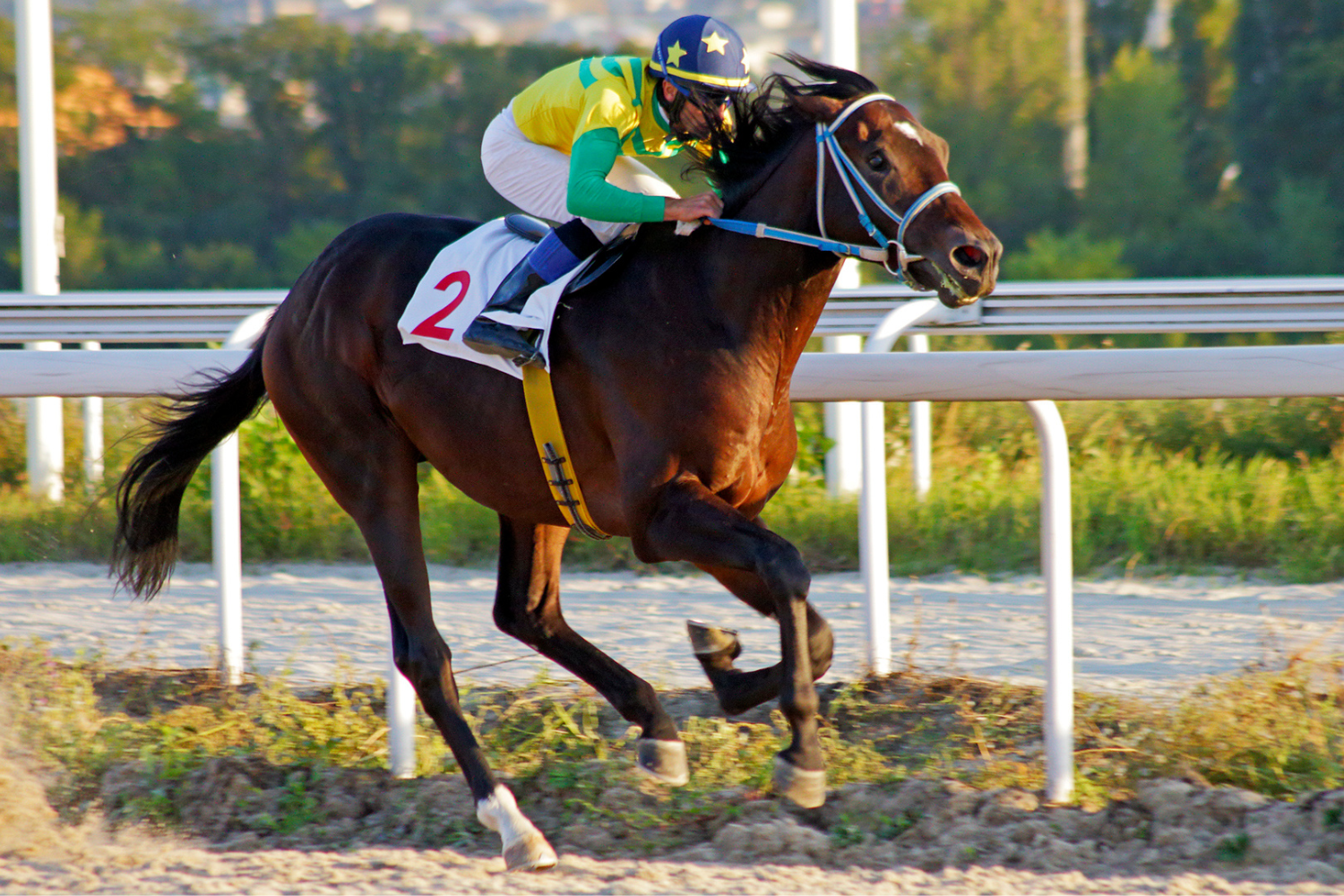
On December 5th, Hastings Racecourse announced the immediate end of horse racing at the province’s last track.
The Vancouver Humane Society’s Chantelle Archambault sat down with Stephen Quinn from The Early Edition on CBC Radio to share the VHS’s response, previous advocacy around the racetrack, and what a compassionate retirement for horses would look like. Interview shared with permission.
Stephen: Thoroughbred horse racing at Vancouver’s Hastings Racecourse is ending after more than a century. In fact, it’s been going there for about 130 years. The operator announced on Friday it will no longer run a racing season at the historic facility.
Great Canadian Entertainment, which operates the site, described the move as an extremely difficult decision. It said the decision was made because of a lack of economic feasibility to move forward with another season of horse racing.
Now, the Vancouver Humane Society released a report earlier this year highlighting the need for public subsidies to remain operational.
And joining us now is Chantelle Archambault. She is the Communications Director of the Vancouver Humane Society. Good morning to you, Chantelle.
Chantelle: Good morning. Thank you so much for having me here.
Stephen: Thanks for being with us. Your reaction to the news on Friday that the race course is shutting down after being operational for well over a century?
Chantelle: Yeah, absolutely. I mean, on on the one hand, we’re so grateful for this step toward a future where animals aren’t bred for use risky entertainment activities like horse racing.
The Vancouver Humane Society has been advocating for an end to horse racing at Hastings for many years, given the animal welfare concerns associated with the industry.
And at the same time, we recognize that it brings quite a lot of uncertainty for those connected to the horse racing industry.
We’re very hopeful that all parties, regardless of their perspective on horse racing, share a common priority of ensuring that every horse currently involved in racing is provided with safe, secure, compassionate retirement.
That’s why we’re encouraging both the provincial government and industry stakeholders to prioritize meaningfully supporting both workers and animals in transitioning away from horse racing,
Report on Hastings Racecourse
Stephen: Your organization commissioned a report earlier this year on the history of the Vancouver Hastings Racecourse. What were some of the key findings of that report?
Chantelle: We looked at both the economic and animal welfare impacts of racing.
We found that there were decades of decline at Vancouver’s Hasting Racecourse, and the track was relying on public subsidies to remain operational.
It outlines that there was decline in attendance, revenue, race days.
The race days went down from about 150 a year in the 1980s to about 45 planned for 2025.
Attendance has collapsed from about 1.1 million people in 1982 to about 150,000 in 2022.
In 2023 and 2024, the horse racing industry received about $9 million from slot machining revenue to keep it running.
So there’s been a heavy reliance on public funds to keep this industry going.
And the report also, of course, highlighted the risks that horses face in racing. At least 14 horses died at Hastings in 2023. In 2024, the fatality rate was 1.78 deaths per 1000 starts, which is well above the industry average and nearly double the rate at tracks that have stronger safety rules.
So given that, the racing industry really no longer aligns with the City of Vancouver’s priorities for public access, sustainability, economic resilience. We were recommending an end to horse racing at Hastings Park when the current operating agreement for the racetrack expires, which would have been in 2026.
Stephen: I’m sure the people who work at the track and work with horses would say that they certainly do their best to ensure the health of horses and to make sure that they stay healthy, do they not?
Chantelle: I absolutely am sure they do. It’s impossible to work with animals and not love them and care for them.
But the reality is that there were so many deaths at this track that it seems like it’s an inevitable, inherent part of the racing industry.
What’s next for the horses?
Stephen: So what will happen then to the horses now that they’re no longer competing at the racetrack?
Chantelle: It’s a great question. A responsible transition plan really means developing clear, transparent retirement pathways for every horce that’s racing.
Horses are only able to race for a fraction of their natural lifespan, so this should be a baked in part of the industry, and we are hopeful that it is. Under normal circumstances, any industry that relies on animals should already have a well-developed safety net and in place for animals who age out of the industry.
From our perspective, a good outcome would be for the horses to move out of the racing industry into an environment where they can have positive experiences, bonds, and the freedom to express their natural behaviors.
So some examples of that would be retiring to a sanctuary or therapy horses, in a setting where they can regularly have time to run free.
Declining public support
Stephen: Chantelle, is this something you see just happening here in the Lower Mainland or in British Columbia, or are we seeing a decline in in horse racing operations across North America?
Chantelle: We really only have been looking very closely at British Columbia, but I have heard whisperings that there there is a wider decline across the industry as a whole.
There’s decreasing public support for this industry. I think it’s clear that people are seeing across multiple industries that use animals and put them at risk like this, that there is a decline in public support as people learn more about animal welfare and animal sentience and learn that animals are beings who can feel pain, feel fear, feel stress, and care about their lives.
Stephen: Chantelle, we’ll leave it there this morning. Thank you so much for taking the time. We appreciate it.
Chantelle: Thank you so much for having me.
Stephen: That is Chantelle Archambault, who is the Communications Director at the Vancouver Humane Society, talking about the end of horse racing at Hastings Park after 130 years, and what will happen to the horses and all of the people who work with those horses as well.
My earliest memories of loving animals include coming home from kindergarten and watching a family of California quails in my grandmother’s backyard for hours, mystified by their sounds and quick movements. No neighbourhood cat went a day without hearing ‘hello’ and receiving a pat.
Like many people who love animals, I sought to be as close to them as possible. Throughout childhood, my family would happily indulge my love of animals by taking me to see them at places like our local zoo, aquarium and to swim with dolphins during our family vacation.
I watched elephants in their enclosures blanketed by Canadian snow, caimans unmoving and unblinking while fellow children screamed and slapped the glass of their enclosure, and dolphins brought into a small pool and instructed to remain still so we could touch them. Meanwhile, a tight discomfort formed in my chest. I was in awe of their shapes and abilities, but I could neither ignore nor understand the growing tension I felt.
When I was 18, my then-boyfriend arranged for us to take a holiday horse carriage ride—the perfect gift for an animal lover. I remember being excited to meet the horses; but when I saw the enormous ornate costumes they wore to carry us through the city, the familiar tension returned. That apprehension turned to guilt as frustrated drivers whipped around the carriage when we moved too slowly or were stopped for too long. We maneuvered through the street amidst cars speeding past in every direction, cyclists and pedestrians crossing intersections, and the growing sound of honking, yelling, dogs barking, and music from shops lining the street.
What was intended to be a relaxing holiday experience left me in a state of constant anxiety while I scanned the roads for hazards that could harm the horses or others. When the ride was over, I felt relief as I walked away. The horses in their feathered headpieces were not so lucky, I realized, as I watched the next set of riders step into the carriage.
The horses consumed my thoughts all evening: where did they stay when they weren’t working? How long did they work? Did accidents happen; and if so, how often? Did they want to be there, and how could we know if they did or did not?
I studied animal welfare science in university, where researchers tried to answer questions like these by measuring stress in animals, evaluating their environments and lifestyles, using preference tests to attempt to determine the choices animals would make if able to choose freely.
This led to a career in animal advocacy. By this time, I understood that my love of animals had led me to seek to be close to them in ways that either put animals at risk or actively caused them harm or stress, through activities the animals had never consented to. I also understood that I was probably not the only person to reckon with this feeling.
I now advocate to end many things I participated in throughout my life, before I had the foresight to consider the animals’ perspective.
This holiday season, I implore fellow animal lovers to consider the experience of animals before choosing to participate in activities, to listen to feelings of discomfort, and to show your love of animals by working toward a world that is kinder for them. You can do this by donating to non-profits that advocate for them if you are able to, or becoming an advocate yourself by signing up for email alerts to take action for animals.
If you share the feelings or concerns that I felt on my holiday horse carriage ride, the Vancouver Humane Society is currently asking the City of Vancouver to remove horse-drawn carriages from busy city streets. It’s not too late to add your voice.
Thank you for making this holiday season one of safety and compassion for all.
The Vancouver Humane Society (VHS) has learned that Vancouver’s Hastings Racecourse is ending horse racing effective immediately. This announcement follows recent government funding changes, including an end to casino slot machine revenue being provided to the horse racing industry, and declining attendance, shrinking revenues, and increasing animal welfare concerns in recent years.
A VHS-commissioned report released earlier this year highlighted decades of decline at Vancouver’s Hastings Racecourse and its dependence on public subsidies to remain operational. The report also raised concerns about the welfare of horses used in racing. Recent data illustrates the serious risks horses face. At Vancouver’s Hastings Racecourse, at least 14 horses have died since 2023. According to the B.C. Gaming & Policy Enforcement Branch, the 2024 fatality rate at Hastings reached 1.78 deaths per 1,000 starts, which is markedly higher than the North American industry average of 1.11 and nearly double the rate at tracks operating under stronger safety regulations (0.90).
This announcement marks a milestone toward a future in which animals are not bred, used, and put at risk for entertainment. At the same time, the VHS recognizes the uncertainty the decision creates for the people and animals currently connected to B.C.’s horse racing industry.
While perspectives on horse racing vary, we hope all parties share a common priority: ensuring that every horse currently involved in racing is provided with a safe, secure, and compassionate retirement. We encourage the provincial government and industry stakeholders to provide support for both workers and animals alike in transitioning away from the horse racing industry.
Nearly every year, animals continue to be injured or killed in dangerous rodeo and chuckwagon events at the Calgary Stampede.
At least 110 animals have died at the Calgary Stampede since 1986, an astonishing average of one death every 3.5 days of competition.
The Vancouver Humane Society is urging Calgary’s newly elected Mayor and Council to remove the chuckwagon races and rodeo events from the annual Stampede program.
TAKE ACTION:
Step 1: Tell Calgary’s NEW Mayor and Council toremove these inhumane and deadly animal events from the Stampede program.
Step 2: Take the #SayNoToRodeo pledge to reflect your opposition to the use of animals in rodeo events.
Check out RodeoTruth.com for more information about the rodeo and chuckwagon races at the Calgary Stampede. This public awareness project is a collaboration between the Vancouver Humane Society and concerned Calgarians.
To keep spreading the word about why the Calgary Stampede should buck inhumane animal events, follow RodeoTruth on Facebook, Instagram, YouTube, and TikTok and share the posts.
Image credit: Jo-Anne McArthur, We Animals
What happened at the 2025 Calgary Stampede?
A horse named Rider suffered a fracture to his left-front cannon bone during a chuckwagon race and was euthanized.
Video clips show the risk of injury to animals, such as a steer who was flipped over and whose neck was repeatedly twisted. Last year, a steer used in steer wrestling was euthanized due to a serious neck injury.
Footage also shows people at risk of injury, including children.
Animals are hit and roughly handled. In one clip, a handler uses a rope to agitate a bull’s neck while another person behind the scenes calls the bull obscene names.
Animals show signs of fear and stress, including widened eyes, tense open mouths, excessive salivation, thrashing in chutes, panicked behaviours, and resisting handlers.
Content warning: The following footage shows a fatal incident and animals showing signs of stress and fear.
Stress, suffering & risk of injury or death in rodeo events
Calf roping: Calves are chased, roped by the neck, abruptly stopped, and thrown to the ground, which can cause neck injuries, bruising, and stress.
Steer wrestling: Steers have their necks twisted and are slammed to the ground, risking serious injury.
Bucking events: Bulls and horses are fitted with flank straps and spurred to provoke bucking, a reaction caused by discomfort and fear.
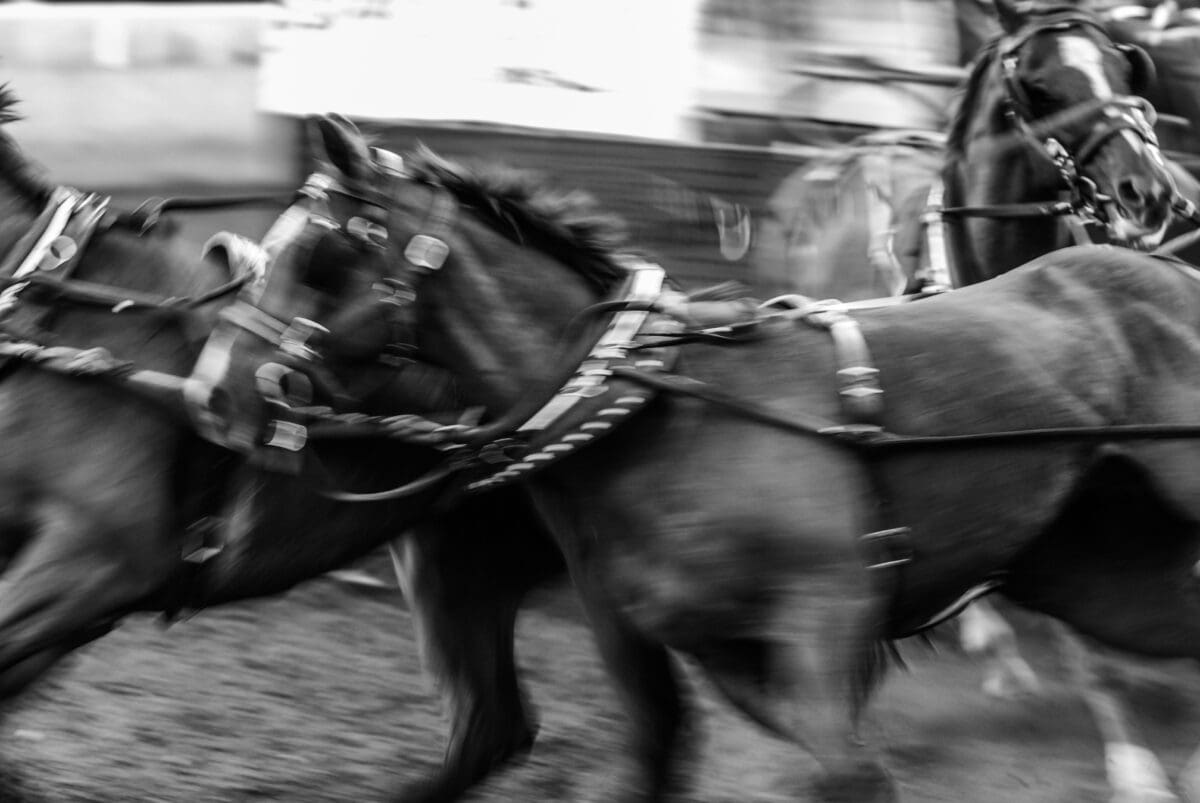
Chuckwagon races: High-speed collisions and crashes often result in catastrophic injuries and death.
In 2025, a horse was euthanized after a serious leg injury in the chuckwagon races.
In 2024, four animals died: three horses during chuckwagon races and one steer whose neck was broken in a steer wrestling event.
Despite efforts to improve safety, animal fatalities continue almost every year, demonstrating that these events are inherently dangerous.
Tools & practices that cause distress
Flank straps and spurs are used to provoke animals into fleeing and bucking.
Animals often show visible signs of fear and stress: wide eyes, drooling, open mouths, vocalizations, and defecation.
Rodeo footage often shows rough handling — hitting, kicking, tail twisting, and ear pulling.
The Vancouver Humane Society is urging the newly elected City of Calgary Mayor and Council to remove rodeo and chuckwagon events from the Calgary Stampede program by collaborating with Stampede organizers or implementing bylaws to prohibit harmful events. Cities like Vancouver, Port Moody, and the District of North Vancouver have already banned rodeos.
Public opposition to rodeo is growing
A 2022 Research Co. poll found removing rodeo and chuckwagon events would have little to no effect on Stampede attendance.
61% of Canadians and 49% of Albertans opposed the use of animals in rodeo (2022).
By 2023, opposition grew to 67% of Canadians and 53% of Albertans.
2024 polls showed majorities of Calgarians oppose calf roping, steer wrestling, bronc riding, and chuckwagon racing.
67% of Calgarians now oppose government funding for rodeos. (2024)
The Future of the Stampede
The Calgary Stampede has evolved over the decades to incorporate other attractions, including a large art festival; Indigenous performers and artists at the Elbow River Camp; the Midway rides and games; and live music featuring today’s top bands and local musicians.
It’s time to embrace a cruelty-free future that brings people together without animal suffering.
Removing these harmful events would align the Stampede with modern values of compassion and respect for animals.
Together, We Can Make a Difference
📢 Call on Calgary’s NEW Mayor and City Council to end rodeo and chuckwagon events at the Stampede!
Together, we can ensure the Calgary Stampede continues as an exciting celebration, without cruelty.
As of January 31, 2026, the B.C. Government will no longer provide casino slot machine revenue to the horse racing industry.
This marks a meaningful step toward phasing out an industry that has long depended on government funding, despite declining public interest, shrinking revenues, and ongoing concerns about the welfare of horses used in racing.
The VHS welcomes this progress while acknowledging the uncertainty for those currently involved in the horse racing industry.
Government and industry are urged to prioritize a safe, compassionate retirement for all horses and to support both workers and animals through the industry’s transition.
The cut signals what may be another nail in the coffin for B.C’s last horse track.
“Even with continued government investment from casino-generated revenue, the industry is not sustainable due to declining revenues, public participation and attendance, a letter from the province reads.”
“Government officials said the amount of slot machine income that went to the horse racing industry was about $8 to $10 million annually.”
What will happen to the horse racing industry?
While media reports state that it is unknown whether the 2026 horse racing season will go forward, statements from industry stakeholders and the B.C. government observe that declining revenues and public attendance make horse racing unsustainable in the province.
A recent VHS report outlines the high racing-related fatality rate, including at least 14 horse deaths since 2023, and the long-term decline in attendance and revenue at Vancouver’s Hastings Racecourse. The report recommends that the City of Vancouver end horse racing at Vancouver’s Hastings Park when the current Operating Agreement expires in 2026.
Slot machine revenue for Hastings Racecourse will be pulled just months before the racetrack’s lease ends with the City of Vancouver in 2026.
More than 1,500 advocates have already signed a petition calling for the lease to not be renewed, supporting an end to horse racing at B.C.’s last racetrack.
Why has the VHS been raising awareness about horse racing?
Deaths at Vancouver racecourse
Hastings Racecourse has seen a concerning pattern of horse deaths, including eight in 2023, four in 2024, and at least two between April and June 2025. In 2024, the rate of horse deaths at Hastings was 1.78 per 1,000 starts—much higher than the industry average of 1.11 and nearly double that of tracks under stricter safety rules (0.90).
Early start, lifelong harm
Most horses start training and/or racing at just 2 years old, before their bones are fully developed. This puts them at high risk for serious injuries and early decline. Thoroughbred horses are often overbred for speed rather than skeletal strength, making their legs susceptible to fatal injury.
Painful & stressful practices
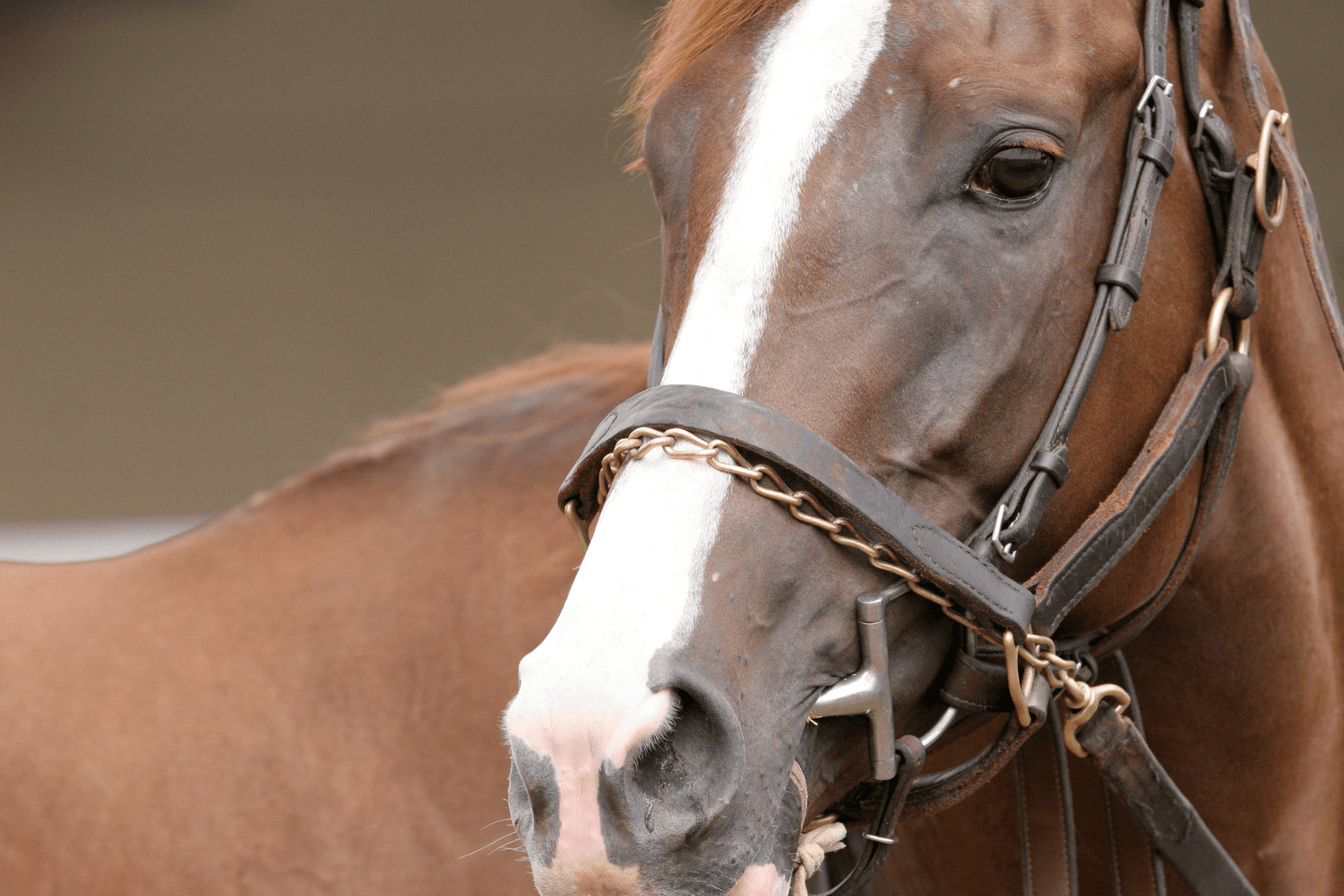
Horses often endure harsh training methods and uncomfortable equipment, like whips and tight mouth bits, that can cause stress and pain.
After 2,450 messages were sent to speak up for exotic animals and mobile live animal programs, the UBCM Executive voted to endorse resolution NR75! Please see the Current Campaigns page for more ways you can help exotic animals, including asking the B.C. government to act on the UBCM’s call for change.
In September, the Union of BC Municipalities (UBCM), which represents local governments across B.C., held its annual convention.
A resolution brought forward called on the B.C. government to regulate mobile live animal programs – such as mobile petting zoos and exotic pet expos – and strengthen rules for keeping exotic (non-native, non-domesticated) species.
More than 1,000 B.C. residents wrote to their local governments, urging them to support resolution NR75 — Mobile Live Animal Programs.
UBCM members ran out of time to vote on resolution NR75 during the convention.
The resolution will now be considered by the UBCM Executive at their quarterly meeting on November 12-14.
TAKE ACTION: Add your name to the VHS’s campaign urging the UBCM President & Executive to support protections for animals used in mobile live animal programs and to call for stronger provincial safeguards for exotic animals kept, sold, bred, or traded as pets.
Exotic animals are wild animals from other countries often imported to Canada through the exotic pet trade. These animals are not domesticated, even if bred in captivity, and their welfare can suffer when sold, bred, transported, or displayed. The exotic pet trade also poses risks to the environment and public health and safety.
Animal welfare issues
Mobile live animal programs (MLAPs) can take many forms, including travelling petting zoos, presentations, and expos where animals can be purchased. They involve the transport of animals to a location for display, public entertainment, or sale to the public, and feature a variety of different animals.
MLAPs often include exotic animals—wild animals from other countries imported to Canada—such as spiders, snakes, lizards, and tortoises.
Animals involved in MLAPs face many animal welfare risks, including:
Travel to and from events
The public handling of animals
Unregulated housing and breeding practices outside of events where they may face restricted movement due to lack of space
Limited behavioural opportunities
Abnormal social groupings, such as highly social animals being housed alone
Exposure to unnatural environmental conditions (lighting, temperature, substrate, sounds, odours)
The accidental or intentional release of exotic pets (e.g. when pets are no longer wanted but a new home cannot be found for them) can introduce invasive species to our ecosystems. Some invasive species who have impacted our local ecosystems include the red-eared slider turtle, goldfish, and American bullfrog.
Invasive species can threaten native wildlife, compromise habitats, and spread new diseases.
Public health & safety concerns
While the risk of disease transmission is always present when interacting with exotic animals, MLAPs increase risk due to:
The number of animals and variety of species
High amount of close human contact
Difficulties in following hygiene protocols (if present)
These risks are particularly prevalent at events marketed to children.
The transportation and frequent handling of animals at these events presents a significant risk factor for stress, and stressed animals may also be more likely to bite or scratch, compounding risks of disease transmission and physical harm.
Community impacts
Escaped or released animals and the surrender of unwanted exotic pets stress already overwhelmed shelters, rescues, and veterinary services, which may not have the resources and expertise to accommodate such a wide range of exotic species.
There have been many documented instances of escaped or released exotic pets in B.C. in recent years.
Outdated regulations leave exotic animals at risk
Currently, there are no provincial regulations in place that are specific to MLAPs and there is a lack of consistent and enforceable standards for keeping, breeding, displaying, and selling exotic pets.
B.C.’s Controlled Alien Species Regulation (CASR), introduced in 2009, has banned ownership of more than 1,000 dangerous species like tigers and venomous snakes that pose a threat to people, property, and wildlife.
However, the CASR does not address animal welfare or disease risks, making many exotic species that suffer in captivity or can spread zoonotic diseases still legal to own and trade.
Regulate mobile live animal programs to address animal welfare concerns and public health and safety risks;
Update the Controlled Alien Species Regulation to equally prioritize animal welfare considerations alongside public safety, and prohibit the import, keeping, breeding and transport of all exotic species.
TAKE ACTION: Sign the letter to show your support for this resolution!