Categories
News/Blog

Global momentum builds to end horse carriages on busy city streets

  • Around the world, meaningful progress is being made to end the practice of operating horse-drawn carriages on busy city streets. 
  • In Cartagena, Colombia, where the city’s historic centre is a UNESCO World Heritage site, horse carriages are being replaced with electric ones amid growing concerns about horse welfare and safety. 
  • In New York, the city’s new mayor has announced support for removing horse carriages from Central Park and working with stakeholders to end the practice. 
  • Locally, the VHS’s campaign to remove horse carriages from high traffic streets in Vancouver has gathered more than 3,000 signatures and was recently featured in the Daily Hive. The campaign has been seen more than 330,000 times on social media.

TAKE ACTION: Sign the petition urging Vancouver City Council to prohibit horse carriages from busy city streets, and if you’ve already signed, please share it to help build momentum.

Share on:

Facebook | Instagram | Bluesky

Send a quick message
Learn more

Below is a template message that will be sent to Mayor Sim & Vancouver City Council. Tip: personalize the subject and message for added impact, or send a message directly to: mayorandcouncil@vancouver.ca

Horse carriages & traffic don’t mix 

Horses are sensitive prey animals, not suited for navigating the increasingly crowded, noisy, and unpredictable streets of a modern city. Yet, Vancouver bylaws still allow horse-drawn carriages to operate on busy roads in high-traffic commercial areas throughout the city. 

These urban environments are filled with loud noises, fast-moving traffic, hard pavement, vehicle exhaust, and crowds that can easily startle horses, no matter how experienced or well-trained they are. 

Previous horse carriage incidents 

Below are a few previous incidents that show how quickly things can become dangerous for the horses and the public when horse carriages operate in busy urban spaces. 

  • Victoria, 2024: A horse is spooked after an equipment malfunction, resulting in the driver losing control of the horse, who proceeds to run and buck through an intersection. Passengers jumped out of the carriage before the horse collapsed on the concrete. 
  • Victoria, 2023: A spooked horse flees for three blocks before tripping and falling over a bike lane curb. The incident resulted in the driver being thrown from the carriage and both the driver and horse suffered minor cuts. 
  • Victoria, 2018: In downtown Victoria, a horse-drawn carriage rolled back and bumped into a bus that was following too closely. The impact caused both horses to fall, blocking traffic and requiring an emergency response. The horses remained on the ground for more than five minutes, during which members of the public attempted to assist. Those assisting were not directed to stay clear of the horses’ legs, putting themselves at risk of serious injury. 
  • Victoria, 2018: A second incident occurred only a few months later, when horses were spooked and veered off course and crashed into a parked vehicle. Witnesses reported that the horses smashed the vehicle’s windows and even climbed onto its roof with their front hooves. 
  • Vancouver, 2016: A loud car horn startled a team of horses pulling a carriage, causing them to bolt along Stanley Park’s seawall with passengers on board. The horses left the road, crossed a bike path, and smashed a park bench with the carriage before continuing for approximately 100 metres. The driver fell from the carriage, and several frightened passengers leapt off as it sped along. Multiple people were injured, and there were concerns that the horses could have plunged over the sea wall and into the water. 

Holiday event observations in Vancouver 

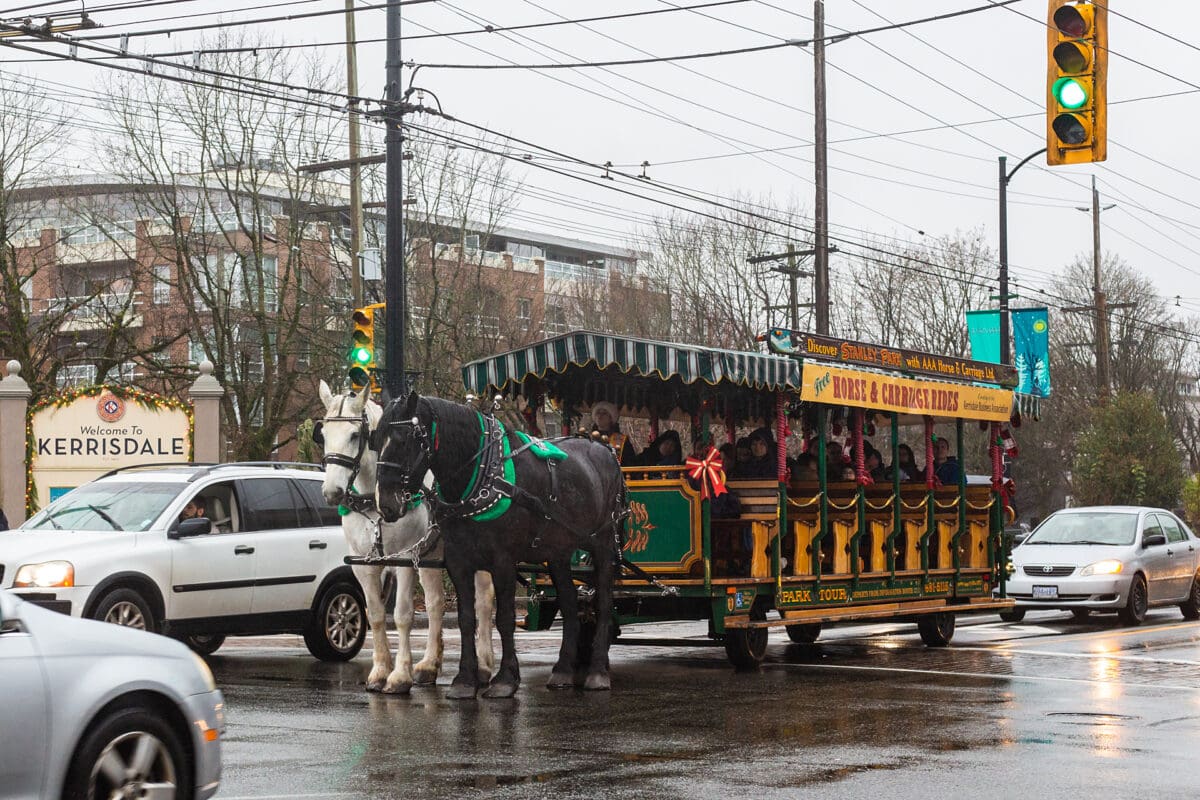
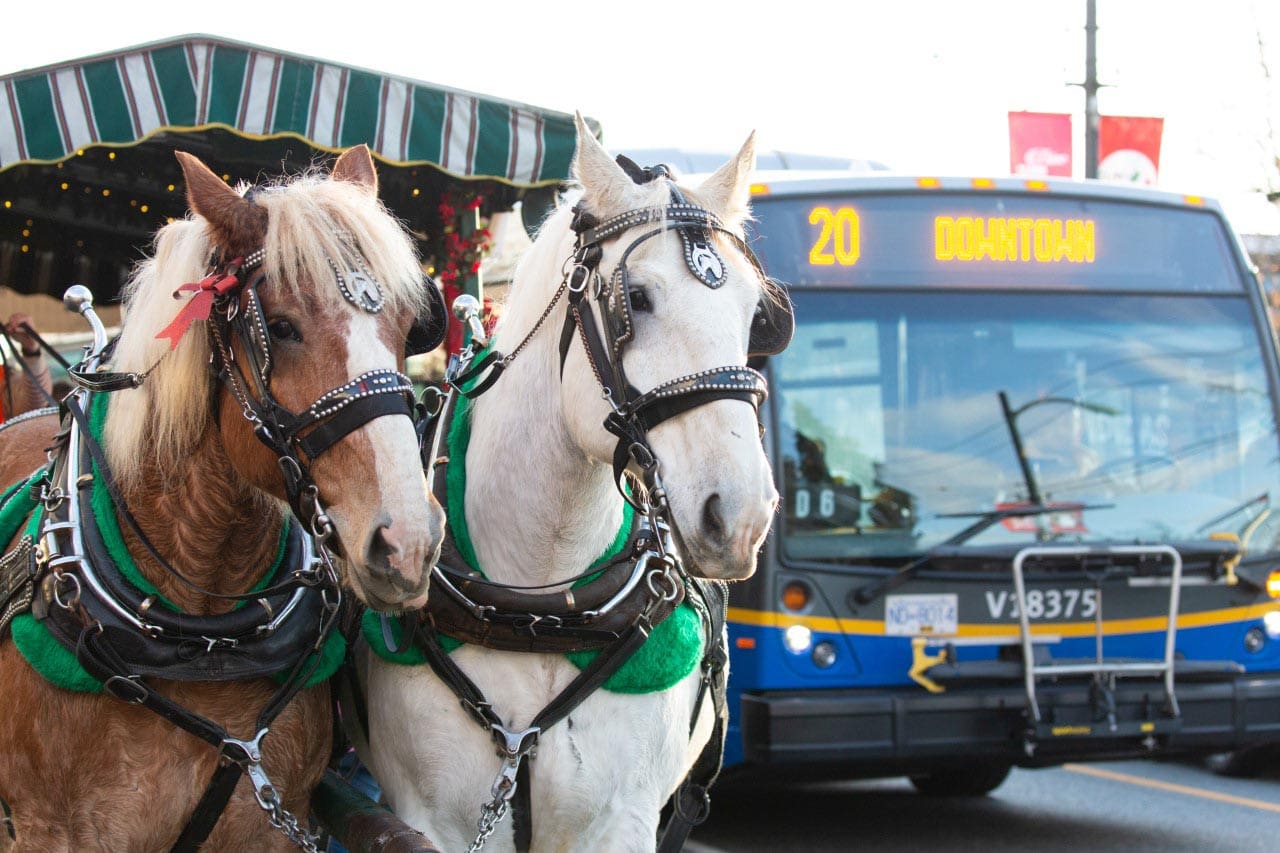
In recent years, the VHS has documented horse carriages at holiday events in busy commercial areas, such as Kerrisdale and Commercial Drive.  

The footage shows recurring welfare concerns and safety risks, including: 

  • Horses working in close proximity to moving vehicles; 
  • Horse carriages turning across oncoming traffic at busy intersections; 
  • Horses exposed to loud, sudden, and unpredictable noises and movement, such as sirens, car alarms, music, dogs, and bicycles; 
  • Members of the public approaching and interacting with horses without supervision; 

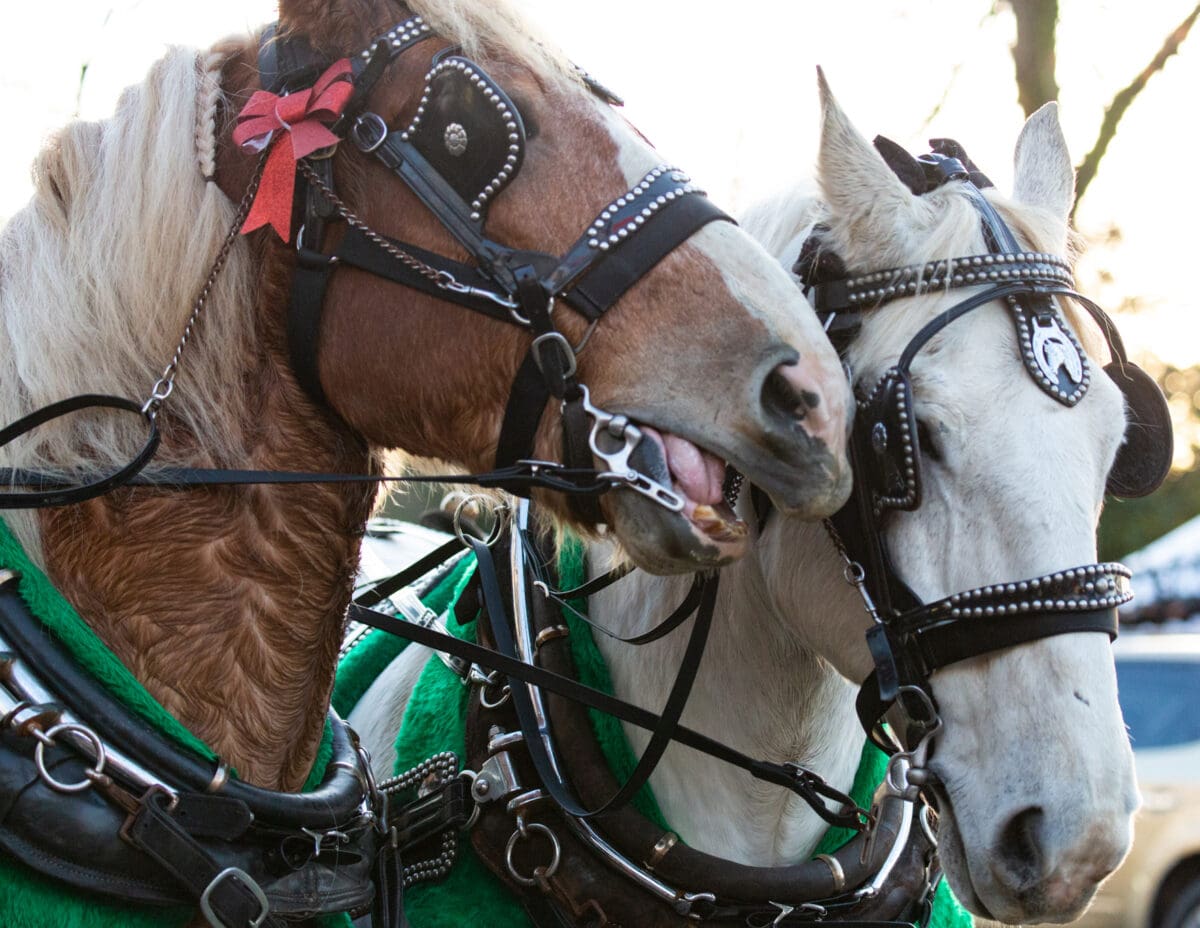
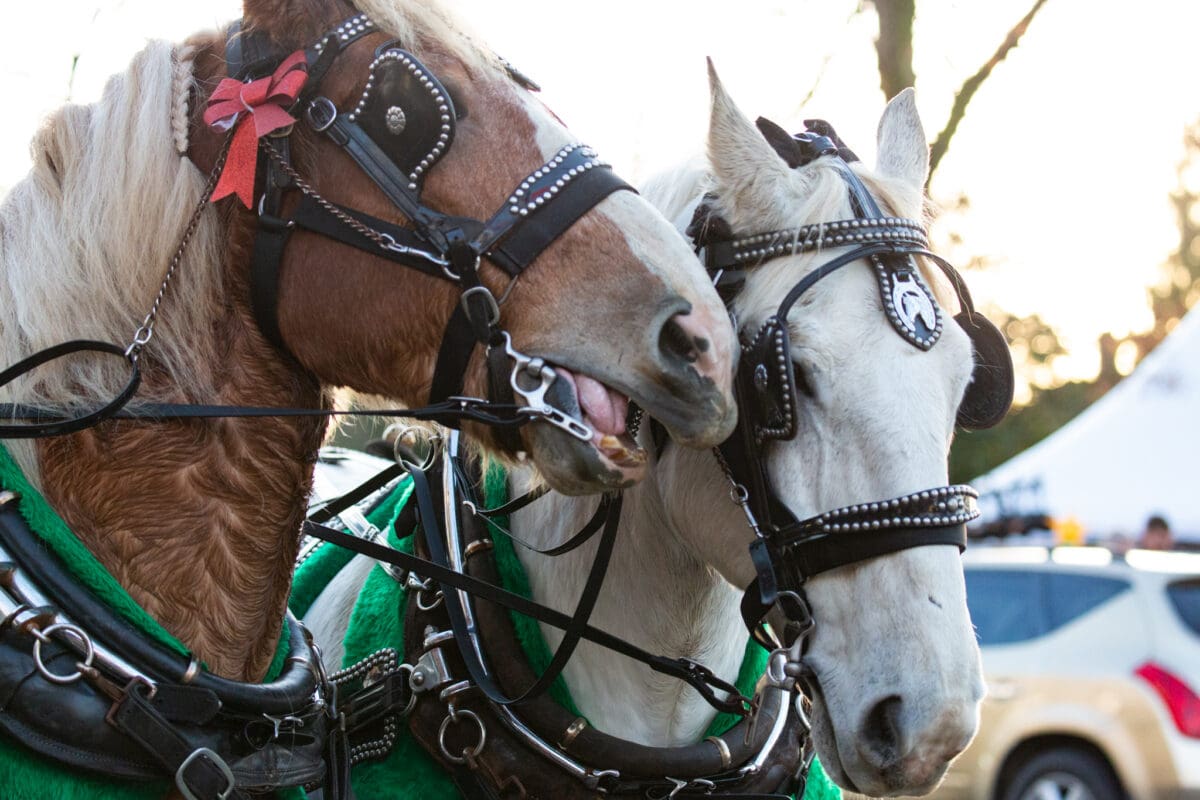
Horses showing possible signs of stress or agitation, including head shaking, bit chewing, and pawing. 

Sign & share the petition

Join the VHS in urging Vancouver City Council to protect the well-being and safety of horses and the public by prohibiting horse-drawn carriages from busy city streets.
TAKE ACTION

Categories
Opinion

Why I stopped riding in horse carriages—and started advocating against them

Article originally published in the Daily Hive. Written by Nadia Xenakis, Campaign Manager at the Vancouver Humane Society.

I stopped riding in horse carriages and started advocating against them | Urbanized

Horse carriages are a popular tourist activity, particularly around the holidays. The experience for the horses is less than ideal.

Read & comment
Learn more & take action

My earliest memories of loving animals include coming home from kindergarten and watching a family of California quails in my grandmother’s backyard for hours, mystified by their sounds and quick movements. No neighbourhood cat went a day without hearing ‘hello’ and receiving a pat.  

Like many people who love animals, I sought to be as close to them as possible. Throughout childhood, my family would happily indulge my love of animals by taking me to see them at places like our local zoo, aquarium and to swim with dolphins during our family vacation.  

I watched elephants in their enclosures blanketed by Canadian snow, caimans unmoving and unblinking while fellow children screamed and slapped the glass of their enclosure, and dolphins brought into a small pool and instructed to remain still so we could touch them. Meanwhile, a tight discomfort formed in my chest. I was in awe of their shapes and abilities, but I could neither ignore nor understand the growing tension I felt.  

When I was 18, my then-boyfriend arranged for us to take a holiday horse carriage ride—the perfect gift for an animal lover. I remember being excited to meet the horses; but when I saw the enormous ornate costumes they wore to carry us through the city, the familiar tension returned. That apprehension turned to guilt as frustrated drivers whipped around the carriage when we moved too slowly or were stopped for too long. We maneuvered through the street amidst cars speeding past in every direction, cyclists and pedestrians crossing intersections, and the growing sound of honking, yelling, dogs barking, and music from shops lining the street.  

What was intended to be a relaxing holiday experience left me in a state of constant anxiety while I scanned the roads for hazards that could harm the horses or others. When the ride was over, I felt relief as I walked away. The horses in their feathered headpieces were not so lucky, I realized, as I watched the next set of riders step into the carriage.  

The horses consumed my thoughts all evening: where did they stay when they weren’t working? How long did they work? Did accidents happen; and if so, how often? Did they want to be there, and how could we know if they did or did not?  

I studied animal welfare science in university, where researchers tried to answer questions like these by measuring stress in animals, evaluating their environments and lifestyles, using preference tests to attempt to determine the choices animals would make if able to choose freely.  

This led to a career in animal advocacy. By this time, I understood that my love of animals had led me to seek to be close to them in ways that either put animals at risk or actively caused them harm or stress, through activities the animals had never consented to. I also understood that I was probably not the only person to reckon with this feeling. 

I now advocate to end many things I participated in throughout my life, before I had the foresight to consider the animals’ perspective.  

This holiday season, I implore fellow animal lovers to consider the experience of animals before choosing to participate in activities, to listen to feelings of discomfort, and to show your love of animals by working toward a world that is kinder for them. You can do this by donating to non-profits that advocate for them if you are able to, or becoming an advocate yourself by signing up for email alerts to take action for animals.  

If you share the feelings or concerns that I felt on my holiday horse carriage ride, the Vancouver Humane Society is currently asking the City of Vancouver to remove horse-drawn carriages from busy city streets. It’s not too late to add your voice.  

Thank you for making this holiday season one of safety and compassion for all.  

Learn more & take action
Categories
News/Blog

Tell Vancouver City Council: keep horse-drawn carriages off busy city streets

  • Vancouver bylaws allow horse-drawn carriages to operate on busy city streets, putting horses and the public at risk of serious injury.  
  • The VHS has raised concern about horse-drawn carriages operating at events in busy, high-traffic commercial districts of Vancouver, such as Kerrisdale and Commercial Drive.  
  • These urban environments are dangerous and can be stressful for horses due to traffic, noise, pollution, and unpredictable surroundings.  
  • Cities like Montreal, Chicago, and Salt Lake City have already banned or restricted horse-drawn carriages for similar reasons.

SIGN THE PETITION: Urge Vancouver City Council to protect horses and the public from these risks by prohibiting horse-drawn carriages from busy city streets.

Sign the Petition
Learn More

Learn more

Horses are sensitive, social animals, not suited for navigating the increasingly busy, noisy, and unpredictable streets of a modern city. Yet, Vancouver bylaws still allow horse-drawn carriages to operate on busy roads in high-traffic commercial areas throughout the city.

These urban environments are filled with loud noises, fast-moving traffic, hard pavement, vehicle exhaust, and crowds that can easily startle horses, no matter how experienced or well-trained they are. The physical and mental toll on horses, especially from noise sensitivity, air pollution, and walking on hard concrete for hours, cannot be overlooked.

Growing public concern

Despite growing concerns, existing bylaws do not address the safety and welfare issues that carriage horses face in busy city environments.

In 2020, nearly 7,000 people signed a petition urging the Vancouver Park Board to remove horse-drawn carriages from Stanley Park, showing that public concern around this outdated practice is strong and growing.

In recent years, incidents in Vancouver, Victoria, and Montreal have underscored the risks associated with horse-drawn carriages in busy urban environments. Horses have bolted after being spooked, fallen on slippery streets, and collided with traffic. Cities across North America, including Montreal, have since chosen to ban or restrict horse-drawn carriages to prevent further harm.

Previous Incidences

Vancouver – Stanley Park

2016: A team of horses pulling a carriage was startled by a car horn and bolted along the Stanley Park seawall with passengers on board. The horses crossed a bike path, smashed a bench, and ran for approximately 100 metres. Multiple people were injured, including the driver who fell from the carriage.

Source: YouTube – CTV News footage of the incident.

Victoria – Downtown

2018: A horse-drawn carriage rolled back into a BC Transit bus that was following too closely. The impact caused both horses to fall and block traffic. They remained on the ground for over five minutes, and bystanders attempted to help, putting themselves at risk. Just months later, another carriage horse team was spooked and crashed into a parked car. Witnesses reported smashed windows and that the horses climbed onto the vehicle’s roof with their front hooves.

Source: YouTube video of the incident.

2023: A carriage horse tripped over a bike lane curb and fell after being spooked when its bridle caught on a railing following a tour. The driver was thrown from the carriage, which became stuck halfway in the bike lane, and sustained a minor cut to the head. 

Source: Times Columnist

2024: A carriage horse is spooked after an equipment malfunction, resulting in the driver losing control of the horse, who proceeds to run and buck through an intersection. Passengers jumped out of the carriage before the horse collapsed on the concrete.

Source: Saanich News article

Holiday Event Observations in Vancouver

In recent years, the Vancouver Humane Society (VHS) has monitored and documented several holiday events in Vancouver where horse-drawn carriages were used in busy commercial areas like Kerrisdale and Commercial Drive.

These events revealed patterns of concern, including:

  • Carriages turning across oncoming traffic at intersections
  • Loud and unpredictable noises (car alarms, ambulance sirens, music, dogs, bikes)
  • Members of the public approaching horses without supervision
  • Horses operating dangerously close to moving traffic
  • Horses showing potential signs of stress or agitation (e.g. head shaking, bit chewing, pawing)

Source: VHS Youtube Compilation

Together, We Can Make a Difference

SIGN THE PETITION: Urge Vancouver City Council to protect the well-being and safety of horses and the public by prohibiting horse-drawn carriages from busy city streets.
TAKE ACTION

Categories
News/Blog

Vancouver park board staff considers removing horse carriages from Stanley Park

  • A recent report from Vancouver park board staff includes a consideration for removing “animal-powered transportation” from Stanley Park.
  • For years, the VHS has called for the removal of horse-drawn carriages from the park.
  • The use of carriages in crowded urban environments poses a risk to horses and the public. Horses endure regular exposure to traffic, noise and pollution; long hours of standing and walking on hard surfaces; and hard labour under sometimes extreme weather conditions.
  • Other jurisdictions, such as the City of Montreal, have banned horse-drawn carriages due to animal welfare concerns and incidents.

Read media coverage on the report and the VHS’s campaign below. Stay tuned for updates!

Six-storey parkade among ideas for Stanley Park’s future

Park board staff are giving commissioners dozens of options to manage traffic in the park

“Vancouver park board commissioners will be asked to weigh up dozens of possible options to reduce the number of cars entering Stanley Park each year.”

“The document includes an option for removing ‘animal-powered transportation’ in the park.”

“The Vancouver Humane Society has a campaign to have the Stanley Park Horse-Drawn Tours business removed from the park.”

“‘Being surrounded by motor vehicle traffic forces horses to inhale toxic exhaust and causes them mental distress, which can make the animals unpredictable and potentially dangerous to park pedestrians, cyclists and motor vehicles,’ the society states.”

Read article
Contact the Park Board
Categories
News/Blog

Stanley Park

Update

This action has now ended. Thank you to the 6,910 advocates who used the quick action to call an end to horse-drawn trolleys in Stanley Park. Please see the Current Campaigns page for more ways you can help protect horses and other animals.

Stanley Park’s horse-drawn trolley is a tragic accident waiting to happen.

Let the Park Board know you support removing the trolley

In 2016, horses pulling a tram full of tourists through Vancouver’s famous Stanley Park were spooked by traffic. The frightened animals bolted off the roadway, crossing a bike path and smashing a park bench before nearly taking the tram over the seawall.

Stanley Park horses spooked by car horn take tourists on wild ride

Some tourists in Vancouver’s Stanley Park went for an unexpected ride after a pair of horses pulling a carriage were spooked during an anti-pipeline protest. The carriage was stopped for protesters when a car sounded a horn and scared the horses. The animals jumped the curb, pulling the carriage into a bench and throwing one woman off.

Fortunately, no horses or people were seriously hurt, however, such incidents could easily occur in the future. Stanley Park’s horse-drawn tram is a tragic accident waiting to happen.

Being surrounded by motor vehicle traffic forces horses to inhale toxic exhaust and causes them mental distress, which can make the animals unpredictable and potentially dangerous to park pedestrians, cyclists and motor vehicles. There are also concerns about traffic being slowed in the lane currently allocated to motor vehicles, leading to motorists unsafely passing the tram in the lane allocated to cyclists.

Many cities, including Montreal, have banned such vehicles. It’s time for Vancouver to do the same.

The Vancouver Humane Society and UBC Animal Justice have sent a letter to Park Board Commissioners calling on them to end the horse-drawn tram in Stanley Park and put the safety of the horses, cyclists, and motorists first.

You can help prevent a tragic accident from happening – sign the petition now.

How you can help

Say no to horse-drawn trolleys in Stanley Park

This action has now ended.

6,910 people used this tool to call on the Park Board to remove horse-drawn trolleys from Stanley Park. Thank you for taking action.

See more campaigns

Categories
Media Release

Vancouver Humane Society says horse carriage rides in Stanley Park are unsafe

Vancouver – The Vancouver Humane Society (VHS) is commenting on the controversy over the traffic problem caused in Stanley Park by horse-drawn carriages. The society says the carriages not only create a risk to public safety but also compromise the horses’ welfare.

This week, the operator of the carriage horse rides was quoted in media stating that conducting rides under a new traffic configuration in the park was an “accident waiting to happen.” 

But VHS points out that a near-disastrous incident involving a runaway carriage took place in 2016, when spooked horses left the roadway and came close to falling off the seawall.

“The horse carriages have always been an accident waiting to happen, whatever the traffic arrangement in the park,” said VHS spokesperson Peter Fricker. “Now is the opportunity for the City to listen to local residents and prioritize safety, ensuring the increase in cycle traffic is adequately accommodated.”

Fricker said the current temporary arrangement, which provides one lane for motorists and another for cyclists might be a reasonable compromise but putting horse carriages in the mix appears unworkable. “If the new traffic pattern gives much-needed access to the park to both motorists and cyclists, it would be a shame to scrap it because of one business putting public and animal safety at risk unnecessarily.”

VHS opposes carriage horse rides in the city because of the dangers of the horses’ close proximity to traffic, the exposure to noise and pollution and long hours standing in all weather conditions.

-ends-