Categories
News/Blog

UPDATE: UBCM Executive to vote on mobile live animal programs & exotic pet regulations

Success!

After 2,450 messages were sent to speak up for exotic animals and mobile live animal programs, the UBCM Executive voted to endorse resolution NR75! Please see the Current Campaigns page for more ways you can help exotic animals, including asking the B.C. government to act on the UBCM’s call for change.

  • In September, the Union of BC Municipalities (UBCM), which represents local governments across B.C., held its annual convention.
  • A resolution brought forward called on the B.C. government to regulate mobile live animal programs – such as mobile petting zoos and exotic pet expos – and strengthen rules for keeping exotic (non-native, non-domesticated) species.
  • More than 1,000 B.C. residents wrote to their local governments, urging them to support resolution NR75Mobile Live Animal Programs.
  • UBCM members ran out of time to vote on resolution NR75 during the convention.
  • The resolution will now be considered by the UBCM Executive at their quarterly meeting on November 12-14.

TAKE ACTION: Add your name to the VHS’s campaign urging the UBCM President & Executive to support protections for animals used in mobile live animal programs and to call for stronger provincial safeguards for exotic animals kept, sold, bred, or traded as pets.

Tell UBCM Executive to vote YES to NR75
Learn More

This action has now ended.

2,450 messages were sent using the quick action tool to support UBCM resolution NR75. Thank you for taking action.

See more campaigns

Learn more

Exotic animals are wild animals from other countries often imported to Canada through the exotic pet trade. These animals are not domesticated, even if bred in captivity, and their welfare can suffer when sold, bred, transported, or displayed. The exotic pet trade also poses risks to the environment and public health and safety.  

Animal welfare issues

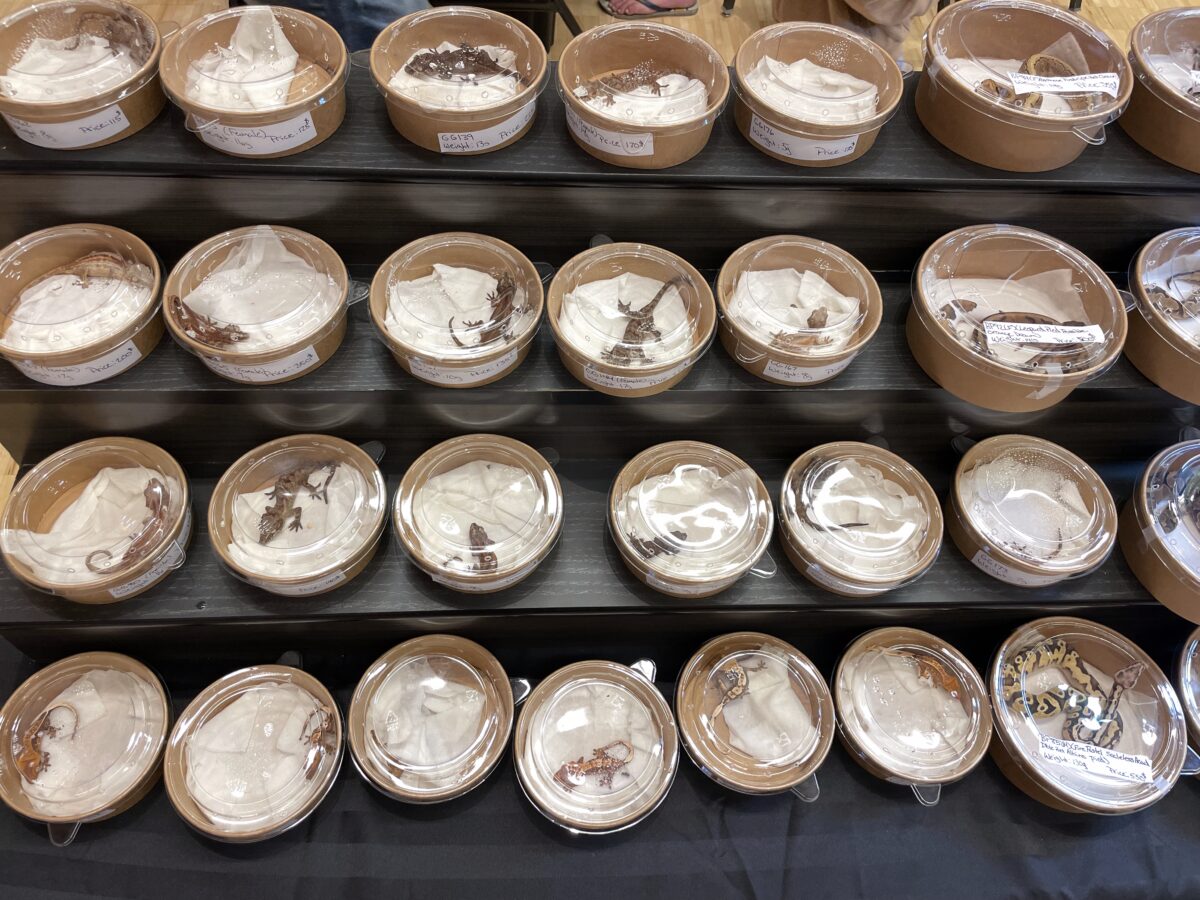
Mobile live animal programs (MLAPs) can take many forms, including travelling petting zoos, presentations, and expos where animals can be purchased. They involve the transport of animals to a location for display, public entertainment, or sale to the public, and feature a variety of different animals.

MLAPs often include exotic animals—wild animals from other countries imported to Canada—such as spiders, snakes, lizards, and tortoises.    

Animals involved in MLAPs face many animal welfare risks, including:

  • Travel to and from events
  • The public handling of animals
  • Unregulated housing and breeding practices outside of events where they may face restricted movement due to lack of space
  • Limited behavioural opportunities
  • Abnormal social groupings, such as highly social animals being housed alone
  • Exposure to unnatural environmental conditions (lighting, temperature, substrate, sounds, odours)

Environmental risks

The accidental or intentional release of exotic pets (e.g. when pets are no longer wanted but a new home cannot be found for them) can introduce invasive species to our ecosystems. Some invasive species who have impacted our local ecosystems include the red-eared slider turtle, goldfish, and American bullfrog.  

Invasive species can threaten native wildlife, compromise habitats, and spread new diseases.   

Public health & safety concerns

While the risk of disease transmission is always present when interacting with exotic animals, MLAPs increase risk due to:

  • The number of animals and variety of species
  • High amount of close human contact
  • Difficulties in following hygiene protocols (if present)

These risks are particularly prevalent at events marketed to children.

The transportation and frequent handling of animals at these events presents a significant risk factor for stress, and stressed animals may also be more likely to bite or scratch, compounding risks of disease transmission and physical harm. 

Community impacts

Escaped or released animals and the surrender of unwanted exotic pets stress already overwhelmed shelters, rescues, and veterinary services, which may not have the resources and expertise to accommodate such a wide range of exotic species.

There have been many documented instances of escaped or released exotic pets in B.C. in recent years.

Outdated regulations leave exotic animals at risk

Currently, there are no provincial regulations in place that are specific to MLAPs and there is a lack of consistent and enforceable standards for keeping, breeding, displaying, and selling exotic pets.  

B.C.’s Controlled Alien Species Regulation (CASR), introduced in 2009, has banned ownership of more than 1,000 dangerous species like tigers and venomous snakes that pose a threat to people, property, and wildlife.

However, the CASR does not address animal welfare or disease risks, making many exotic species that suffer in captivity or can spread zoonotic diseases still legal to own and trade. 

UBCM resolution NR75 – Mobile Live Animal Programs calls on the B.C. government to:

  • Regulate mobile live animal programs to address animal welfare concerns and public health and safety risks; 
  • Update the Controlled Alien Species Regulation to equally prioritize animal welfare considerations alongside public safety, and prohibit the import, keeping, breeding and transport of all exotic species. 

TAKE ACTION: Sign the letter to show your support for this resolution!
ADD YOUR VOICE
Categories
News/Blog

Tell your local leaders: Support stronger exotic pet & mobile animal program rules

Update

This action has ended. Thank you to everyone who sent a message to their local decision-makers and spoke up for animals. Please stay tuned for updates and go to this page for current campaigns.

  • B.C. residents: Please call on your local government to endorse a resolution seeking stronger protections for exotic animals and animals used in mobile programs.
  • The Union of BC Municipalities (UBCM), which serves as the voice for local governments across B.C., will be meeting for their annual convention Sept 22-26 in Victoria.
  • UBCM members will consider a resolution calling on the B.C. government to regulate mobile live animal programs (MLAPs) and update regulations relating to exotic (non-native, undomesticated) species.
  • The UBCM resolution (pg. 173 of Resolutions Book) was put forward by Port Moody Council following a Port Moody decision earlier this year to prohibit MLAPs, such as mobile petting zoos.
  • Port Moody’s decision was a result of animal welfare, environmental, public health and safety, and educational concerns associated with MLAPs. 

TAKE ACTION: Use the quick message tool below to urge your local government to endorse the UBCM resolution seeking stronger protections for animals transported for public display, handling, or sale and for updated regulations related to the import, keeping, breeding, and transport of all exotic species.

Send a quick message
Learn more

The resolution seeks to:

  1. Regulate mobile live animal programs (MLAPs), which can “create distress for animals and introduce risks of zoonotic disease transmission and injury for people and other animals” as they transport animals for public display, handling, or sale.
  2. Update the Province’s Controlled Alien Species Regulations to equally prioritize animal welfare considerations alongside public safety, and prohibit the import, keeping, breeding and transport of exotic species.

Use the template message to ask your local leaders to back the UBCM resolution.

This action has now ended.

1,327 people used this tool to support stronger regulations for animals used in mobile live animal programs and exotic animals kept as pets. Thank you for taking action.

See more campaigns

Learn more

What are mobile live animal programs? 

Mobile live animal programs (MLAPs) can take many forms, including travelling petting zoos, presentations, and expos. They involve the transport of animals to a location for display, public entertainment, or sale to the public, and feature a variety of different animals. MLAPs often include exotic animals (wild animals not native to B.C.), such as spiders, snakes, lizards, and tortoises.  

Concerns regarding MLAPs include: 

  • Frequent, and at times long-distance, transport of animals to events; 
  • Small, barren enclosures with little to no opportunity for natural behaviours or the ability to escape the view of the public and other animals; 
  • Frequent public handling, increasing risk of injury and disease spread; 
  • Lack of educational value and the risk of perpetuating misconceptions about animal care and needs. 

What are the issues with keeping exotic animals as pets? 

  • Animal welfare: Exotic animals (wild animals not native to B.C.), even if they are born in captivity, still have the same complex needs they would in the wild. It’s extremely difficult to recreate their natural environment in captivity, and when those needs aren’t met, the animals often suffer. 
  • Public health & safety concerns: Approximately 75% of emerging infectious diseases are zoonotic, meaning they can spread from animals to humans. In the last decade, there have been seven documented disease outbreaks in B.C. linked to the exotic pet trade, four of which occurred in 2023 and 2024 and were associated with snakes, lizards, and geckos. 
  • Ecological threats: Escaped or released pets can become invasive species, displacing native wildlife, threatening habitats, and spreading new diseases. 
  • Community impacts: Escaped or released animals and the surrender of unwanted exotic pets strain already overwhelmed shelters, rescues, and veterinary services. There have been many documented instances of escaped/released exotic pets in B.C. in recent years. 
Read or listen

Categories
News/Blog

Update: Speaking up for sled dogs and wild animals in captivity


Update

This action has now ended. Thank you to the 518 advocates who used the quick action to ask their MLA to speak up for animals in captivity and sled dogs. Please see the Current Campaigns page for more ways you can help wild animals in captivity and animals used in entertainment.

This summer, the VHS ramped up calls for changes to B.C.’s regulations on two key animal welfare issues: sled dogs and wild animals in captivity. All B.C. residents can help by raising these two animal welfare issues with their MLA in a call or meeting.

You don’t need to be an expert on either of these topics to make an impact. Instead, what’s important is that they hear why these issues matter to you. You can ask them to raise the issues, along with the VHS’s recommendations, with the relevant B.C. Ministers.

Provincial decision-makers have previously noted that the regulations for both issues are due for review, without a timeline for action. The VHS has provided clear recommendations for how the regulations need to be updated to better protect animal welfare, but action continues to be delayed and animals continue to suffer as a result.

As MLAs return to parliament this fall, the VHS will continue to advocate for wild and exotic animals in captivity and sled dogs in the commercial sled dog industry.

Can you help by engaging with your MLA on these animal welfare issues? To find your MLA’s contact information, head to the Legislative Assembly of British Columbia website and enter your postal code.

Find my MLA

Short on time? Use the quick email tool to send a message to your MLA today!

This action has now ended.

518 people used this tool to call on their MLA to speak up for animals. Thank you for taking action.

See more campaigns


Commercial sled dog industry

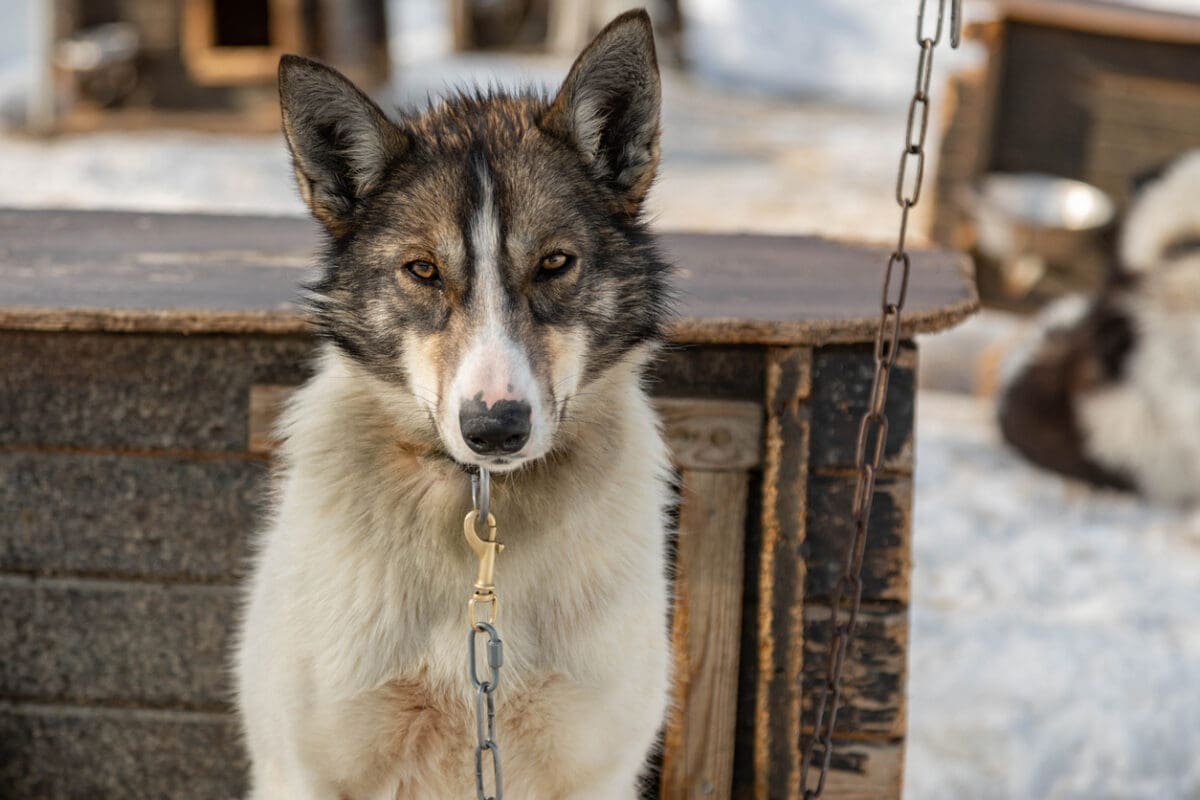
Under B.C.’s current sled dog regulations, sled dogs can be tethered for lengthy periods of time and sled dog tour companies are allowed to shoot surplus dogs, so long as the operator has made reasonable efforts to try to rehome the sled dog.

 
Recommendations on sled dogs


Wild and exotic animals in captivity

Meanwhile, B.C.’s outdated wild and exotic animal captivity regulations allow for many species to be kept as pets or in captive facilities, despite the difficulty in meeting their complex physical and psychological needs. Numerous incidents in recent years at the Greater Vancouver Zoo, including the escape of wolves from the zoo this summer which tragically resulted in the death of one wolf, reiterate the urgent need for updating the province’s regulations.

 
Recommendations on animals in captivity
“Think about the worst thing you think could happen to an animal in Canada … I guarantee that what’s out there is a thousand times worse.”
Rob Laidlaw, Zoocheck founder
Tweet

The VHS was recently joined by Zoocheck founder Rob Laidlaw to share his decades of experience advocating for the well-being of animals. Read or listen to the discussion on the VHS’s exclusive podcast, The Informed Animal Ally.

 
Learn more about captivity laws & practices


Categories
News/Blog

Call on your B.C. MLA to act for sled dogs and wild animals in captivity

Update

This action has now ended. Thank you to the 452 advocates who signed up to receive the MLA engagement guide. Please see the Current Campaigns page for more ways you can help animals used in entertainment.

Speak up for sled dogs & wild animals in captivity

The government has so far been inactive on the VHS’s recommendations to improve laws for sled dogs and wild animals in captivity. Will you ask your MLA to speak up to change the laws? Take action now!

Sled dogs & wild animals in captivity need your help

Wild, exotic animals confined in captivity and dogs suffering in the commercial sled dog industry are two issues that the provincial government has acknowledged are on their ‘to-do list’; but action continues to be delayed and animals suffer in the meantime.

Here’s where YOU come in! By contacting your B.C. MLA, you can help ensure these crucial animal welfare issues are acknowledged as a priority for the provincial government.

You don’t need to be an expert on either of these topics. Instead, what’s important is that they hear why these issues matter to you; what your concerns are; and that you want them to raise the issues, along with the VHS’s recommendations, with the relevant B.C. Ministers.

The VHS put together a step-by-step guide to help engage your MLA and is here to support you along the way. Sign up to receive your MLA engagement guide and get in touch with your MLA today!

Sign up below to get your MLA engagement guide

This action has now ended.

452 people signed up to receive the MLA engagement guide. Thank you for taking action.

See more campaigns

Ask your MLA to speak up for:

1) Wild and exotic animals in captivity

Wild and exotic animals (animals not native to B.C.) kept in captivity have complex needs that aren’t being met in cages and tanks and that are crucial for their physical and mental well-being.

In captivity, these animals are are cut off from exploring new territory with engaging sights and smells. They are often kept alone or in unnatural social groups, with the inability to escape from other animals they don’t get along with. They are also unable to engage in many behaviours that are natural to them, including hunting. As a result, captive wild and exotic animals often show signs of stress, boredom, and even aggression.

Many wild and exotic animals are legally kept in captivity throughout B.C., including:

  • kept in zoos and aquariums with enclosures a fraction of the size of their natural home range
  • kept in poor conditions by animal rental agencies for use in TV, film and events
  • suffering as a result of inadequate housing, nutrition and care when kept as pets

The VHS has been documenting the conditions of animals at the Greater Vancouver Zoo and Vancouver Aquarium for years.

The video below illustrates the need for changes to B.C.’s rules around wild and exotic animals in captivity.

Wild and exotic animals are suffering in captivity in British Columbia

Wild and exotic animals are suffering in captivity in British Columbia as a result of outdated regulations. Learn more and take action: https://vancouverhumanesociety.bc.ca/?p=26184

2) Sled dogs in commercial sled dog tourism industry

In the commercial sled dog tourism industry are often kept chained outdoors for prolonged periods of time, with little opportunity to exhibit natural behaviours or socialize. When they can no longer be used by the industry, they are subjected to inhumane methods of euthanasia.

Undercover investigations and whistleblowers have shared evidence of:

  • dogs pacing repetitively
  • dogs chained in barren yards with access to dog houses that provide little protection from the heat and cold
  • stories of dogs being euthanized inhumanely, including by gunshot

In fact, B.C.’s current Sled Dog Standards of Care allow for sled dogs to be tethered or caged for prolonged periods of time, as they are only required to be released once a day and there are no requirements for how long. Sled dog tour companies are permitted to shoot surplus sled dogs, so long as the operator has made reasonable efforts to try to rehome the sled dog.

The video below, from B.C.-based tour companies, highlights the need to update the province’s sled dog regulations.

Sled dogs are still suffering in British Columbia

Sled dogs in British Columbia are still suffering as a result of outdated regulations. Learn more and take action: https://vancouverhumanesociety.bc.ca/?p=26184

Unable to meet or speak with your MLA, but still want to take action?

Get in touch with VHS at info@vancouverhumanesociety.bc.ca for a quick way to call on your MLA to take action on these issues.