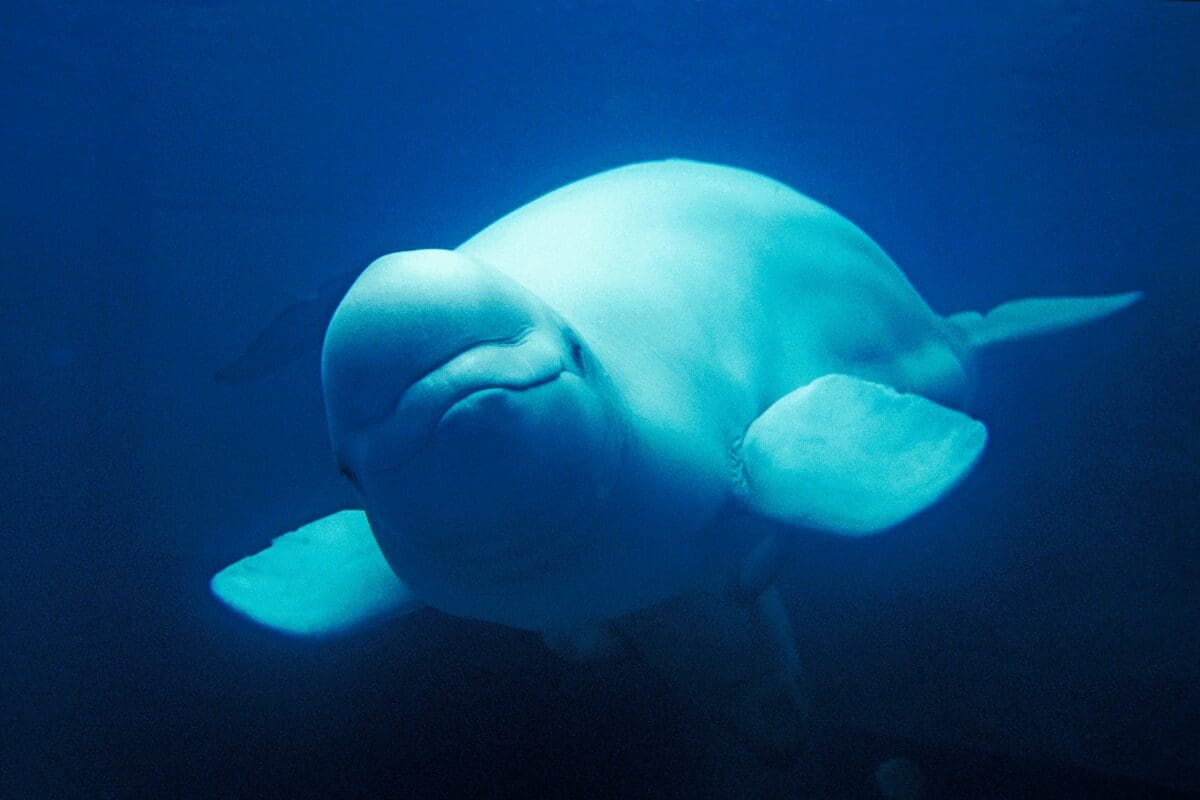
In January 2026, the Canadian government granted conditional approval for Marineland to export their remaining belugas to the United States. Read more details or see the VHS’s Current Campaigns page for other ways to support animals.
Humane Canada, of which the VHS is a member organization, needs our help to speak up for animals in captivity at Marineland!
Since this important federal law was passed in 2019, more than 20 animals have died at Marineland.
Earlier this year, Marineland requested a permit from the federal government to export their 30 remaining beluga whales to the Chimelong Ocean Kingdom aquarium in China where they would endure stressful and dangerous transport and a continued life in captivity for public entertainment.
Marineland’s request was denied, and now they are threatening to euthanize the 30 remaining belugas in their care if financial support is not received from the federal government.
Join Humane Canada and animal allies across Canada to call on the Ontario government to step up for animal welfare and assist in finding alternative solutions!
What are Humane Canada and other animal organizations asking for?
Humane Canada and other organizations, including the Vancouver Humane Society, are deeply concerned about the ongoing welfare of animals at Marineland in Niagara Falls. While we applaud the federal government’s decision to decline a permit for Marineland to export their beluga whales to China, and the passing of the Ending Captivity of Whales and Dolphins Act in 2019, action must be taken by the Ontario government to protect the animals at Marineland.
Humane Canada and other expert partners including the Whale Sanctuary project and World Animal Protection have repeatedly offered to assist in finding humane outcomes for these animals. Recent deaths of marine mammals and threats of euthanasia from Marineland demonstrate the urgent need for action.
Humane Canada and compassionate allies are asking for the Government of Ontario to:
Direct Ontario’s Provincial Animal Welfare Services (PAWS) to step in right away to seize the animals in situ and ensure their welfare and safety, which is at immediate risk. Marineland has stated that the whales will be euthanized if the federal government fails to approve the export permits;
Convene a group of independent marine mammal experts to assess the whales’ current condition and work to improve care standards on-site;
Determine the next steps for these whales based on expert advice and in accordance with the whales’ well-being and best interests.
Jo-Anne McArthur / Born Free Foundation / We Animals
Photo: Jo-Anne McArthur / Born Free Foundation / We Animals
Update
This action has ended. Thank you to everyone who sent a message to provincial decision-makers and spoke up for animals. Please stay tuned for updates and go to this page for current campaigns.
The B.C. government is proposing new regulations to ban the breeding, sale, and future ownership of all exotic cat species (non-native, wild cats).
Public feedback on the ban is being accepted until September 30, 2025.
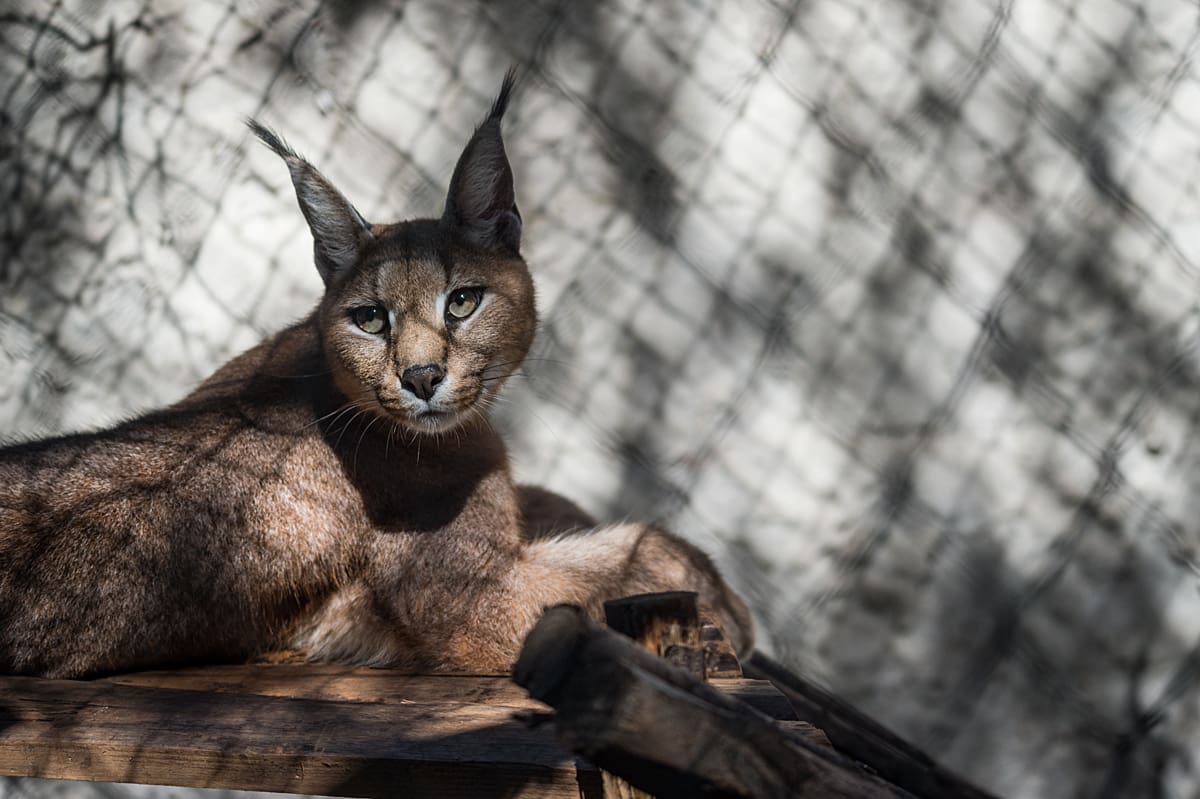
While species like lions and tigers are already prohibited, others—such as servals, caracals, leopard cats, and ocelots—are still legal to keep as pets.
These wild animals have complex physical and behavioural needs that are nearly impossible to meet in captivity, leading to poor welfare.
While the proposed exotic cat ban is a strong first step, the VHS is calling on the B.C. government to extend the same protections to other exotic species that also suffer in captivity.
TAKE ACTION: Use the quick action tool below to support the proposed ban and urge the B.C. government to adopt regulations that allow only species proven suitable as pets based on scientific welfare, health, and environmental criteria.
Use the editable template below to send a message to the B.C. Ministry of Water, Land and Resource Stewardship, or send a message directly to controlledalienspecies@gov.bc.ca.
This action has now ended.
854 people used this tool to support stronger regulations for animals used in mobile live animal programs and exotic animals kept as pets. Thank you for taking action.
In July 2025, B.C.’s Ministry of Water, Land and Resource Stewardship announced proposed regulation changes that would ban the breeding, sale and future ownership of all exotic (non-native and non-domestic) cat species. This would include species such as servals, caracals, ocelots, European and African wildcats, Asian golden cats, fishing cats, jungle cats and marbled cats.
The B.C. government cited welfare, public safety and environmental concerns as motivating factors for the proposed ban.
Exotic cats in human care have the same natural behaviours and instincts they would in the wild, including the desire to roam, climb and hunt. They suffer compromised health and welfare when owners cannot meet their needs in captivity, and escaped exotic cats pose a threat to the public and other animals.
What would an exotic cat ban mean?
If approved, all exotic cat species would be added to the list of 1000+ exotic species already prohibited under the “Controlled Alien Species Regulations”.
The proposed ban would allow current owners to keep their exotic cats for the remainder of the animal’s life, provided they apply for a free permit and meet basic care and safety requirements. However, breeding, selling or acquiring new exotic cat species would no longer be permitted.
The Vancouver Humane Society recommends stronger regulations
The VHS supports the proposed exotic cat ban and is urging the B.C. government to extend the scope of the ban to consider all exotic species that do not thrive in human care, utilizing a positive list framework that allows only species proven suitable as pets based on welfare, health, and environmental criteria.
Similar to exotic cats, many other exotic species have complex needs and suffer compromised health and welfare when kept as pets; pose a risk to public health and safety; and can threaten native wildlife and habitat when released or escaped.
The current Controlled Alien Species Regulations (CASR) are based on a lengthy and reactive “negative listing” approach, which lists 1000+ restricted and prohibited species. The current regulations also do not include animal welfare or disease risk as considerations for which animals are prohibited.
The VHS recommends that the CASR be updated to utilize an evidence-based “positive list” framework. Positive lists are shorter and easier to understand, update and enforce. This framework would outline species allowed to be kept as pets and would be based on welfare, health, safety, and environmental criteria.
This action has ended. Thank you to everyone who sent a message to their local decision-makers and spoke up for animals. Please stay tuned for updates and go to this page for current campaigns.
B.C. residents: Please call on your local government to endorse a resolution seeking stronger protections for exotic animals and animals used in mobile programs.
The Union of BC Municipalities (UBCM), which serves as the voice for local governments across B.C., will be meeting for their annual convention Sept 22-26 in Victoria.
UBCM members will consider a resolution calling on the B.C. government to regulate mobile live animal programs (MLAPs) and update regulations relating to exotic (non-native, undomesticated) species.
The UBCM resolution (pg. 173 of Resolutions Book) was put forward by Port Moody Council following a Port Moody decision earlier this year to prohibit MLAPs, such as mobile petting zoos.
Port Moody’s decision was a result of animal welfare, environmental, public health and safety, and educational concerns associated with MLAPs.
TAKE ACTION: Use the quick message tool below to urge your local government to endorse the UBCM resolution seeking stronger protections for animals transported for public display, handling, or sale and for updated regulations related to the import, keeping, breeding, and transport of all exotic species.
Regulate mobile live animal programs (MLAPs), which can “create distress for animals and introduce risks of zoonotic disease transmission and injury for people and other animals” as they transport animals for public display, handling, or sale.
Update the Province’s Controlled Alien Species Regulations to equally prioritize animal welfare considerations alongside public safety, and prohibit the import, keeping, breeding and transport of exotic species.
Use the template message to ask your local leaders to back the UBCM resolution.
This action has now ended.
1,327 people used this tool to support stronger regulations for animals used in mobile live animal programs and exotic animals kept as pets. Thank you for taking action.
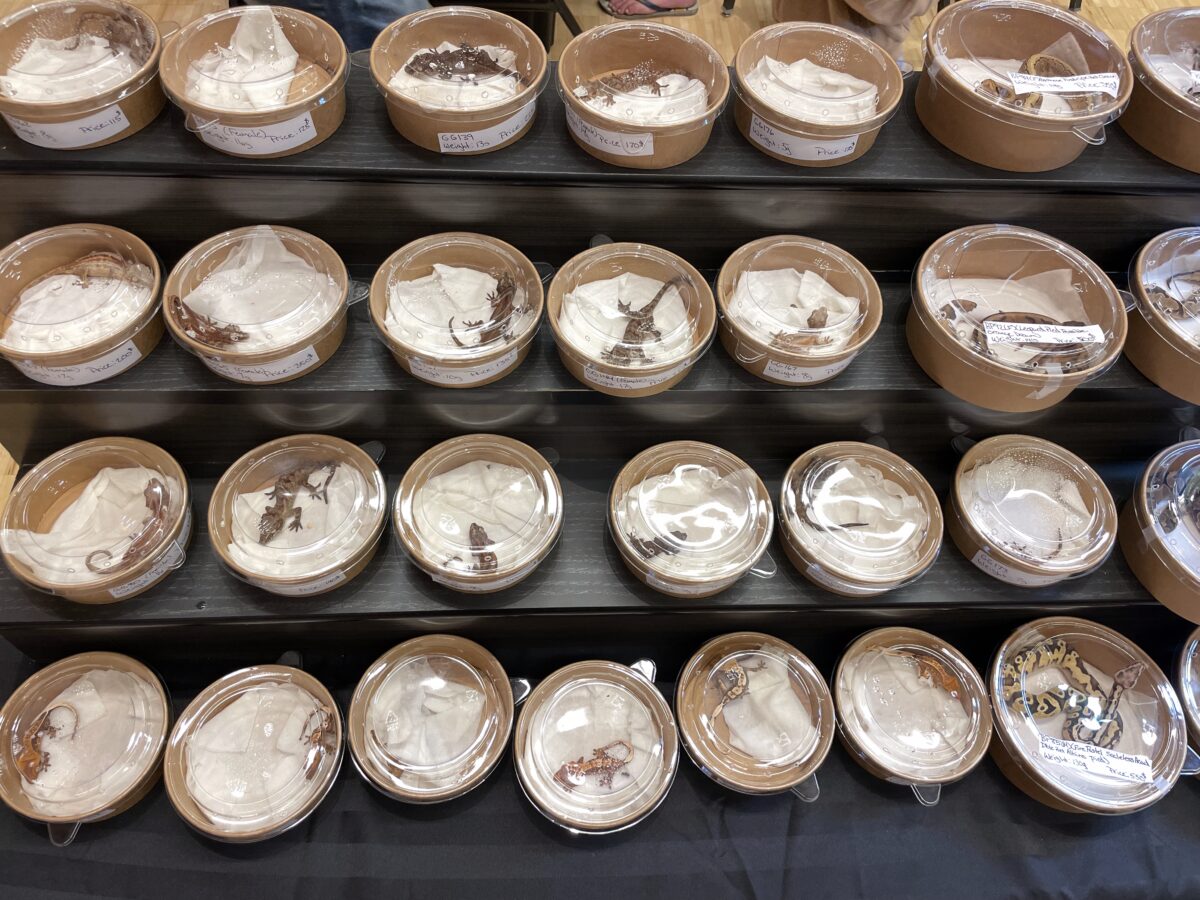
Mobile live animal programs (MLAPs) can take many forms, including travelling petting zoos, presentations, and expos. They involve the transport of animals to a location for display, public entertainment, or sale to the public, and feature a variety of different animals. MLAPs often include exotic animals (wild animals not native to B.C.), such as spiders, snakes, lizards, and tortoises.
Concerns regarding MLAPs include:
Frequent, and at times long-distance, transport of animals to events;
Small, barren enclosures with little to no opportunity for natural behaviours or the ability to escape the view of the public and other animals;
Frequent public handling, increasing risk of injury and disease spread;
Lack of educational value and the risk of perpetuating misconceptions about animal care and needs.
What are the issues with keeping exotic animals as pets?
Animal welfare: Exotic animals (wild animals not native to B.C.), even if they are born in captivity, still have the same complex needs they would in the wild. It’s extremely difficult to recreate their natural environment in captivity, and when those needs aren’t met, the animals often suffer.
Ecological threats: Escaped or released pets can become invasive species, displacing native wildlife, threatening habitats, and spreading new diseases.
Community impacts: Escaped or released animals and the surrender of unwanted exotic pets strain already overwhelmed shelters, rescues, and veterinary services. There have been many documented instances of escaped/released exotic pets in B.C. in recent years.
The end of horse racing at Hastings was announced in December 2025 following decling public support and revenues. Please support a safe retirement for horses and see the Current Campaigns page for more ways you can help animals.
The City of Surrey recently announced the permanent closure of the Fraser Downs horse racetrack, citing plans to develop housing, a hospital, and new public spaces on the land.
The decision aligns with the VHS’s call for an end to horse racing at Vancouver’s Hastings Racecourse, where at least 14 horses have died since 2023.
A recent VHS report shared with the City of Vancouver in June outlines the high racing-related fatality rate and the long-term decline in attendance and revenue at Vancouver’s Hastings Racecourse.
The report recommends ending horse racing at Hastings Park when the current Operating Agreement expires in 2026.
SIGN THE PETITION: Urge the City of Vancouver to follow Surrey’s lead and end horse racing at Vancouver’s Hastings Racecourse.
Hastings Racecourse has seen a concerning pattern of horse deaths, including eight in 2023, four in 2024, and at least two between April and June 2025. In 2024, the rate of horse deaths at Hastings was 1.78 per 1,000 starts—much higher than the industry average of 1.11 and nearly double that of tracks under stricter safety rules (0.90).
Early start, lifelong harm
Most horses start training and/or racing at just 2 years old, before their bones are fully developed. This puts them at high risk for serious injuries and early decline. Thoroughbred horses are often overbred for speed rather than skeletal strength, making their legs susceptible to fatal injury.
Painful & stressful practices
Horses often endure harsh training methods and uncomfortable equipment, like whips and tight mouth bits, that can cause stress and pain.
This action has ended. Thank you to everyone who signed the petition and spoke up for animals. Please stay tuned for updates and go to this page for current campaigns.
The Vancouver Humane Society is joining Humane Canada and advocates across Canada in calling for companion animals to be included in emergency planning.
More than 60% of Canadian households include a dog or cat, yet there is a lack of pet-inclusive support and accommodations for people evacuating during emergencies such as wildfires.
The lack of resources and limited training on animal response adds to confusion and panic in times of emergency, and can lead to people delaying or avoiding seeking safety, risk of death for animals, and added dangers for first responders.
A new federal e-petition launched by Humane Canada calls on the Canadian government to include animals in emergency preparedness, response, and recovery efforts.
TAKE ACTION: Canadian residents can sign the official parliamentary e-petition until October 9, 2025. After you sign, be sure to click the link in the confirmation email so your signature is counted.
You can also use the quick action tool from Humane Canada to send an email to federal decision-makers calling for change.
Join the Vancouver Humane Society, Humane Canada, MP Nathaniel Erskine-Smith, and advocates across Canada in calling to protect animals and teh people who care for them during emergencies.
Sign the federal e-petition on the Parliament of Canada website before October 9, 2025, at 9:06 a.m. PST.
Important: After you sign the petition, be sure to check your email and click the confirmation link to ensure your signature is counted.
Update: This petition is now closed. You can still take the quick action from Humane Canada to contact your federal decision-makers in support of change, or check the House of Commons website for updates.
The feedback period for the Pig Code of Practice is now closed. Thank you to all who spoke up for pigs!
The National Farm Animal Care Council’s (NFACC) Pig Code of Practice, last updated in 2014, was up for review until June 4, 2025.
The code of practice serves as a guideline for the on-farm care and handling of pigs raised in Canada.
There are many significant welfare issues associated with the current pig code of practice, including: extreme confinement; lack of opportunities to engage in natural behaviour; lameness and injury; unnecessary painful procedures; and inhumane forms of on-farm euthanasia.
Hundreds of advocates spoke up for pigs, submitting their top welfare concerns with help from the VHS’s tip sheet.
Keep an eye out for the next public feedback stage around fall 2026 to winter 2027, when NFACC will release specific updates for comment.
Thank you! The 5-minute survey to speak up for millions of pigs is now closed.
Read the top welfare concerns for pigs
Advocates filled out a short survey and shared their top 3 concerns for pig welfare. Scroll down to read a few of the top welfare issues the VHS recommended for consideration.
Photo: Jo-Anne McArthur/We Animals
Note: Click or tap to expand images. Though the images do not show graphic violence or injuries, they depict animal suffering and may be upsetting to some viewers. All photos were taken on Canadian pig farms between 2020 and 2022.
Top welfare priorities
Extreme confinement
Recommendation: End extreme confinement, including use of gestation and farrowing crates.
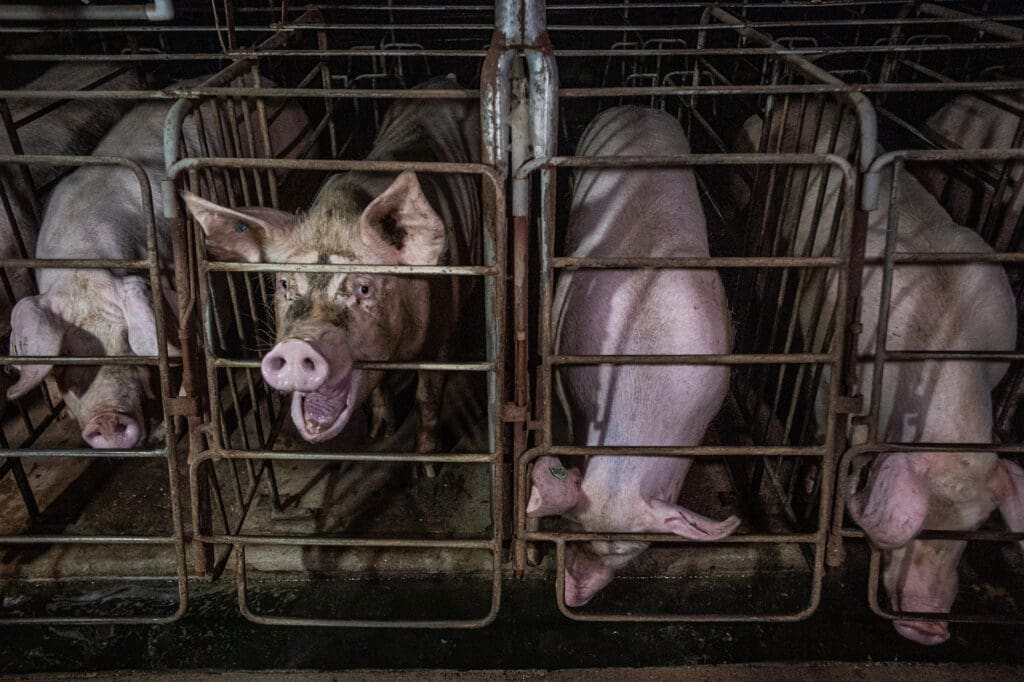
Background: Gestation and farrowing crates are used to isolate and confine individual pigs who are pregnant (gestation crates) and ready to give birth and nurse piglets (farrowing crates).
Both types of enclosures are so small and narrow that the mother pig can only stand up, lie down, and take a few steps forward or back, but cannot turn around.
Click for image of gestation crates
Jo-Anne McArthur/We Animals
On an industrial pig farm, a sow chews repetitively on the metal bars of her gestation crate while her neighbours drink accumulated water from a channel that runs in front of their enclosures. Sows confined inside these bare, concrete-floored enclosures can sit, stand and lie down, but they cannot walk or turn around. Quebec, Canada, 2022.
Lack of space & enrichment
Recommendation: Require more space and species-specific enrichment opportunities to engage in natural behaviours.
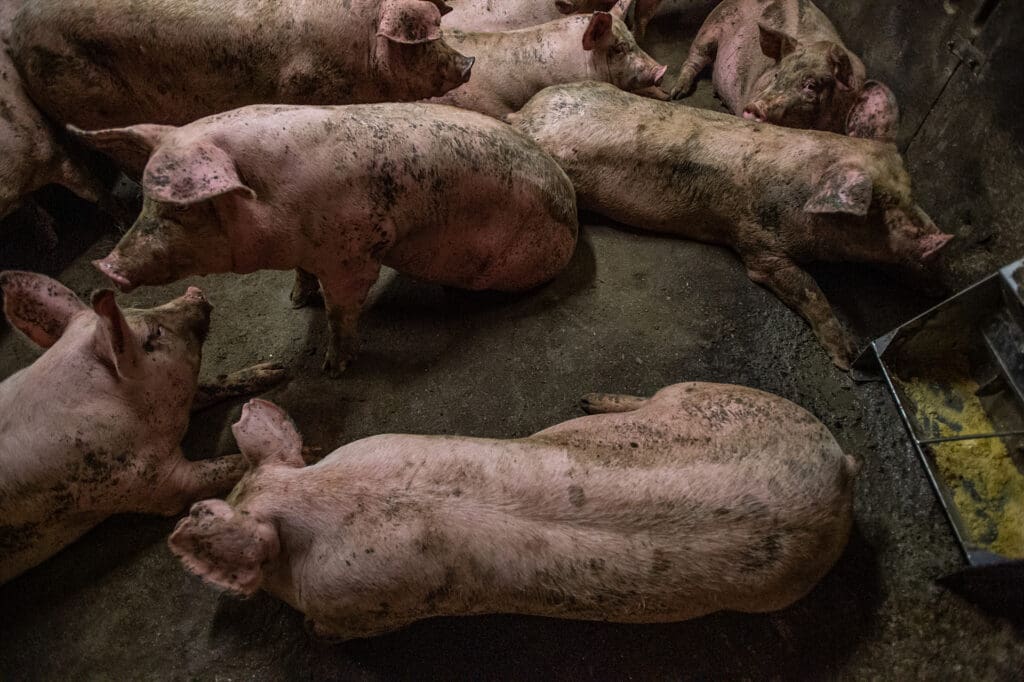
Background: Inadequate space and overcrowding can contribute to stress, aggression, injury and lameness and restrict the ability to engage in important natural behaviours.
Appropriate environmental enrichment is crucial for allowing pigs to express species-specific natural behaviours (e.g. rooting, chewing, exploring) and prevent boredom, stress and abnormal behaviours. Appropriate nesting materials are also a crucial form of enrichment for pregnant pigs.
Click for image of a crowded industrial pig farm
Jo-Anne McArthur/We Animals
Young pigs live in compact pens inside this industrial farming facility. The windows open to the hallway and not to the outdoors, and investigators confirm that the pigs live in complete darkness except for when a farm hand enters the rooms. Canada, 2020.
Unnecessary painful procedures
Recommendation: End painful procedures, such as castration, tail docking, teeth clipping, and ear notching.
Background: Pigs can experience acute and chronic pain during and after these unnecessary procedures. Current pain control requirements do not account for both acute and chronic pain. For instance, castration for piglets younger than 10 days of age requires the use of analgesics (for lasting relief), but anesthetics (for immediate pain) are only “recommended”.
Click for image of pigs with docked tails
Jo-Anne McArthur/We Animals
Pigs can be seen with docked tails on an industrial farm. Tail docking of pigs does not require anesthetics for acute pain control. Canada, 2020.
Inhumane forms of euthanasia
Recommendation: Ban euthanasia by blunt force trauma.
Background: Blunt force trauma, usually striking the piglet’s head against a hard surface or with a blunt instrument, is an approved method of euthanizing piglets under the current code of practice. This unethical practice presents significant welfare risks and places an emotional burden on handlers.
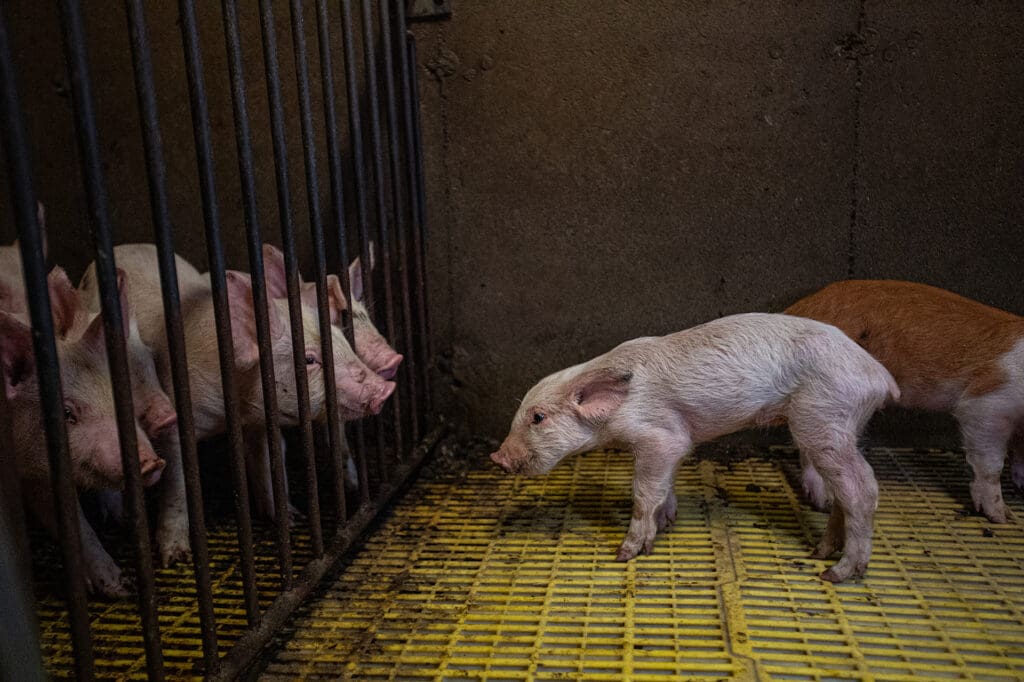
Click for image of piglets on a farm
Jo-Anne McArthur/We Animals
Curious piglets look at one another from inside a small pen. The pig on the right is ill and thin. At this farm, there are no windows facing the exterior and the pigs live in darkness. Canada, 2020.
Lameness & injury
Recommendation: Improve flooring, bedding and housing conditions to reduce lameness and injury.
Background: Concrete, slatted flooring has been identified as a major contributor to lameness and injuries in pigs. Improved flooring requirements are needed to reduce the incidence of lameness and injury and to ensure pigs can move freely and lie down and rise comfortably.
Access to bedding, such as straw or shavings, can provide thermal comfort, cushioning and enrichment opportunities.
Click for image of piglets on a slatted floor
Jo-Anne McArthur/We Animals
Slatted floors can be seen in this pig farm that houses more than one thousand pigs in a windowless building. Investigators told We Animals Media they had visited this farm many times and confirmed that the lights inside the building were only turned on when people briefly entered to check on and feed the pigs. Canada, 2020.
This petition is now closed. Thank you to the 7,058 people who spoke out against inhumane fur farming!
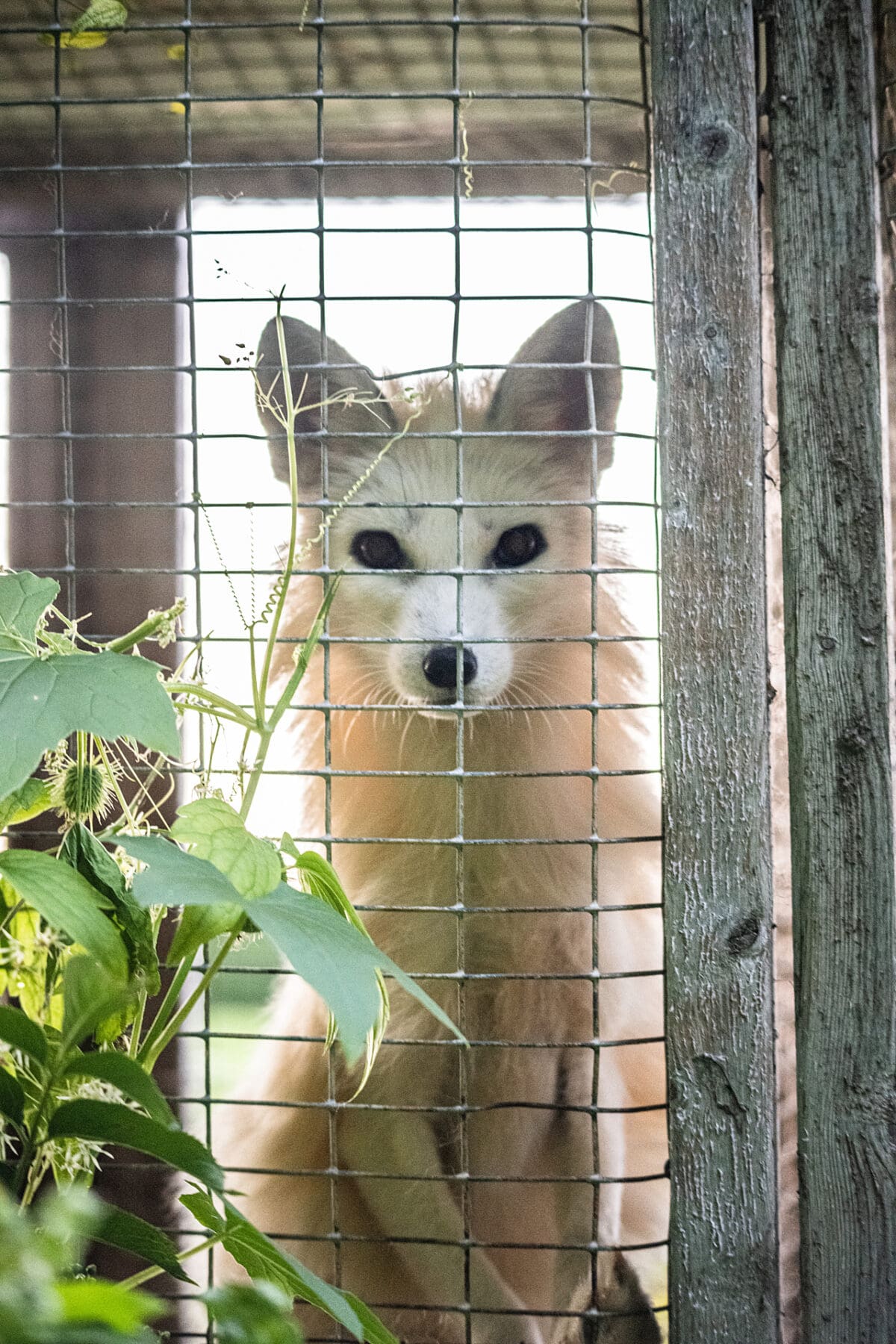
Photo: We Animals
The Vancouver Humane Society is joining The Fur-Bearers and other organizations across Canada in calling for a national prohibition on fur farming in Canada.
Fur farming causes significant animal suffering and poses serious risks to public health and the environment for the sake of luxury fashion items.
More than 20 countries have already banned fur farming or introduced legislation to do so in the coming years.
A new federal e-petition, launched by The Fur-Bearers, calls on the Canadian government to ban fur farming for all animal species across the country.
TAKE ACTION: Canadian residents can sign the official parliamentary e-petition until January 27, 2025. After you sign, be sure to click the link in the confirmation email so your signature is counted.
Call on the Canadian government to ban cruel fur farming
Join the Vancouver Humane Society, The Fur-Bearers, MP Gord Johns, and other organizations in urging the federal government to end fur farming across Canada.
Sign the federal e-petition on the Parliament of Canada website before January 27, 2025, at 6:48 a.m. PST.
Important: After you sign the petition, be sure to check your email and click the confirmation link to ensure your signature is counted.
Inhumane fur farming persists in Canada despite widespread opposition
There are close to 100 fur farms left in Canada. Animal species that are farmed for their fur include mink, fox, wolves, bobcats, lynxes and chinchillas.
Although British Columbia banned mink fur farming in 2021, farming other species for their fur is still allowed in the province. There are currently no prohibitions at the national level.
Polling from 2024 revealed that 78% of Canadians and 81% of British Columbians are against killing animals for their fur.
Animal welfare concerns
On fur farms, animals are kept in small, wire cages for the entirety of their lives, depriving them of the ability to engage in natural behaviors typical in the wild. This can lead to stress, stereotypic behaviors, and self-mutilation.
Warning: The following video contains graphic footage. Viewer discretion is advised.
Over the past several months, The Association for the Protection of Fur-Bearing Animals obtained footage from inside Canada’s fur farms. This second video shows never-before-seen images of fox and mink suffering in deplorable conditions. Please join us and take the pledge to #MakeFurHistory at www.MakeFurHistory.com.
Public health risks
Animals confined in fur farms have been shown to be hosts for zoonotic diseases. For example, during COVID-19, deadly outbreaks were seen in fur farms globally, including locally in the Fraser Valley. Millions of animals were culled in an attempt to control the spread of the virus.
Environmental degradation
Manure runoff from large industrial fur farms pollutes nearby soil and bodies of water, threatening local animal populations, humans, and ecosystems.
Visit furfarming.ca to learn more about The Fur-Bearers’ campaign to ban fur farming across Canada and the organizations that have signed on in support.
Metro Vancouver is updating the Regional Food System Strategy for the first time since 2011 and is seeking public input.
This is an important opportunity for Metro Vancouver residents and food system stakeholders to advocate for a shift toward more humane, healthy and sustainable plant-based food production and consumption across the region.
TAKE ACTION: If you’re a Metro Vancouver resident, your input is needed to help advocate for an updated strategy that prioritizes less animal-based products and more plant-based foods. Share your feedback in the online survey before the deadline of December 31, 2024.
Below are the main questions included in the Metro Vancouver survey. Click on each key point for tips and context to help answer the questions in your own words.
1. What changes have you seen in the regional food system over the last 10 – 15 years?
(Examples: changes to imports/exports, climate considerations, community changes, consumer habits, costs, etc.)
Growing public awareness and concern about the impact of animal-based foods…
…on the environment, health, and animal welfare, resulting in more people reducing their consumption of animal products.
A 2022 survey of Lower Mainland Residents found that 65% of respondents have reduced their consumption of animal products.
A 2019 survey found that 25% of B.C. residents have tried a vegetarian diet, compared to the national average of 18%.
A 2018 survey found that almost 40% of British Columbians aged 35 and under follow a vegetarian or vegan diet, more than three times higher than the national average.
Increased demand for plant-based foods/beverages…
…and more products being offered in stores, restaurants, etc.
A 2022 survey found that 65% of respondents in the Lower Mainland would eat more plant-based meals if there were more tasty options available when going out to eat.
Scientific research and experts urging all levels of government to support food system change…
…toward plant-based eating patterns.
Growing awareness that the type of food plays a much larger role in a food’s overall carbon footprint than the distance it travels. Previously, much of the focus has been on prioritizing local food, but it’s also increasingly important that plant-based food be incorporated into food system strategies.
Food system change, including shifting toward plant-based diets, is necessary to meet global climate targets and stay below 2 degrees of global warming.
In the City of Vancouver, nearly 98% of the ecological footprint of food comes from the land and energy used for growing and producing it, particularly red meat and dairy products.
Government acknowledgement and action around the need for food system change…
…toward more plant-based foods.
The City of Vancouver passed a motion declaring the various social, economic, and environmental benefits of plant-based procurement.
The District of North Vancouver passed a motion to ensure plant-based options are included and prioritized at municipal events, meetings, and other gatherings where the District purchases food.
Public support for government action…
…including meat reduction efforts incorporated into government strategies.
In a 2022 survey of Lower Mainland residents, 58% of respondents would support shifting government subsidies from animal-based food production to plant-based food production.
60% of survey respondents would support including animal production-reduction efforts into local, provincial and federal climate, health and animal welfare strategies.
Are there any other food system-related changes or trends you’ve noticed in the Lower Mainland over the last decade?
2. What do you think the role of Metro Vancouver should be in the implementation of a regional food system strategy?
(Examples: protecting agricultural lands, convening member jurisdiction on specific issues, providing local research and data, public education, etc.)
As a regional organization, Metro Vancouver and member jurisdictions can prioritize humane, healthy and sustainable plant-based foods across the supply chain.
This could include:
Prioritizing and incentivizing plant-based food production and processing.
Supporting partnerships that enable businesses, public institutions and others to collaborate on plant-based procurement throughout the region through bulk ordering and supplier connections.
Public marketing, education, and promotion around increasing plant-based food consumption, in alignment with the updated Canada Food Guide, which recommends choosing plant-based proteins more often.
Supporting more plant-based options in food service, including through public institutions like schools, hospitals and community centers, as well as in catering, corporate programs, and cafeterias.
Supporting consumption of more plant-based foods across consumer, corporate, business and institutional levels.
Are there other food system-related roles you think Metro Vancouver should be involved in?
3. Is there any other feedback or other information you would like to share?
Metro Vancouver is uniquely positioned to support a much-needed food system shift towards plant-based food across multiple sectors.
This could include strategies and practices such as:
Promoting and supporting strategies that prioritize plant-based food choices. For example, setting plant-based meals as the default option at events, meetings and municipal facilities.
Incentivizing plant-based food production, processing, purchasing and procurement. For example, through municipal food service contracts.
Encouraging member jurisdictions to set a target for reducing the volume of animal products purchased at municipal levels and follow the lead of other jurisdictions that have implemented meat reduction and/or plant-forward strategies.
Are there other food-system related ideas or examples you would like to share?
In a letterto the Canadian Senate, 30+ Canadian celebrities, 20+ veterinary and animal welfare experts, and more than a dozen animal advocacy organizations have called for an end to the cruel export of live horses abroad for slaughter.
Bill C-355, which would ban the cruel practice, got through the House of Commons but has been stalled in the Senate since May.
Recent investigations and Japanese government data show the suffering far exceeds what the Canadian Food Inspection Agency (CFIA) claims.
While the Senate delays action, horses continue to suffer and die as shipments continue.
TAKE ACTION: Use the quick action tool below to send a message to Canadian Senators in your province, urging them to move forward with bill C-355 without further delay.
Join Canadian celebrities, experts and advocates in urging the Senate to stop the deadly delay.
Take the quick action to email Canadian Senators
Use the email template below to send a message to Canadian Senators in your province, calling on them to move forward with bill C-355 without further delay.
Tip: For added impact, edit the template message below to personalize your email.
Note: Click here for individual contact info of Canadian Senators.
Canadian icon and multi-platinum artist Jann Arden, along with a host of celebrity signatories including Bryan Adams, Chantal Kreviazuk, Elisha Cuthbert and Queen’s Brian May have penned a letter imploring Canada’s Senate to move forward with Bill C-355, the Prohibition of the Export of Horses by Air for Slaughter Act. The letter (which can be found here) also has strong support from the Canadian acting community, including stars in shows like Star Trek: Discovery, The Handmaid’s Tale, Workin’ Moms, and Heartland.
More than 20 veterinary and animal welfare experts, and more than a dozen animal advocacy organizations have also signed the letter urging senators to study and pass this lifesaving bill, which was passed by the House of Commons in May.
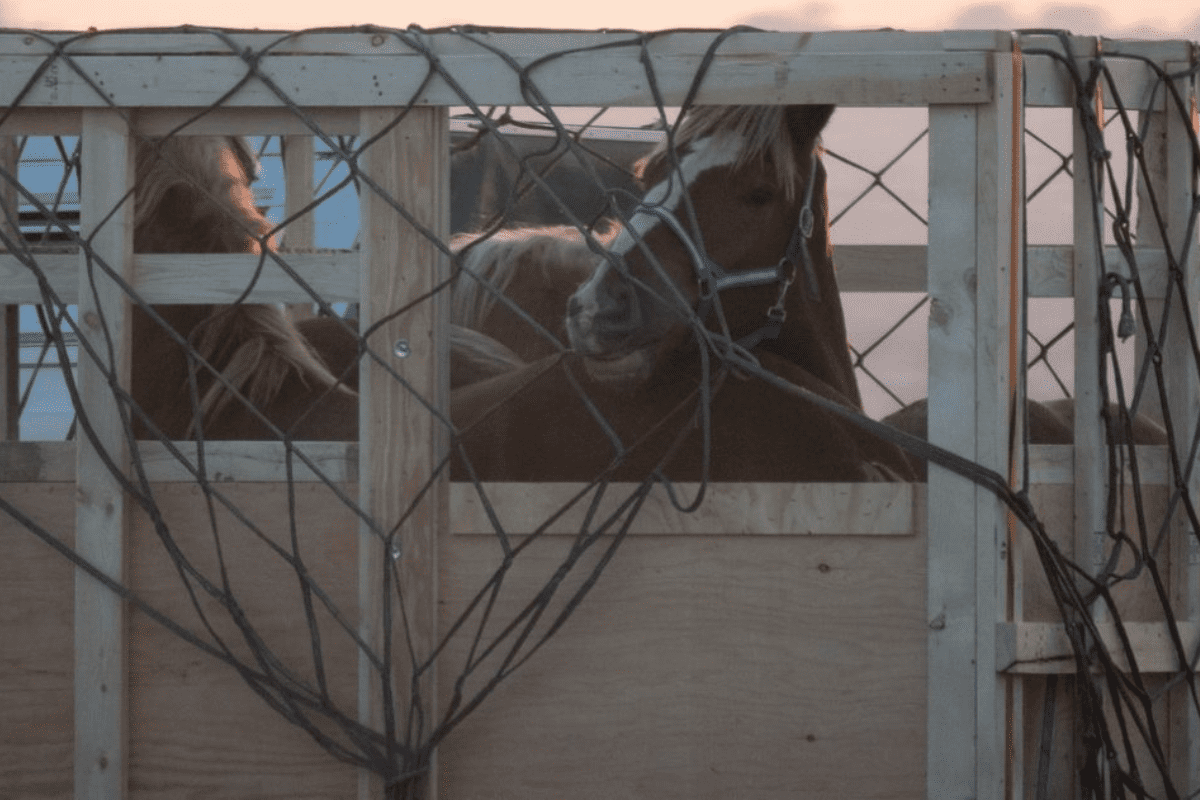
“Since 2006, tens of thousands of terrified horses have been crammed into shoddy wooden crates and flown 8,000 km to their demise, enduring turbulence, thirst and hunger, and abject fear,” said Jann Arden. “To say this practice is inhumane would be an understatement. Canadians want this to end.”
Bill C-355 was introduced last September by federal MP Tim Louis to end the abhorrent practice of shipping horses from Canada overseas to Japan for slaughter. The Bill is being delayed by a handful of Senators and has seen little progress in the Senate since May. The clock is ticking – if the bill is to become law it must pass before the next federal election.
Tens of thousands of Canadians have called and written to Senators, urging them to study and pass the bill. Yet as the legislation remains in limbo, these shipments continue to be sent overseas for slaughter, with horses enduring gruelling journeys. Most shipments appear to go over the legal limit of 28 hours without food, water, and rest.
Shipments continue despite the revelations uncovered through recent investigations by Animal Justice and Japan-based Life Investigation Agency. Based on Government of Japan records, between June 2023 and May 2024 alone, at least 21 horses exported for slaughter died during transport or in the hours and days shortly thereafter.
More than 50 others were injured or became seriously ill during this time. None of these injuries, illnesses, or deaths were reported to Canadian officials.
Bill C-355 reflects a promise made to Canadians during the last federal election, and enjoys broad public support across the political spectrum. With a pending election expected in 2025, Ms. Arden and the letter’s numerous other signatories are gravely concerned about the Senate’s delay in studying and ultimately passing this crucial legislation.
The feedback period for transparent labelling on egg products is now closed. Thank you to all who spoke up for transparency for egg-laying hens!
The Canadian Food Inspection Agency (CFIA) is looking for public feedback on proposed guidelines for how plant-based egg products can be labelled.
While the intention is to prevent false or misleading advertising of plant-based products, research shows that consumers find labelling of eggs from chickens confusing.
TAKE ACTION: Your input is needed to help advocate for fair and transparent labelling standards among all egg products in Canada. Share your feedback in a quick email before the consultation deadline of October 28th.
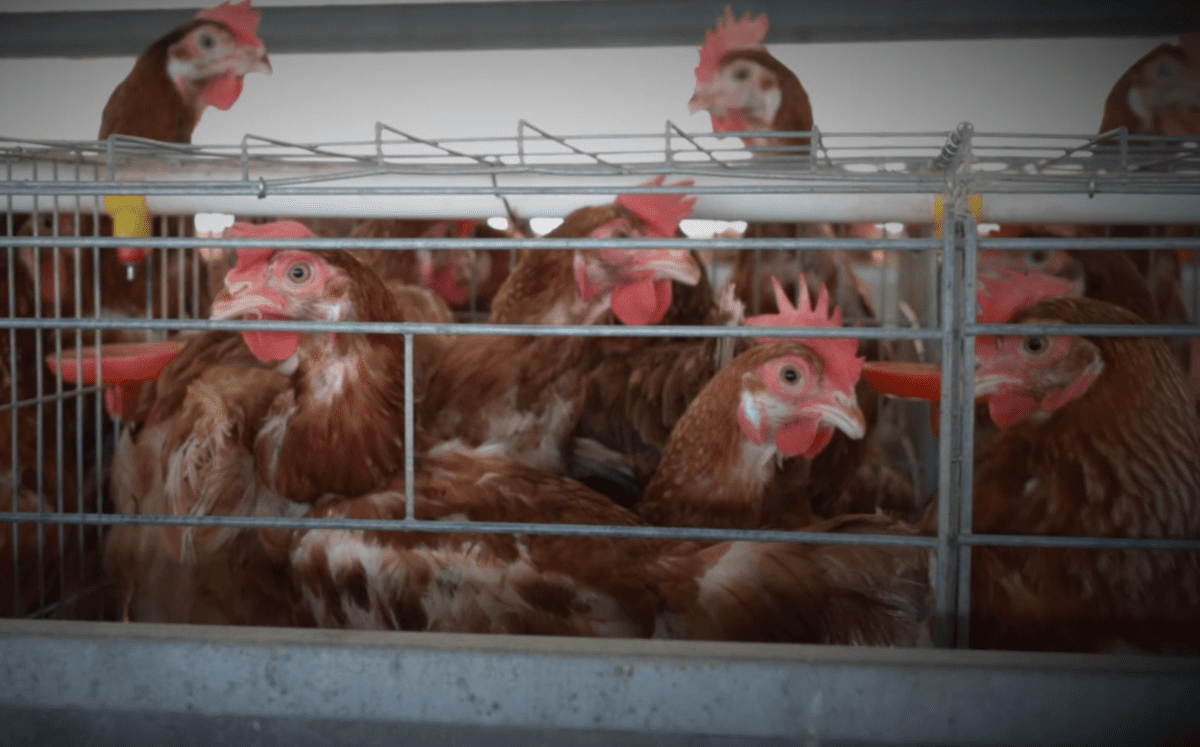
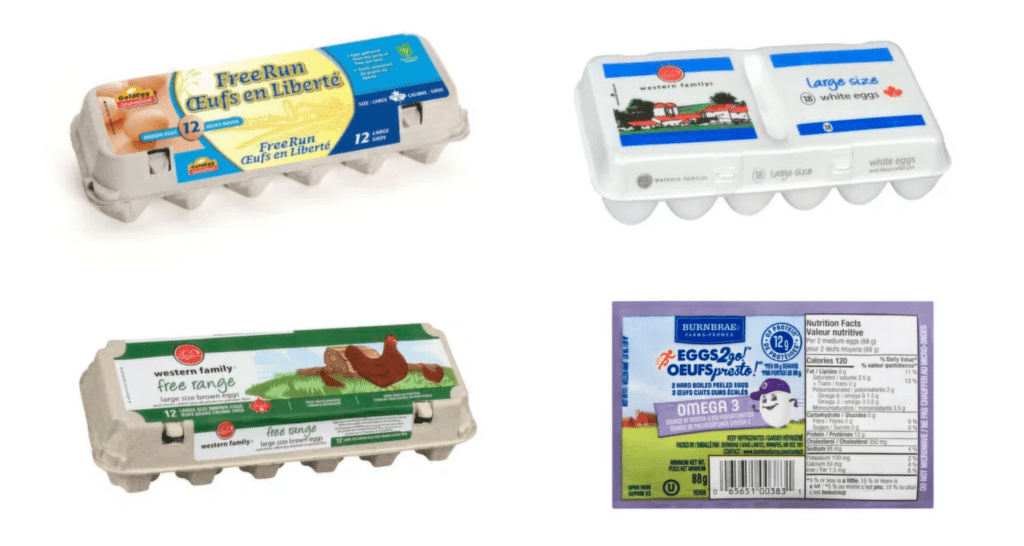
Terms such as free-range, free-run, cage-free and enriched colony housing have no legal definitions. These terms, along with marketing tactics such as labels with images of happy hens frolicking in the grass, are misleading when compared to the on-farm conditions and methods of production.
Tip: Share your own experience with chicken egg labelling. Have you found it confusing to understand the welfare information and method of production (caged vs. cage-free eggs) of eggs at your grocery store?
Egg product labelling should include welfare information and method of production
Research shows that a majority of Canadian consumers think about animal welfare when deciding what eggs to purchase. The majority are willing to spend more when they believe the hens’ welfare is higher.
Consumers and advocates are increasingly calling for in-store egg labelling that includes animal welfare and method of production (e.g. caged vs. cage-free) information.
Fairness in labelling for ALL egg products
Guidelines for plant-based egg labelling must be fair and not put plant-based products at a disadvantage to animal-based products. Efforts to prevent misleading advertising and improve transparency must apply to ALL egg products.
Have more time? You can learn more about the proposed guidance on plant-based egg labelling and submit your feedback via the online feedback questionnaire, which includes more questions.
Update: The online questionnaire is now closed. Thank you to all who participated.