“I cannot thank you enough. My angel Lola is recovering beautifully! … I am forever grateful to you for giving us more time together.”
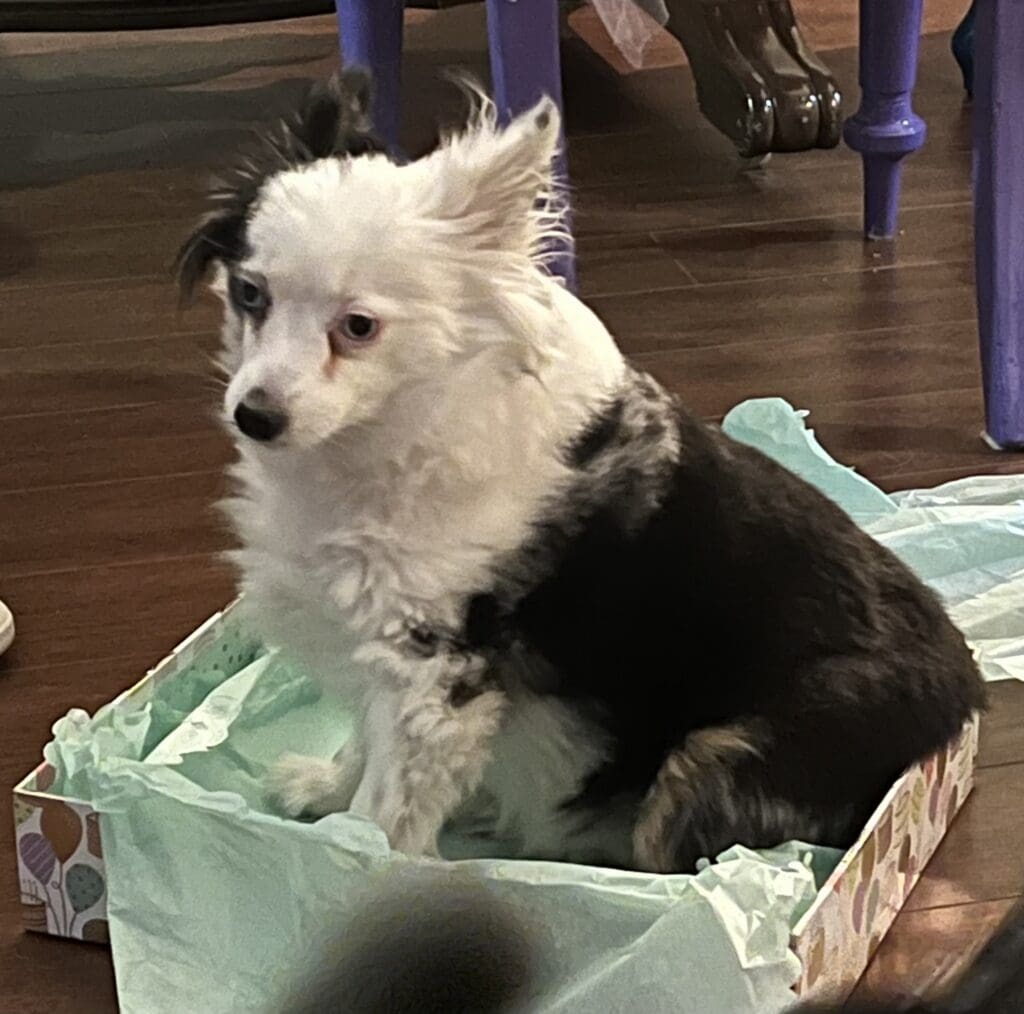
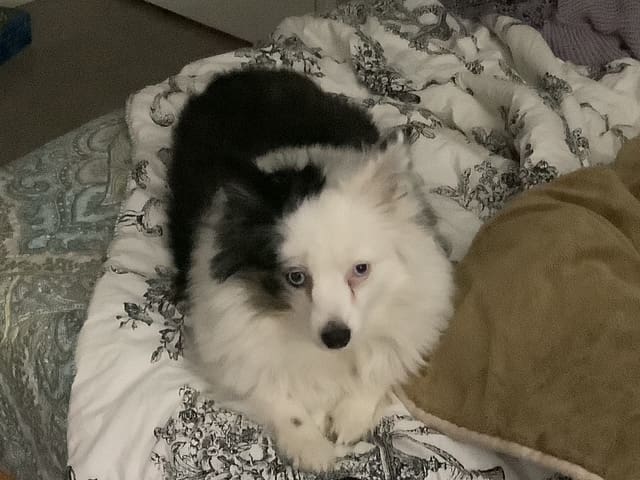
Beautiful senior dog Lola is home safe and healthy now with her senior guardian.
At 12 years old, Lola still has a lot of life left in her. She is deaf and is highly visual, understanding facial expressions and some sign language. She loves strolling the neighbourhood with her guardian and her buddy and “hearing ear dog”, Dobby. She says hello to every person she meets. Her guardian says Lola considers it her duty to visit every patient at the Alzheimer’s hospital.
But this sweet girl’s life almost didn’t have a chance to begin.
Because Lola was born deaf, her breeder wanted to euthanize her. She was rescued by her guardian “Carol” (name changed for privacy), and the two have been an incredible support for each other ever since.
“She is an angel and has changed my life. I have severe anxiety, often unable to even get to the grocery store, but with Lola, I am able to get out because she loves being the social butterfly. She insists we stop and see every person that crosses our path! She has opened my world.”
For the first six years of her life, Lola suffered from seizures until Carol finally found a medication to keep them under control. She has now been seizure-free for half of her lifetime!
Lola has also stood by Carol’s side, offering invaluable comfort and love through health struggles including cancer.
“This little girl, with all her strength and heart, has taught me to be a fighter.”
Six months ago, Carol noticed that Lola would soon need dental care. She tried getting part time work to save up, but as a 70-year-old woman dealing with her own health struggles, she was sadly not able to save up the funds in time. She recently found Lola running back and forth rubbing her mouth on furniture trying to cope with a very painful toothache.
Without a credit card and almost out of options, Carol reached out to her last hope for support: the VHS’s McVitie Fund.
“We were up all night because she doesn’t know what to do with herself, running back and forth, rubbing her mouth on everything … wondering why I am not helping her.”
Thanks to generous supporters from the community who make this work possible, Lola was able to get the urgent care she needed to feel better and come home.
Carol shared that she is so grateful to have more time with Lola.
Every day, donors who support the McVitie Fund make these happy stories possible: bringing animals home safe and healthy, taking care of those in urgent need, and keeping loving families together.
The McVitie Fund helps an average of 140 animals each month, with each care case needing an average of $500 in assistance. These life-changing assistance funds are entirely donated by caring members of the community. That’s why every donation, no matter the size, makes such a meaningful difference.
Could you make a gift today to help give animals like Lola more time with their families who love them?
Mette Frederiksen’s new government promises overhaul for people – and animals – in home of ultra-intensive farming
Progress for animals often moves slowly. This can be disheartening. As an animal ally, it can feel as though others don’t care enough to make change. But how much is that feeling based in reality?
When asked about animal issues, most Canadians express care and concern. Most people with companion animals consider those animals to be part of the family. Canadians are also largely opposed to activities that pose animal welfare concerns, such as trophy hunting (83% opposed), killing animals for their fur (78% opposed), rodeos (65% opposed), and zoos and aquariums (58% opposed).
Animal welfare is typically a bipartisan issue in Canada, resonating with people regardless of which political party they vote for. Still, animal welfare alone is rarely a motivator for change from decision-makers.
What happens when animal allies unite with other changemakers?
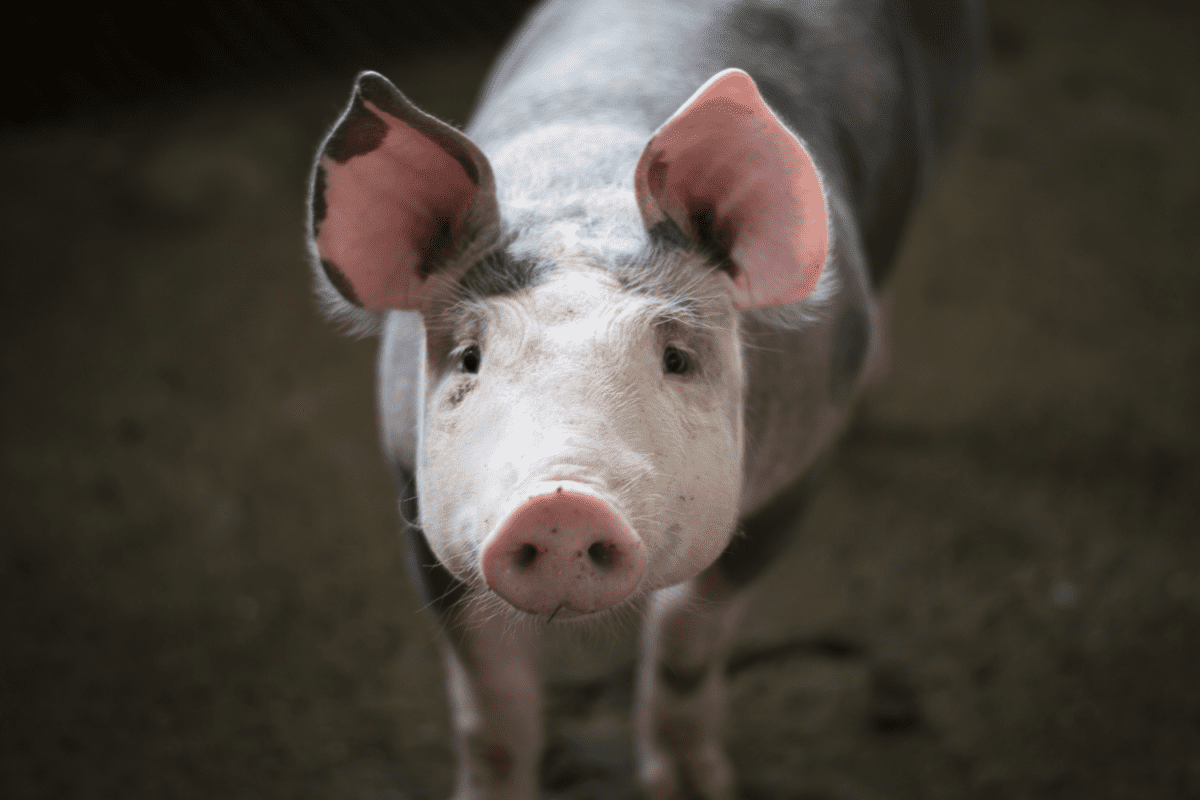
A recent election in Denmark answered that question, as advocates for animal welfare, the environment, and residents made pig farming a major election issue through two years of focused campaigning.
Citizens used their votes to show they care about the animal welfare, land use, environmental, and human impacts of pig farming, a main industry in Denmark.
Collaboration with other sectors has helped make progress for animals in Canada.
Animal advocates in Canada have teamed up with advocates on other issues and highlighted the overlap between the health of animals, humans, and our shared environment.
Here in British Columbia, a permanent ban on the farming of mink for fur was announced in 2021 due to public health risks.
In 2023, a phase-out of toxicity testing on animals was included in an update to the Canadian Environmental Protection Act.
The Protecting Victims Act passed this summer, criminalizing the distribution of animal sexual abuse material while recognizing harm and threats against animals as part of coercive control and criminal harassment.
Collaboration paints a promising path forward.
These stories paint a promising path forward in animal advocacy; one where collaboration with other advocates and intersections with other important issues create real opportunities for meaningful change.
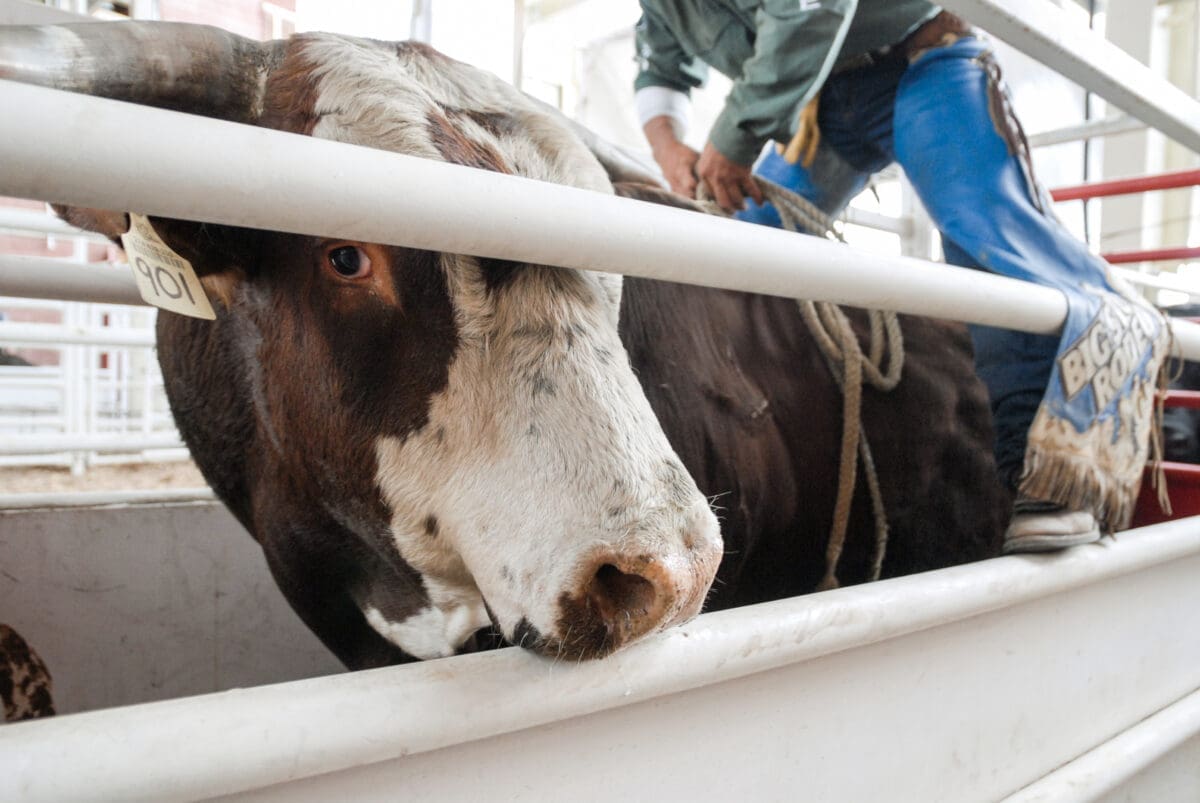
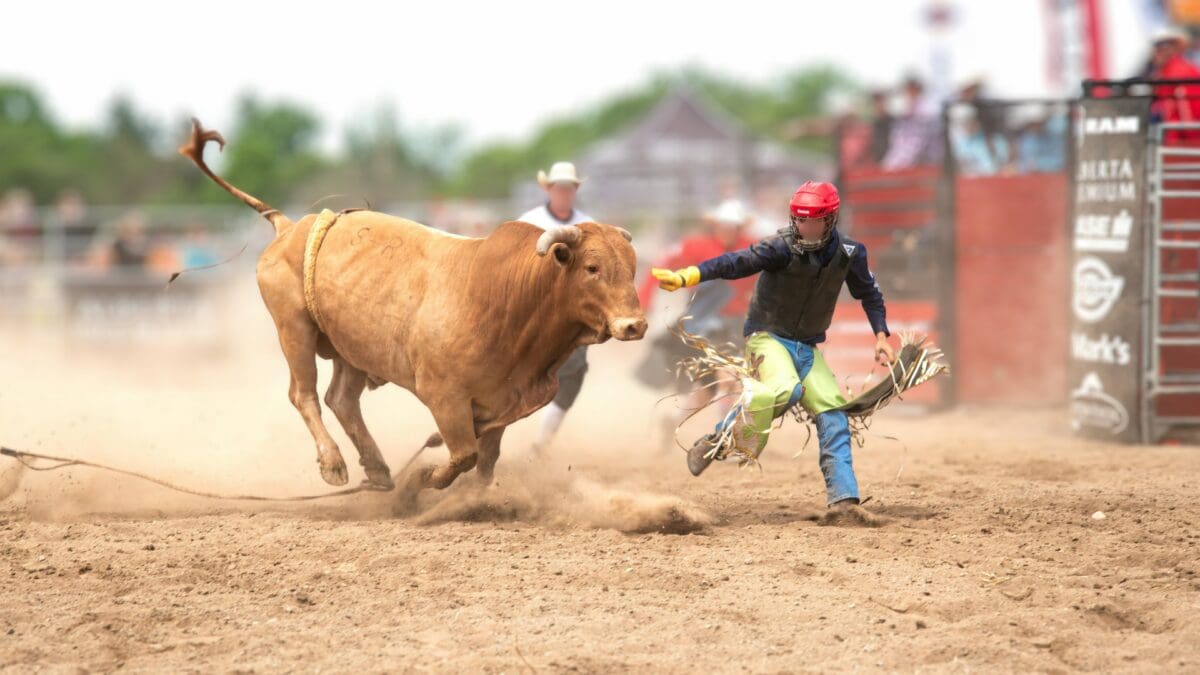
A bull in the chutes at The Calgary Stampede rodeo. Jo-Anne McArthur \ We Animals Media.
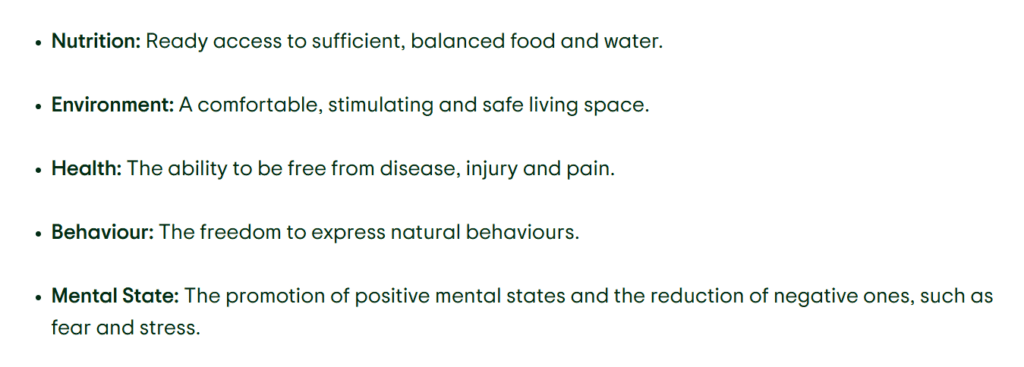
Animal advocates around the world are celebrating a step forward as Tripadvisor has strengthened their animal welfare policy! The new policy evaluates activities involving animals “informed by the Five Domains of Animal Welfare, a globally recognised framework that assesses an animal’s quality of life”:
Source: Tripadvisor.ca
The new policy “does not enable booking for experiences that involve animal racing, such as most dog, horse and camel racing or for rodeo-style events”. It also forbids sales of tickets for attractions including elephant riding and those involving captive whales and dolphins.
This important step forward involves a major company acknowledging that many animal entertainment events cause unnecessary risk and stress to animals. It also helps travellers to make more compassionate choices about the events and attractions they attend.
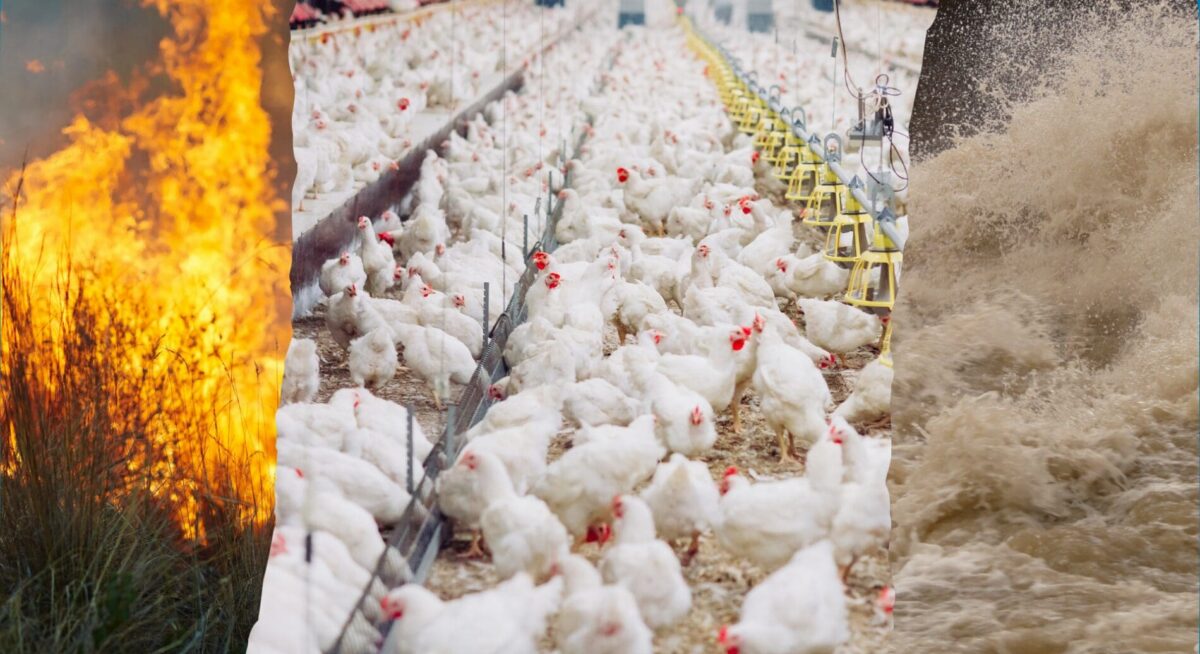
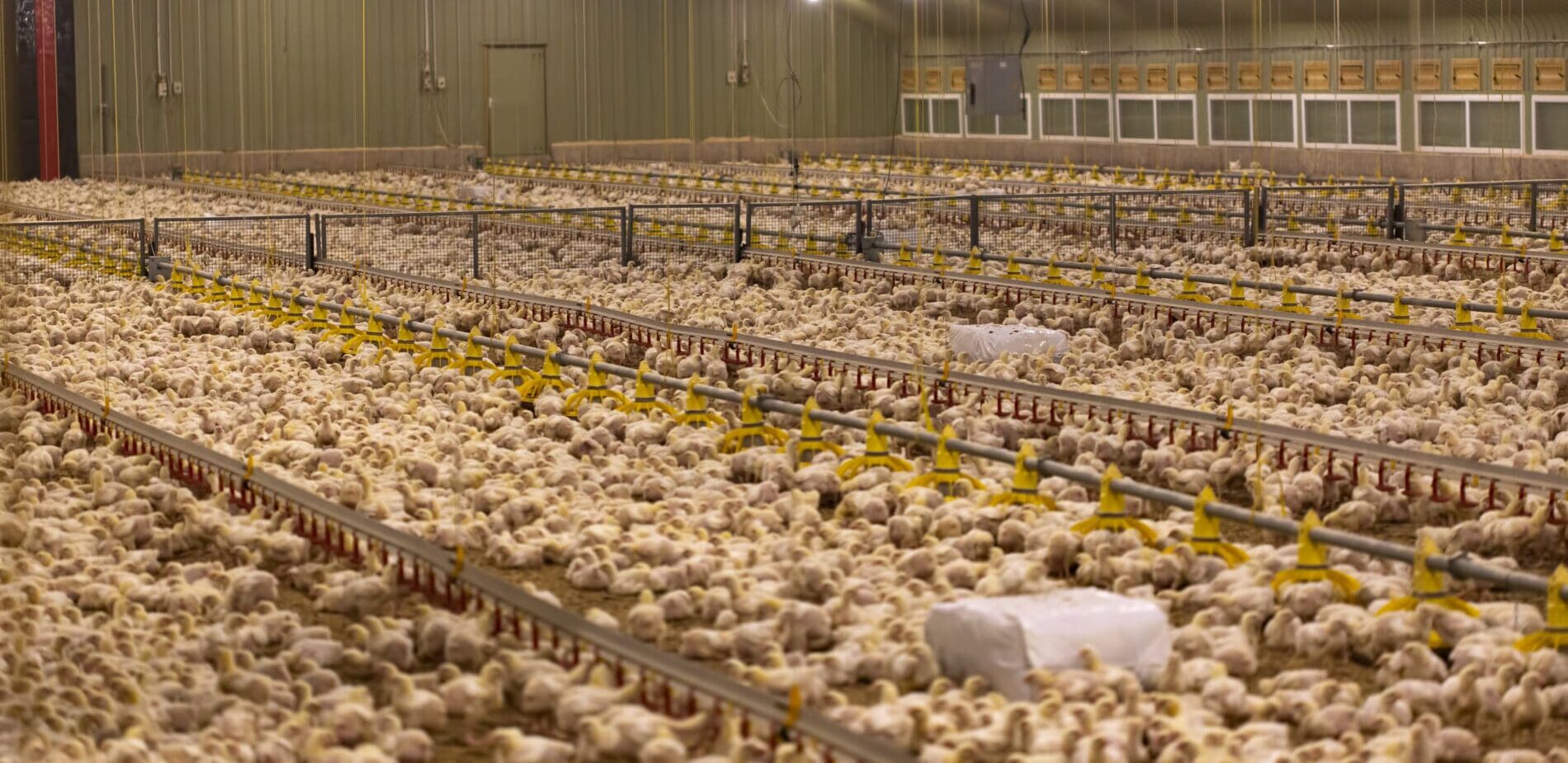
On many large-scale farms, tens of thousands of animals may be housed in a single facility.
During a fast-moving barn fire, wildfire, extreme heat event, flood, or power failure, there may be no practical way to move every animal to safety.
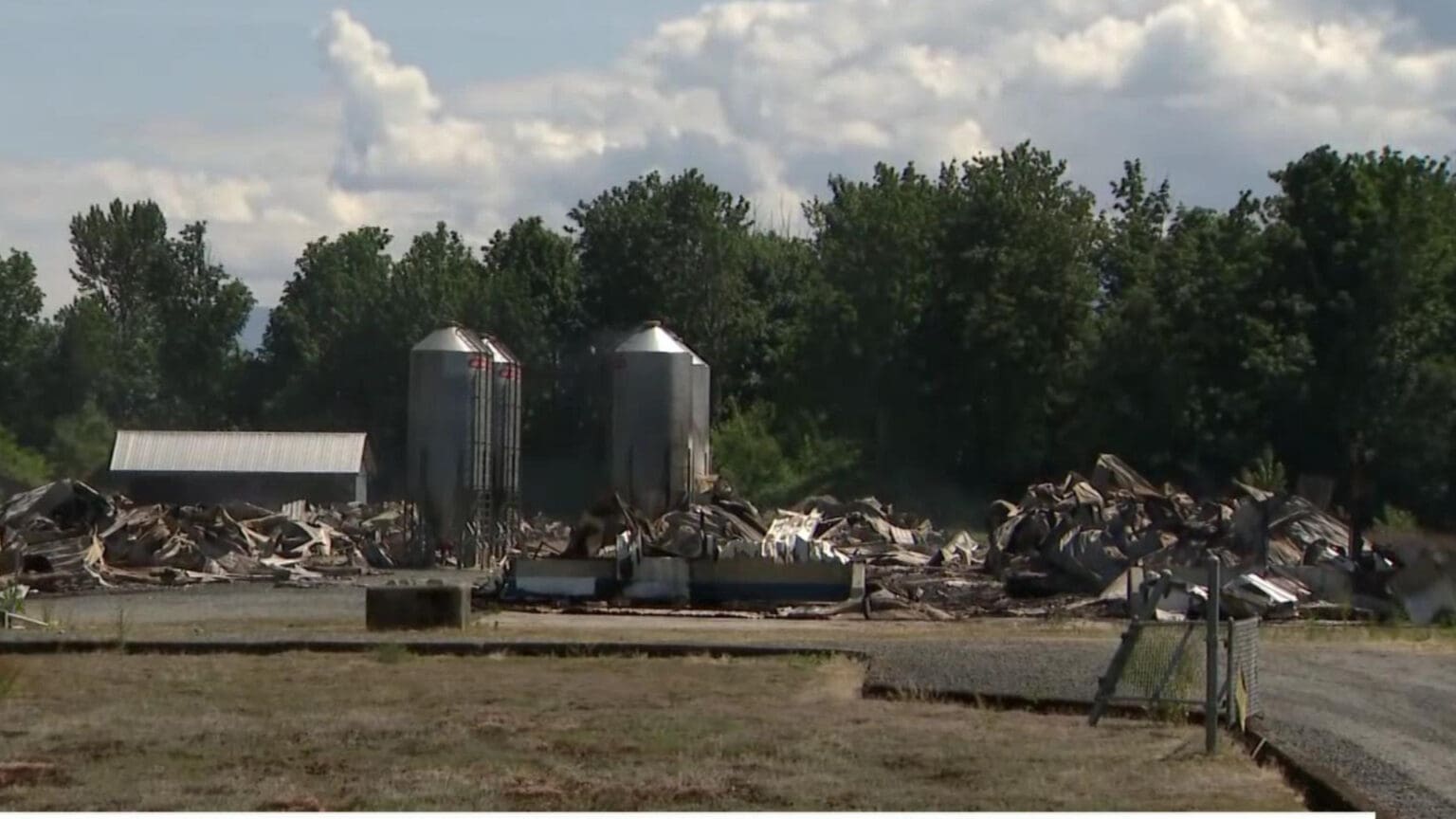
Approximately 165,000 chickens died in a recent Abbotsford barn fire. Weeks later, at least 20,000 pigs died in a fire at an industrial farm in southern Ontario.
Current industry codes of practice generally call for farms to have emergency plans, but do not require proof that those plans can protect every animal.
TAKE ACTION: Sign now to call on the B.C. government to strengthen protections for farmed animals before the next disaster strikes.
Each chicken was a sentient animal capable of feeling fear, pain and stress. Confined inside the barns, they had no way to escape.
This was a devastating tragedy.
It was also a warning about a system that confines enormous numbers of animals in facilities where evacuation are virtually impossible.
The aftermath of a barn fire in Abbotsford is seen on Friday May 22, 2026. (CityNews Image)
Why large-scale evacuation may be impossible
Evacuating a farm is not as simple as opening a barn door.
Animals must be caught or gathered, safely handled and loaded into suitable crates or trailers. They must then be transported somewhere with enough space, food, water and shelter.
This can require trained workers, specialized equipment, available vehicles and drivers, safe and accessible roads, veterinarians, backup power and fuel, and suitable places to house the animals.
Animals who are sick, injured, or affected by heat or smoke may not be safe to transport.
Birds housed by the tens of thousands cannot simply be released outside.
Pigs and cattle may panic, become injured, or be unable to move through floodwater, smoke, or crowded handling areas.
Even when animals can be loaded, there may be nowhere for them to go.
Nearby farms may already be full, affected by the same emergency or unable to accept animals because of disease and biosecurity concerns.
During a regional disaster, many farms may need the same trailers, workers, roads, and receiving sites at the same time.
For a barn holding tens of thousands of chickens, hundreds of cattle, or thousands of pigs, there may be no workable way to move every animal within minutes, or even hours.
An industrial chicken barn housing tens of thousands of chickens
This has already happened
The Abbotsford fire was not an isolated example.
In July 2026, at least 20,000 pigs died in a fire at a large industrial farm near Simcoe, Ontario. The fire spread through a facility covering about 200,000 square feet.
The scale of these fires makes the problem painfully clear. When tens of thousands of animals are confined inside one facility, there may be no practical way to reach and rescue them.
B.C.’s 2021 disasters exposed the same problem on an even larger scale.
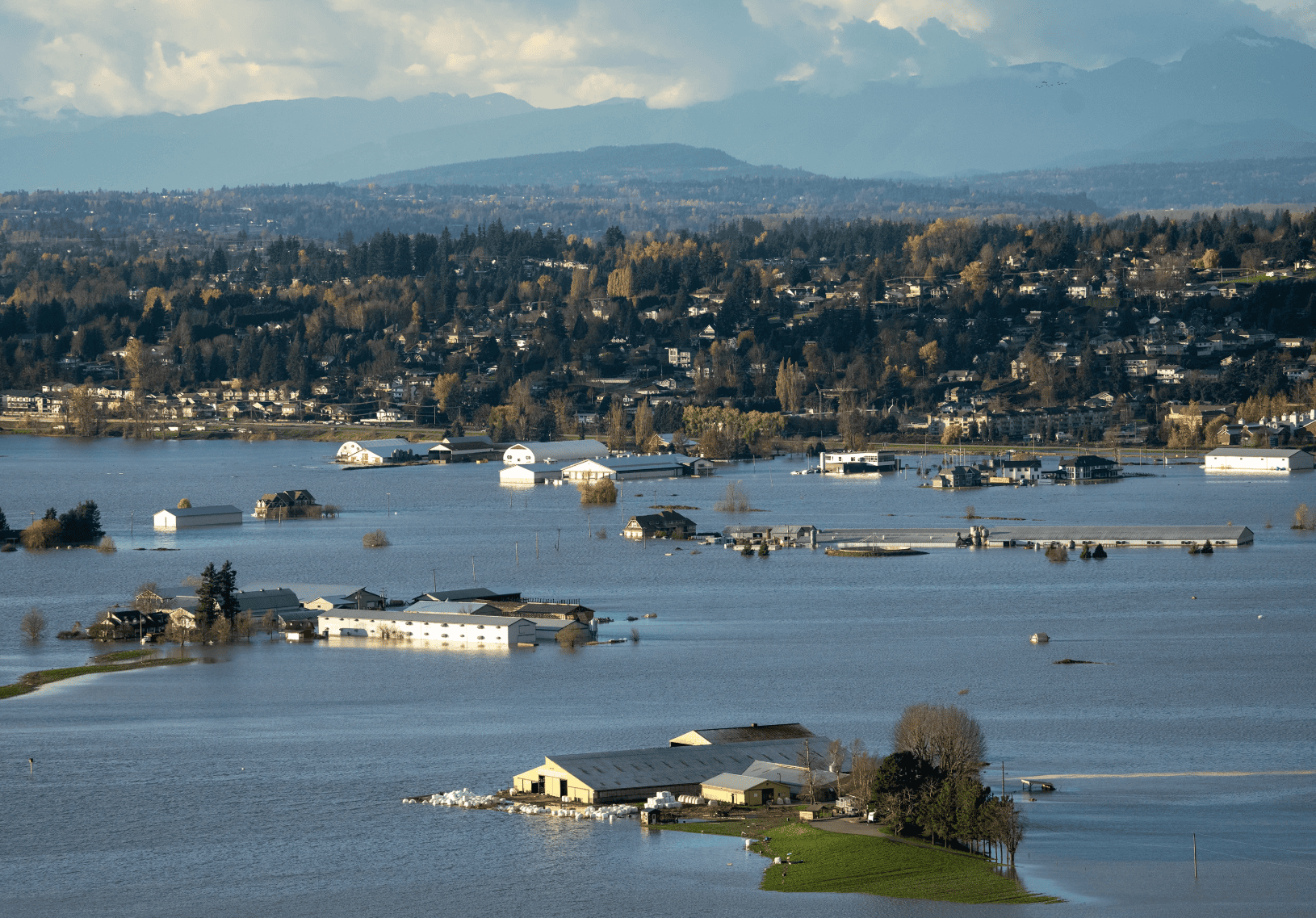
Some farmers moved animals to higher ground or other facilities. In many cases, however, water rose too quickly, roads became impassable, or there was nowhere available to take them.
That same year, more than 650,000 farmed birds died during B.C.’s extreme heat dome. Many were confined in barns that depended on mechanical ventilation and cooling.
Barn fires, floods, wildfires, extreme heat and power failures are different emergencies. They reveal the same systemic risk: enormous numbers of animals are being kept in conditions where their lives depend on buildings, roads, equipment and emergency systems that can fail.
Properties inundated by flood waters are seen in Abbotsford, B.C., Tuesday, Nov. 16, 2021. Jonathan Hayward/The Canadian Press
Large-scale animal deaths also carry wider costs. Emergency responders may be placed in dangerous conditions. Farmers and workers experience serious emotional and financial harm. Communities face the costs of emergency response, rebuilding, and the disposal of thousands of animal bodies. Floodwater can carry manure, fuel and other contaminants into homes, waterways and surrounding land.
As the risks grow, relying on individual farms to solve this problem on their own is not enough.
B.C. has an opportunity to act
In 2024, B.C.’s Farmed Animal Welfare Advisory Committee released a report recommending major changes to the province’s farmed animal welfare framework.
The recommendations included:
creating a government inspection and enforcement function
introducing proactive, risk-based inspections
expanding enforcement options
improving public reporting
including farmed animals in emergency-management regulations
assessing aging infrastructure and climate risks
clarifying the responsibilities of government, industry and emergency partners
improving emergency access to water, cooling, vet care and essential support
These recommendations are an important starting point. However, the B.C. government has not publicly provided a clear plan or timeline for implementing them.
Take action for farmed animals
Farmed animals deserve stronger protections before disaster strikes.
The VHS is raising concerns about transparency and accountability at the Stampede and about a recent update to Alberta’s Animal Protection Act that was passed without public consultation. The change makes it harder to protect animals used in rodeo and chuckwagon races from distress.
In summary:
Following another controversial year for the Calgary Stampede rodeo and chuckwagon races, the VHS reached out to the Stampede Board of Directors and Executive Management team requesting an update on this year’s animal incidents, injuries and any deaths.
To date, the VHS has still not received a response or acknowledgement from the Calgary Stampede.
The 2026 Calgary Stampede rodeo and chuckwagon races saw several incidents, including a chuckwagon collision resulting in the serious injury of a horse.
The Stampede also denied a media pass to We Animals Media, an animal photojournalism organization, further limiting public transparency around their treatment of animals.
The 2026 Calgary Stampede ended on July 13th with a confirmed serious injury and three other concerning animal incidents.
Despite reaching out to Stampede officials to confirm the status of these animals, the Vancouver Humane Society has still not heard back.
On July 19th, the Vancouver Humane Society wrote directly to the Calgary Stampede to inquire about several concerning incidents:
One horse was confirmed to be seriously injured during an unaired heat of the chuckwagon races on July 11th.
Another heat from the same day was not aired and results show that a team did not finish the race; this often indicates an incident or animal injury.
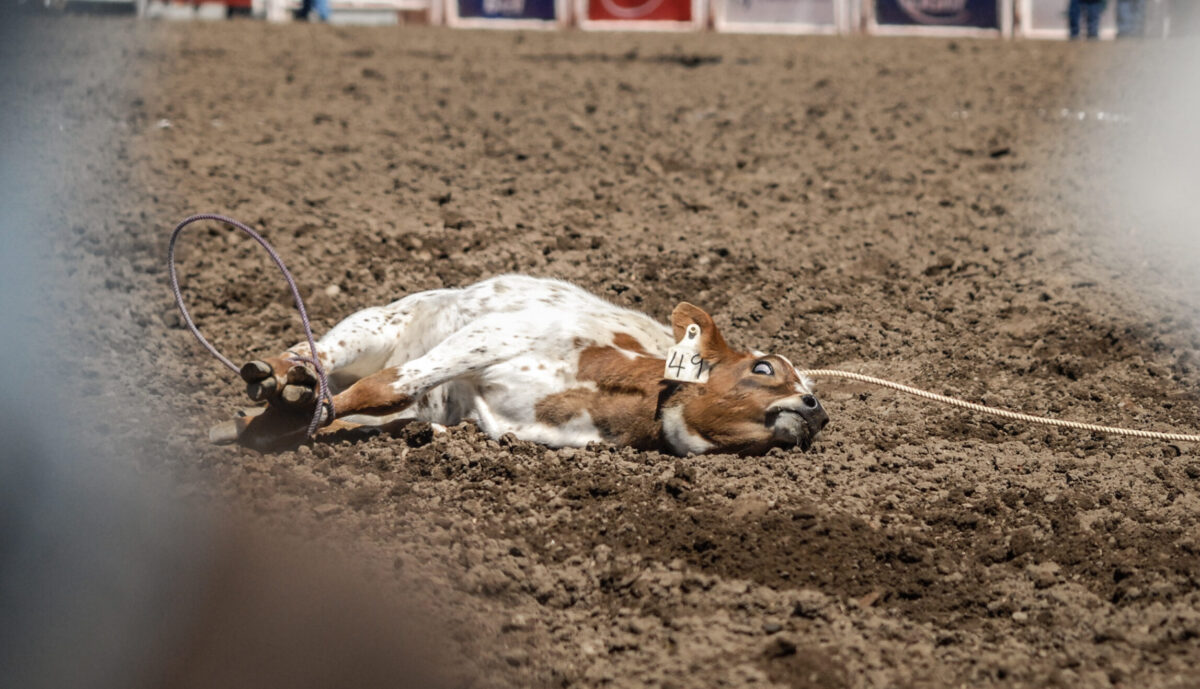
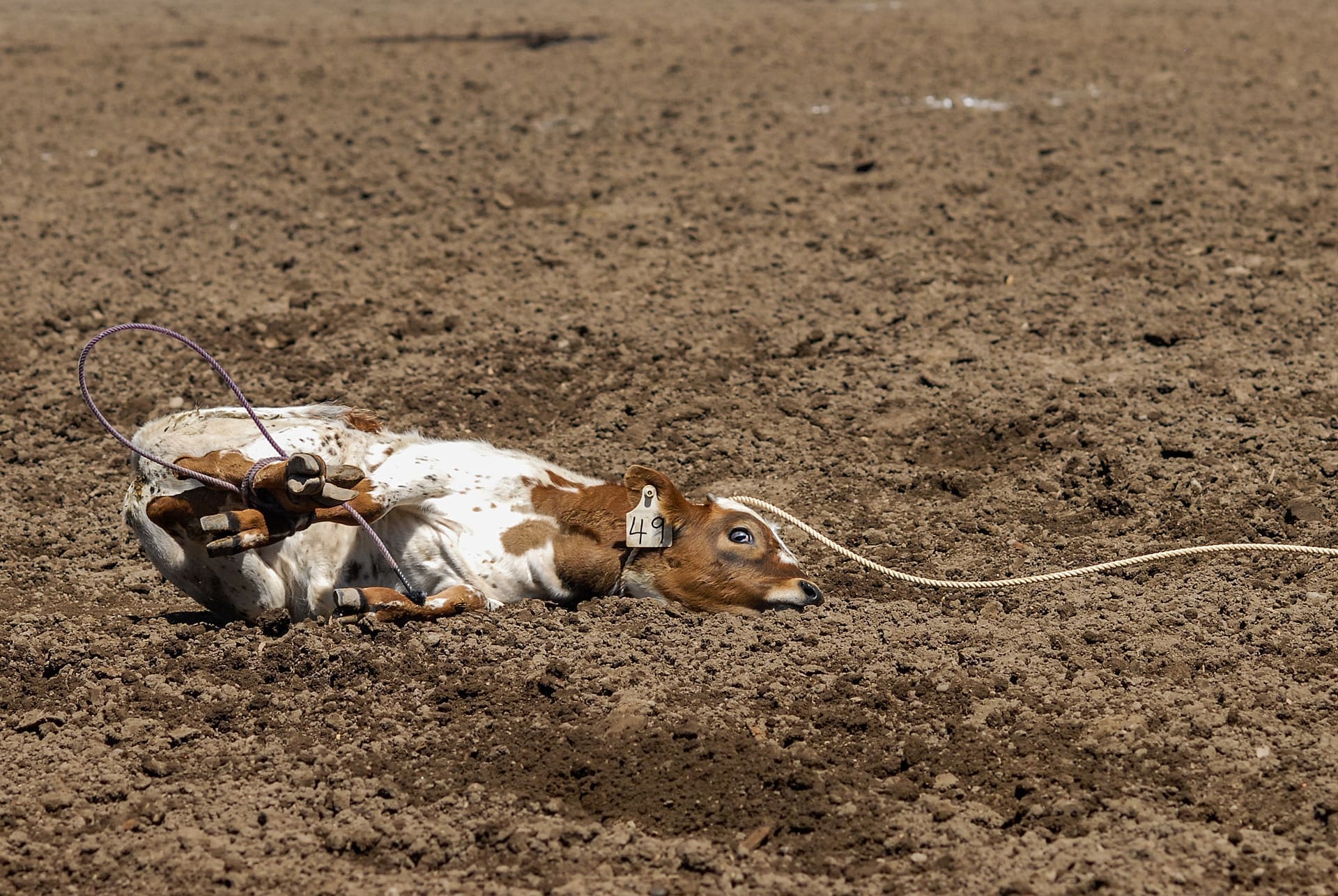
During a calf roping event on July 12th, a calf appeared motionless after being caught. The cameras quickly cut away.
Rodeo handlers received criticism for rough handling of a horse in a bucking event on July 8th.
The VHS requested that Calgary Stampede organizers respond with the status of these animals and the number of animal injuries and fatalities at the 2026 rodeo and chuckwagon races by July 27th. That deadline has passed with no response or acknowledgment from the Stampede.
The Stampede’s lack of transparency conflicts with their own welfare messaging.
The Calgary Stampede regularly emphasizes its commitment to animal welfare. But being transparent about their animal welfare practices would mean providing honest, timely information when animals are hurt, especially when those incidents are captured on video and witnessed by thousands of people.
The public deserves to know what happened to these animals so they can make informed decisions about attending risky animal entertainment events.
Meanwhile, Alberta law change weakens protections for animals used in rodeo.
The silence from the Stampede comes at a troubling moment for animals used in rodeo and chuckwagon racing in Alberta.
Earlier this year, when Alberta’s Animal Protection Act was being updated with a new loophole for animal sporting events, the VHS and supporters wrote to Alberta decision-makers to raise concerns.
A proposed change allowed distress caused to animals in sporting activities, as long as those activities followed “reasonable and generally accepted practices.”
The amendment that passed explicitly names chuckwagon racing and rodeo, exempting them from distress protections that other animals receive. It also makes it an offence to make “frivolous or vexatious” complaints to law enforcement.
There was no public comment period on this significant change.
As journalist Jessica Scott-Reid recently wrote in the Toronto Star, this new law amendment leaves animals more vulnerable and will likely discourage the public from making complaints.
“The legislature didn’t write that exemption because these events are safe. It wrote that exemption because it knew they weren’t, and it chose to protect the rodeo industry instead of the safety of these horses”
said Alexandra Pester, a Calgary-based lawyer with Animal Justice.
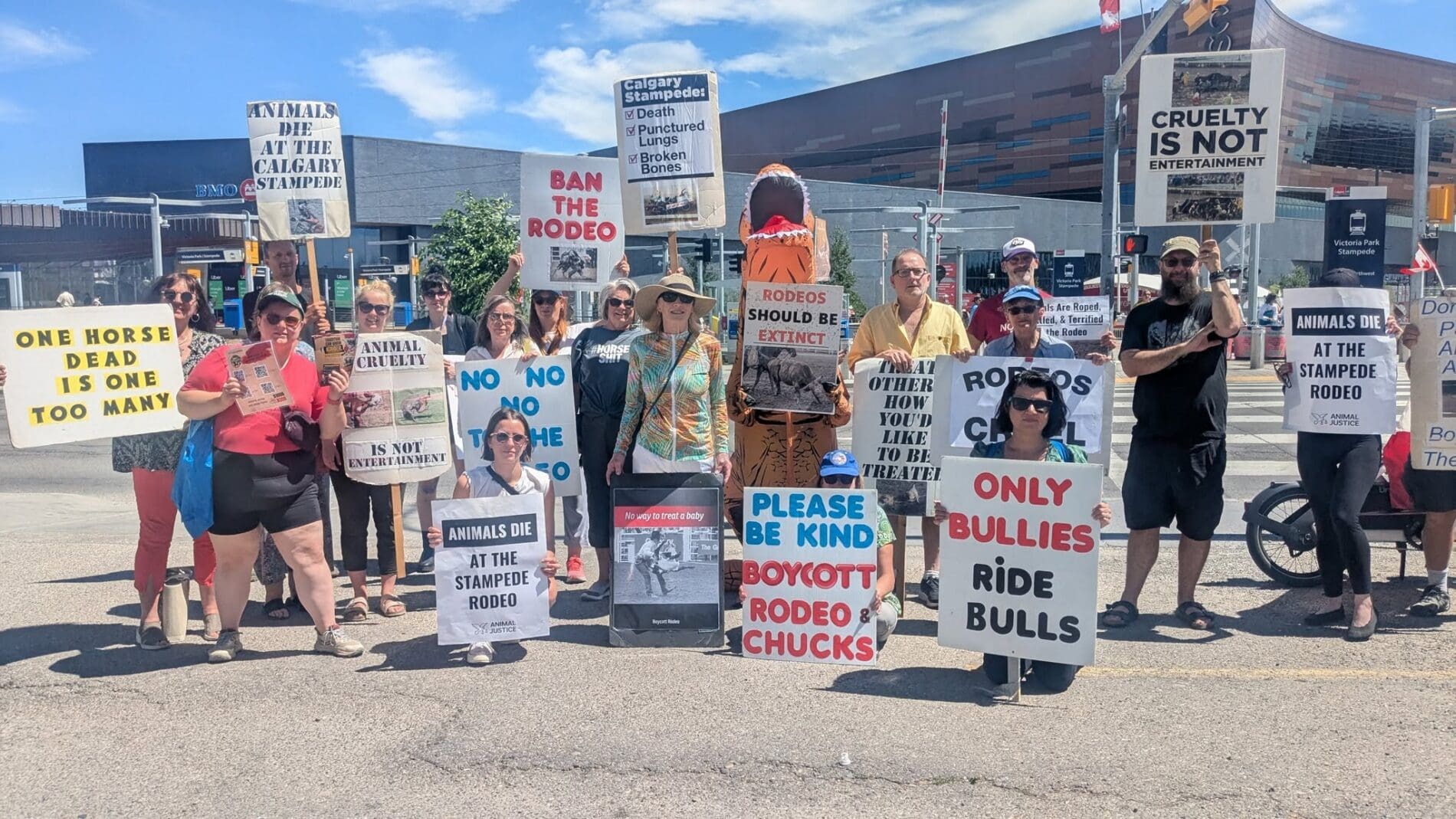
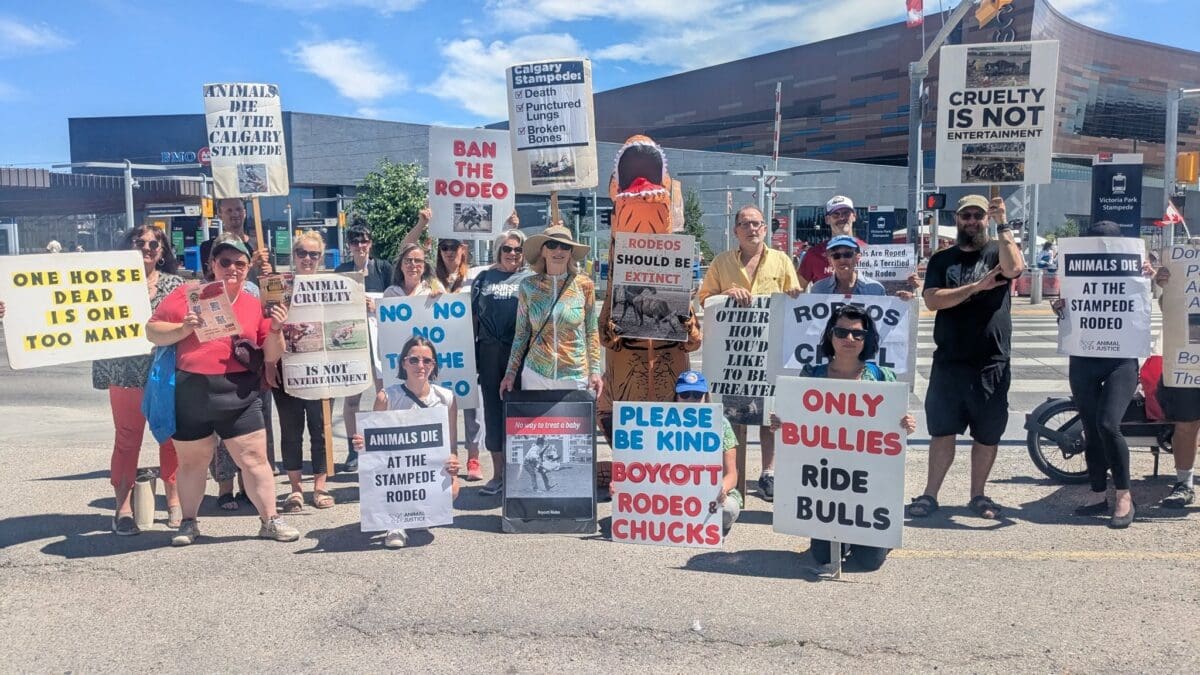
Activists gather with signs protesting the 2026 Calgary Stampede
Your voice can help ensure animals’ voices and well-being aren’t left behind.
Below are three important actions you can take today for animals used in the Calgary Stampede’s rodeo and chuckwagon events.
1. Use the quick-action tool below to contact decision-makers
2. Keep the momentum going by signing the #SayNoToRodeo pledge
3. Contact the Calgary Stampede directly using their public contact form to share your concerns and request an update on the animal incidents at this year’s event
After signing, share the action with others and invite them to speak up.
“The study … shows how limited the evidence is, and how much more research is needed … before people can confidently claim that common captive care practices protect reptile welfare.”
In summary:
Reptiles are readily available through pet stores and hobbyist sellers, where they are often marketed as “easy” or “low-maintenance” pets. A new scientific review suggests a much more complicated reality.
The paper reviewed decades of research on captive reptile welfare and found that the evidence base for reptile care is still surprisingly small.
The authors identified just 72 papers, representing 75 studies, that tested achange to captive reptile care and measured its effect using at least one welfare-related indicator.
Reptiles are commonly kept in a wide range of captive settings, including zoos, laboratories, farms, classrooms, rehabilitation centres, and private homes, using practices that historically relied on tradition, assumptions, or anecdotal advice, often called ‘folklore husbandry’, rather than strong scientific evidence.
Reptile welfare research is growing, but major gaps remain
The review found that reptile welfare research has increased over time, which is encouraging, but the available studies are not evenly distributed across species or settings.
Species: Most studies focused on squamates, the group that includes snakes and lizards, while other reptiles were less represented.
Settings: Much of the research also took place in controlled environments such as laboratories and zoos. Laboratory settings alone made up about 43 per cent of studies, while research in the companion animal industry represented only about 1 per cent.
This is a serious gap.
Many reptiles are kept in private homes, where care can vary widely and oversight is limited. Without research that reflects the conditions animals actually experience in homes, expos, breeding operations, and other commercial settings, it is difficult to know whether common care recommendations truly support good welfare.
Most studies looked at enclosures, not the full picture
Nearly half of the studies focused on changes to the physical environment, such as enclosure size, furnishings (such as climbing structures, hides, caves, or ledges), lighting, or substrate (e.g. bedding, flooring, litter, etc.). The most common changes noted by the researchers involved adding or changing enclosure furnishings.
These factors are especially important for reptiles because their bodies and behaviour are closely tied to their surroundings. Temperature, light, humidity, shelter, substrate, and opportunities to climb, burrow, bask, hide, or explore can all shape their well-being.
But the review also found that fewer studies examined other important areas, including human interaction, enrichment, or social contact with other members of the same species.
Measuring welfare in reptiles is challenging
The paper also highlights a major challenge in animal welfare science: how to tell whether a reptile is doing well.
Behaviour was the most commonly used welfare measure, appearing in more than half of the studies. Behaviour can offer important clues, such as how animals use their space, whether they hide, explore, bask, or show signs of stress.
But behaviour alone may not tell the whole story, especially for reptiles, who may mask signs of illness or distress.
Physical measures, such as body condition and growth, and physiological measures, such as stress hormones, were used less often. The authors note that only three studies included all three types of welfare indicators: behavioural, physical, and physiological.
For animals with complex and species-specific needs, relying on one type of measurement can leave important welfare concerns hidden.
What does this mean for exotic animals kept as pets?
The study does not show that captivity can meet reptiles’ needs. Instead, it shows how limited the evidence is, and how much more research is needed before people can confidently claim that common captive care practices protect reptile welfare.
Wild and exotic animals retain complex social, physiological, and behavioural needs, even when bred in captivity. The VHS opposes the sale and keeping of exotic pets and advocates for stronger protections to prevent animals from being kept in environments where their needs cannot be met.
The findings also support the need for a precautionary, science-based approach to exotic animal regulations.The VHS has called for a positive list framework, which would only allow species to be kept as pets if they are proven suitable based on animal welfare, public health, safety, and environmental criteria.
Animals deserve more than guesswork
Reptiles are sentient animals with needs that are often poorly understood and difficult to meet in captivity. Animal care should not be based on what is convenient, traditional, or profitable. Rather, it should be based on strong evidence and on the animal’s well-being.
When it comes to reptiles and other exotic animals, compassion means looking beyond the enclosure and asking a more fundamental question: should these animals be kept as pets at all?
You can help reptiles by:
Sharing this information with your friends and family
Not purchasing reptiles as pets
Supporting reputable rescues that prioritize animal welfare
Not engaging with harmful content that promotes wild animals as pets
Social media can be part of the solution, not the problem.
Share our content to reach more people and spread the word!
In this episode of The Informed Animal Ally podcast, Vancouver Humane Society Communications Director Chantelle Archambault and co-host, VHS Executive Director Amy Morris, are joined by Wildlife Campaign Manager at World Animal Protection, Erin Ryan. Together, they explore the welfare concerns surrounding captive wild animal attractions, including roadside zoos, exotic pet expos, and other close-contact wildlife experiences. They discuss common misconceptions about education and conservation, the impact these attractions have on animals, red flags to watch for when choosing family activities, and compassionate alternatives that help children connect with wildlife without causing harm.
Note: This written discussion has been edited for length.
Featured Guest: Erin Ryan
Wildlife Campaign Manager for World Animal Protection
Erin Ryan is the Wildlife Campaign Manager for World Animal Protection. She brings more than 10 years experience working on a variety of wild animal welfare issues across the country with groups including the BC SPCA and Humane World for Animals Canada. She is a skilled and creative science communicator, a Registered Professional Biologist (RPBio), and holds a BSc and MSc in Applied Animal Biology from the UBC Animal Welfare Program. Erin is a proud member of the Syilx (Okanagan) Nation.
Chantelle: Hi and welcome back to The Informed Animal Ally, presented by the Vancouver Humane Society. I’m Chantelle Archambault, the Communications Director here at the VHS. I’m joined, as always, by my wonderful co-host, the VHS’s Executive Director, Amy Morris.
Amy: Hello.
Chantelle: And today we’re so excited to welcome former guest Erin Ryan back on the show. Thank you so much for being here, Erin.
Erin: Thanks for having me.
Chantelle: Since she was last on the show in 2022, Erin has moved into a role as the Wildlife Campaign Manager for World Animal Protection. She has more than 10 years’ experience working on a variety of wild animal welfare issues across the country, with groups including the BCSPCA and Humane World for Animals Canada. She is a skilled and creative science communicator, a registered professional biologist, and holds a BSc and MSc in Applied Animal Biology from the UBC Animal Welfare Program.
Erin is a proud member of the Syilx Okanagan Nation. Today we’re very grateful to have her back to talk about an important issue moving into summer, as families are looking for activities to do, which is captive animal attractions. But first, Erin, could you share a little bit about your background on animals in captivity and entertainment, and why you feel it’s so important to talk about this?
Erin: Yes, absolutely, and thanks for the introduction. So, of course, I’ve spent almost my entire career in wild animal welfare. In my background in applied animal biology, what we really focused on was sort of the scientific evaluation of different animal welfare scenarios, including a strong background in animals in captivity. So, I’ve looked at a lot of the research on, you know, animal welfare problems for wild animals that aren’t in captivity, including urban wildlife conflicts, pest control.
I’ve also done some work with understanding captive wildlife facilities, including the ongoing issue of roadside zoos in Ontario, which is a major part of my campaign work here with World Animal Protection, but then also animals in the tourism space and how you can be a responsible tourist. So, I think I’ve had sort of a lifelong interest in these animals and, you know, just seeing how we can improve their lives and what we can be doing better.
Amy: Thanks for sharing, Erin. Something that I’ve sort of noticed is that social media is full of animals in captivity that are pets. You know, there’s this blurred line, and it’s becoming more popularized than ever before. And people are seeing that. They’re thinking about fun things to do with their kids as summer break is coming. And so, what are some of the popular attractions or activities around wildlife in captivity that people may not realize can be harmful for the animals?
Erin: You’re totally right. Social media, unfortunately, has this bad habit of sort of normalizing some harmful activities. And abroad, that can look like things like riding elephants or even bathing with elephants, which people don’t realize is a harmful activity. It can translate into things like swim with dolphins experiences, or even on a local level, people visiting substandard facilities like roadside zoos that we have in Ontario, or low-quality facilities that people kind of assume that if they’re open and operating legally, that they must be okay, when in fact we know that there’s a lot that goes on behind the scenes or even to the untrained eye that these animals aren’t doing well.
From zoos to exotic pet expos: what families don’t see
Chantelle: I’ve heard so many times that certain zoos are accredited by certain places, so they must be okay, or they’re still operating and they’ve been operating for a long time, so they must be okay. But we see again and again that the animals in those situations are not, they’re certainly not thriving, and they seem to be really having these negative behavioural patterns that are a result of just being stressed and bored and frustrated.
Erin: It’s a lot similar to food labeling systems, where consumers are wading through the different labels like free range versus free run, or organic. What does that actually mean for animal welfare? When we talk about some of the zoo standards, not everybody’s going to be an expert on all the different accreditations or certifications that a program may or may not have. But, generally we see that the absence of any type of accreditation is a type of red flag.
Chantelle: That’s certainly true. And then there’s also accreditations that are industry-based or volunteer-based that are less rigorous, let’s say.
Erin: Yeah, those that don’t carry the same weight or don’t necessarily translate into a humane experience for the animals.
Chantelle: Yes, exactly. That being said, zoos are often marketed as educational or conservation-focused spaces. What are some of the biggest animal welfare concerns that you’ve seen with zoos in Canada?
Erin: I think where we see some really professional facilities that are operating at a much higher level, that type of education work does happen, but it varies widely, and there’s no requirement or no prescribed method that says your education has to be of a certain quality or has to be correct. And unfortunately, I’ve even seen cases while visiting roadside zoos in Ontario where the so-called education that was being provided was blatantly wrong, or it was focused only about the animals at the zoos and not about the animals in their natural behaviour or what they would normally experience. So, it’s unfortunately not giving this education or conservation experience.
And many of these places argue that simply by owning these animals and keeping them forever, that they’re in fact contributing to conservation, when generally the opposite is true, that these wild populations are facing pressures because people are taking them from the wild to start breeding stock for animals in captivity.
But generally, you know, these programs aren’t meaningfully contributing to conservation in the wild, and that’s really what we’d want to see from any type of legitimate facility.
Chantelle: Yeah, absolutely. What is the typical experience of an animal in a zoo that you’ve seen?
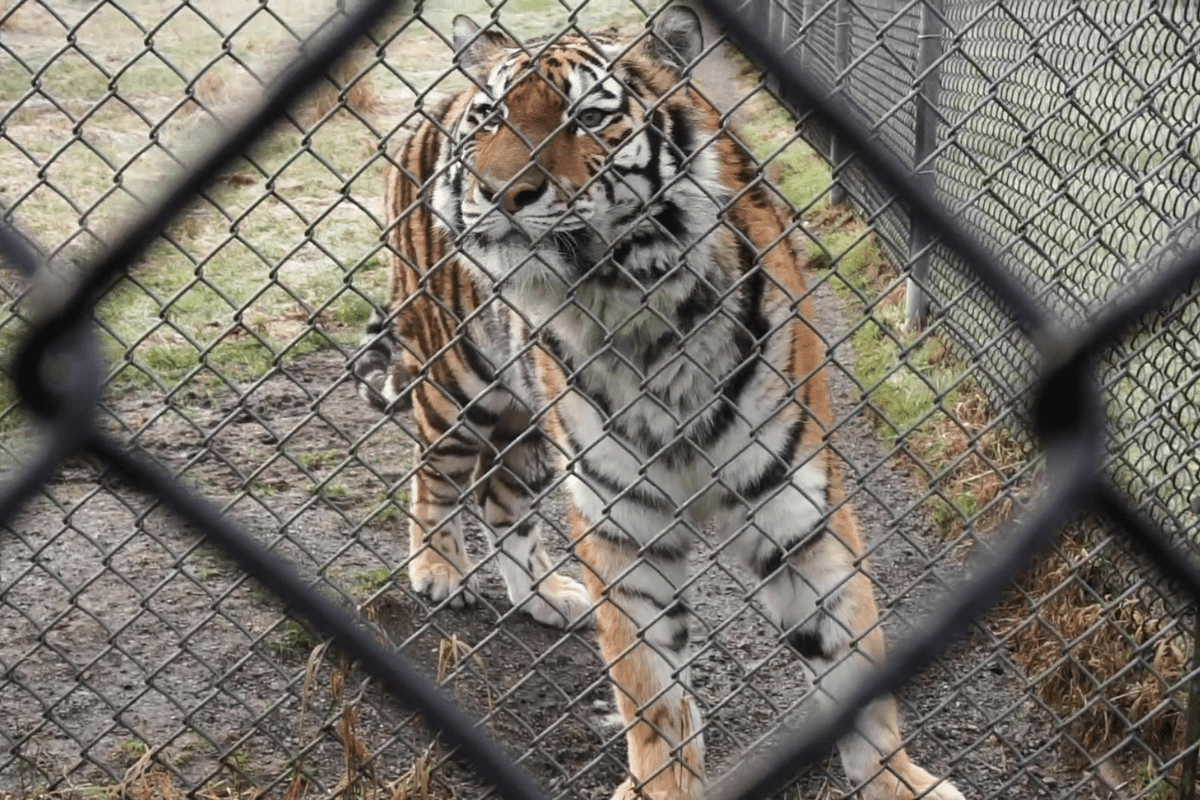
Erin: In some of the worst facilities I’ve seen, it’s generally animals in really barren conditions. And in somewhere like Ontario, where there’s no sort of regulations about it, you can imagine the most DIY animal cages you can imagine. So, think about wood frames with sort of chicken wire nailed to these wooden frames, hand-built ramps or shelters that don’t actually meet the animal’s biological needs.
And you can see this reflected in how the animals behave, because what we see is a lot of stereotyping or repetitive behaviors. That can be things like pacing around repetitive paths in the enclosure, and you can start to see that they’ll wear down paths where they do this. You can also see things like chewed materials or things like bar biting. I saw a really poor example of giraffes who were basically bar biting at their fenced-in enclosure, and you could see very deeply worn holes on either side of their wooden fencing.
I saw a serval that had a repetitive pacing pattern that was so specific that their paw prints were wearing down the individual footprints where they were putting their feet every time. So, it wasn’t even just one paced path, it was the individual steps they were taking over and over and over again.
Amy: Yeah, it’s really interesting to come at these facilities with a lens of the experience of the animals. And I know growing up, my family took me to aquariums and zoos, and I always was sort of like disturbed by the penguin exhibits because they’re really small and they’re sort of like always on display. You know, even as a child, I looked at them and thought, something just doesn’t feel right watching this.
The breeding that’s happening is just happening in a vacuum, in a non-natural habitat, and there’s such a loss of knowledge of what their natural habitat is meant to be. And they’re not getting to do any of their long swims, their deep dives, the hunting behaviors that make them who they are.
You know, it’s like they clock in for work every day, they go out, they’re gone all day, and they clock back out or whatever on their way back home, and you just don’t see that in these captive facilities. And for me, that is a symbol of so many of the animals. You know, it’s one example, but you can find with each animal you look at in an enclosure, you can see the ways in which something’s lacking for them.
I even remember once my mom took me to a zoo in San Diego that’s supposed to be amazing for conservation. And we were walking by the cat enclosures, and they’re very small, incredibly small, and one of the cats was spraying or peeing outside of the enclosure because, you know, the enclosures were so small and you could see just a sort of like stain on the pavement where people walk by. So, all of these experiences for me have been a big sign of why these places are harmful for animals, but there’s still a draw to see wild animals, to engage with them.
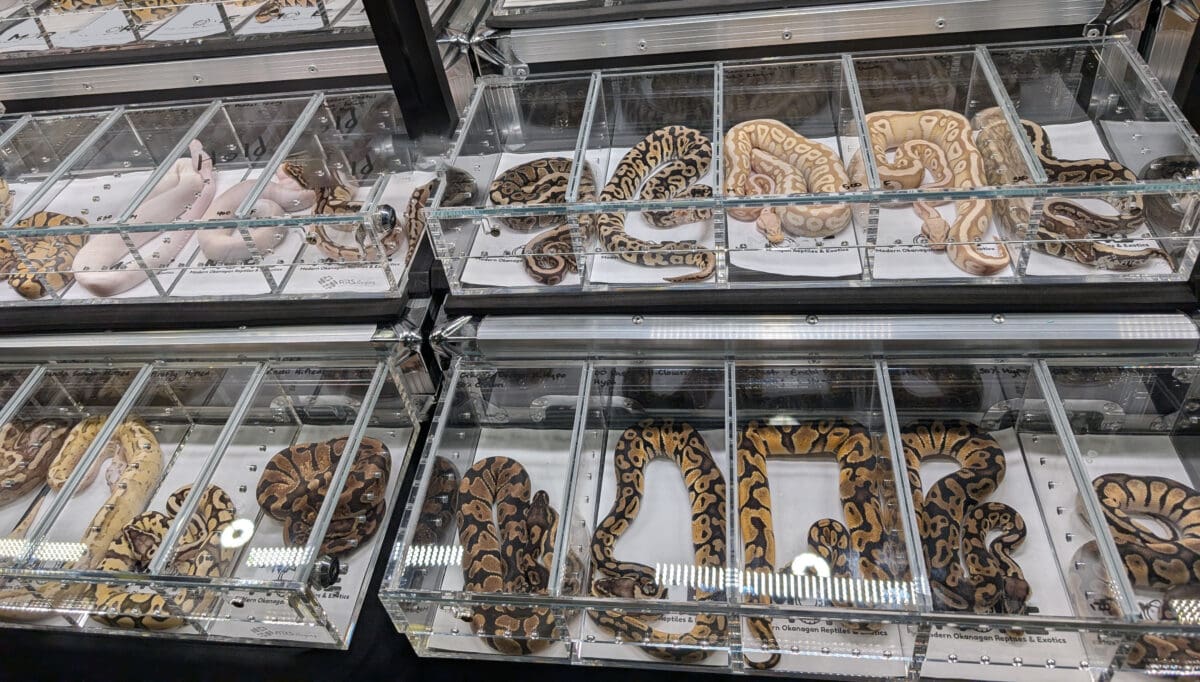
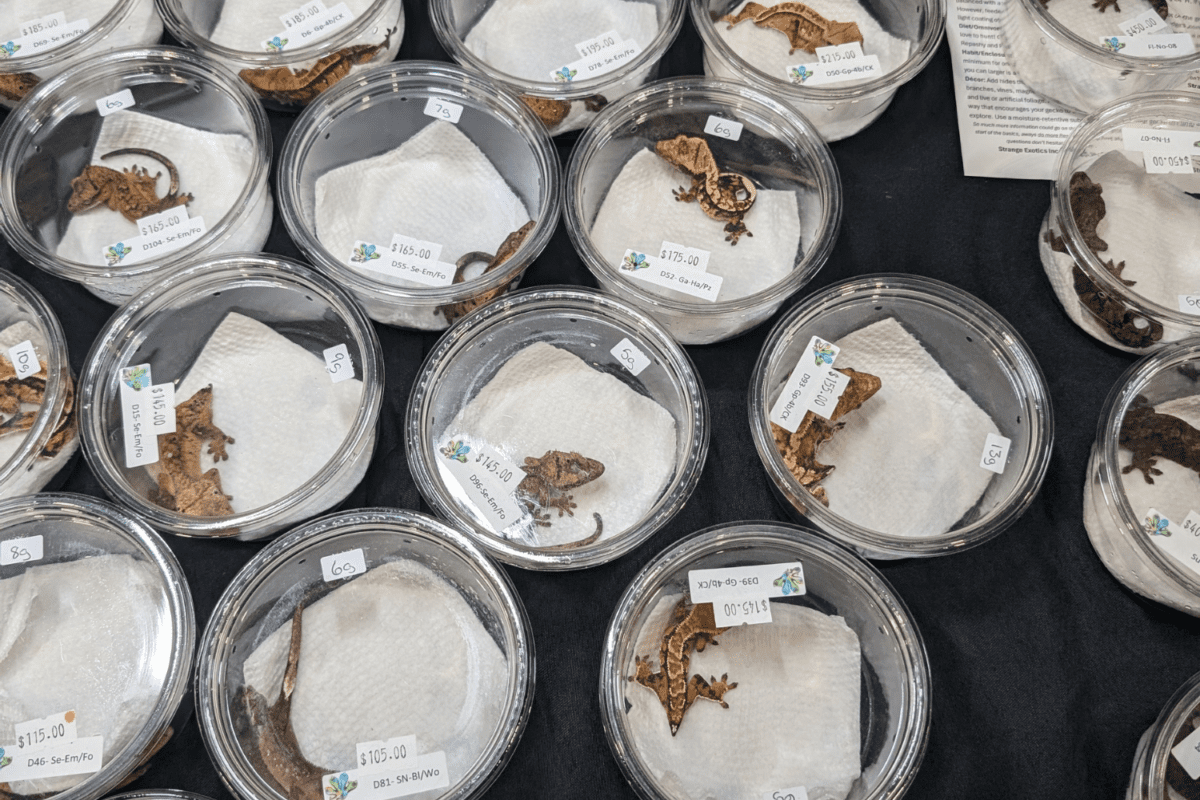
So even, you know, on a local level, there’s even these exotic pet expos. People are trying to keep wild animals as pets, including reptiles, and they’ve become popular for family outings as well. And, you know, I have a lot of concerns about these events. I’m curious to hear, Erin, what concerns you have about these events, both for the animals involved and for the messages they’re sending to children.
What children really learn from captive animals
Erin: You actually raised a really good point in your previous anecdote that ties in closely to this.
And my experience is that children are so much more intelligent and savvy than we give them credit for, and that they are more likely to have sort of a gut reaction to say, this doesn’t feel right. But then, you know, either two things can happen: the adults in their lives can normalize it for them, or they can check themselves and think, wait a minute, is this something that I’ve normalized? Is this a behavior I’ve internalized?
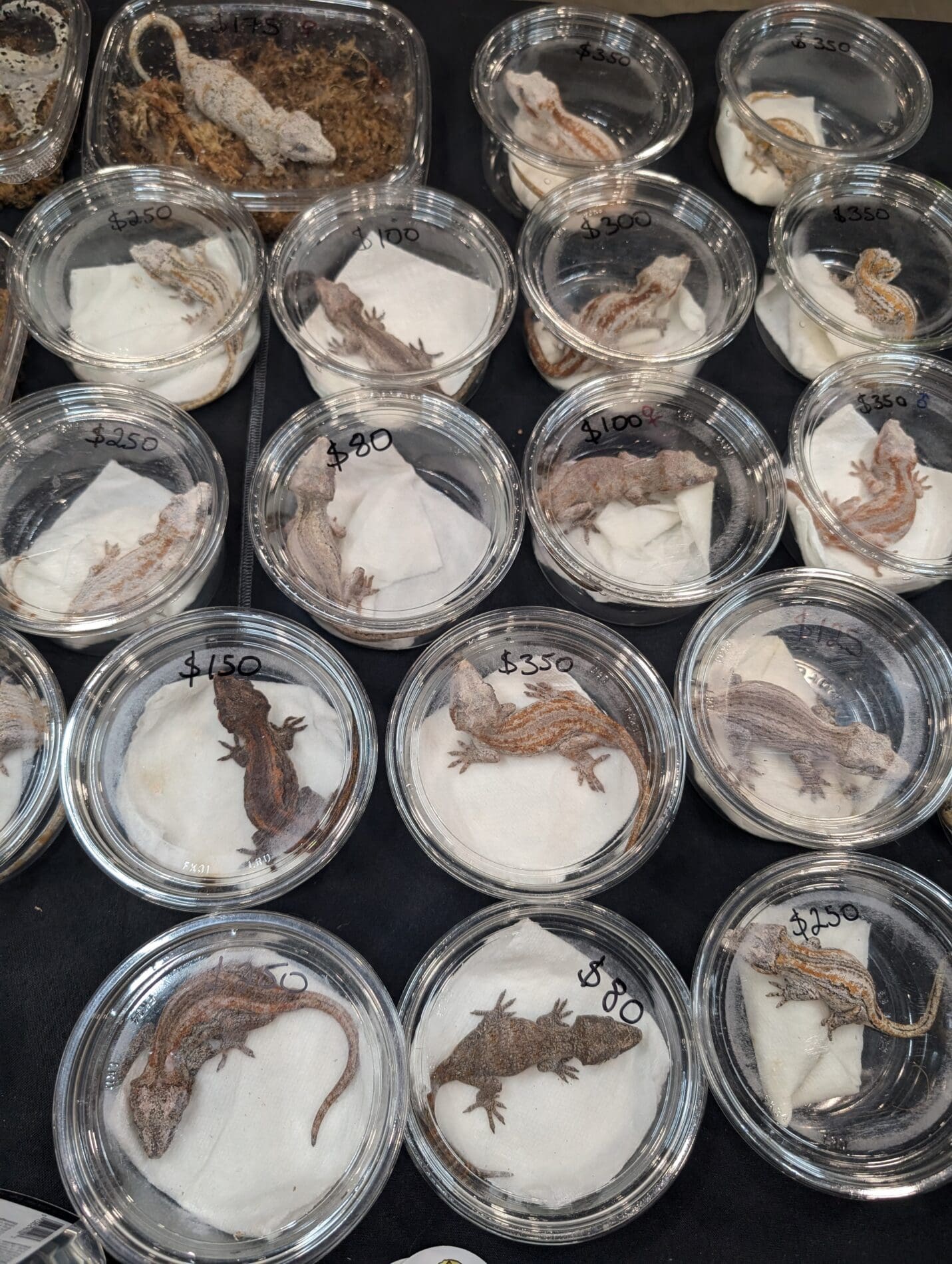
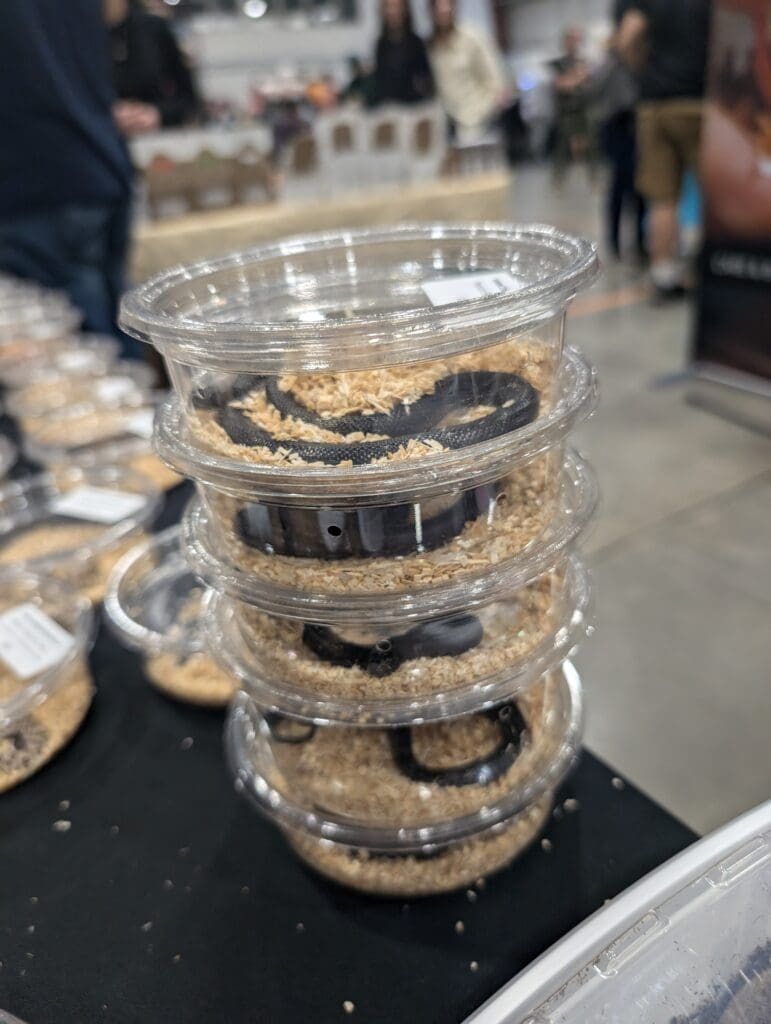
But it’s funny, I saw that a lot at a recent reptile expo that I went to, is that some, I would say probably the large majority of folks who were attending are, you know, reptile or exotic animal enthusiasts who are there with a specific purpose or specific reasons for going. But then there are a lot of foot traffic where it seems like this is a fun outing for the family for the long weekend or something like that. And what I saw is that, you know, even though there are signs everywhere saying that these enclosures are temporary and that’s why they’re so small, is that I would overhear both kids and their parents who maybe hadn’t been to an event like this before that were saying, man, this doesn’t feel right. Those enclosures look too small. Those animals don’t look happy. Wow, it really looks like they’re trying to get out. And then, you know, it was interesting to watch people kind of stuff that down, to have that gut reaction, to question it, and then try to normalize it. Well, it’s happening, so it must be okay, or maybe I’m not thinking correctly.
And then, of course, it also has that secondary effect of normalizing the ownership of these animals. We saw some pretty incredible animals, but also, I’m just, as a biologist, trying to understand the needs that those animals have and what their counterparts would experience in the wild, and I can’t see how anyone could meet those needs in a home without the animal suffering quite a bit.
Chantelle: Yeah, they do have extremely complex needs, and then having them in these small containers doesn’t really showcase the difficulty level.
I know that there are some breeders and sellers who put in more effort to show people what the requirements are going to be, but it is extremely difficult for the average person to meet the needs of these animals in a home or impossible. We also heard that same defense that it’s okay that animals are in these small containers because it’s just temporary. But if you think about it, it’s like these expos are happening in one building over the course of a weekend.
A seller has hundreds of animals, and they’re transporting them from a different city, usually. They’re going to the expo, they’re there for the weekend, and then they’re going home. They’re not going back to their hotel room every night and putting them in these large, suitable containers. That’s where they are for those, that set of days that is the travel and the expo. So, it’s temporary, but it’s still like, I wouldn’t want to be in a small closet for the equivalent of a long weekend.
Erin: I think that’s a good point. It kind of ties into what Amy, you were talking about like the penguins and their restricted movement and how that doesn’t really showcase what a penguin should be doing and acting. And, you know, as a person, you can imagine maybe back to the early days of the COVID-19 pandemic when we were all mostly staying indoors. I think about if some alien from outer space were watching me in those months, do they think that would be an accurate representation of humans’ natural behaviour to be cooped up inside and see the things we did then versus when we have our full scope of natural environment available to us? And the answer is certainly no.
So, I think it’s, you know, it’s really important that for an education value, we understand the full range of what these animals can and want to do, rather than seeing how they behave in a restricted environment and saying, well, that’s just how they are.
Amy: Yeah, absolutely. We were not doing well just in our homes for those months when that was happening, and that’s in our fully enriched environments with entertainment and things to do. And these animals are in a container, so that’s a great point.
Chantelle: So, we have a lot of concerns about these activities, but a lot of parents do choose these activities because they genuinely want their kids to learn about animals and build empathy for animals and be around them. How much do you think children are actually learning from activities that involve captive wild animals and close contact experiences?
Erin: I think on average, and a lot of the peer-reviewed evidence that I’ve seen, is that on average, not a lot. A lot of the kids who report learning after visiting the facilities are generally from families or kids that already have an interest in the natural world, already have an interest in sort of environmental sciences that’s often passed down to them by family or friends, and that these facilities rarely inspire new interest in people. And unfortunately, you know, what we see on average is that what kids remember is saying it was fun to see the tigers. They don’t remember saying, this is how a tiger behaves in the wild. These are the threats that tigers face in the wild.
This is what we need to do to protect tigers. So, it kind of misses the mark. And I know one of the most disappointing things that I saw when I was visiting roadside zoos last year was we would see school buses full of kids arrive at these already substandard facilities, and then half an hour later, all the children were on the playground.
So, it didn’t even matter that they’d come to see these animals or reportedly learn about these animals. They were more interested in hanging out with their friends and playing outside, which is absolutely what kids should be doing.
Chantelle: Yeah, that’s a great point. I was at the Greater Vancouver Zoo to check out the facilities and see how the animals are living and behaving. And I was at the tiger exhibit where there’s this tiger who is stuck by herself in this cage for years. There was a child walking by surrounded by these big cat enclosures, and there were all these animals to see. These animals spend all their time in these enclosures so that children could come and see them. And this child was walking by and saying, why are we here? Can we go back to the dinosaurs? And the dinosaur exhibit does not even have animals, obviously, because it’s just this exhibit with animatronic dinosaurs that are more interactive.
That is quite an engaging exhibit, but it really shows that you don’t need to have live animals for children to be interested. You need to engage them in the things that they’re interested in. So, if there were other ways that these facilities were teaching children about animals, say like animatronic animals or holographic shows, I’ve seen that done as well. There are so many other ways to see animals without having the animals need to be there for their entire life experience.
Erin: That’s an excellent example, is that, you know, often the argument that kids in particular need to see these animals to learn about them or to inspire awe about them is totally untrue. If you’ve ever asked a five-year-old their favourite dinosaur, they can tell you all about it, the specific name, they will absolutely call you out if you get it wrong. And of course, none of them have ever seen a dinosaur.
Changing minds with curiosity and compassion
Amy: Many of us grew up going to zoos, marine parks, having pony rides, other animal attractions without questioning them. And maybe I’ll share one other story, certainly because I feel like I’ve experienced a bunch of these different animal exhibits, and I have had sort of some changes in how I see things or had to work through what I felt when I saw things.
So, one example is in the place where I grew up in New Hampshire, there’s a place called Clark’s Training Post that has bears and they’re doing tricks. And so, they do a whole performance where they’re being fed ice cream cones as a positive reward, and they’re swinging on the swings and they’re pushing things around. And, you know, it’s positive reinforcement-based and it’s cute. And, you know, for me, that was this confusing thing where I went, well, these bears live a long time and everything’s positive reinforcement, but something still feels wrong about this. And it’s only once I started working in the field that I really understood, okay, you know, what’s the full picture? What are the bears experiencing? What are their habitats like outside of this moment? What does being forced to perform do for them? So many questions about them and their experience.
Have your own views changed over time as you’ve worked in this field? And was there a moment that shifted how you saw these experiences? And I’d be happy to hear both from Erin and Chantelle on this.
Erin: Yeah, I always say to people, you know, we never judge or shame folks for what they did in the past when they didn’t know better because, you know, I was definitely a kid who has been to zoos. I went to Marine Land when I was a kid, and now it’s been a huge part of my own work in, you know, basically encouraging places like that to shut down and advocating for better protections against those facilities. So, I think it’s just important that when we know better, we do better.
But for me, I think, you know, most of my love of animals and my understanding of them comes from, you know, my grandfather and my Syilx culture. So, I was basically raised in my grandparents’ backyard, and my first exposures with their animals were in the wild. And, you know, seeing them do all their natural behaviours and learning how to coexist with them.
And I think the older I got, the more it just didn’t feel right that this was the relationship we had with them. And it felt very exploitative and it felt not true to how I viewed the role of animals in our culture and in our world, and it didn’t feel good. So, I don’t know that I can pinpoint one specific example, but, you know, I do think a lot about my childhood and how I was raised watching wild animals be wild animals and learning to respect that from my whole life, basically.
Chantelle: Yeah, I completely relate to that experience. I was really interested in animals as a child, so I just sought out every opportunity to be near them. And my parents also helped me seek out all opportunities, which included opportunities that were not good for the animals. So, I have pictures of me at a petting zoo feeding captive deer. I used to go to the zoo. I went to the aquarium all the time.
But those weren’t the only places that I engaged with knowing about animals. And I wouldn’t say that they were a main part of why I got into this work. I read books about animals. I adopted a cat. I had all these different experiences where I was seeking out animals. I was watching for wildlife when we were going on walks. I was looking for frogs and birds and squirrels. So, there’s all these places that I was engaging with animals. And then as I grew older, I started to kind of pick and choose which activities I was engaging in that felt more wrong than others.
So, I would say, okay, well, the aquarium seems like it’s fine, but the zoo maybe seems like it’s not as good. And I’m okay eating some meat right now, but I feel like veal is maybe a meat I shouldn’t be eating. And it was just a very gradual thing where I finally realized that kind of any exploitation of animals is something that I’m not okay with happening. So, I don’t engage in those activities anymore. I’m vegan. I really had a moment where I was looking more into these activities and what they mean and what the experience is for the animals.
And I do carry some guilt that I engaged in those activities because I did contribute to a system where animals were being exploited. But I also recognize that there’s a journey where you go from what is okay in the general public and what feels like it’s acceptable within your culture to recognizing what the realities are. But I think that experience of carrying some guilt is fairly common when people learn more about these issues because these experiences seem like such a normal part of childhood and you learn more about them and you realize that they’re not okay. So, I’d like to ping this back to you, Erin, and Amy as well. How would you approach a conversation where someone is feeling that kind of guilt or defensiveness?
Erin: Yeah, I think you said the feeling of guilt is normal. And I always try to approach it with some compassion and say like, you know, when you didn’t know, you didn’t know. We can’t hold that against ourselves.
Although I should tell myself the same thing because, of course, I feel the same way in, you know, so many different instances. But what’s really important is that, again, that sense of when we know better, we do better.
And I think that defensiveness on the flip side kind of comes out when people don’t want to hear or aren’t open to maybe hearing some different opinions. And the result is a feeling of like, well, I’m a good person, so what I did couldn’t have been wrong. But acknowledging that even if, you know, you didn’t make exactly the right choices, that you’re still a good person. It doesn’t mean that, you know, just because this experience happened in your past or we know that shifting social norms has a profound effect on folks.
I think I always encourage people to lead with curiosity rather than judgment. So, I know in my own life when I’ve been confronted with challenges, what I try to do, especially the scientist in me, is understand, oh, like you’re saying that this belief I held is wrong or that something’s not true or that something’s different than the way I expected it. Like let’s, you know, try to talk about it. Or if I’m feeling uncomfortable in the moment, I may just say, okay, but then I’ll take it home and sort of do my own background work to try and understand the issue a little bit better in all the different angles. But I would also say with that, so don’t judge yourself on things you couldn’t have known and always lead with curiosity over judgment.
Chantelle: That’s great advice.
Amy: Yeah, I think guilt and judgment are so closely linked and certainly associated with the values that we hold. And as our values grow from what we learn, those things show up in different ways.
And I think it applies to so many areas of animal protection, whether it is what we eat, whether it is how we train and keep our pets, whether it is, you know, what activities we’re doing when it comes to tourism, whether we’re choosing to, I don’t know, ride a donkey or a camel just for the fun of it. You know, there’s such a range of things to reflect on in our decision-making around animals.
And certainly, there’s a lot of self-forgiveness that has to happen when you think about what you have done, what your past experiences have been, and then also kindness and empathy for others that are going through that process. And I still don’t always know how to handle situations, and they do come up.
I was wearing a shirt with a raccoon on it, and a woman came up to me and she said, oh, you like raccoons? I have a raccoon in my car right now. I’m going to bring the raccoon to the climbing area with me. And so, she has a pet raccoon. She explained that the raccoon had been domesticated. They’ve been trying to domesticate these raccoons over 30 years. And so, it was one of those situations where I was like, oh, I really wish I wasn’t wearing a raccoon shirt right now because I wish I didn’t know that this woman has a raccoon in her car. And I just, I remember being in that conversation and trying to find that line of not normalizing her behavior, of showing curiosity, but also really not knowing what to say.
And I think it’s okay to have those moments and they’re going to happen. And it’s also about like taking those moments and then reflecting on them later where maybe you didn’t know what to say when your friend said that they took picturesor, you know, with like a drugged tiger or when a person talks about visiting a sanctuary, but it doesn’t sound really like a sanctuary and it sounds more like wild animals are being kept for entertainment. You know, these things happen all the time. And it’s just about thinking about how you would want someone to talk with you about it and how you can approach something with curiosity and kindness while still holding to your values.
And so as much as possible, I think reflecting on these things in advance and sort of having these almost like having conversations in your head sometimes and practicing the skills of being able to both be curious but also share about your experiences, your boundaries, what you’ve learned in a kind way is really important because that’s where social change happens in the situations where people do not feel defensive when they’re met with curiosity and then they can also meet your perspective with curiosity. And it is really hard to do that. And certainly, in a way, I think as animal protectors, as people who care for individual lives of animals, that’s our biggest job is to get into a practice of having those conversations in a connecting way.
Erin: It’s a good point. Social change, we think about happening in, you know, government buildings and parliament, but social change also happens in living rooms, at coffee shops and bars and all those tough conversations.
Better ways for families to experience wildlife
Chantelle: For listeners who are thinking about these things and they want their children or their grandchildren or they want to talk to friends about the activities their friends do and making sure that they still have access and connection to animals and nature, what are some more compassionate and animal-friendly alternatives you’d recommend?
Erin: I think at the local scale, one thing that we’re losing, especially as we’re facing increased urbanization, is exploring the wonder of nature and animals in your own backyard. So many people don’t get to experience that the way that, you know, even I did growing up with a forested backyard.
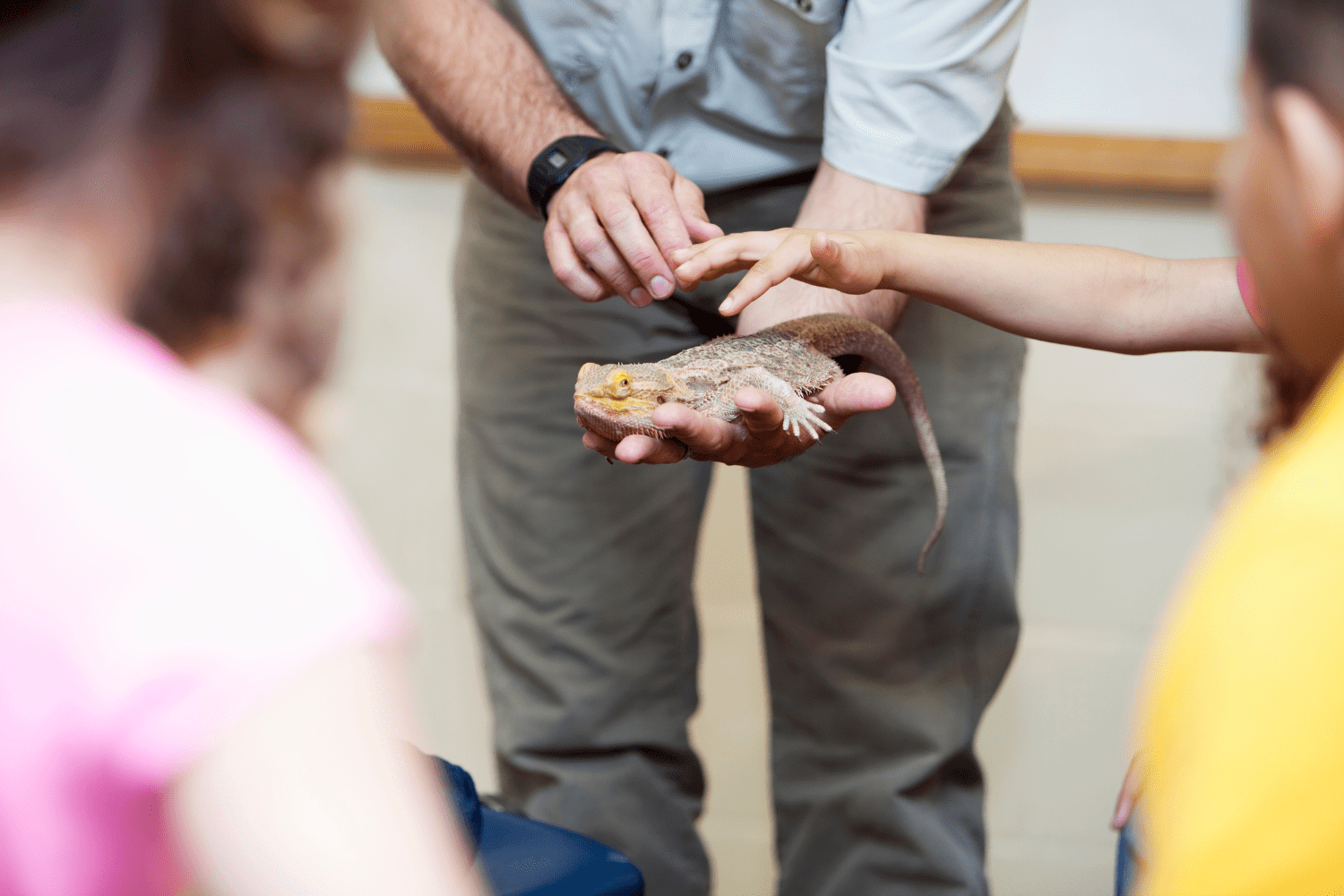
So, finding ways that you can engage with local naturalist societies for different wildlife viewings that may be closer to home rather than in sort of faraway places. But then also looking for sort of those genuine rescue and sanctuary models. And unfortunately, the reality is many of those places, by nature of the work they do, may or may not allow visitors for the protection of the animals. But there are certainly models where, you know, they’re primarily doing wildlife-friendly viewing rather than direct interactions. I would say that anytime you’re directly handling or interacting with an animal, that’s generally a red flag.
Chantelle: Oh, that’s a great point to bring up, red flags that people can look for when they’re going into looking at these activities. Are there any other red flags that people can look for if someone is unsure whether an activity involving animals is ethical?
Erin: So, I think that direct interaction is one. There’s also the aspect of even if it’s not the person or the visitor handling, how do the people handling the animals interact with the animal? Are they being, you know, their authentic selves? Are they kind of being forced to perform, in an example Amy gave, are they forced to perform tricks or sort of performances? Like are they brought near a stage? Those are typically red flags.
If there’s any type of photo opportunities, I generally call that a red flag. Any opportunities to feed animals, it doesn’t always fall into direct interaction because you may not be hand-feeding animals, but encouraging, even throwing food can be a form of sort of coercion.
And I would also look for, does the animal have somewhere to hide? Because if there’s nowhere in their enclosure that they can get away from guests, I would also say that that’s a red flag that’s built for the guests and not for the animals. I think green flags are definitely those places that are observation only where animals are more or less behaving as they would and they have their own choice of whether they want to be seen and what they want to do when they’re out of their enclosures or roaming about.
Chantelle: Those are really helpful tips. Thank you, Erin.
Amy: So, what are some things people with children in their lives can do to help normalize a kinder, more animal-friendly summer break?
Erin: I would encourage folks to check out local options. So, engaging, again, local societies, local naturalists, local wildlife viewing, and finding options there. But then also looking for those types of experiences where either it’s observation only or maybe it’s a purely educational experience. I know I always wanted to be a kid who went to summer camps and I was not, but looking for that type of option would be really good.
Amy: Yeah, absolutely. This has been a really helpful and interesting discussion. I’m really glad that you were here for it and I hope that everyone listening at home found it helpful as well.
Chantelle: Erin, you’ve highlighted some great actions people can take at home to look for red flags and to look for kinder alternatives. Another quick thing you can do is if there’s an animal attraction near you that you’re concerned about or that people don’t realize is harmful to animals, just share this podcast episode and other information about animals used in entertainment with your local community or parenting groups.
Thank you again so much for having this conversation today, Erin and Amy, and thank you to everyone at home who’s listening. We hope to see you again next month as we talk about more ways that you can be an ally to animals.
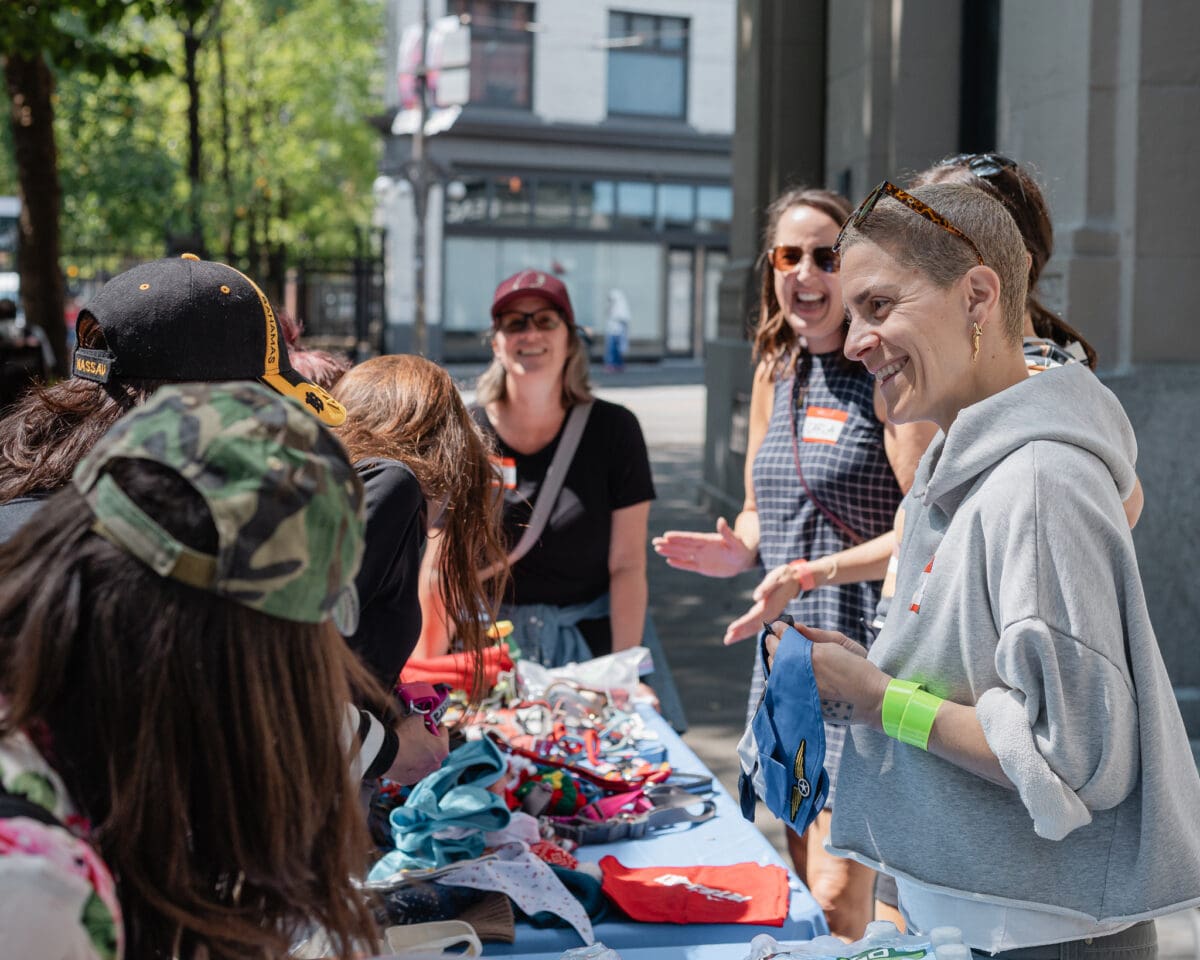
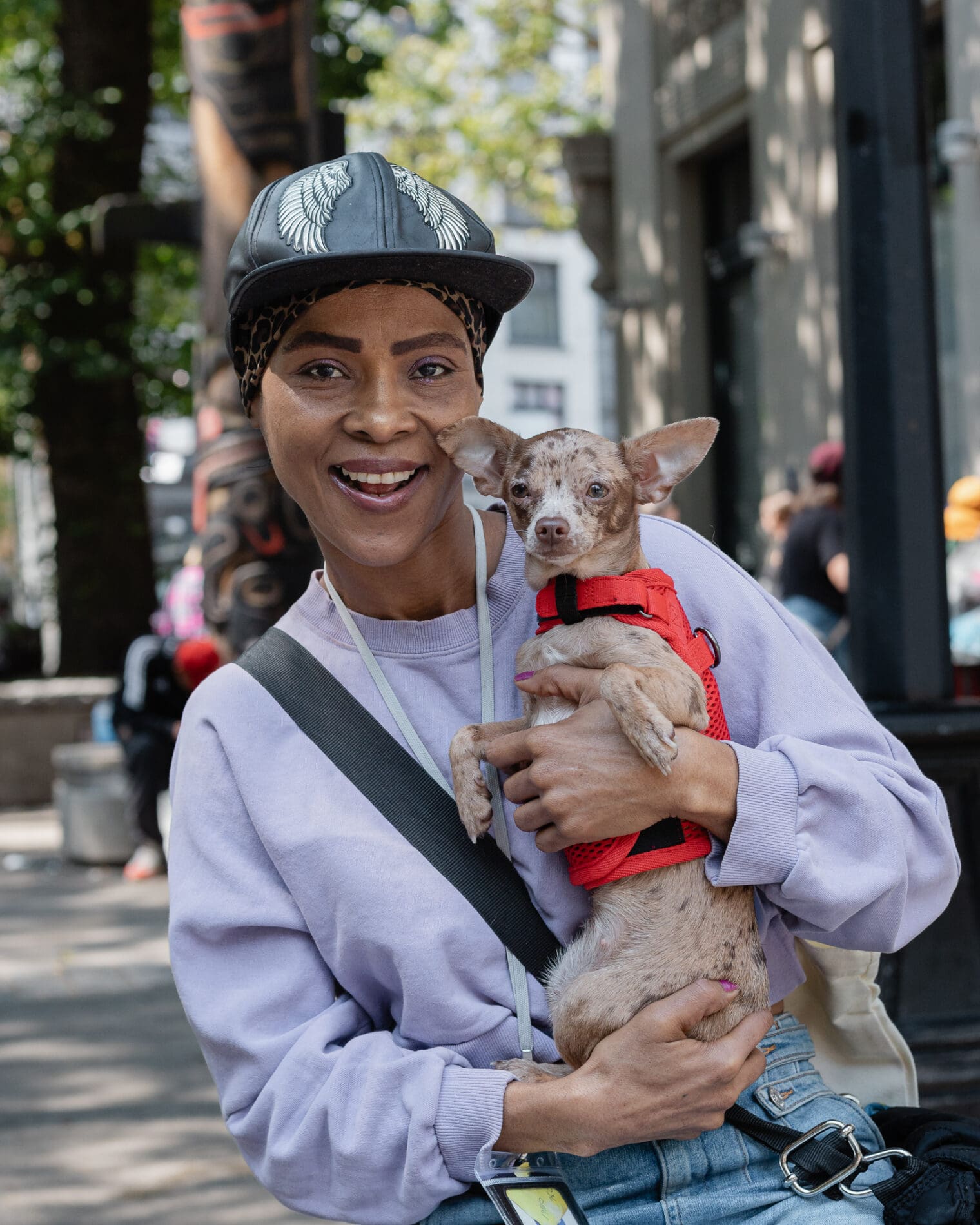
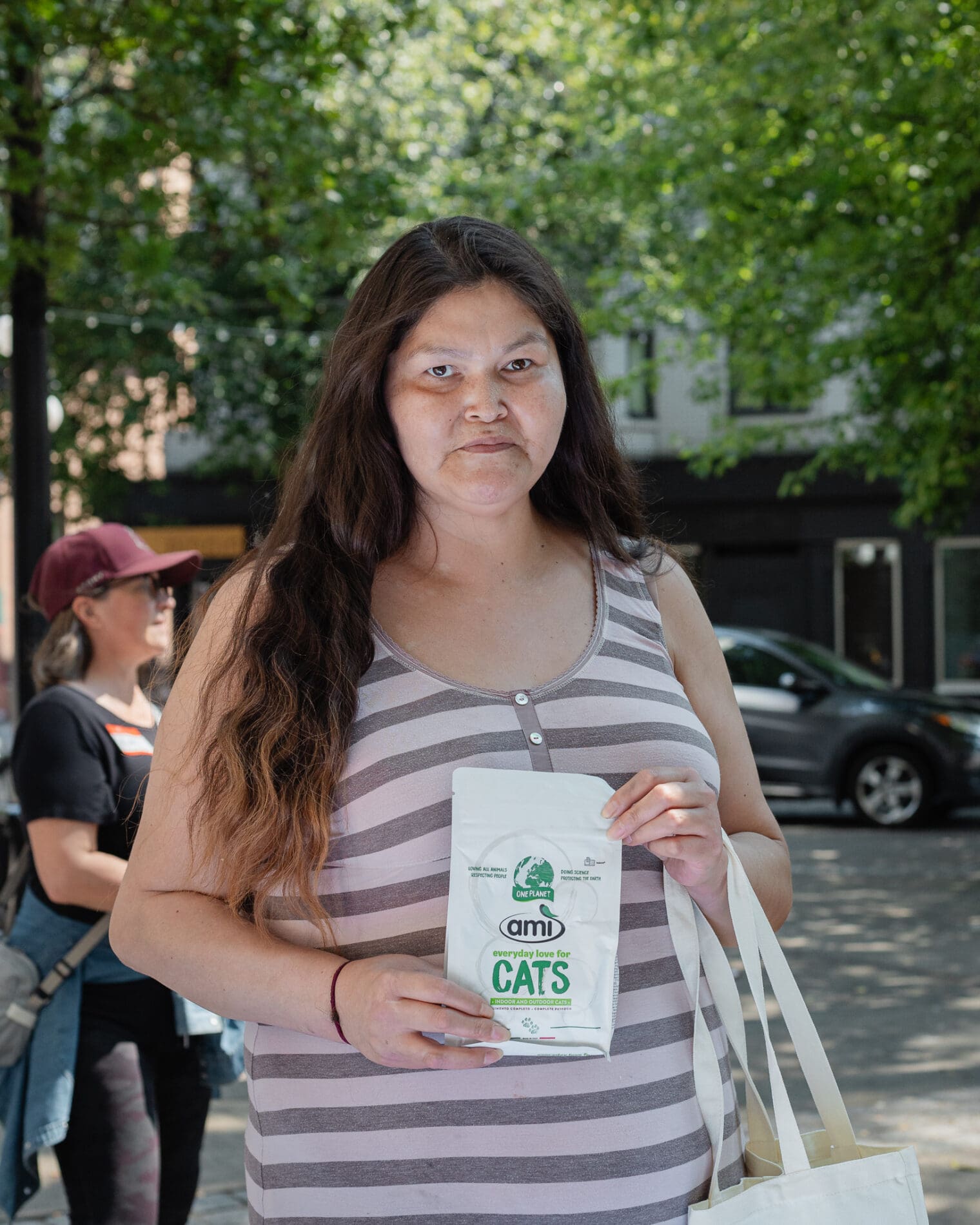
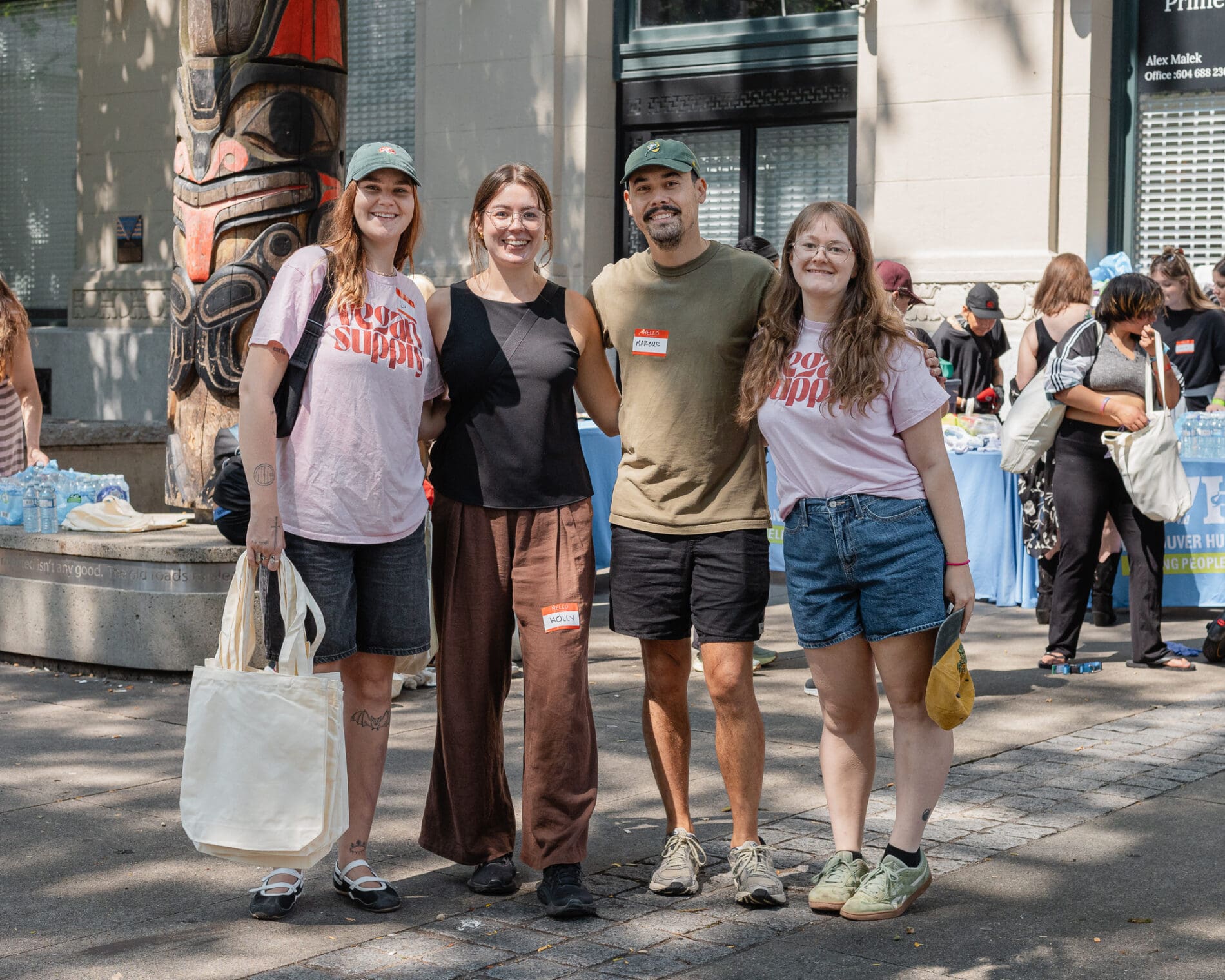
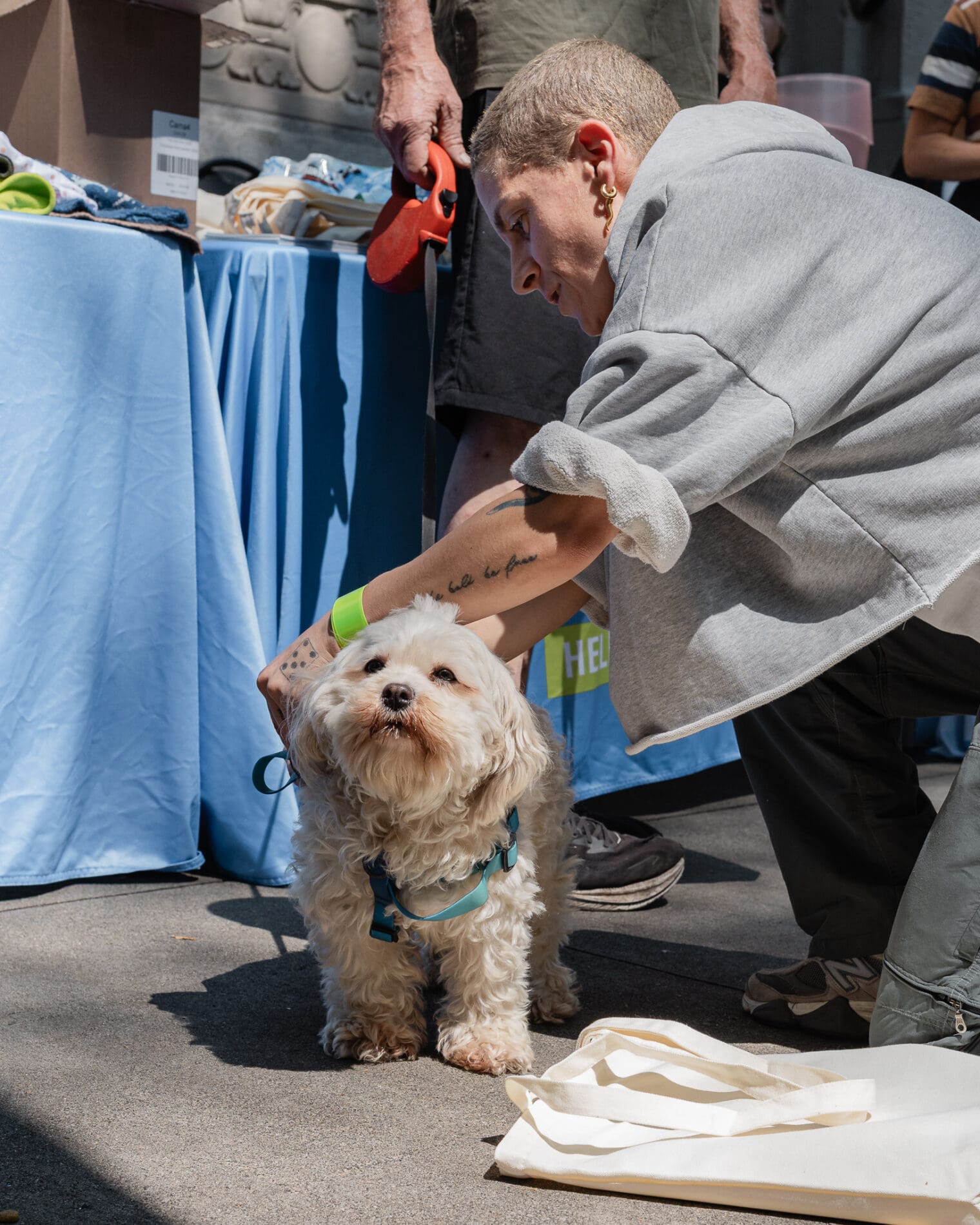
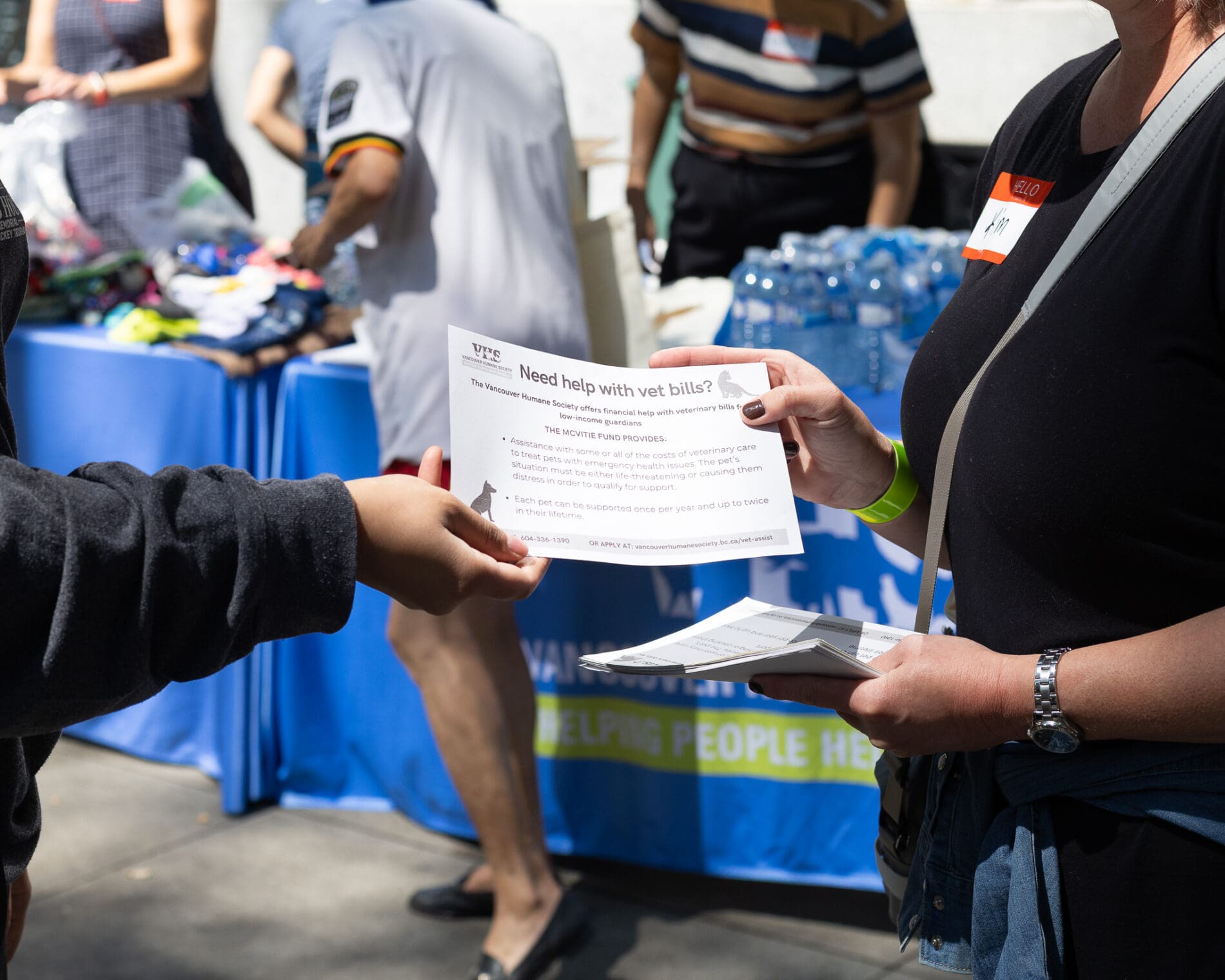
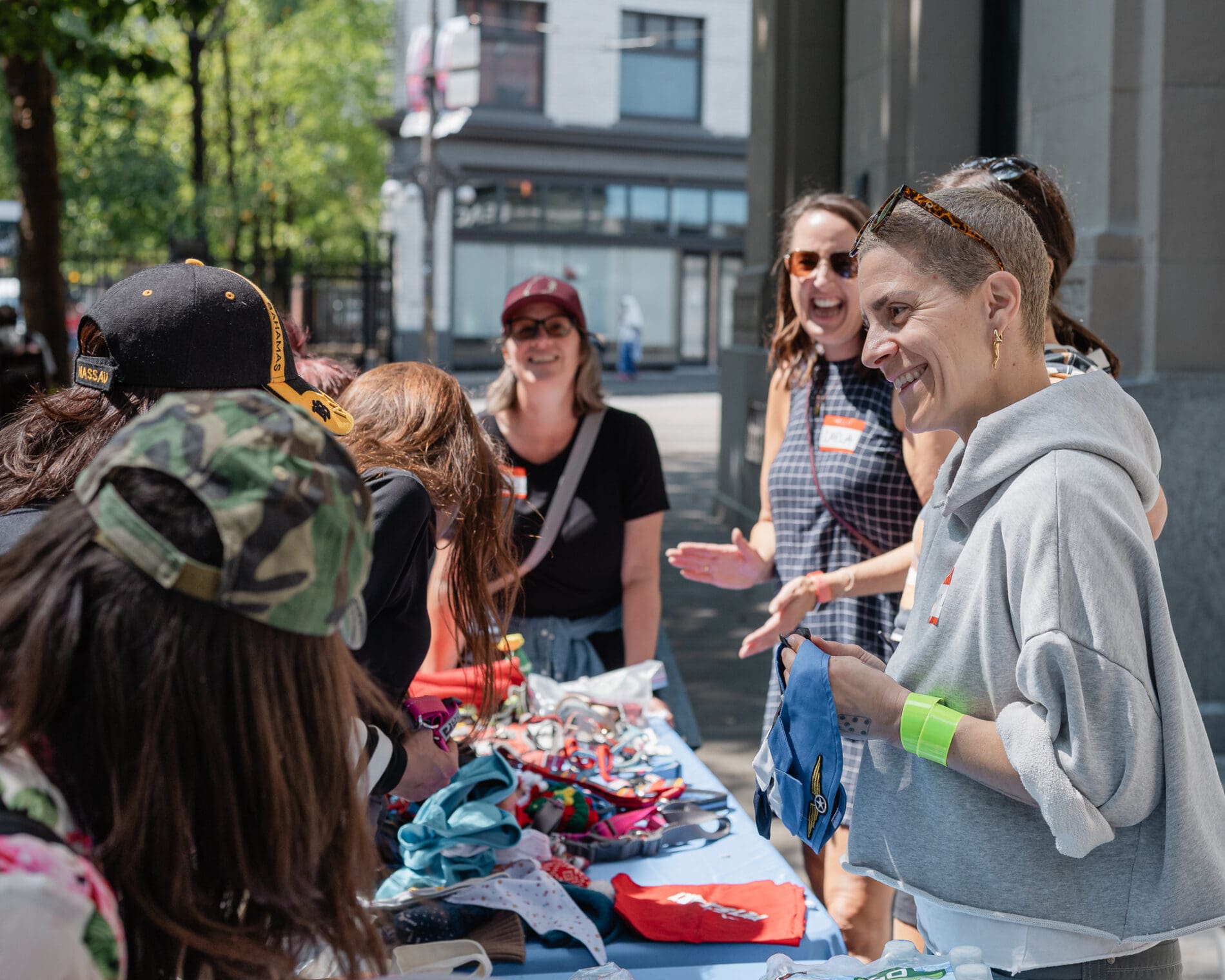
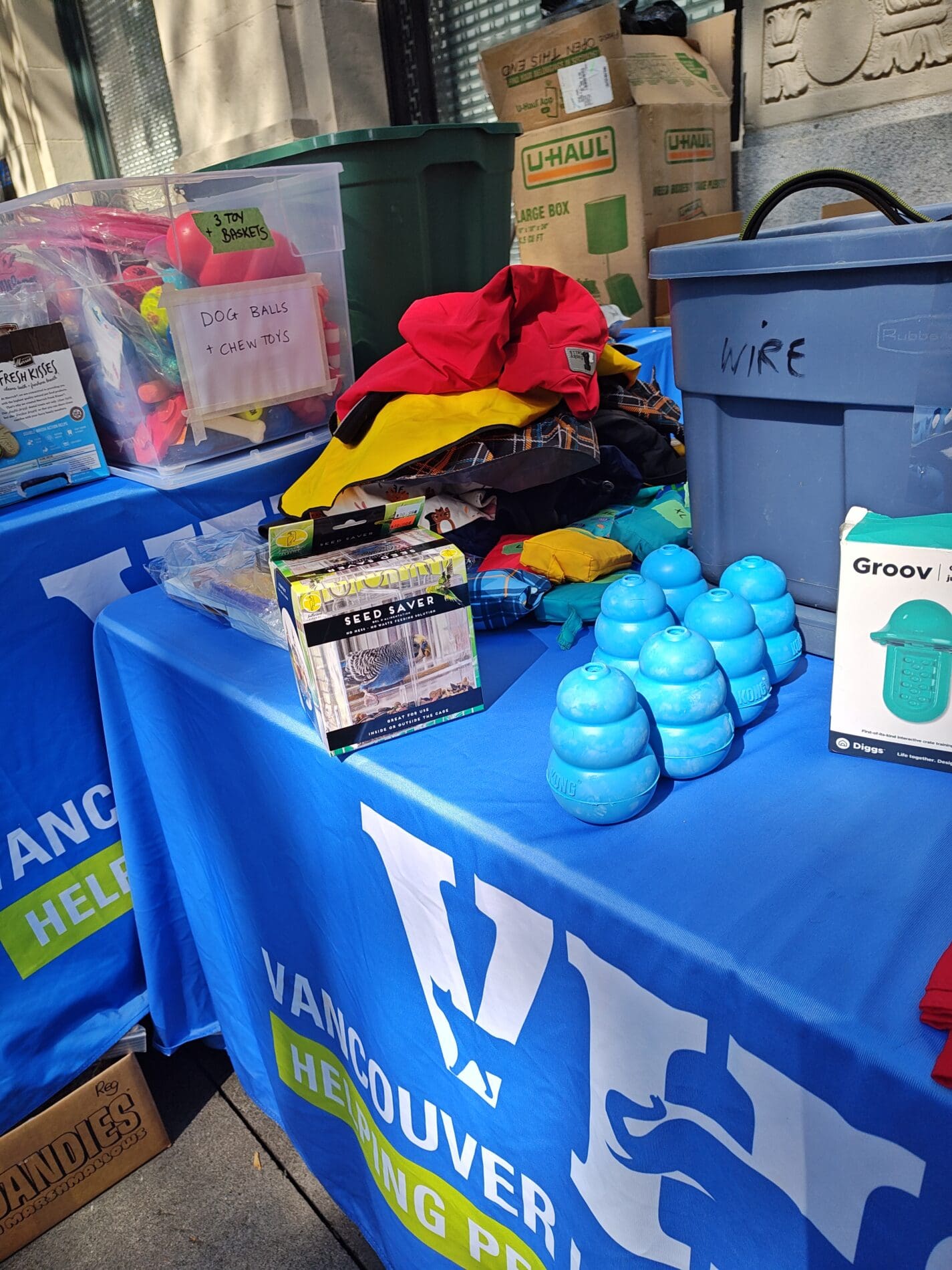
Several hundred residents of the Downtown Eastside community visited the Because They Matter table in Pigeon Park on Sunday, July 19, all eager to pick up high-quality supplies for their beloved pets. Event participants also spoke with many pet guardians about accessing the VHS’s free veterinary care assistance program.
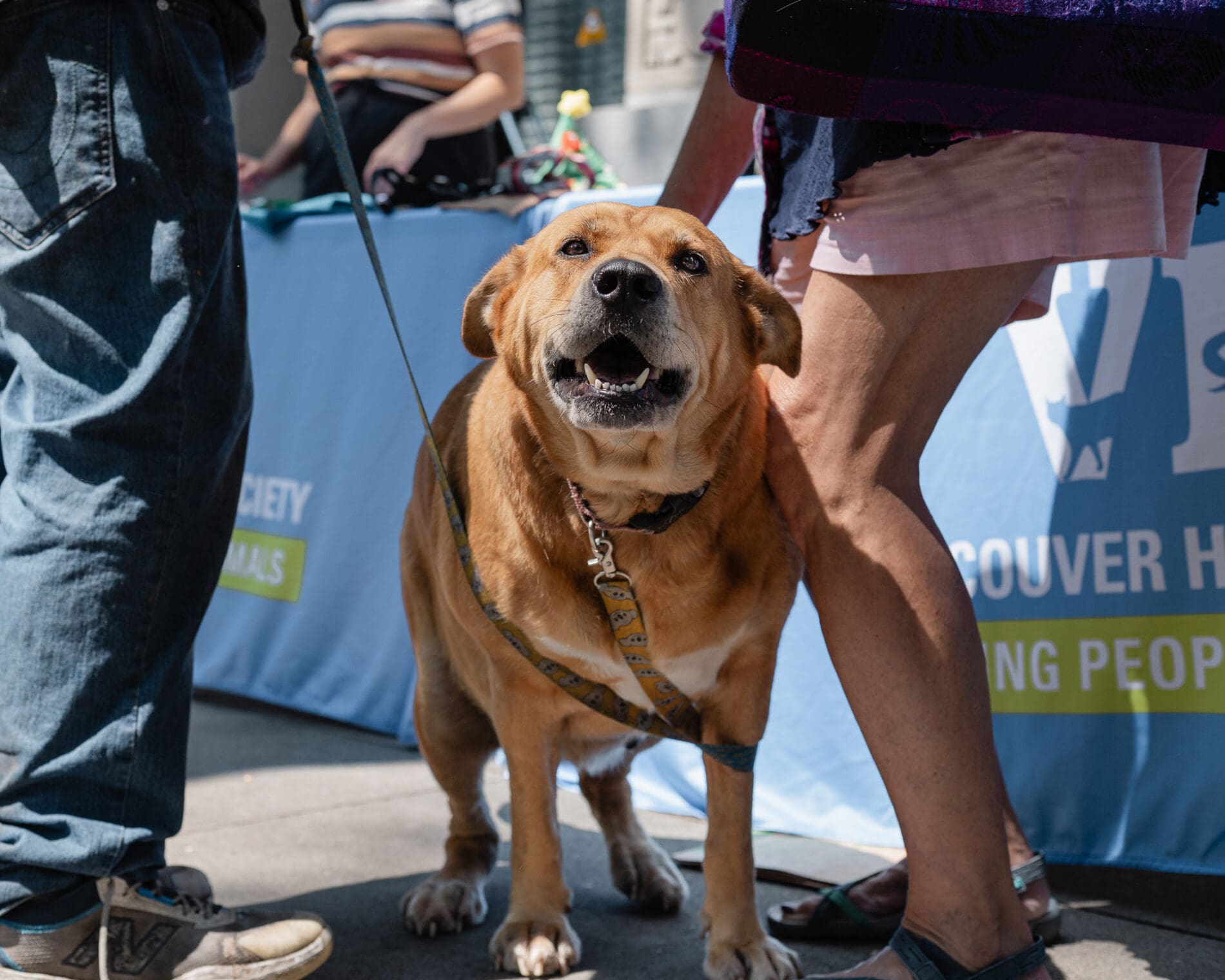
Each person who connected with the team had a unique journey, and all had incredible bonds with their pets.
Here are some of the amazing people and pets who visited the Vancouver Humane Society’s table in Pigeon Park.
In all, the VHS team and event participants handed out hundreds of pet supplies and pamphlets about the Vancouver Humane Society’s veterinary assistance program.
The VHS’s veterinary support program helps animals get the care they need while staying with their loving families. The need for this program is growing every year, and it is essential that this need is met to make sure loved animals get the care they require without having to be surrendered to the already overflowing shelter and rescue system. The VHS’s veterinary support program is only possible through the help of donations from animal lovers like you.
Can you make a donation towards the VHS’s $18,000 Because They Matter fundraising goal to help animals and the people who love them?
A new peer-reviewed study adds to the growing body of evidence that calf-roping puts young animals through fear and stress.
The study analyzed video footage of calves confined in chutes before being released into the arena for calf-roping events in Australia.
The findings are deeply concerning: every calf observed showed at least one behaviour associated with a negative emotional state, such as fear or stress.
“Welfare concerns begin while calves are still confined in the chute”
Calf-roping, also called tie-down roping, involves a young calf being released from a chute, chased by a rider on horseback, roped around the neck, stopped abruptly, forced to the ground, and tied by the legs.
Animal welfare concerns have long focused on the risk of stress, pain, and injury during the event itself. This study shows that welfare concerns begin even earlier, while calves are still confined in the chute.
Calf-roping event at The Calgary Stampede. Jo-Anne McArthur \ We Animals Media.
Some were held in the chute for shorter periods, 28 to 51 seconds, while others were held longer, 52 to 166 seconds. They recorded visible behaviours using an assessment tool known as an ethogram.
“Red flag” behaviours included:
Showing more of the eye white
mouth opening
sticking tongue out
rearing
tail swishing
escape attempts
The study found that calves held for longer periods showed more frequent red flag behaviours. These included more mouth opening, sticking out their tongues, rearing, and escape attempts.
Inherently inhumane practices
The researchers concluded that calves experience fear and stress while confined in the chute before release, and that longer confinement was associated with increased signs of stress.
These findings matter because they challenge the idea that rodeo events can be made humane through minor rule changes or handling adjustments. Even before the event started, calves were already showing signs of stress.
Take quick action: Share this graphic
Help more animal lovers learn about this opportunity.
Share this graphic on your social media and encourage others to write to their decision-makers.
Causing stress in animals should not be entertainment
The study also notes that calves in rodeo settings may be exposed to multiple stressors, including separation from other calves, confinement, loud noises, sudden movements, close contact with handlers, and the inability to escape.
Calves are young, vulnerable animals. Their fear and stress should not be dismissed as part of a show. The findings of this study support what animal welfare advocates have been stating for years: animals should not be used as tools for entertainment.
The VHS continues to call for an end to inhumane and high-risk rodeo events and for stronger protections for animals in entertainment. You can help by using the quick action tool and sending a message to government decision-makers, taking the ‘Say No to Rodeo’ pledge and encouraging friends and family not to attend rodeo events, and sharing this post!
At the 2026 Calgary Stampede, rodeo and chuckwagon events continued to put animals at risk of fear, stress, injury and death, while also exposing human competitors and workers to serious safety risks.
The 10-day event saw two chuckwagons collide resulting in a serious injury for one of the horses, as well as harsh handling of a bucking horse in a chute leading to a cruelty complaint.
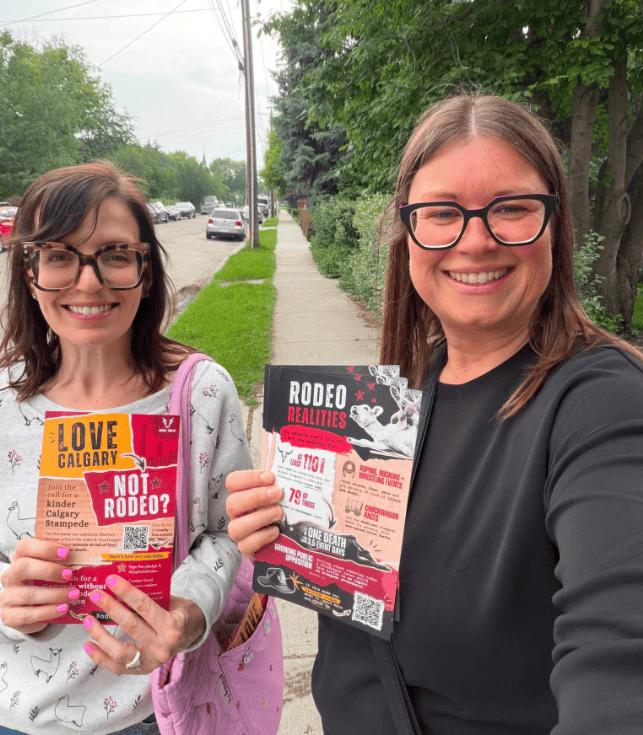
With support from the Vancouver Humane Society, Calgary Animal Rights Effort advocates distributed educational materials to Stampede attendees at four peaceful rallies.
TAKE ACTION: keep the momentum going by signing the #SayNoToRodeo pledge, using the quick-action tool below to contact government decision-makers and, if your workplace attends the Stampede, use the template letter to ask your workplace to choose cruelty-free activities for any future Stampede gatherings.
The crowds are leaving and the temporary attractions are coming down, but the concerns surrounding animals used in the events remain unresolved.
From July 3 to 12, animals were once again put at risk of stress, injury and death in fast-paced rodeo and chuckwagon events for entertainment. Calves were chased, thrown to the ground and tied. Steers were pursued and wrestled by the neck. Horses and bulls were made to buck. Teams of horses pulled wagons at high speeds around tight turns and alongside other teams.
These events depend on animals reacting to pressure, fear, discomfort and stress. The behaviours presented as entertainment to the onlookers in the crowd, including fleeing, bucking, resisting and struggling, can be signs that an animal is overwhelmed or trying to escape what is happening.
Reported incidents at the 2026 Stampede
Two high-profile incidents received media attention, including a horse suffering a serious injuryafter two chuckwagons collided at the start of a race on July 11. One horse was eventually able to walk from the track, while the other remained down and was lifted into a trailer behind a privacy tarp. The injured horse is reportedly undergoing evaluation.
Footage from a bucking event earlier in the week also raised concern and resulted in a cruelty complaint, after a handler was seen forcefully pulling on the mane of a horse who was down in the bucking chute. The handler also repeatedly smacked the horse in the head. No further enforcement action was taken by local authorities.
Some rodeo injuries may not be immediately visible. The full impact of a fall, collision or other incident may only become apparent after an animal leaves the arena, but those injuries and deaths are not publicly available
Animal welfare cannot be measured only by whether an animal survives an event. It must also consider what the animal experienced before, during and after being used in an event.
At least 110 animals have died in the Stampede’s rodeo and chuckwagon events since the VHS began tracking fatalities in 1986. That represents an average of one animal death every 3.6 days of competition. Most of the recorded deaths have occurred during the chuckwagon races.
In 2024, three chuckwagon horses suffered fatal injuries and a steer’s neck was broken during a wrestling event. In 2025, a horse named Rider was euthanized after suffering a catastrophic leg injury during a chuckwagon race.
Rodeo events also put people at risk
The risk of injury or death extends to human competitors and handlers as well. Each year, rodeo participants experience injuries of varying severity, with multiple reported deaths directly linked to rodeo activities since 1996.
Research has found that ‘rough stock’ events, such as bull riding and bronc riding, carry particularly high injury risks with contusions, sprains, and concussions being the most frequent injury types. While human competitors can choose to participate, and animal participants cannot, the risks to both are serious and should not be minimized.
Competitors and their families can experience serious physical, emotional, and financial hardship when injuries occur. Recognizing these impacts is an important step towards a future where the welfare of both people and animals is prioritized under a One Welfare framework.
A safer future should protect both people and animals by moving away from activities that include fear, force, and predictable injury risks. By working together to promote practices that reduce harm, we can help create a rodeo culture where both human and animal well-being is protected.
Recent efforts to hide the reality behind the rodeo arena
In recent years, Calgary Stampede organizers and allies have ramped up messaging about their so-called commitment to animal welfare, all while making it increasingly difficult for the public to learn the reality of what happens to animals used in rodeo.
Private businesses limit animal welfare messaging
Last year, major advertising companies rejected or pulled ads set to run in Calgary that would have pointed out the welfare concerns around rodeo. The VHS and Animal Justice raised concerns about mounting censorship and the decision by private advertisers to keep animal welfare messaging from the public.
Online advertising groups like Meta regularly reject promoted videos and photos of unaltered rodeo events displaying animal welfare messaging, claiming these images are too violent to be shared, despite permitting similar photos being used to promote Stampede events on the same platform.
Alberta government amends law to make enforcement more difficult
In May, Alberta’s Animal Protection Act was updated to better protect animals such as pets, but added a specific exemption which would allow animals to be in distress during rodeo and racing events, so long as the treatment is considered reasonable and generally accepted. This change makes it more difficult to protect animals used in these controversial sports.
Stampede organizers limit transparency
We Animals Media, an animal photojournalism organization applied for a media pass at the Calgary Stampede this year to document the rodeo and chuckwagon races. Despite following up, the Stampede never responded to their application. Media accreditation is required in order to bring professional photography equipment to the Stampede grounds, and public recording of the rodeo and chuckwagon races is not permitted.
We Animals Media shared that “If the Stampede is proud of how it treats animals, it shouldn’t be afraid of a camera.”
Live broadcast coverage of the rodeo and chuckwagon races also raises transparency concerns. The camera routinely cuts away during moments that would be difficult for viewers to watch, such as calves hitting the end of the rope, rough handling of animals in the chutes, or horses being injured during chuckwagon races. This pattern played out again this year: at least two chuckwagon races were cut from broadcast coverage, and no mention was made at the time that a horse had suffered a serious injury during one of them.
Because of the combined efforts of Stampede organizers, the Alberta government, and private businesses, the animal welfare concerns around the rodeo and chuckwagons are largely hidden from the public, who are instead provided with a carefully selected, sanitized, Stampede-approved version of events.
To combat efforts to silence animal welfare messaging, the VHS has been working with advocates in Calgary and organizations across the country to increase awareness about animal suffering at the Stampede rodeo and chuckwagon races.
Throughout the Stampede, Calgary-based advocates worked to keep animal welfare visible. With resources and support from the VHS, Calgary Animal Rights Effort advocates held peaceful Buck the Rodeo rallies on July 4, 5, 11 and 12 near the Stampede grounds.
Advocates spoke with members of the public, handed out educational materials and encouraged visitors to consider what animals experience behind the spectacle.
They also promoted cruelty-free ways to take part in Stampede season, including community events, food, music, arts and other activities that do not depend on animals being frightened or put at risk.
Animal advocates distributing Rodeo Truth leaflets
The end of the 2026 Stampede does not need to mean the end of public attention.
Decisions about funding, sponsorship, workplace outings and future programming are made throughout the year. This is when respectful and consistent public engagement can have the greatest influence.
Did your workplace attend the rodeo or chuckwagon races?
Workplace outings should be activities where employees feel comfortable, respected and able to participate.
For some employees, attending a rodeo conflicts with deeply held concerns about animal welfare. Others may be uncomfortable watching events where animals or human competitors could be seriously injured.
The VHS has created a template letter that employees can share with their employer to respectfully ask that future team activities are inclusive and do not involve rodeo or other animal events.
Starting the conversation now can help your workplace make a different choice in 2027.
It’s time for a Stampede that leaves animal suffering behind
The Calgary Stampede has evolved throughout its history. It can continue to change.
Ending the rodeo and chuckwagon races would not mean ending Calgary’s celebration. It would mean creating a celebration where community, culture and entertainment no longer come at the expense of animals.
Another Stampede has ended. The work to build something kinder continues.

Social media can be part of the solution, not the problem.