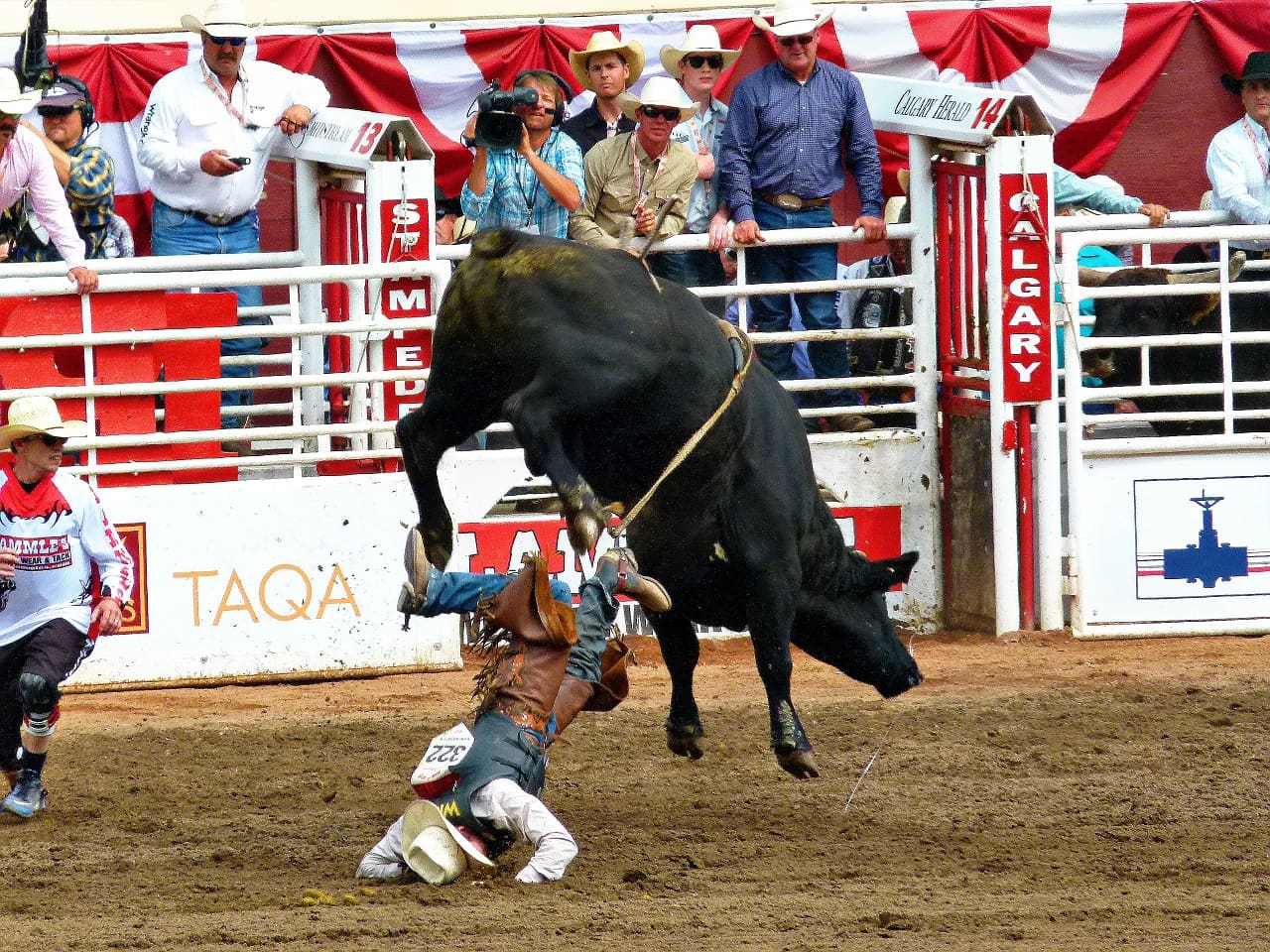
This summer, thousands of people joined the VHS in calling for a kinder future for animals used in rodeos, both online and on the ground, and your support helped make that possible.
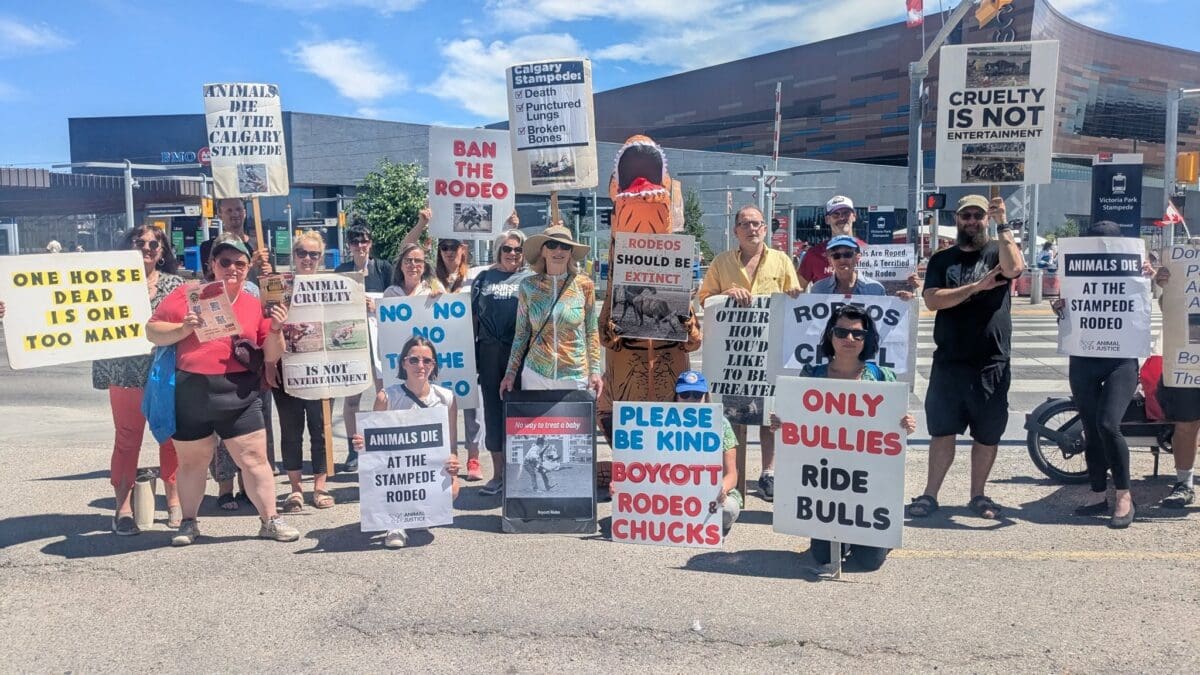
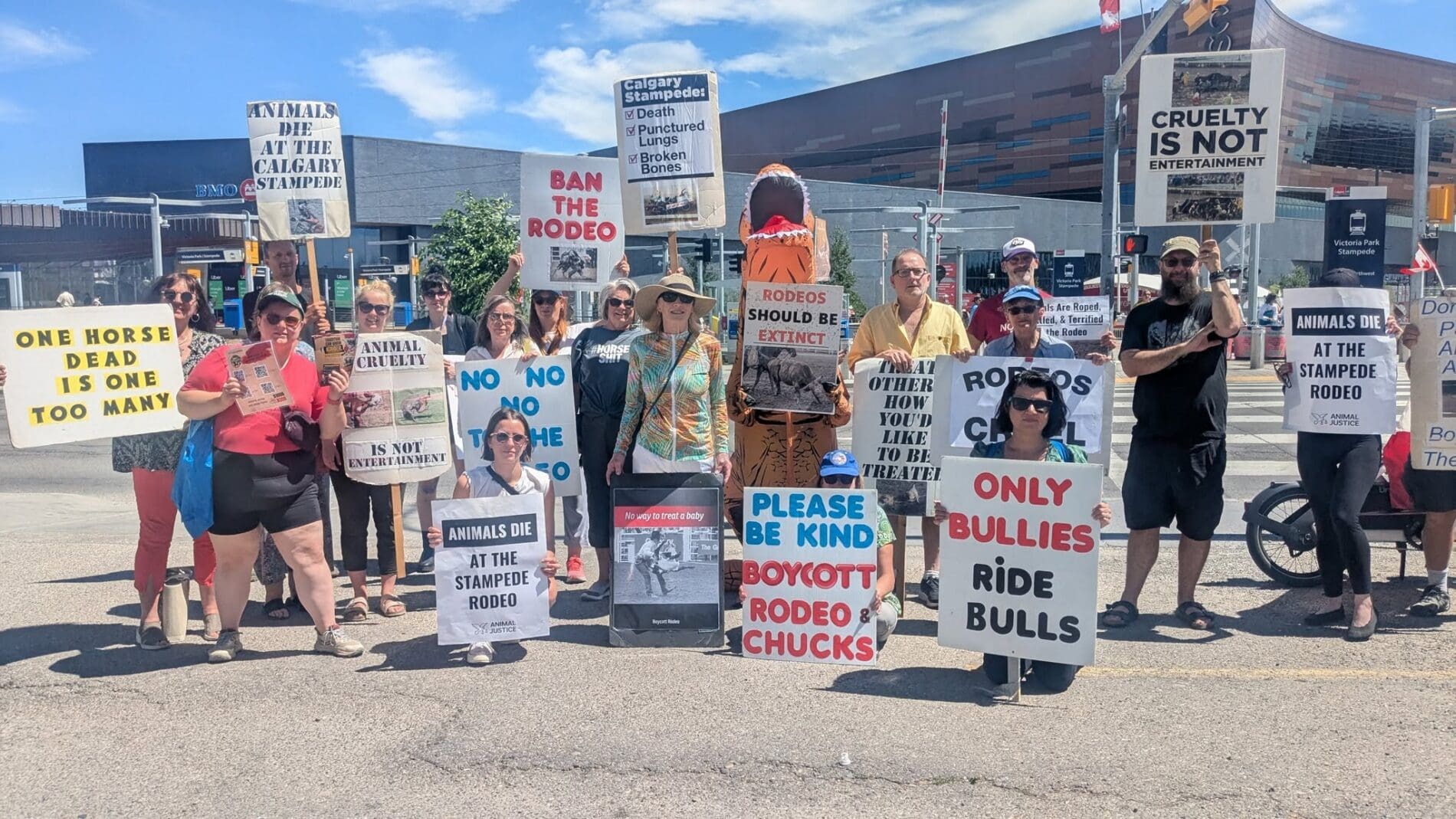
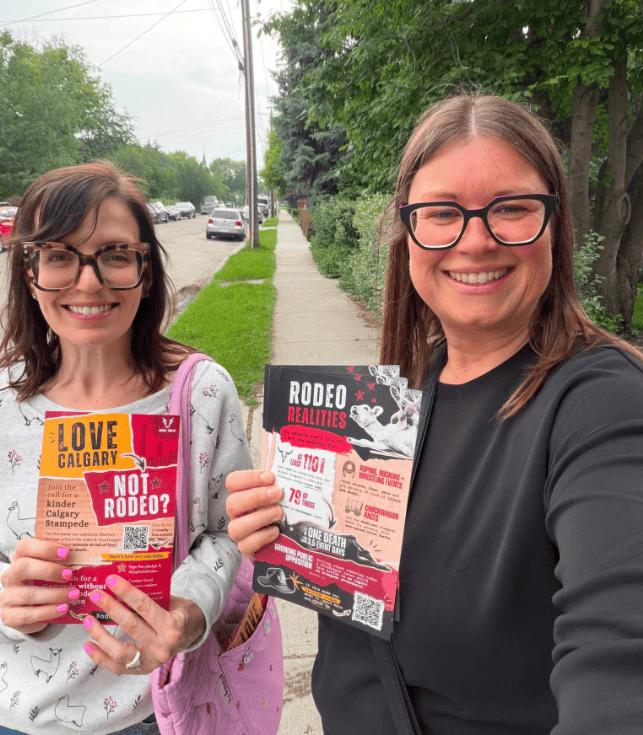
In Calgary, the VHS supplied Calgary Animal Rights Effort (CARE) with resources for four peaceful Buck the Rodeo rallies near the Stampede grounds. Local advocates spoke directly with Stampede visitors, distributed Rodeo Truth educational materials and shared cruelty-free ways to enjoy Stampede season without events that harm animals. Animal Justice also joined advocates at the rallies, helping strengthen the local effort.
1,900,000
views of animal welfare messaging from VHS rodeo campaigns
And thanks to animal allies like you, the message travelled much further. More than 7,600 direct actions have been taken by supporters across the VHS’s B.C. rodeo and Calgary Stampede campaigns so far in 2026. Together, the rodeo campaigns were viewed more than 1.9 million times, bringing animal welfare concerns to a massive new audience.
direct actions in support of ending inhumane rodeo events
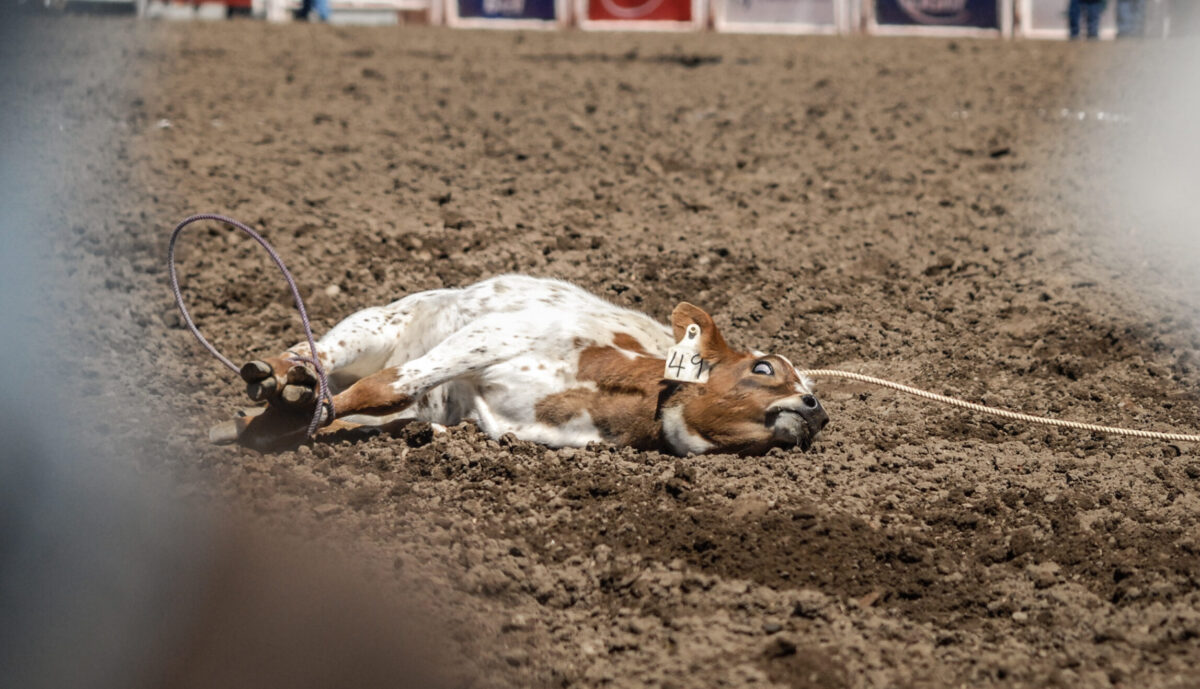
Behind that impact was the advocacy work your support makes possible. The VHS monitored multiple B.C. rodeos on the ground, documented concerning incidents and wrote directly to organizers asking for answers and accountability. The VHS also teamed up with We Animals Media and Animal Justice to call for greater transparency at the Calgary Stampede after We Animals was denied media accreditation to attend and document the Stampede.
Together, the organizations brought national attention to the importance of independent documentation and public accountability. From supporting grassroots advocates to collaborating nationally and mobilizing thousands of animal allies, your support helps to build public awareness, strengthen the movement and create pressure for lasting change.
The 2026 municipal elections in B.C. have now ended. The VHS will continue to work with local governments across B.C. to advocate for animal-friendly policies and practices. You can use the form below to receive important alerts when advocacy opportunities arise. Please see the Current Campaigns page for more ways you can help animals.
The Vancouver Humane Society (VHS) contacted local election candidates in key B.C. communities where current or ongoing animal welfare issues overlap with the VHS’s local advocacy work.
Candidates in these communities were invited to respond to the same questionnaireaddressing specific animal welfare issues, such as horse carriages, horse racing, rodeos, mobile live animal programs and exotic animals in captivity.
The responses below are from candidates who have responded to date. Candidates who did not respond are not included in the response summaries.
Responses are organized by community, are presented as received and have not been edited for content. The VHS has not interpreted, rated, or otherwise assessed candidates’ responses.
Select a community from the list below to see the candidates who responded and their answers to each question asked by the VHS.Subscribe for local election resources and updates.
Don’t see your community, question, or candidate here?
Explore the VHS Animal Welfare Local Election Guide to contact candidates in your area, ask your own questions, and access helpful resources like candidate tracking tools, message templates, and shareable graphics.
Share this post!
Abbotsford
The VHS asked candidates in Abbotsford the below question based on animal welfare issues connected to their community. Click the drop-downs to read the background information and candidates responses.
“Would you support restricting or prohibiting mobile live animal programs from operating within Abbotsford? “
Background provided to candidates
Mobile live animal programs (MLAPs) involve transporting animals to different locations for display, public entertainment, fundraising, orsale. They often include a wide range of species, ranging from farmed animals like goats, lambs, and chicks, to wild, exotic species like snakes, lizards, tortoises, and sugar gliders. They can include travelling petting zoos, animal presentations at schools and birthday parties, animal displays at community events, and reptile or exotic pet expos.
These programs can expose animals to frequent transportation, repeated public handling, unfamiliar environments, temporary or undersized enclosures, noise and other stressful conditions, often with limited or no opportunity to retreat from public view or engage in natural behaviours. And because healthy-looking animals can carry pathogens like E. coli and Salmonella, the risks reach people too, especially young children, older adults, and pregnant people. Many examples of disease outbreaks in connection to mobile live animal programs have been documented in recent years.
The VHS believes local governments can play an important role in determining whether and where MLAPs are permitted to operate. For example, the City of Port Moody has adopted a corporate policy prohibiting mobile live animal programs on public and private property.
Please briefly explain your position and what action you would take if elected.
“Would you support strengthening local regulation of exotic animals, including exploring a science-based positive list of species that may be kept as pets and licensing or other tools to regulate the keeping of exotic animals?”
Background provided to candidates
Many MLAPs feature exotic animals (wild animals native to countries outside Canada) such as snakes, lizards, tortoises, sugar gliders, and spiders. These animals have complex behavioural, social, dietary, and environmental needs that can be extremely difficult to meet in private homes. The promotion and sale of exotic animals at MLAPs can also contribute to impulse purchases, animal surrender, and risks to native wildlife when exotic animals escape or are released.
The VHS supports a science-based “positive list” approach, in which species would only be permitted to be kept as pets after being assessed, using a scoring tool like EMODE, as suitable based on factors such as animal welfare, health, public safety, and environmental considerations.
Local governments can use local bylaws and licensing tools to regulate the keeping of exotic animals. For example, the City of Castlegar’s Animal Control and Licencing Bylaw includes provisions addressing exotic pets, animal performance, exhibition, and display.
Mayor Candidate responses
No response received yet.
The VHS invited candidates to share their views on local animal welfare issues, but has not yet received a response. Please check back before October 17 to see if a candidate has responded.
If you live in this community, you can help us hear from your candidates. Contact the candidates running in your area and ask them to respond to the VHS’s animal welfare questionnaire.
You can also use the VHS Animal Welfare Local Election Guide to learn about key issues in your community and find simple questions and message templates to contact candidates directly.
Thank you for reaching out and for all the information you have provided.
Would you support restricting or prohibiting mobile live animal programs from operating within Abbotsford?
I would support restricting or prohibiting mobile live animal programs from operating within Abbotsford. Abbotsford is an agricultural community with many chicken, pig, and cattle farms.
I would be concerned that frequent transport of animals, and interaction with humans could also pose a disease threat to our farm animals. I would work with other councillors to promote education in our community to get public support, followed with putting forward a restriction or ban.
Would you support strengthening local regulation of exotic animals, including exploring a science-based positive list of species that may be kept as pets and licensing or other tools to regulate the keeping of exotic animals?
Yes. Our local painted turtle population is threatened by invasive species including non native pet turtles that were released, so I fully support regulations that preserve our indigenous wildlife.
Joel Madsen
Thanks for reaching out. This isn’t a subject I’m terribly familiar with, so I’ll try my best to answer based on my limited knowledge as well as my personal reasoning.
1. Mobile live animal programs: I wouldn’t support a blanket ban on mobile animal programs. I think these programs can be a great way for kids and families to learn about animals, especially in an agricultural community like Abbotsford. Animal welfare and public safety absolutely need to be taken seriously, but I don’t think we should be creating more restrictions for responsible operators because of the actions of a few. I’d rather see us address specific problems where they exist and make sure proper standards are being followed.
2. Exotic animals as pets: I’d be more inclined to look at restrictions when it comes to exotic animals, particularly species that are difficult to properly care for or could pose a risk to people or the environment. That said, I don’t think we should lump all exotic animals into the same category. There are plenty of snakes, lizards, and other exotic pets that people could responsibly care for.
I’d be open to exploring a more in depth approach that looks at individual species and their needs. I’d also want to understand what regulations are already in place before adding new ones.
I think we can find a reasonable balance between protecting animals and allowing responsible pet ownership.
Rick Thiessen
I would not fully restrict mobile live animal programs as I believe they have some value as long as they are conducted in safe and responsible ways.
Chilliwack
The VHS asked candidates in Chilliwack the below question based on animal welfare issues connected to their community. Click the drop-downs to read the background information and candidates responses.
“Would you support prohibiting inhumane rodeo events, tools, and practices in Chilliwack, including roping, wrestling, and bucking events; the use of tools like electric prods and flank straps; and forcible handling practices such as ear and tail pulling and twisting, neck twisting, hitting, kicking, and shoving animals?”
Background provided to candidates
The VHS has documented and raised concerns about a number of rodeo events and practices, including roping, wrestling, and bucking events, as well as the use of inhumane handling practices and tools such as electric prods, flank straps, ear and tail pulling and twisting, neck twisting, hitting, kicking, and shoving animals. These events, tools, and practices involve the use of fear, pain, and stress to incite animals to flee and buck.
The VHS documented concerning incidents at the Chilliwack rodeo over several years, including in 2022 and 2023, with visibly stressed and agitated animals being roughly handled, thrashing around in the chutes, and being put at risk of injury. The VHS also documented electric prod use in 2018 and 2019 at the Chilliwack rodeo.
Municipalities have an important role to play in preventing the inhumane treatment of animals within their jurisdiction and can establish conditions for events and activities held in their communities.
Please briefly explain your position and what specific action you would take if elected, including whether you would support conditions or restrictions on rodeos held within your community, funding or other forms of support.
Mayor Candidate responses
No response received yet.
The VHS invited candidates to share their views on local animal welfare issues, but has not yet received a response. Please check back before October 17 to see if a candidate has responded.
If you live in this community, you can help us hear from your candidates. Contact the candidates running in your area and ask them to respond to the VHS’s animal welfare questionnaire.
You can also use the VHS Animal Welfare Local Election Guide to learn about key issues in your community and find simple questions and message templates to contact candidates directly.
Yes. I believe animals should be treated humanely and protected from unnecessary pain, fear, and distress.
If elected to Chilliwack City Council, I would support appropriate restrictions or prohibitions on rodeo practices, tools, or handling methods where credible evidence demonstrates that they cause unnecessary suffering or an unreasonable risk of injury to animals.
I would also support reviewing the standards and conditions for animal-based events within the City’s jurisdiction, in consultation with animal-welfare professionals, veterinarians, event organizers, agricultural representatives, and the community. Decisions should be evidence-based, enforceable, and respectful of Chilliwack’s agricultural community.
Traditions can evolve while still respecting their history and community significance.
If a practice cannot be carried out without unnecessary pain, fear, or injury to an animal, I do not believe it should be permitted simply because it is a tradition.
Steve Just
Thank you for reaching out and sharing these concerns. Animal welfare matters to me, and I would want any concerns about mistreatment taken seriously.
At this point, I would reserve my decision on the prohibitions you’re proposing until I’ve reviewed the evidence. I would want to understand what happened, whether any investigations found violations, and what rules and oversight are already in place. I would also want to hear from animal-welfare professionals and the rodeo organizers.
I respect the rodeo’s place in our community, and I believe animal welfare needs to be part of that conversation.
If elected, I would ask City staff to explain the City’s authority and the options available before deciding on restrictions, funding, or other support.
If you have investigation findings or follow-up reports relating to the incidents you’ve mentioned, please send them along with the footage.
That would help me make an informed decision. My approach is to listen, review the facts, and then take a position I can explain and stand behind.
Zeeshan Khan
I believe rodeos are an important part of Chilliwack’s agricultural heritage and community identity. They bring people together, celebrate our farming roots, and contribute to local events and traditions. I want to see these traditions continue, but this continuation must never come at the expense of animal wellness. Animal abuse and the unnecessary suffering of animals are absolutely unacceptable, and protecting our community’s traditions must go hand in hand with protecting the animals involved.
If elected, I would support developing and enforcing strict, evidence-based municipal bylaws and event-permit conditions that establish clear animal welfare standards for rodeos held in Chilliwack. This would include prohibiting abusive handling practices, establishing firm restrictions on harmful tools and equipment, veterinary oversight, and procedures to prevent distress. These standards must be enforceable, with meaningful consequences for violations, including penalties or restrictions on future event permits where warranted. Equally important, I would work directly with rodeo organizers, agricultural organizations, animal welfare experts and veterinarians to ensure these events are safe. Those who work with animals have valuable practical knowledge, and meaningful collaboration would help establish standards that are effective.
My goal would be to ensure a community tradition evolves responsibly. Chilliwack can honour its agricultural heritage while setting a clear expectation that animal abuse is non-negotiable. We can work toward keeping rodeos in our community while ensuring animals are treated humanely and unnecessary harm is prevented.
Thank you for this wonderful question and bringing awareness to a very important topic.
Lisa Morry
Thanks for your question. I support kindness to animals, if elected, I would continue to work for animal kindness in Chilliwack.
Ghazaleh Nozamani
Thank you for reaching out and for giving me the opportunity to respond. As someone who has spent much of my life advocating for human rights, dignity, and protection from unnecessary suffering, I believe compassion should extend to animals as well.
How we treat those who cannot speak for themselves reflects our values as a community. I support strong and enforceable animal-welfare standards and would not support practices that unnecessarily cause animals pain, fear, injury, or distress.
At the same time, I notice that the incidents referenced in your question are from 2018, 2019, 2022, and 2023. I would be interested to see the most recent information, and I hope there is an updated report for the 2026 Chilliwack rodeo showing whether practices and animal-welfare standards have improved.
If elected, I would support reviewing current evidence and working with animal-welfare experts, veterinarians, event organizers, and the community to determine what municipal conditions or restrictions are appropriate.
Where a practice is demonstrated to be inhumane, I would support taking action to prevent it and would not support using municipal resources to enable animal cruelty.
I respect Chilliwack’s agricultural heritage and traditions, but tradition and compassion do not have to compete with each other. We can celebrate our history while continuing to improve how animals are treated.
My approach would be based on evidence, compassion, and accountability, and on the most current information available.
Clinton
The VHS asked candidates in Coombs the below question based on animal welfare issues connected to their community. Click the drop-downs to read the background information and candidates responses.
“Would you support prohibiting inhumane rodeo events, tools, and practices in Clinton, including roping, wrestling, and bucking events; the use of tools like electric prods and flank straps; and forcible handling practices such as ear and tail pulling and twisting, neck twisting, hitting, kicking, and shoving animals?”
Background provided to candidates
The VHS has documented and raised concerns about a number of rodeo events and practices, including roping, wrestling, and bucking events, as well as the use of inhumane handling practices and tools such as electric prods, flank straps, ear and tail pulling and twisting, neck twisting, hitting, kicking, and shoving animals. These events, tools, and practices involve the use of fear, pain, and stress to incite animals to flee and buck.
The VHS documented concerning incidents at the Clinton rodeo in 2024 and 2026, including visibly stressed and agitated animals; inhumane use of electric prods; and harsh handling including a horse being repeatedly struck in the face and punched in the neck while in a bucking chute; a horse being repeatedly whipped by a rider as they prepared for a steer wrestling event; and a handler striking a visibly stressed bull with a paddle.
Municipalities have an important role to play in preventing the inhumane treatment of animals within their jurisdiction and can establish conditions for events and activities held in their communities.
Please briefly explain your position and what specific action you would take if elected, including whether you would support conditions or restrictions on rodeos held within your community, funding or other forms of support.
Mayor Candidate responses
No response received yet.
The VHS invited candidates to share their views on local animal welfare issues, but has not yet received a response. Please check back before October 17 to see if a candidate has responded.
If you live in this community, you can help us hear from your candidates. Contact the candidates running in your area and ask them to respond to the VHS’s animal welfare questionnaire.
You can also use the VHS Animal Welfare Local Election Guide to learn about key issues in your community and find simple questions and message templates to contact candidates directly.
The VHS invited candidates to share their views on local animal welfare issues, but has not yet received a response. Please check back before October 17 to see if a candidate has responded.
If you live in this community, you can help us hear from your candidates. Contact the candidates running in your area and ask them to respond to the VHS’s animal welfare questionnaire.
You can also use the VHS Animal Welfare Local Election Guide to learn about key issues in your community and find simple questions and message templates to contact candidates directly.
The VHS asked candidates in Coombs the below question based on animal welfare issues connected to their community. Click the drop-downs to read the background information and candidates responses.
“Would you support prohibiting inhumane rodeo events, tools, and practices in Coombs, including roping, wrestling, and bucking events; the use of tools like electric prods and flank straps; and forcible handling practices such as ear and tail pulling and twisting, neck twisting, hitting, kicking, and shoving animals?”
Background provided to candidates
The VHS has documented and raised concerns about a number of rodeo events and practices, including roping, wrestling, and bucking events, as well as the use of inhumane handling practices and tools such as electric prods, flank straps, ear and tail pulling and twisting, neck twisting, hitting, kicking, and shoving animals. These events, tools, and practices involve the use of fear, pain, and stress to incite animals to flee and buck.
Footage from the Coombs “Bulls, Broncs & Barrels” rodeo in 2024 and 2025 captured inhumane treatment of animals, including repeated electric prod use; harsh handling of a fallen horse; visibly stressed animals thrashing in chutes, rearing up, and resisting handlers. Despite the BC SPCA issuing a notice to rodeo organizers to cease harsh or inhumane training, disciplinary or handling techniques or physical abuse and to cease “excessive” use of electric prods after the 2024 Coombs rodeo, the VHS again documented similar concerns in 2025.
Municipalities have an important role to play in preventing the inhumane treatment of animals within their jurisdiction and can establish conditions for events and activities held in their communities.
Please briefly explain your position and what specific action you would take if elected, including whether you would support conditions or restrictions on rodeos held within your community, funding or other forms of support.
Electoral Area Director Candidate responses
Leanne Salter
Thank you for reaching out and for giving candidates an opportunity to respond to this important issue. I take animal welfare seriously, and I believe animals should be treated humanely and with respect. My record demonstrates that this is more than a statement of principle.
During my eight years as the elected Director for Electoral Area F, I have worked closely with the BC SPCA and others on animal-welfare issues. Most notably, I advocated for stronger provincial protections regarding exotic cats, including servals which was an emergent issue in Area F.
I worked with the BC SPCA, provincial officials, Ministers and other elected representatives to bring this issue forward. I am proud that, effective May 1, 2026, British Columbia implemented legislation prohibiting the breeding, transport and future ownership of non-native, non-domestic cats, including servals.
With respect to rodeos, I believe animals must be treated humanely and that unnecessary cruelty should never be accepted.
The rodeo held in Coombs has received Temporary Use Permits from the Regional District of Nanaimo during my eight years as Director. As an elected representative, I have a responsibility to consider applications within the authority provided to the RDN and to apply the same standards to all applicants.
I would expect any rodeo or other event held in Area F to comply fully with provincial animal-welfare legislation and all applicable RDN requirements. Where credible concerns about animal treatment are brought forward, I believe those concerns should be properly investigated by the appropriate authority and considered in any future regulatory or permitting decisions where the RDN has jurisdiction.
I would not make a commitment to prohibit specific rodeo events or practices without first establishing that the RDN has the legal authority to do so and that such a prohibition is legally enforceable. I believe elected officials have a responsibility to advocate for animal welfare while also respecting the division of authority between local and provincial government.
My work on the provincial exotic-cat legislation demonstrates that when I believe stronger animal-welfare protections are needed, I am prepared to work with organizations such as the BC SPCA, provincial Ministers and other elected representatives to pursue meaningful legislative change.
Delta
The VHS asked candidates in Delta the below question based on animal welfare issues connected to their community. Click the drop-downs to read the background information and candidates responses.
“Would you support restricting or prohibiting mobile live animal programs from operating within Delta? “
Background provided to candidates
Mobile live animal programs (MLAPs) involve transporting animals to different locations for display, public entertainment, fundraising, orsale. They often include a wide range of species, ranging from farmed animals like goats, lambs, and chicks, to wild, exotic species like snakes, lizards, tortoises, and sugar gliders. They can include travelling petting zoos, animal presentations at schools and birthday parties, animal displays at community events, and reptile or exotic pet expos.
These programs can expose animals to frequent transportation, repeated public handling, unfamiliar environments, temporary or undersized enclosures, noise and other stressful conditions, often with limited or no opportunity to retreat from public view or engage in natural behaviours. And because healthy-looking animals can carry pathogens like E. coli and Salmonella, the risks reach people too, especially young children, older adults, and pregnant people. Many examples of disease outbreaks in connection to mobile live animal programs have been documented in recent years.
The VHS believes local governments can play an important role in determining whether and where MLAPs are permitted to operate. For example, the City of Port Moody has adopted a corporate policy prohibiting mobile live animal programs on public and private property.
“Would you support strengthening local regulation of exotic animals, including exploring a science-based positive list of species that may be kept as pets and licensing or other tools to regulate the keeping of exotic animals?”
Background provided to candidates
Many MLAPs feature exotic animals (wild animals native to countries outside Canada) such as snakes, lizards, tortoises, sugar gliders, and spiders. These animals have complex behavioural, social, dietary, and environmental needs that can be extremely difficult to meet in private homes. The promotion and sale of exotic animals at MLAPs can also contribute to impulse purchases, animal surrender, and risks to native wildlife when exotic animals escape or are released.
The VHS supports a science-based “positive list” approach, in which species would only be permitted to be kept as pets after being assessed, using a scoring tool like EMODE, as suitable based on factors such as animal welfare, health, public safety, and environmental considerations.
Local governments can use local bylaws and licensing tools to regulate the keeping of exotic animals. For example, the City of Castlegar’s Animal Control and Licencing Bylaw includes provisions addressing exotic pets, animal performance, exhibition, and display.
Mayor Candidate responses
Melissa Granum
Thank you for reaching out and for the important work the Vancouver Humane Society does to protect animals and raise awareness about their welfare.
Our much-loved pets have been featured throughout Delta First’s social media campaign. They are part of our families, and we recognize the companionship and joy animals bring to our community.
We appreciate your organization’s work to ensure their welfare receives thoughtful attention.
On your questions:
Mobile live animal programs: The animal-welfare and public-health concerns you have raised deserve careful consideration. I am not taking a position on a blanket prohibition at this time. If elected, I would support reviewing Delta’s approach, with input from animal-welfare and public-health experts, to understand whether additional safeguards or restrictions are needed.
Exotic animals as pets: I recognize the importance of ensuring that animals receive appropriate care and that public safety and our local environment are protected. I would be open to considering stronger local regulation, including learning more about a science-based positive list and licensing options.
Before endorsing a particular approach, I would want to understand Delta’s existing rules, the evidence supporting proposed changes, and how those changes would work in practice. Delta First believes in listening, making informed decisions and being clear with residents about our commitments.
While I cannot endorse the specific measures proposed without further review, I take these concerns seriously and value the Vancouver Humane Society’s contribution to that discussion.
Thank you for giving candidates the opportunity to address these issues and helping residents make informed choices.
If elected, we are excited about working with you and the Vancouver Humane Society as we head into the future.
Council Candidate responses
Gillian McLeod
1. I would not restrict or prohibit live animal programs
2. I would work with people who have animals and those around where they are placed to find out if they are accepted. IF Not I would work with many ways to keep the animals safe if they need to be moved.
3. I would support strengthening local regularion of exotic animals, including exploring a science-based positive list of species that may be kept as pets.
4. I would work with family members and mayor and council and community to support the lives of exotic animals even if they need to be moved.
Nanaimo
The VHS asked candidates in Nanaimo the below question based on animal welfare issues connected to their community. Click the drop-downs to read the background information and candidates responses.
“Would you support restricting or prohibiting mobile live animal programs from operating within Nanaimo? “
Background provided to candidates
Mobile live animal programs (MLAPs) involve transporting animals to different locations for display, public entertainment, fundraising, orsale. They often include a wide range of species, ranging from farmed animals like goats, lambs, and chicks, to wild, exotic species like snakes, lizards, tortoises, and sugar gliders. They can include travelling petting zoos, animal presentations at schools and birthday parties, animal displays at community events, and reptile or exotic pet expos.
These programs can expose animals to frequent transportation, repeated public handling, unfamiliar environments, temporary or undersized enclosures, noise and other stressful conditions, often with limited or no opportunity to retreat from public view or engage in natural behaviours. And because healthy-looking animals can carry pathogens like E. coli and Salmonella, the risks reach people too, especially young children, older adults, and pregnant people. Many examples of disease outbreaks in connection to mobile live animal programs have been documented in recent years.
The VHS believes local governments can play an important role in determining whether and where MLAPs are permitted to operate. For example, the City of Port Moody has adopted a corporate policy prohibiting mobile live animal programs on public and private property.
“Would you support strengthening local regulation of exotic animals, including exploring a science-based positive list of species that may be kept as pets and licensing or other tools to regulate the keeping of exotic animals?“
Background provided to candidates
Many MLAPs feature exotic animals (wild animals native to countries outside Canada) such as snakes, lizards, tortoises, sugar gliders, and spiders. These animals have complex behavioural, social, dietary, and environmental needs that can be extremely difficult to meet in private homes. The promotion and sale of exotic animals at MLAPs can also contribute to impulse purchases, animal surrender, and risks to native wildlife when exotic animals escape or are released.
The VHS supports a science-based “positive list” approach, in which species would only be permitted to be kept as pets after being assessed, using a scoring tool like EMODE, as suitable based on factors such as animal welfare, health, public safety, and environmental considerations.
Local governments can use local bylaws and licensing tools to regulate the keeping of exotic animals. For example, the City of Castlegar’s Animal Control and Licencing Bylaw includes provisions addressing exotic pets, animal performance, exhibition, and display.
Mayor Candidate responses
Brunie Brunie
I am a dog person meaning I always have a dog in my life. I advocate for more rights for dogs to go with their humans. I am absolutely against animals showcased in venues of any kind or to be in cages. As Mayor I would not allow animals to be treated disrespectfully.
Council Candidate responses
Ben Geselbracht
1. Mobile live animal programs: Yes, I would support restricting mobile live animal programs in Nanaimo. These programs cause animals to suffer unnecessarily and can spread disease to vulnerable people. I would support a motion being brought forward directing staff to report on options to restrict these programs, such as a corporate policy similar to Port Moody’s.
2. Would you support Exotic animals as pets restrictions: Yes. Exotic animals needs often can not be met in a private home, and impulse buys often lead to surrender, neglect or release into the community which causes issues with Native species. I support exploring a science-based positive list, using tools suggested such as EMODE, along with licensing and bylaw provisions similar to Castlegar’s.
If elected, I would support a motion being brought forward directing staff to review the City’s animal control bylaw with these tools in mind.
Paul Van Ryssel
Thank you for reaching out and for providing the background information on these issues.
At this stage of the campaign, I’m going to respectfully decline to complete the questionnaire. These are very specific policy questions, and I have not had the opportunity to properly examine Nanaimo’s existing regulations, the extent of any local concerns, the evidence surrounding the proposed approaches, or the potential enforcement and financial implications.
One of the commitments I’ve made throughout this campaign is not to take a position simply because I’m asked for one.
Before supporting new regulations, I would want to understand the problem we are trying to solve, the evidence, the alternatives, the cost and how we would measure whether the change was effective.
I appreciate the work your organization does and the information you’ve provided. If elected and these matters come before Council, I would approach them with that same process and would be very willing to hear from your organization as part of that discussion.
Thank you again for including me.
Angela Waldick
Thank you so much for reaching out and for giving candidates the opportunity to think through these issues.
I appreciate the work the Vancouver Humane Society does to bring animal welfare into the public conversation.
My approach to municipal government is to start with what we already have, understand where the gaps are, and then work collaboratively toward practical improvements. I don’t believe good policy should be written in a vacuum, especially when it involves animal welfare, public health, safety and environmental considerations.
Mobile live animal programs: I would support Council taking a closer look at how Nanaimo currently regulates mobile live animal programs and whether our existing framework is sufficient. Nanaimo already has an Animal Responsibility Bylaw, adopted in 2021 following a review of animal-control services, best-practice research, stakeholder input and public engagement.
It addresses areas including animal welfare, licensing, owner responsibilities and enforcement. I think it is reasonable to ask whether that framework has kept pace with the different types of mobile animal programs we see today.
If elected, I would support asking staff to review the current regulations and identify any gaps, including considerations around animal welfare, public health, public safety, environmental impacts, provincial jurisdiction and our actual ability to enforce any new requirements.
I would also want to learn from what other municipalities have done and hear from the people who work with animals and animal welfare every day. Depending on what that review shows, restrictions or prohibitions may be appropriate in some circumstances.
I would also want to make sure legitimate educational, conservation, agricultural and veterinary activities are considered appropriately.
Exotic animals as pets: I am also supportive of looking at whether Nanaimo’s existing regulations around exotic animals could be strengthened. I find the idea of a science-based positive list worth exploring, particularly if it can help ensure that animals being kept as pets are species whose welfare needs can realistically be met in a home environment.
I would want that conversation to look beyond simply whether an animal is considered “exotic.”
We should consider animal welfare, behavioural and environmental needs, public safety, disease risks, potential impacts on local eco-systems if animals escape or are released, and whether regulations can actually be enforced.
If elected, I would support asking staff to identify what Nanaimo already regulates, where there may be gaps, what authority the City has, and what additional licensing or regulatory tools might be appropriate.
I would also want that process to include veterinarians, animal-welfare organizations, public-health and environmental professionals, relevant Indigenous partners, animal owners and the broader community.
There is also an important jurisdictional piece. Municipal government has a role to play, but it is not the only level of government involved in animal regulation.
I would want Nanaimo’s approach to work within our legal authority and complement provincial requirements rather than simply duplicating them.
Most importantly, I want to be honest about what being a councillor actually means. If elected, I will have one seat at the table. I can bring an issue forward, ask questions, advocate for action and work with Council and staff, but meaningful policy changes require collaboration, evidence and the proper process.
Thank you again for reaching out and for including me in this conversation. I appreciate the opportunity to learn more about these concerns and to consider where Nanaimo may be able to strengthen the work it is already doing.
Meg Fyfe Watkins
Thanks so much for your email, and for the information about mobile live animal programs and the keeping of exotic animals in Nanaimo. I wasn’t aware of things like travelling petting zoos and animal presentations at schools or birthday parties in our city, so I appreciate you bringing it to my attention.
As someone who follows a principle of non-harming in my own life, it is very important to me that we are reducing harm to people, animals, and our planet wherever we can. I would like to look into this matter more to get a better understanding of how the science-based “positive list” approach would be applied to these travelling zoos and presentations, but I would absolutely like to see stronger regulations in place around animal welfare. If elected, I would support evidence-based approaches to these types of regulations.
Osooyos
The VHS asked candidates in Osoyoos the below question based on animal welfare issues connected to their community. Click the drop-downs to read the background information and candidates responses.
“Would you support or oppose the continuation of harness horse racing at Desert Park Raceway in Osoyoos? “
Background provided to candidates
Harness horse racing at Fraser Downs Raceway in Surrey came to an end in 2025. In July 2026, plans were announced to establish Desert Park Raceway as a new harness racing venue.
The VHS has raised concerns about the welfare risks associated with horse racing, including injuries, fatalities, and broader welfare concerns, including coercive training and equipment, and what happens to horses after they are no longer used in racing.
Please briefly explain your position, including whether you would support the Town continuing to facilitate or provide resources to the racing operation and what action you would take if elected.
Mayor Candidate responses
Tom Shields
In 1961 I marched in a parade at the CNE in Toronto for Armed Forces Day as a high school cadet. To thank us, they gave us 1 minute with a fortune teller who told me, “She saw a horse in my future, lots of horses, American and Canadian horses and a long way from Toronto. She also said I would be in a position of authority and would do well.” There was more but time was up and I would marry a girl whose last name started with a ‘Z’.
That was first as I married Eva Maria Zipper on August 11, 1969. I arrived in Osoyoos in 1978 to broadcast the local news and sports on the radio there and immediately got involved with Desert Park Race Track as the track announcer for the next 15 years. I sounded very much like Darryl Wells. I was also the mayor for 3 terms before now and it has been almost 25 years since I was the mayor, howefver I am known as I brought Bryan Adams amd 30,000 people to Desert Park, plus I have brought the Righteous Brothers, BTO. Tom Cochrane and others to Osoyoos. I am totally supportive of the SPCA and have had my picture in newpapers in Midland Ontario in the 1970s for getting a truckload of food for the SPCA through my radio shows and the same out here.
Desert Park is now used for harness racing: a sport governed by rules, just like Thoroughbred and Quarter horse racing. Hockey, baseball, football all have rules yet deaths have occurred in all of those sports. Desert Park is no longer a location for big concerts due to the residential area that now exists across the street plus a lack of parking. When visitors come to Osoyoos, they want to be near, on, or in Lake Osoyoos which takes these events away from the racing track and harness racing with off-track betting has a chance of survival in an industry that casino betting has weakened threatening the continued existence of betting on horses.
As a mayor who has been involved at that location since 1980, continuing down this road is the way to go. It also keeps stables available in case fires require horses to be evacuated from other parts of the province. This really is no different than police expecting us to obey the rules of the road and I expect the racing concerns to be addressed by those producing the races. I have produced large and small concerts including production and emcee work with Red Robinson in Memphis for the 25th anniversary of Elvis’s death in 2002.
The same thing occurs at race time: ‘someone’ is producing the event and that person ensures all rules are followed. If you have further questions, please do not hesitate to ask.
I should also add that I am in the Sports Hall of Fame for broadcasting hockey and baseball half a century ago in Ontario, and I was a news director with excellent ratings in Ontario and B.C.
Council Candidate responses
Bridget Wilson
While I appreciate the VHS’s concerns regarding the welfare risks associated with horse racing, research shows that Standardbreds (harness horses) generally experience lower on-track fatality rates compared to Thoroughbreds due to more gradual training methods.
However, intense competition at higher levels still carries risk, which is why Veterinary Technicians must remain present at these races to assist with health monitoring, regulatory compliance, and medical checks.
Generally, I am in favour of harness racing at Desert Park because it brings significant tourism and economic activity to the South Okanagan. These events draw visitors to local businesses, hotels, and restaurants during the shoulder season, which Osoyoos greatly needs. Furthermore, horse racing has deep historical ties to many British Columbia communities. Revitalizing the sport utilizes existing facilities for a unique public attraction while preserving agricultural livelihoods—including grooms, trainers, drivers, and feed suppliers.
Therefore, I support the Town of Osoyoos continuing to facilitate the racing operation, provided it is done with enhanced safety measures. If elected, I would propose to reduce the scheduled number of harness racing events from 22 down to 15, and advocate for reducing the number of horses racing side-by-side from 5 down to 3. This will actively reduce track congestion, lower the risk of collisions, and ensure a safer environment for both the horses and their drivers.
Surrey
The VHS asked candidates in Surrey the below question based on animal welfare issues connected to their community. Click the drop-downs to read the background information and candidates responses.
“Would you support prohibiting inhumane rodeo events, tools, and practices in Surrey, including roping, wrestling, and bucking events; the use of tools like electric prods and flank straps; and forcible handling practices such as ear and tail pulling and twisting, neck twisting, hitting, kicking, and shoving animals?”
Background provided to candidates
The VHS has documented and raised concerns about a number of rodeo events and practices, including roping, wrestling, and bucking events, as well as the use of inhumane handling practices and tools such as electric prods, flank straps, ear and tail pulling and twisting, neck twisting, hitting, kicking, and shoving animals. These events, tools, and practices involve the use of fear, pain, and stress to incite animals to flee and buck.
Municipalities have an important role to play in preventing the inhumane treatment of animals within their jurisdiction and can establish conditions for events and activities held in their communities.
Please briefly explain your position and what specific action you would take if elected, including whether you would support conditions or restrictions on rodeos held within your community, funding or other forms of support.
Mayor Candidate responses
No response received yet.
The VHS invited candidates to share their views on local animal welfare issues, but has not yet received a response. Please check back before October 17 to see if a candidate has responded.
If you live in this community, you can help us hear from your candidates. Contact the candidates running in your area and ask them to respond to the VHS’s animal welfare questionnaire.
You can also use the VHS Animal Welfare Local Election Guide to learn about key issues in your community and find simple questions and message templates to contact candidates directly.
Thank you for reaching out and for the Vancouver Humane Society’s continued advocacy for animal welfare, humane treatment, and responsible municipal governance.
Yes, I support prohibiting inhumane rodeo events, equipment, and handling practices that subject animals to avoidable pain, fear, distress, or risk of injury.
Tradition, entertainment, and commercial interests should not be regarded as sufficient justification for practices that compromise animal welfare. A community’s values are reflected not only in the protections it extends to people, but also in the standards it establishes for the treatment of animals within its jurisdiction.
The reported incident at the 2026 Cloverdale rodeo, in which a horse and rider fell and were injured during a bucking event, underscores the importance of examining the risks associated with these activities.
One incident alone cannot establish the overall incidence of injury across rodeos; nevertheless, it reinforces the need for evidence-based safeguards and a serious assessment of whether particular events and practices are compatible with contemporary animal-welfare standards.
If elected, I would support pursuing municipal restrictions to prohibit rodeo events and practices that involve the deliberate infliction of avoidable distress or unacceptable risks to animal welfare, including roping, wrestling, and bucking events where the evidence demonstrates that the practices cannot be conducted humanely.
I would also support prohibiting electric prods, flank straps used to induce bucking, the pulling or twisting of ears and tails, neck twisting, and the hitting, kicking, or shoving of animals as described in your questionnaire.
My approach would be grounded in prevention, enforceability, and accountability—not merely expressions of concern after an animal has been injured.
Specifically, I would advocate for the following measures:
1. Municipal restrictions and enforceable conditions: Review Surrey’s authority to prohibit specified events and practices or impose enforceable animal-welfare conditions on rodeos and similar events held within municipal jurisdiction.
2. Evidence-based animal-welfare standards: Seek input from qualified veterinarians, animal-welfare organizations, event operators, and relevant regulatory authorities to establish clear requirements grounded in veterinary evidence and the prevention of avoidable suffering.
3. Permitting, monitoring, and enforcement: Support appropriate permit conditions, independent oversight, incident reporting, and meaningful consequences for violations, subject to municipal authority and applicable provincial law.
4. Responsible use of public resources: Support reviewing municipal funding, grants, promotional assistance, and other forms of public support for rodeo events to ensure that public resources do not subsidize activities involving prohibited or demonstrably inhumane practices.
5. Transparent public accountability: Advocate for publicly accessible reporting on animal-welfare requirements, reported incidents, enforcement measures, and compliance outcomes. Municipal action must be legally sound, proportionate, and practically enforceable.
I would therefore work with Surrey’s legal and regulatory teams to identify the strongest available mechanisms for implementing these protections while ensuring that municipal bylaws and permit conditions remain consistent with provincial legislation. Ultimately, animal welfare must be treated as a substantive public responsibility rather than a secondary consideration subordinate to entertainment or tradition.
Where an activity depends on practices that inflict avoidable suffering, the appropriate response is to restrict or prohibit those practices—not to presume that their historical existence makes them acceptable.
Thank you for including this important issue in your 2026 local election questionnaire.
I welcome the opportunity to have this position shared with VHS supporters and the wider Surrey community.
Youssef Khattab
I do support prohibiting inhumane events, tools and practices to all animals. I do not mind to: Sign a petition at the Surrey Council, Lobby with provincial MLS to enforce stricter animal cruelty regulations, Engage with event organizers to encourage the voluntary removal of high risk roping and wrestling segments.
Vik Uppal
Thank you for reaching out and for your work advocating for animal welfare.
I support prohibiting inhumane rodeo events, tools, and handling practices in Surrey. Community traditions should evolve to ensure animals are treated humanely. Entertainment should never depend on causing animals fear, pain, or distress.
If elected, I would bring forward a motion requesting a staff report on enforceable restrictions, informed by independent veterinary and animal welfare expertise.
This would include prohibiting roping, wrestling, and bucking events that cause animal suffering, along with electric prods, flank straps, and the abusive handling practices listed in your questionnaire.
I would also support making humane treatment a condition of municipal permits, use of City facilities, funding, and other City support, with clear monitoring and consequences for violations. Public funding should support humane community celebrations and activities.
As an independent candidate, I am committed to listening to residents, examining the evidence, and speaking up for responsible decisions at City Hall.
Donna Wu
Thank you to the Vancouver Humane Society for raising this important issue.
I support strong and enforceable animal welfare standards for events held in Surrey. Animals should not be subjected to unnecessary pain, fear, stress, or injury for entertainment.
If elected, I would support prohibiting inhumane rodeo practices within Surrey, including the use of electric prods and other harmful tools, as well as forcible practices such as ear or tail pulling and twisting, neck twisting, hitting, kicking, and shoving. I would also support appropriate restrictions on rodeo events where the activity itself creates an unreasonable risk of pain, distress, or injury to animals.
Municipal approval and permitting should include clear animal welfare, safety, and compliance requirements, with appropriate monitoring and enforcement. I would also support reviewing municipal funding or other forms of support to ensure that public resources are not used to facilitate activities involving inhumane treatment of animals.
As a city councillor, I would work with animal welfare organizations, event organizers, veterinarians, and relevant authorities to establish practical, transparent, and enforceable standards for events held in Surrey.
Thank you for your advocacy and for giving candidates an opportunity to address this important community issue.
Vancouver
The VHS asked candidates in Vancouver the below question based on animal welfare issues connected to their community. Click the drop-downs to read the background information and candidates responses.
“Would you support or oppose efforts to reinstate horse racing at Hastings Park?”
Background provided to candidates
Horse racing at Vancouver’s Hastings Racecourse ended in December 2025 following the provincial government’s decision to end public funding for the industry.
This followed years of declining attendance, revenue and race days, increasing reliance on public subsidies, and ongoing horse welfare concerns. The VHS highlighted these issues, including a horse fatality rate at Hastings that was marked higher than the North American industry average, in its June 2025 report.
Despite the end of racing, the horse racing industry is actively pursuing its return to Hastings Park.
“Would you support prohibiting horse-drawn carriages from operating on busy, high-traffic streets in Vancouver?”
Background provided to candidates
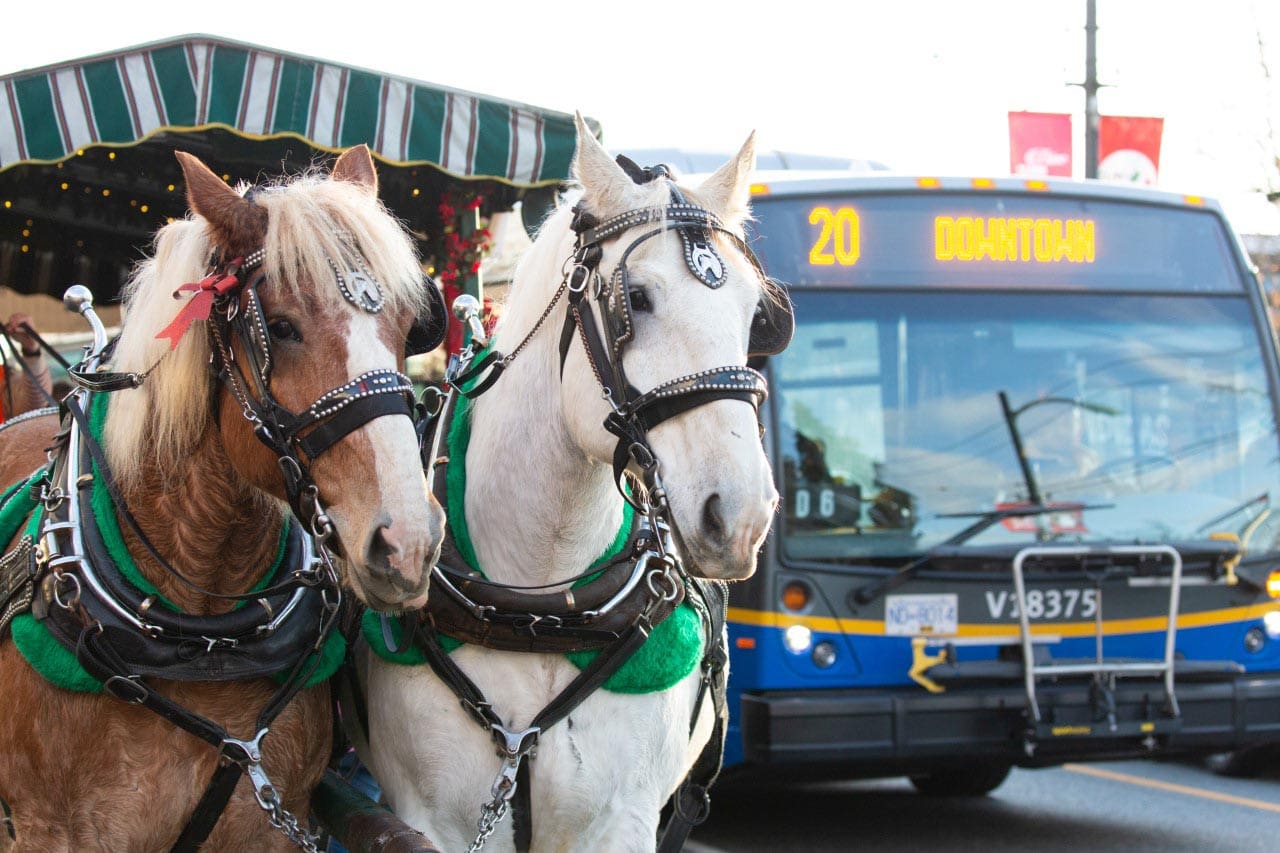
Vancouver permits horse-drawn carriages to operate in busy urban environments, where horses are exposed to vehicle traffic, noise, pollution, hard surfaces and unpredictable conditions. The VHS has raised concerns about the resulting risks to both horse welfare and public safety.
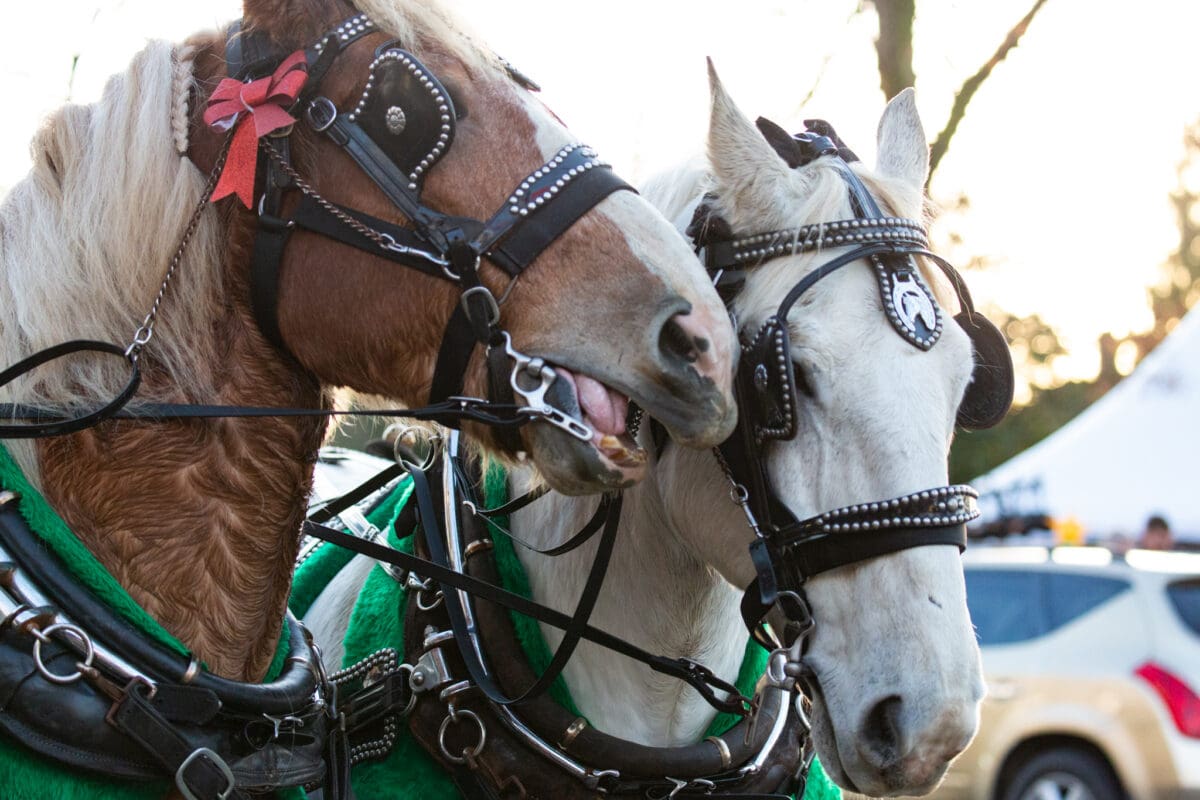
The VHS has documented carriages operating close to moving vehicles and turning across oncoming traffic at holiday events in busy commercial areas like Kerrisdale, Yaletown, and on Commercial Drive. The VHS has also observed horses displaying potential signs of stress or agitation, including head shaking, bit chewing, and pawing. and pawing.
In recent years, incidents have occurred in Vancouver, Victoria, and Montreal involving carriage horses becoming spooked, falling, or colliding with vehicles, sometimes resulting in injuries to the animals or passengers. Such incidents demonstrate how quickly situations can become unsafe for both animals and people. Cities like Montreal, Chicago, and Salt Lake City have already banned or restricted horse-drawn carriages over similar concerns.
Mayor Candidate responses
Muhammad Ahmad
Thank you for inviting me to respond. As an animal lover and humanitarian who has worked with WWF, I believe animal welfare and public safety deserve serious consideration in City decisions.
1. Horse-drawn carriages on busy city streets Yes. I support prohibiting horse-drawn carriages on busy, high-traffic streets in Vancouver. Horses should not be exposed to dangerous traffic conditions, and the public should not face avoidable safety risks. If elected, I would ask City staff to review current rules and bring forward changes to restrict carriage operations on high-traffic routes.
2. Horse racing at Hastings Park I oppose efforts to reinstate horse racing at Hastings Park. Given the end of public funding and the animal welfare concerns raised about the industry, I would not support bringing racing back to the site.
I would work with the Park Board, community groups and other partners on uses for Hastings Park that serve Vancouver residents without relying on horse racing.
Scott Gilbert
Yes. I support prohibiting horse-drawn carriages on busy, high-traffic Vancouver streets. Mixing horses with dense vehicle traffic, noise, hard surfaces and unpredictable urban conditions creates avoidable risks for animals, passengers and the public. If elected, I would ask staff to bring forward an enforceable bylaw that bars commercial horse-drawn carriages from high-traffic streets, supported by clear route definitions, animal-welfare standards and a reasonable transition period. Any narrowly defined exception for a controlled ceremonial event should require a closed or protected route, veterinary safeguards, weather limits and an emergency plan—not ordinary operation in live traffic.
I oppose reinstating horse racing at Hastings Park. The combination of documented animal-welfare concerns, declining attendance and revenue, and dependence on public subsidy does not justify reviving the industry on City-owned land. If elected, I would oppose City funding or a new lease intended to restore racing and would support a transparent, public process to plan a safer and financially responsible future for Hastings Park, including community, recreation, cultural and green-space uses. Any interim site decisions should include meaningful consultation with workers, neighbouring communities and Indigenous partners.
Council Candidate responses
Iona Bonamis
OneCity Council candidates are committed to prohibiting horse-drawn carriages on busy streets and opposing efforts to reinstate horse racing at Hastings Park.
OneCity candidates are dedicated to advancing animal welfare in Vancouver. We support instructing staff to review permitting rules to prohibit horse-drawn carriages on busy, high-traffic streets to protect animals and for the security of all road users.
We would oppose the efforts to reinstate horse racing at Hastings Park, given the racing-related fatality rate for horses and in the interest of not further expanding the gambling industry in our city.
Bridget Burns
Horses are living animals, not props for entertainment, and they shouldn’t have to navigate congested streets alongside cars, buses, cyclists and unpredictable urban traffic. We have a responsibility to protect both animal welfare and public safety.
If elected, I would push for a review of the current permitting system, stronger restrictions on where carriages can operate, and ultimately a prohibition on operating in high-traffic areas. Vancouver can celebrate its traditions and create memorable experiences without putting animals or people at unnecessary risk.
The industry has had years to demonstrate that it can operate sustainably and responsibly, and the declining attendance, growing reliance on public subsidies, and serious horse welfare concerns make a strong case for moving on. Horses should not be put at risk to sustain an industry that is no longer financially viable.
If elected, I would oppose any use of public funds to revive horse racing and work with the Park Board and other levels of government to ensure Hastings Park is developed as a welcoming public space that serves the community, protects animals, and creates opportunities for recreation, culture and green space.
Frances Bula
OneCity Council candidates are committed to prohibiting horse-drawn carriages on busy streets and opposing efforts to reinstate horse racing at Hastings Park.
OneCity candidates are dedicated to advancing animal welfare in Vancouver. We support instructing staff to review permitting rules to prohibit horse-drawn carriages on busy, high-traffic streets to protect animals and for the security of all road users.
We would oppose the efforts to reinstate horse racing at Hastings Park, given the racing-related fatality rate for horses and in the interest of not further expanding the gambling industry in our city.
David Grewal
Typically on issues like this I would need a lot more information.
Current elected officials often receive briefings and reports from city staff on specific issues of concern. Making an informed decision is important.
As an elected official that would mean speaking with stakeholders, understanding the problem or dangers posed, exploring alternatives or mitigative measures, receiving city staff data and report, etc.
I’m not trying to not answer your questions but it wouldn’t be wise of me to provide an opinion on any issue unless I have more than a short email of information and no engagement with stakeholders to fully understand what I am forming an opinion on.
I would do similar on any important issue. Thank you for reaching out to me.
Jarrett Hagglund
OneCity Council candidates are committed to prohibiting horse-drawn carriages on busy streets and opposing efforts to reinstate horse racing at Hastings Park.
OneCity candidates are dedicated to advancing animal welfare in Vancouver. We support instructing staff to review permitting rules to prohibit horse-drawn carriages on busy, high-traffic streets to protect animals and for the security of all road users.
We would oppose the efforts to reinstate horse racing at Hastings Park, given the racing-related fatality rate for horses and in the interest of not further expanding the gambling industry in our city.
Lucy Maloney
OneCity Council candidates are committed to prohibiting horse-drawn carriages on busy streets and opposing efforts to reinstate horse racing at Hastings Park.
OneCity candidates are dedicated to advancing animal welfare in Vancouver. We support instructing staff to review permitting rules to prohibit horse-drawn carriages on busy, high-traffic streets to protect animals and for the security of all road users.
We would oppose the efforts to reinstate horse racing at Hastings Park, given the racing-related fatality rate for horses and in the interest of not further expanding the gambling industry in our city.
Stephanie Smith
Thanks for getting in touch. I don’t believe that there should be horse carriages on busy, high-traffic streets and I would commit to finding a legislative or regulatory path to prohibit it.
I would also oppose returning horse racing to Hastings Park. The problems with Hastings Park racing were long-standing, and the information in the report that you attached unfortunately doesn’t surprise me.
I also don’t think it would be feasible even if someone at the city were to champion it. Site conditions were already substandard and the backstretch has since been dismantled. It’s not viable and we should move on to other ideas for the site.
Caitlin Stockwell
OneCity Council candidates are committed to prohibiting horse-drawn carriages on busy streets and opposing efforts to reinstate horse racing at Hastings Park.
OneCity candidates are dedicated to advancing animal welfare in Vancouver. We support instructing staff to review permitting rules to prohibit horse-drawn carriages on busy, high-traffic streets to protect animals and for the security of all road users.
We would oppose the efforts to reinstate horse racing at Hastings Park, given the racing-related fatality rate for horses and in the interest of not further expanding the gambling industry in our city.
Parris J. Williams
I would support prohibiting horse-drawn carriages from operating on busy, high-traffic streets in Vancouver. Safety should be a priority for everyone, including the horses themselves. Busy urban environments present potential risks due to vehicle traffic, noise, and unpredictable conditions. I believe we should look at ways to protect both animal welfare and public safety, and I would support exploring appropriate restrictions through City policy.
Personally, I am not in favour of horse racing returning to Hastings Park. However, I believe decisions of this nature should be informed by evidence, animal welfare standards, and community feedback. Before considering any potential return, I would want to understand what safeguards would be required, how they would be monitored and enforced, and what the implications would be for the horses and the community.
If elected, I would listen to residents and relevant experts, review the available evidence, and consider whether a clear, enforceable plan could adequately address animal welfare concerns before determining how to proceed.
“Would you support prohibiting horse-drawn carriages from operating in Stanley Park?”
Background provided to candidates
Horse-drawn carriages operate in Stanley Park, exposing horses to busy and unpredictable urban conditions. The VHS has raised concerns about the resulting risks to horse welfare and public safety.
In 2016, horses pulling a carriage full of tourists through Stanley Park were spooked by traffic. The frightened animals bolted off the roadway, crossing a bike path and smashing a park bench before nearly taking the carriage over the seawall. Fortunately, no horses or people were seriously hurt, but the incident demonstrates how quickly this situation can become unsafe for both animals and people.
In recent years, incidents have occurred elsewhere, including in Victoria and Montreal, involving carriage horses becoming spooked, falling, or colliding with vehicles, sometimes resulting in injuries to the animals or passengers. Cities like Montreal, Chicago, and Salt Lake City have already banned or restricted horse-drawn carriages over similar concerns.
Park Board candidate responses
Sacia Burton
I am in favour of exploring a well-managed end to the horse-drawn carriages in Stanley Park. Given the increased summer temperatures we have been experiencing in BC, it is unsafe for the animals (and for nearby people) to be waiting and operating on pavement during the summer months.
Further, as you referenced, moments when the horses are startled pose an unnecessary risk to park patrons and to the horses’ well-being. I would want to ensure that the horses are able to be retired in an ethical way, and to work alongside the business owner for a timely and appropriate wind-down of operations.
Given the possibility of introducing Neighbourhood Zero Emission Vehicles to continue park tours humanely, it feels appropriate and timely to make this decision before any further threats to safety or wellbeing emerge.
Jon Girard
I think it’s absolutely ridiculous that there’s still horse drawn carriages in Stanley Park. It’s a lose lose. Cruelty to the animals that shouldn’t be forced to work AND was one of the reasons the bike lane’s got removed as well if I recall correctly since people complained “it held up traffic too much” with one lane (separate issue but we also need more bike lanes, I digress).
Breanne Smart
Thank you for reaching out to me as this is an issue that is close to my heart. As a vegan and animal rights advocate for the past decade, the use of animals for profit and entertainment is not something I support.
While the horse drawn carriages are a beloved institution of Stanley Park, it would be my responsibility as a Park Board Commissioner to move forward a motion to financially support Stanley Park Horse Drawn Tours in the transition to electrify their fleet and remove the use of animals in their business.
Thank you very much for all of the work that the VHS does, and for taking the time to send this question to candidates.
I look forward to everyone’s responses.
Tamiko Suzuki
Yes I would support prohibiting horse drawn carriages from operating in Stanley Park for all the reasons you have listed. I’ve always felt concern for the horses having to work on concrete all day, having to pull the carriage up that steep hill towards Prospect Point, and having cars and bikes pass fairly closely.
Victoria
The VHS asked candidates in Victoria the below question based on animal welfare issues connected to their community. Click the drop-downs to read the background information and candidates responses.
“Would you support prohibiting horse-drawn carriages from operating on busy, high-traffic streets in Victoria? “
Background provided to candidates
The City of Victoria permits horse-drawn sightseeing carriages to operate on city streets. Horse carriages in Victoria operate in an urban environment alongside cars, buses, bicycles, pedestrians and other traffic. This exposes horses to vehicle noise, traffic congestion, hard road surfaces and unpredictable situations that can create risks to both animal welfare and public safety.
Victoria has also experienced multiple incidents demonstrating how quickly these risks can escalate.
In 2018, a horse-drawn carriage in downtown Victoria was bumped by a bus, causing both horses to fall onto the roadway. In 2023, a spooked carriage horse fled for several blocks before falling near a bike lane, resulting in injuries to the horse and driver. More recently, in April 2024, a carriage horse became spooked at an intersection. The driver lost control and passengers jumped out of the carriage before the horse collapsed on the ground. Cities like Montreal, Chicago, and Salt Lake City have already banned or restricted horse-drawn carriages over similar concerns.
Mayor Candidate responses
Mike Harris
Thank you for reaching out and providing the opportunity to share my position on horse-drawn carriages in Victoria.
I recognize the importance of animal welfare and public safety, and I appreciate the concerns raised by the Vancouver Humane Society.
Horse-drawn carriages have been a longstanding part of Victoria’s heritage and tourism industry. I support their continued operation, provided that strong animal welfare and public safety standards are maintained and properly enforced.
I do not support a blanket prohibition on horse-drawn carriages operating on Victoria’s streets. However, I recognize that certain high-traffic areas may present additional challenges, and I believe any legitimate safety concerns deserve careful consideration.
If elected Mayor, I would support reviewing existing operating regulations, traffic safety requirements and enforcement practices to ensure they adequately protect horses, carriage operators, passengers and other road users.
Where evidence demonstrates that particular routes or operating conditions create unacceptable safety risks, I would support considering reasonable adjustments, including route restrictions where warranted.
I also believe carriage operators must be held accountable for complying with animal welfare requirements and municipal bylaws. Complaints and reported incidents should be taken seriously, investigated appropriately and addressed through consistent enforcement.
My approach would be to preserve this longstanding Victoria tradition while ensuring that animal welfare and public safety remain priorities. I believe we can achieve both through responsible oversight, meaningful consultation and evidence-based decisions rather than an outright ban.
David Johnston
I will be proposing an outright ban on the horse-drawn carriages as horses are people and to condemn them to slavery is abominable.
Bruce McGuigan
Thank you for reaching out and sharing your concerns regarding horse-drawn carriages in Victoria.
The campaign has received a number of concerns regarding the operation of these tours and the condition of the horses, which warrants a thorough review. Given the importance of both animal wellbeing and community safety, I believe it would be premature to announce a definitive position while outside of office, absent such a review.
I am currently evaluating the option of not renewing the existing permit, though I remain deeply concerned about the welfare of the horses if that were to occur. My priority is to look at this issue carefully, ideally with the assistance of the SPCA, to ensure any path forward is both responsible and humane.
Thank you for the work you do and for the opportunity to share my perspective on this matter.
Gregoor Miller (Gregory Miller)
Your point of view depends on where you are coming from.
In New York City tourists really like taking a carriage ride through Central Park. The locals do not. Are the animals fairly treated?
If the carriages are not allowed on busy streets, is Beacon Hill Park enough?
Yes, it is frustrating behind one in James Bay. However the way streets are in Victoria now, it is not much different.
I feel it is a question for the Humane Society to answer, not some politician. Whatever choice the Humane Society makes, I will enforce it.
Council Candidate responses
Wendy Bowkett
Thank you for inviting my response. Animal welfare and public safety should guide the City’s approach to horse-drawn carriages.
I would support restricting their operation on streets where an evidence-based assessment identifies risks that cannot be adequately addressed.
If elected, I would seek a review of permitted routes, traffic conditions, incident records and operating standards, informed by independent equine-welfare expertise and consultation with residents and operators.
Where that review demonstrates unacceptable risks, I would support prohibiting carriage operations on those routes.
Jerry Garcia
You bring up an excellent and important topic that has come up in door-knocking discussions and meetings with residents.
Yes. I support prohibiting horse-drawn carriages from busy, high-traffic streets where horses must operate beside buses, trucks, cars, bicycles and pedestrians. The incidents described are not abstract. They show that one collision, sudden noise or unexpected movement can injure a horse, driver, passenger or other road user. Tradition cannot outweigh a preventable safety risk.
If elected, within my first 90 days I would ask Council to direct staff to amend the Vehicles for Hire Bylaw. The review should identify restricted streets and intersections using objective criteria: traffic volume and speed, transit activity, bike-lane conflicts, construction, road width, and collision or incident history.
It should include the Vancouver Humane Society, animal welfare and veterinary experts, carriage operators, VicPD, transportation staff and affected neighbourhoods. I would also request immediate interim safety options available under the City’s existing licensing authority, mandatory reporting of every carriage-related incident, and annual public reporting.
The result should be enforceable route restrictions, not voluntary guidelines. Operators should receive a defined transition period and an opportunity to move to safer routes or alternatives such as electric heritage style vehicles. The timetable must protect animals and the public, not preserve the status quo indefinitely.
Victoria can preserve heritage tourism without exposing horses and people to unnecessary risk. This is a practical, balanced step the City can take, and I would support it.
Martin Girard
I’ve already committed to a ban on horse carriages. I say it is an anachronistic practice and would see it ended in favour of pedicab services already in place. I’m already aware that horse carriages have caused several accidents over the years and raised legitimate concerns about animal welfare, including operation during heat waves. I would simply refuse to renew the permit once it expires.
James Harasymow
This is my fourth time running. And to be honest, my opinion has changed recently thanks to some conversations that I had recently a greeting meet this year. Here are your answers.
Would you support prohibiting horse-drawn carriages from operating on busy, high-traffic streets in Victoria?
yes.
Please briefly explain your position and what action you would take if elected.
I believe we should set up a permanent plan to phase out horse drawn carriages from the city of Victoria.
We should vote this through immediately as I know it will take a few years to allow the horses to live out there lifespan doing what they were bred to do. Sooner the better.
Jason Heit
Thank you for reaching out and for providing this information. I appreciate the work the Vancouver Humane Society does to advocate for animal welfare. Animal welfare and public safety are both important considerations, and I certainly recognize the concerns you’ve raised regarding horse-drawn carriages operating in busy urban environments.
However, I don’t believe in making decisions without first having a thorough understanding of all the facts and potential consequences. Before taking a position on prohibiting horse-drawn carriages from certain streets, I would want to better understand several factors, including the health and welfare of the horses, existing safety regulations, the frequency and circumstances of incidents, and whether additional safeguards could effectively address the concerns.
I would also want to understand the economic impact on the operators, employees and Victoria’s tourism industry, as well as what would happen to the horses if restrictions significantly affected or ended these operations.
I believe it’s important to hear from animal welfare organizations, veterinarians, carriage operators, employees and other affected parties before making a decision. If elected, I would support a comprehensive review of the issue, including current animal welfare standards, safety records, economic implications and potential alternatives.
I am not opposed to change when there is evidence that change is necessary. However, I believe decisions should be based on facts, consultation and a clear understanding of the consequences rather than committing to a particular outcome before that work has been done.
Thank you again for the opportunity to respond.
Arthur McInnis (Joel Arthur McInnis)
I have not yet taken a position on prohibiting horse-drawn carriages on busy streets. Through your work with the Humane Society, you are close to this issue and may have strong views. I would be very open to hearing more from you about the current standards.
As a candidate, I want to hear the relevant issues and understand who would be affected, including the animals. Animal welfare is at the core of this issue. If elected, I would listen to the people of Victoria and vote according to what they tell me is important to them.
You can make animal welfare part of the conversation about the future of our communities!
While local elections may focus on issues like housing, transportation, parks, and community safety, there is another important issue that deserves a place on the ballot: animal welfare.
That means voters have an important opportunity to ask: “What will you do to make our communities safer and more compassionate for animals?”
Use your voice to help animals this October with the VHS Animal Welfare Local Election Guide
The Vancouver Humane Society (VHS) is encouraging voters to bring animal welfare into conversations with candidates in the lead-up to the 2026 local elections across British Columbia.
Use the VHS Animal Welfare Election Guide to engage with your candidates and discover what they will do to make our communities safer and more compassionate for animals.
The VHS also contacted election candidates in key B.C. communities where current or ongoing animal welfare issues overlap with the VHS’s local advocacy work.
Candidates were asked questions about topics such as horse carriages, horse racing, rodeos, mobile live animal programs and exotic animals in captivity. Read their responses to learn where candidates in these communities stand on these important issues.
UpdateThe 2026 municipal elections in B.C. have now ended. The VHS will continue to work with local governments across B.C. to advocate for animal-friendly policies and practices. You can use the form below to receive important alerts when advocacy opportunities arise. Please see the Current Campaigns page for more ways you can help animals.
While local elections may focus on issues like housing, transportation, parks, and community safety, there is another important issue that deserves a place on the ballot: animal welfare.
Across B.C., many local governments have already taken action on animal welfare issues.
Some communities have introduced bylaws addressing animals used in entertainment, such as banning mobile live animal programs or rodeos, or have adopted policies that better protect companion animals, such as pet-friendly housing.
That means voters have an important opportunity to ask:
What will you do to make our communities safer and more compassionate for animals?
B.C. is also holding a provincial election shortly after the local elections.
This guide is specifically for the local elections and the candidates running for local government and school boards.
The VHS will continue engaging with the provincial government on animal welfare issues after the provincial election and sharing resources for VHS supporters to do the same.
Get advocacy opportunities & updates delivered to your inbox!
1. Key animal welfare issues
Local governments make decisions every day that impact animals and the people who care about them. From bylaws regulating the use of animals in entertainment and pet ownership, to pet-friendly housing policies, parks management and local business regulations.
Some issues are especially relevant across B.C., while others have a particular connection to specific communities.
Choose an issue to see what local governments can do and questions you can ask your candidates.
Support a shift away from factory farming, toward a more plant-based food system with stronger protections for farmed animals
What local governments can do
Local governments can help create healthier, more sustainable communities through policies that support plant-based food choices, stronger emergency planning and disaster response for farmed animals, and a transition away from intensive factory farming toward more diverse, sustainable, and locally focused agriculture.
Similarly, school board trustees can support school district policies and practices that prioritize plant-based food access in schools.
The Squamish-Lillooet Regional District has adopted a comprehensive Agriculture Emergency Plan that includes a Commercial Livestock Relocation Guide and emergency support protocols.
Want to strengthen your message? Copy one of the examples above to show your candidate what other local governments are already doing.
Use or adapt these questions to start the conversation with candidates at the local government and school trustee level:
Would you support practices, plans, and policies that increase the availability of sustainable plant-based foods, while reducing reliance on products from intensive animal agriculture?
Would you advocate to the provincial and federal governments for policies and investments that facilitate a transition toward healthy, humane, and sustainable plant-based food systems and away from intensive animal agriculture
—and, if so, what specific measures would you support?
Would you support updating local emergency and disaster plans to make sure farmed animals are included and plans are required for their evacuation, shelter, and care?
"This election, I’m asking candidates what they will do to support policies that help protect farmed animals and make plant-based choices more accessible in our communities."
Support a shift away from entertainment that puts animals at risk toward humane, animal-free alternatives
What local governments can do
Animals should not be put at risk or subjected to fear, stress or suffering for entertainment. Local governments can take meaningful action towards protecting animals by prohibiting harmful events or activities at the community level.
Rodeos
Determine whether inhumane rodeo events or activities, such as roping, wrestling, and bucking events, are allowed to operate within the community or are supported financially through local policies and programs.
Mobile live animal programs (MLAPs)
Determine whether MLAPs, such as exotic pet expos, travelling petting zoos, animal displays, and presentations, are allowed to operate. MLAPs increase the risks of zoonotic disease spread, cause animals unnecessary stress and risk of injury, and can contribute to environmental concerns if an exotic animal escapes.
Horse racing
Prohibit horse racing in communities where the horse racing industry is trying to revive the sport, particularly in Vancouver, the Lower Mainland, the Fraser Valley, and Osoyoos.
Horse carriages
Prohibit the operation of horse carriages on busy, urban streets in communities where carriage rides operate, particularly in Victoria and Vancouver.
Castlegar introduced bylaws and licensing tools using a positive list of animals to regulate which are allowed to be kept in the community and under what circumstance.
Mobile live animal programs
Port Moody passed a corporate policy prohibiting mobile live animal programs on public and private property.
Want to strengthen your message? Copy one of the examples above to show your candidate what other local governments are already doing.
Ask candidates where they stand on the use of animals for entertainment, and what they would do to ensure animal welfare and public safety are protected.
Would you support prohibiting rodeos or specific rodeo events involving practices that cause animals pain, fear, stress, or risk of injury?
Would you support prohibiting mobile live animal programs involving exotic or wild animals?
Would you support a positive list of animal species that can be kept in the community?
Would you support prohibiting horse racing in our community?
Would you support prohibiting horse-drawn carriages on high-traffic roads or areas with heavy pedestrian and vehicle activity?
"This election, I’m asking candidates what they will do to protect animals from fear, stress, suffering and injury in entertainment, and support safer, animal-free alternatives."
Support policies that help keep people and pets together,assist pet guardians in need and strengthen protections for animals sold in pet stores
What local governments can do
For many people, pets are family.
Local policies can help make communities more welcoming and safer for people and their companion animals.
You can support this by advocating for pet-friendly housing and policies that reduce barriers for renters with pets, support for low-income pet guardians, and responsible regulation of the sale of live animals in pet stores.
Examples of local action
Pet-friendly housing
Vancouver has incorporated pet-friendly housing considerations into its Tenant Relocation and Protection Policy, including within development frameworks such as the Broadway Plan.
This shows how local housing policies can recognize the importance of keeping people and their pets together.
Live animal sales
Richmond, Vancouver, New Westminster and Delta have all taken municipal action to restrict the sale of live animals in pet stores, showing how local governments can strengthen protections for animals sold commercially.
Want to strengthen your message? Copy one of the examples above to show your candidate what other local governments are already doing.
Ask candidates what they would do to make your community more pet-friendly, help keep people and their animals together, and strengthen support for pets and their guardians.
Would you support policies that make it easier for renters to find and keep pet-friendly housing, including pet-friendly units in new affordable and supportive housing developments?
Would you support funding or partnerships for low-cost or subsidized veterinary services and programs that provide pet food to residents experiencing financial hardship?
Would you support policies that encourage pet stores to partner with local shelters and rescues rather than selling commercially bred animals?
Would you support restricting the sale of live animals in pet stores?
"This election, I’m asking candidates what they will do to support pet-friendly housing, help keep people and pets together, and strengthen protections for companion animals."
NOTE – The button above will take you to an external web page – Civic Info BC
Navigate to your municipality to find your candidates contact details.
By email or message
Use the template below to contact your local candidates by email, direct message or social media.
Choose one or more questions that matter most to you, then personalize the message with the candidate’s name, your community and the animal welfare issue you want to raise.
Tip: Keep your question concise, clear and respectful. Candidates receive many messages, and a focused question is more likely to get a useful response.
Dear (candidate name),
My name is (your name) and I live in (your community or neighbourhood).
As a resident and voter, animal welfare is one of my top priorities in this year’s local election. Decisions made at the local level have a real impact on animals. That is why I am reaching out to candidates to find out where they stand before I decide how to vote.
I would appreciate hearing your position on the topics below and how you would address them if elected.
(Add the animal welfare issues that matter most to you here. Consider providing some background information about the issue and then share your questions. You can copy the questions from the guide, or write your own in your own words.)
Thank you for your time, and for putting your name forward to serve our community. I look forward to hearing from you.
Sincerely,
(Your name) (Your community/postal code)
Engage in person
Events & debates
Bring the top questions that matter to you to candidate forums, debates and community events.
Tip: Some audience questions are invited in real-time, whereas others ask you to submit your questions ahead of time.
At the Door
If candidates or campaign volunteers come to your door, try asking one or two questions.
Tip: Not every candidate will be prepared to answer your question. Ask for their contact information so that you can follow up.
Make the conversation count
Prioritize animals
Share with candidates that animal welfare is a key election priority for you.
Keep it constructive
Constructive conversations can help people take animal welfare seriously.
Seek commitments
Find out what they would actually do if elected.
Ask, don’t attack
Give them an opportunity to explain their position.
Listen to the answer
Their reasoning can be just as informative as their final position.
Your conversations with local candidates can help other voters, too. If a candidate gives you a positive or specific response, consider sharing it with your friends, family and community. You can say:
I asked my local candidates what they would do for animal welfare.
Here’s what I learned…
Share it with the VHS!
Candidate responses can help build a picture of the commitments being made across B.C. and help inform animal welfare advocacy following the election.
Learn about the issues. Ask local candidates where they stand. Encourage them to make concrete commitments. And together, we can build communities where animals, people, and the environment are safe and protected.
On many large-scale farms, tens of thousands of animals may be housed in a single facility.
During a fast-moving barn fire, wildfire, extreme heat event, flood, or power failure, there may be no practical way to move every animal to safety.
Approximately 165,000 chickens died in a recent Abbotsford barn fire. Weeks later, at least 20,000 pigs died in a fire at an industrial farm in southern Ontario.
Current industry codes of practice generally call for farms to have emergency plans, but do not require proof that those plans can protect every animal.
TAKE ACTION: Sign now to call on the B.C. government to strengthen protections for farmed animals before the next disaster strikes.
Each chicken was a sentient animal capable of feeling fear, pain and stress. Confined inside the barns, they had no way to escape.
This was a devastating tragedy.
It was also a warning about a system that confines enormous numbers of animals in facilities where evacuation are virtually impossible.
The aftermath of a barn fire in Abbotsford is seen on Friday May 22, 2026. (CityNews Image)
Why large-scale evacuation may be impossible
Evacuating a farm is not as simple as opening a barn door.
Animals must be caught or gathered, safely handled and loaded into suitable crates or trailers. They must then be transported somewhere with enough space, food, water and shelter.
This can require trained workers, specialized equipment, available vehicles and drivers, safe and accessible roads, veterinarians, backup power and fuel, and suitable places to house the animals.
Animals who are sick, injured, or affected by heat or smoke may not be safe to transport.
Birds housed by the tens of thousands cannot simply be released outside.
Pigs and cattle may panic, become injured, or be unable to move through floodwater, smoke, or crowded handling areas.
Even when animals can be loaded, there may be nowhere for them to go.
Nearby farms may already be full, affected by the same emergency or unable to accept animals because of disease and biosecurity concerns.
During a regional disaster, many farms may need the same trailers, workers, roads, and receiving sites at the same time.
For a barn holding tens of thousands of chickens, hundreds of cattle, or thousands of pigs, there may be no workable way to move every animal within minutes, or even hours.
An industrial chicken barn housing tens of thousands of chickens
This has already happened
The Abbotsford fire was not an isolated example.
In July 2026, at least 20,000 pigs died in a fire at a large industrial farm near Simcoe, Ontario. The fire spread through a facility covering about 200,000 square feet.
The scale of these fires makes the problem painfully clear. When tens of thousands of animals are confined inside one facility, there may be no practical way to reach and rescue them.
B.C.’s 2021 disasters exposed the same problem on an even larger scale.
Some farmers moved animals to higher ground or other facilities. In many cases, however, water rose too quickly, roads became impassable, or there was nowhere available to take them.
That same year, more than 650,000 farmed birds died during B.C.’s extreme heat dome. Many were confined in barns that depended on mechanical ventilation and cooling.
Barn fires, floods, wildfires, extreme heat and power failures are different emergencies. They reveal the same systemic risk: enormous numbers of animals are being kept in conditions where their lives depend on buildings, roads, equipment and emergency systems that can fail.
Properties inundated by flood waters are seen in Abbotsford, B.C., Tuesday, Nov. 16, 2021. Jonathan Hayward/The Canadian Press
Large-scale animal deaths also carry wider costs. Emergency responders may be placed in dangerous conditions. Farmers and workers experience serious emotional and financial harm. Communities face the costs of emergency response, rebuilding, and the disposal of thousands of animal bodies. Floodwater can carry manure, fuel and other contaminants into homes, waterways and surrounding land.
As the risks grow, relying on individual farms to solve this problem on their own is not enough.
B.C. has an opportunity to act
In 2024, B.C.’s Farmed Animal Welfare Advisory Committee released a report recommending major changes to the province’s farmed animal welfare framework.
The recommendations included:
creating a government inspection and enforcement function
introducing proactive, risk-based inspections
expanding enforcement options
improving public reporting
including farmed animals in emergency-management regulations
assessing aging infrastructure and climate risks
clarifying the responsibilities of government, industry and emergency partners
improving emergency access to water, cooling, vet care and essential support
These recommendations are an important starting point. However, the B.C. government has not publicly provided a clear plan or timeline for implementing them.
Take action for farmed animals
Farmed animals deserve stronger protections before disaster strikes.
At the 2026 Calgary Stampede, rodeo and chuckwagon events continued to put animals at risk of fear, stress, injury and death, while also exposing human competitors and workers to serious safety risks.
The 10-day event saw two chuckwagons collide resulting in a serious injury for one of the horses, as well as harsh handling of a bucking horse in a chute leading to a cruelty complaint.
With support from the Vancouver Humane Society, Calgary Animal Rights Effort advocates distributed educational materials to Stampede attendees at four peaceful rallies.
TAKE ACTION: keep the momentum going by signing the #SayNoToRodeo pledge, using the quick-action tool below to contact government decision-makers and, if your workplace attends the Stampede, use the template letter to ask your workplace to choose cruelty-free activities for any future Stampede gatherings.
The crowds are leaving and the temporary attractions are coming down, but the concerns surrounding animals used in the events remain unresolved.
From July 3 to 12, animals were once again put at risk of stress, injury and death in fast-paced rodeo and chuckwagon events for entertainment. Calves were chased, thrown to the ground and tied. Steers were pursued and wrestled by the neck. Horses and bulls were made to buck. Teams of horses pulled wagons at high speeds around tight turns and alongside other teams.
These events depend on animals reacting to pressure, fear, discomfort and stress. The behaviours presented as entertainment to the onlookers in the crowd, including fleeing, bucking, resisting and struggling, can be signs that an animal is overwhelmed or trying to escape what is happening.
Reported incidents at the 2026 Stampede
Two high-profile incidents received media attention, including a horse suffering a serious injuryafter two chuckwagons collided at the start of a race on July 11. One horse was eventually able to walk from the track, while the other remained down and was lifted into a trailer behind a privacy tarp. The injured horse is reportedly undergoing evaluation.
Footage from a bucking event earlier in the week also raised concern and resulted in a cruelty complaint, after a handler was seen forcefully pulling on the mane of a horse who was down in the bucking chute. The handler also repeatedly smacked the horse in the head. No further enforcement action was taken by local authorities.
Some rodeo injuries may not be immediately visible. The full impact of a fall, collision or other incident may only become apparent after an animal leaves the arena, but those injuries and deaths are not publicly available
Animal welfare cannot be measured only by whether an animal survives an event. It must also consider what the animal experienced before, during and after being used in an event.
At least 110 animals have died in the Stampede’s rodeo and chuckwagon events since the VHS began tracking fatalities in 1986. That represents an average of one animal death every 3.6 days of competition. Most of the recorded deaths have occurred during the chuckwagon races.
In 2024, three chuckwagon horses suffered fatal injuries and a steer’s neck was broken during a wrestling event. In 2025, a horse named Rider was euthanized after suffering a catastrophic leg injury during a chuckwagon race.
Rodeo events also put people at risk
The risk of injury or death extends to human competitors and handlers as well. Each year, rodeo participants experience injuries of varying severity, with multiple reported deaths directly linked to rodeo activities since 1996.
Research has found that ‘rough stock’ events, such as bull riding and bronc riding, carry particularly high injury risks with contusions, sprains, and concussions being the most frequent injury types. While human competitors can choose to participate, and animal participants cannot, the risks to both are serious and should not be minimized.
Competitors and their families can experience serious physical, emotional, and financial hardship when injuries occur. Recognizing these impacts is an important step towards a future where the welfare of both people and animals is prioritized under a One Welfare framework.
A safer future should protect both people and animals by moving away from activities that include fear, force, and predictable injury risks. By working together to promote practices that reduce harm, we can help create a rodeo culture where both human and animal well-being is protected.
Recent efforts to hide the reality behind the rodeo arena
In recent years, Calgary Stampede organizers and allies have ramped up messaging about their so-called commitment to animal welfare, all while making it increasingly difficult for the public to learn the reality of what happens to animals used in rodeo.
Private businesses limit animal welfare messaging
Last year, major advertising companies rejected or pulled ads set to run in Calgary that would have pointed out the welfare concerns around rodeo. The VHS and Animal Justice raised concerns about mounting censorship and the decision by private advertisers to keep animal welfare messaging from the public.
Online advertising groups like Meta regularly reject promoted videos and photos of unaltered rodeo events displaying animal welfare messaging, claiming these images are too violent to be shared, despite permitting similar photos being used to promote Stampede events on the same platform.
Alberta government amends law to make enforcement more difficult
In May, Alberta’s Animal Protection Act was updated to better protect animals such as pets, but added a specific exemption which would allow animals to be in distress during rodeo and racing events, so long as the treatment is considered reasonable and generally accepted. This change makes it more difficult to protect animals used in these controversial sports.
Stampede organizers limit transparency
We Animals Media, an animal photojournalism organization applied for a media pass at the Calgary Stampede this year to document the rodeo and chuckwagon races. Despite following up, the Stampede never responded to their application. Media accreditation is required in order to bring professional photography equipment to the Stampede grounds, and public recording of the rodeo and chuckwagon races is not permitted.
We Animals Media shared that “If the Stampede is proud of how it treats animals, it shouldn’t be afraid of a camera.”
Live broadcast coverage of the rodeo and chuckwagon races also raises transparency concerns. The camera routinely cuts away during moments that would be difficult for viewers to watch, such as calves hitting the end of the rope, rough handling of animals in the chutes, or horses being injured during chuckwagon races. This pattern played out again this year: at least two chuckwagon races were cut from broadcast coverage, and no mention was made at the time that a horse had suffered a serious injury during one of them.
Because of the combined efforts of Stampede organizers, the Alberta government, and private businesses, the animal welfare concerns around the rodeo and chuckwagons are largely hidden from the public, who are instead provided with a carefully selected, sanitized, Stampede-approved version of events.
To combat efforts to silence animal welfare messaging, the VHS has been working with advocates in Calgary and organizations across the country to increase awareness about animal suffering at the Stampede rodeo and chuckwagon races.
Throughout the Stampede, Calgary-based advocates worked to keep animal welfare visible. With resources and support from the VHS, Calgary Animal Rights Effort advocates held peaceful Buck the Rodeo rallies on July 4, 5, 11 and 12 near the Stampede grounds.
Advocates spoke with members of the public, handed out educational materials and encouraged visitors to consider what animals experience behind the spectacle.
They also promoted cruelty-free ways to take part in Stampede season, including community events, food, music, arts and other activities that do not depend on animals being frightened or put at risk.
Animal advocates distributing Rodeo Truth leaflets
The end of the 2026 Stampede does not need to mean the end of public attention.
Decisions about funding, sponsorship, workplace outings and future programming are made throughout the year. This is when respectful and consistent public engagement can have the greatest influence.
Did your workplace attend the rodeo or chuckwagon races?
Workplace outings should be activities where employees feel comfortable, respected and able to participate.
For some employees, attending a rodeo conflicts with deeply held concerns about animal welfare. Others may be uncomfortable watching events where animals or human competitors could be seriously injured.
The VHS has created a template letter that employees can share with their employer to respectfully ask that future team activities are inclusive and do not involve rodeo or other animal events.
Starting the conversation now can help your workplace make a different choice in 2027.
It’s time for a Stampede that leaves animal suffering behind
The Calgary Stampede has evolved throughout its history. It can continue to change.
Ending the rodeo and chuckwagon races would not mean ending Calgary’s celebration. It would mean creating a celebration where community, culture and entertainment no longer come at the expense of animals.
Another Stampede has ended. The work to build something kinder continues.
The 2026 Calgary Stampede is underway from July 3 to 12, bringing with it the return of controversial rodeo events and deadly chuckwagon races that continue to put animals at risk of injury and that result in near-annual animal deaths.
To date, at least 110 animals have lost their lives at the Calgary Stampede since the VHS began tracking fatalities in 1986 – an astonishing average of one animal death every 3.5 days of competition.
There are many ways to enjoy the city during Stampede season without supporting rodeo or chuckwagon events. Check out the cruelty-free Stampede events calendar and share it with friends, family, and coworkers.
TAKE ACTION: Sign the #SayNoToRodeo pledge and send a message to decision-makers to call for the removal of inhumane and deadly animal events from the annual Stampede program.
Rodeos and chuckwagon races are fast-paced, timed events that put animals’ safety at risk.
The chuckwagon races are promoted as the “half-mile of hell” and involve teams of horses attached to wagons that are pulled at high speed, making tight turns, and in close proximity to each other.
Beyond the risk of injury and death, animals used in rodeo events are also subjected to stress and suffering.
Many rodeo activities, including bucking, roping, and wrestling events, use tools and practices like spurs, flank straps, and rough handling to provoke “fight or flight” responses in the animals.
These events rely on the use of fear, stress, and discomfort to make animals flee and buck.
Nearly every year, there are animal deaths at the Calgary Stampede.
At least 110 animals have lost their lives at the Stampede since 1986, when the VHS began keeping track. Most deaths occur during the chuckwagon races due to the fast pace and close proximity of the horses and wagons.
In 2025, a horse named Rider was euthanized after a catastrophic leg injury during a chuckwagon race. The 2024 Stampede was the deadliest since 2019, with 4 animal fatalities during the 10-day event. 3 chuckwagon horses suffered irrecoverable injuries and a steer’s neck was broken during a wrestling event.
Injuries and deaths may also be underreported, as it can take up to 48 hours after an incident for an injury to present.
Public polling in recent years reflects growing opposition to the use of animals in rodeo.
2022
Removal of the rodeo and chuckwagon events from the Stampede program would have virtually no impact on attendance rates and would bring in new crowds.
A majority of Calgarians oppose calf roping, steer wrestling, bronc riding, and chuckwagon racing. In addition to this, 67% of Calgarians oppose government funding of rodeo events.
Attend alternative cruelty-free events around Calgary
There are many ways to enjoy the city during Stampede season without supporting rodeo or chuckwagon events. Check out the cruelty-free Stampede events calendar and share it with friends, family, and coworkers.
Join the “Buck the Rodeo” Rally
The Calgary Animal Rights Effort is hosting a peaceful rally to raise awareness about the animal welfare issues at the rodeo and chuckwagon races.
Saturday and Sunday, July 4 and 5th, 11th and 12th. 12:00 p.m. to 2:00 p.m. MDT Victoria Park / Stampede Station, Calgary
The rally will meet across from the Victoria/Stampede C-Train Station. Signs will be available, and you are welcome to bring your own.
The draft plan looks at adaption strategies to build resilience into the city’s infrastructure against major climate impacts. Food should be part of that conversation.
By adding plant-based food strategies into their draft plan, New Westminster can take a practical step toward strengthening food resilience by increasing access and affordability and reducing pressure on high-impact food systems.
TAKE ACTION: If you live or operate a business in New Westminster, please take a few minutes to comment on the City’s Draft Plan, encouraging them to consider plant-based foods as part of their strategy.
New West can build climate resilience through plant-based food.
When people think about preparing a city for climate change, they often picture cooling centres, shaded streets, stronger buildings, flood planning, and emergency response. But resilience is also about everyday needs, including whether people can access affordable, nutritious food when climate impacts disrupt daily life.
New Westminster can help build climate-ready neighbourhoods by supporting increased access to affordable plant-based meals, shelf-stable plant-based proteins, locally sourced produce, and culturally appropriate food options.
Below are key sections of the draft plan where New West residents and businesses can ask the City to include plant-based food.
If you do not have time to comment on each section, you can adapt the comment below and email mayorandcouncillors@newwestcity.ca:
“Please include plant-based food in New Westminster’s climate adaptation and resilience planning.
Plant-based foods can be part of a stronger and more resilient food system. Foods such as legumes, grains, seeds, nuts, fruits, vegetables, and plant-based proteins can be affordable, nutritious, lower-impact, and easier to store than many animal-based products.
Climate impacts can disrupt food access and increase costs, so the City should support affordable, nutritious, lower-impact options through public facilities, City-run programs, community events, emergency planning, food security initiatives, and partnerships with local businesses and community organizations.
Plant-based food policy is a practical climate solution.
Animal products use a large share of the world’s farmland and contribute more than half of food-related emissions, while providing a much smaller share of global calories and protein.
C40’s Good Food Cities work found that cities shifting public food procurement saw a 31% drop in high-emission foods, a 44% increase in plant-based foods, and a 16% drop in food-related greenhouse gas emissions from public food purchasing.
And a Vancouver Humane Society cost-benefit analysis found that replacing 20% of the City of Vancouver’s animal-based food purchasing with plant-based alternatives could save up to $99,000 and reduce emissions by more than 500 tonnes.
Plant-Based Cities Movement notes that 82% of Canadians live in cities and that most food is consumed there. That gives municipal governments a real opportunity to reduce food-related emissions through local policy.
For New Westminster, including plant-based food in their strategies offers a practical way to strengthen climate resilience while also reducing emissions, saving public funds, and helping prevent animal suffering through everyday policy choices.
Take quick action: Share this graphic
Help more New West residents learn about this opportunity.
Share this graphic on your social media before the May 31 deadline and encourage others to comment on the draft plan.
Key sections for comment:
To comment, create an account on New West’s online platform ‘Be Heard’, review the draft plan, and add your feedback directly to the sections you care about. You can leave as many comments as you’d like throughout the draft plan.
To make your submission impactful, and to ensure that it is included, do not copy and paste the text below. Use your own words so your submission reflects your personal concerns and experience.
Action 2.2.3: Public facilities can lead by example
Public facilities are more than just buildings. They are places where people gather, learn, celebrate, receive services, exercise, and build community.
As New Westminster updates public facility policies, the City could include food service and procurement in that work. This could mean making plant-based options available at City-hosted events, meetings, recreation centres, community programs, seniors’ programs, and other public spaces.
A climate-resilient public facility should not only be energy-efficient. It should also support access to affordable, nutritious, lower-impact plant-based food options in the places residents already use.
Theme 3: Neighbourhood resilience includes food access
When a heat wave, flood, storm, or supply chain disruption occurs, food access becomes a public resilience issue.
That is why plant-based food should be considered in emergency planning, food security work, community kitchens, public programs, and local food partnerships.
New Westminster can help build climate-ready neighbourhoods by working with community partners to improve access to affordable plant-based meals, shelf-stable plant-based proteins, local produce, and culturally appropriate food options.
Theme 6: Everyday City decisions can build food resilience
The draft Climate Plan says climate risk and resilience should be integrated into day-to-day decision-making and City operations.
New Westminster could make plant-based options a normal part of City operations by:
Requiring plant-based options at City-hosted events and meetings
Adding plant-based considerations to procurement guidelines
Providing staff guidance for plant-forward catering
Supporting public education about climate-resilient food choices
Ensuring City-supported food programs include affordable plant-based options
City decisions about catering, events, grants, facility rentals, community programs, concessions, procurement, and public education all shape what food options are available.
Action 6.1.8: Funding local food resilience solutions
Small grants, pilot projects, public education, and partnerships could help residents access affordable, nutritious, lower-impact plant-based foods while supporting broader climate resilience goals.
For example, the City could support plant-based cooking workshops, community kitchen programs, food security partnerships, local growers, community gardens, food forests, or pilot projects in recreation centres and community centres.
These kinds of initiatives can reduce barriers and help residents see that resilient plant-based food can be familiar, affordable, culturally relevant, and enjoyable.
New West residents: Take action by May 31!
Food is key part of climate resilience. New Westminster has an opportunity to make affordable, climate-resilient, animal-friendly options more available in the places people already gather.
If you live or operate a business in New Westminster, please take a few minutes to ask the City to include plant-based food access in the plan.
Around the world, meaningful progress is being made to end the practice of operating horse-drawn carriages on busy city streets.
In Cartagena, Colombia, where the city’s historic centre is a UNESCO World Heritage site, horse carriages are being replaced with electric ones amid growing concerns about horse welfare and safety.
In New York, the city’s new mayor has announced support for removing horse carriages from Central Park and working with stakeholders to end the practice.
Locally, the VHS’s campaign to remove horse carriages from high traffic streets in Vancouver has gathered more than 3,000 signatures and was recently featured in the Daily Hive. The campaign has been seen more than 330,000 times on social media.
TAKE ACTION: Sign the petition urging Vancouver City Council to prohibit horse carriages from busy city streets, and if you’ve already signed, please share it to help build momentum.
Below is a template message that will be sent to Mayor Sim & Vancouver City Council. Tip: personalize the subject and message for added impact, or send a message directly to: mayorandcouncil@vancouver.ca
Horse carriages & traffic don’t mix
Horses are sensitive prey animals, not suited for navigating the increasingly crowded, noisy, and unpredictable streets of a modern city. Yet, Vancouver bylaws still allow horse-drawn carriages to operate on busy roads in high-traffic commercial areas throughout the city.
These urban environments are filled with loud noises, fast-moving traffic, hard pavement, vehicle exhaust, and crowds that can easily startle horses, no matter how experienced or well-trained they are.
Previous horse carriage incidents
Below are a few previous incidents that show how quickly things can become dangerous for the horses and the public when horse carriages operate in busy urban spaces.
Victoria, 2024: A horse is spooked after an equipment malfunction, resulting in the driver losing control of the horse, who proceeds to run and buck through an intersection. Passengers jumped out of the carriage before the horse collapsed on the concrete.
Victoria, 2023: A spooked horse flees for three blocks before tripping and falling over a bike lane curb. The incident resulted in the driver being thrown from the carriage and both the driver and horse suffered minor cuts.
Victoria, 2018: In downtown Victoria, a horse-drawn carriage rolled back and bumped into a bus that was following too closely. The impact caused both horses to fall, blocking traffic and requiring an emergency response. The horses remained on the ground for more than five minutes, during which members of the public attempted to assist. Those assisting were not directed to stay clear of the horses’ legs, putting themselves at risk of serious injury.
Victoria, 2018: A second incident occurred only a few months later, when horses were spooked and veered off course and crashed into a parked vehicle. Witnesses reported that the horses smashed the vehicle’s windows and even climbed onto its roof with their front hooves.
Vancouver, 2016: A loud car horn startled a team of horses pulling a carriage, causing them to bolt along Stanley Park’s seawall with passengers on board. The horses left the road, crossed a bike path, and smashed a park bench with the carriage before continuing for approximately 100 metres. The driver fell from the carriage, and several frightened passengers leapt off as it sped along. Multiple people were injured, and there were concerns that the horses could have plunged over the sea wall and into the water.
Holiday event observations in Vancouver
In recent years, the VHS has documented horse carriages at holiday events in busy commercial areas, such as Kerrisdale and Commercial Drive.
The footage shows recurring welfare concerns and safety risks, including:
Horses working in close proximity to moving vehicles;
Horse carriages turning across oncoming traffic at busy intersections;
Horses exposed to loud, sudden, and unpredictable noises and movement, such as sirens, car alarms, music, dogs, and bicycles;
Members of the public approaching and interacting with horses without supervision;
Horses showing possible signs of stress or agitation, including head shaking, bit chewing, and pawing.
Sign & share the petition
Join the VHS in urging Vancouver City Council to protect the well-being and safety of horses and the public by prohibiting horse-drawn carriages from busy city streets.
Vancouver bylaws allow horse-drawn carriages to operate on busy city streets, putting horses and the public at risk of serious injury.
The VHS has raised concern about horse-drawn carriages operating at events in busy, high-traffic commercial districts of Vancouver, such as Kerrisdale and Commercial Drive.
These urban environments are dangerous and can be stressful for horses due to traffic, noise, pollution, and unpredictable surroundings.
Cities like Montreal, Chicago, and Salt Lake City have already banned or restricted horse-drawn carriages for similar reasons.
SIGN THE PETITION: Urge Vancouver City Council to protect horses and the public from these risks by prohibiting horse-drawn carriages from busy city streets.
Horses are sensitive, social animals, not suited for navigating the increasingly busy, noisy, and unpredictable streets of a modern city. Yet, Vancouver bylaws still allow horse-drawn carriages to operate on busy roads in high-traffic commercial areas throughout the city.
These urban environments are filled with loud noises, fast-moving traffic, hard pavement, vehicle exhaust, and crowds that can easily startle horses, no matter how experienced or well-trained they are. The physical and mental toll on horses, especially from noise sensitivity, air pollution, and walking on hard concrete for hours, cannot be overlooked.
Growing public concern
Despite growing concerns, existing bylaws do not address the safety and welfare issues that carriage horses face in busy city environments.
In 2020, nearly 7,000 people signed a petition urging the Vancouver Park Board to remove horse-drawn carriages from Stanley Park, showing that public concern around this outdated practice is strong and growing.
In recent years, incidents in Vancouver, Victoria, and Montreal have underscored the risks associated with horse-drawn carriages in busy urban environments. Horses have bolted after being spooked, fallen on slippery streets, and collided with traffic. Cities across North America, including Montreal, have since chosen to ban or restrict horse-drawn carriages to prevent further harm.
Previous Incidents
Vancouver – Stanley Park
2016: A team of horses pulling a carriage was startled by a car horn and bolted along the Stanley Park seawall with passengers on board. The horses crossed a bike path, smashed a bench, and ran for approximately 100 metres. Multiple people were injured, including the driver who fell from the carriage.
2018: A horse-drawn carriage rolled back into a BC Transit bus that was following too closely. The impact caused both horses to fall and block traffic. They remained on the ground for over five minutes, and bystanders attempted to help, putting themselves at risk. Just months later, another carriage horse team was spooked and crashed into a parked car. Witnesses reported smashed windows and that the horses climbed onto the vehicle’s roof with their front hooves.
2023: A carriage horse tripped over a bike lane curb and fell after being spooked when its bridle caught on a railing following a tour. The driver was thrown from the carriage, which became stuck halfway in the bike lane, and sustained a minor cut to the head.
2024: A carriage horse is spooked after an equipment malfunction, resulting in the driver losing control of the horse, who proceeds to run and buck through an intersection. Passengers jumped out of the carriage before the horse collapsed on the concrete.
In recent years, the Vancouver Humane Society (VHS) has monitored and documented several holiday events in Vancouver where horse-drawn carriages were used in busy commercial areas like Kerrisdale and Commercial Drive.
These events revealed patterns of concern, including:
Carriages turning across oncoming traffic at intersections
SIGN THE PETITION: Urge Vancouver City Council to protect the well-being and safety of horses and the public by prohibiting horse-drawn carriages from busy city streets.
Photo by <a href="https://unsplash.com/@bang_gecko?utm_content=creditCopyText&utm_medium=referral&utm_source=unsplash">verdian chua</a> on <a href="https://unsplash.com/photos/brown-and-white-lizard-on-brown-wooden-surface-68hC4vYTSFo?utm_content=creditCopyText&utm_medium=referral&utm_source=unsplash">Unsplash</a>
Port Moody Councillor Kyla Knowles introduced a resolution at the UBCM calling for regulations on mobile live animal programs, citing animal welfare, zoonotic disease risks, and public safety.
The Vancouver Humane Society supports the resolution, highlighting the lack of minimum standards for animal care in mobile programs.
The resolution also urges the province to update the Controlled Alien Species Regulation to include stronger welfare protections and restrictions on exotic species transport, breeding, and display.
Read media coverage on the report and the VHS’s campaign below. Stay tuned for updates!
Proposal to regulate mobile live petting zoos in B.C. is based on animal welfare concerns, advocate says.
“It seems cruel to take these animals from event to event, from party to party,” said Knowles.
Knowles said the issue came to the city’s attention through public complaints about an operator who regularly made presentations at the city’s Golden Spike Days.
“This particular operator had exotic lizards, turtles and snakes. People and kids would line up and take their turns holding them, posing with them. It just seemed cruel to watch these animals being handed from one child to another,” said Knowles after observing the operator at an event.
“The resolution is about oversight and regulation. The problem is that there are independent, private, for-profit operators in this space, and we have no idea how they are being operated,” said Knowles.
Said Emily Pickett, campaign director of the Vancouver Humane Society: “We don’t know how many of these groups there are, that’s part of the problem.”