Categories
News/Blog

End inhumane rodeo events at the Calgary Stampede

Update

Though the chuckwagon races did not proceed in 2021 due to time-sensitive safety concerns, Stampede organizers have not committed to removing this dangerous event or the three concerning rodeo events highlighted by 5,354 animal supporters. Please stay tuned for future actions to address cruel events at the Calgary Stampede.

UPDATE – July 26, 2021

A horse was euthanized this weekend following a chuckwagon race in Red Deer, Alberta.

This comes after the Calgary Stampede cancelled their 2021 chuckwagon races due to safety concerns surrounding the lack of a practice season during COVID-19.

The chuckwagon races always pose a risk to horses because of the fast pace of the event and the proximity of wagons and horses on the track. There are also concerns about the use thoroughbred horses in chuckwagon racing, which tend to be bred for speed rather than skeletal strength. This puts them at greater risk of serious injury and euthanization.

The horse who was euthanized this weekend was diagnosed with a muscular-skeletal injury after the accident.

The loss was tragic and preventable.

Please call on the Calgary Stampede to extend their suspension of the chuckwagon races until an independent review by animal experts can determine if they can be made safer.

The majority of Canadians are opposed to rodeo; so why does a Canadian event marketing itself as “The Greatest Outdoor Show on Earth” continue to host rodeo events?

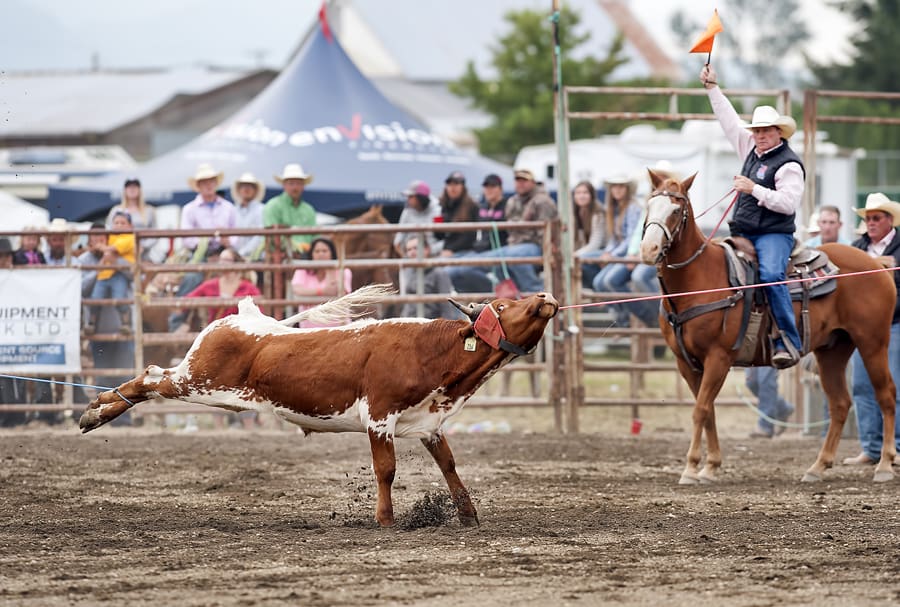
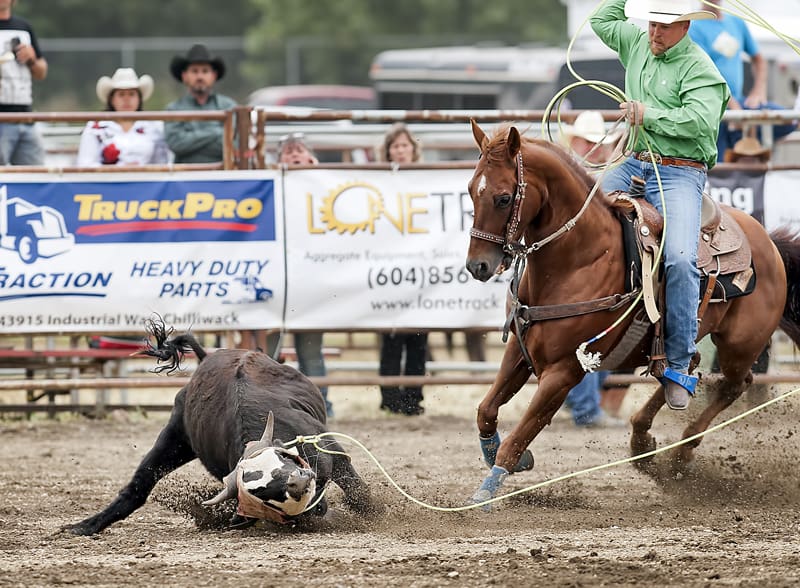
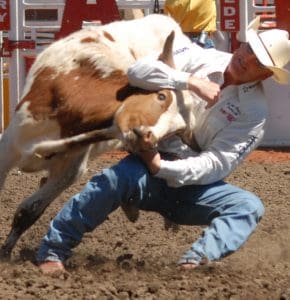
59% of Canadians are opposed to using animals in rodeo, and yet the Calgary Stampede continues to host cruel rodeo events year after year that cause animal suffering, stress, and even death. It is clear to most people that twisting a steer’s neck until he falls down or stretching him by the neck and hind legs so he is suspended above the ground is inhumane, but these activities are carried out for the sake of so-called entertainment in the form of steer wrestling and team roping every year.

Watch: The cruel reality of calf roping

The cruel reality of calf roping

This is calf roping, an event held at rodeos including the Calgary Stampede. Take action to end inhumane rodeo events and create an animal-friendly, family-friendly Stampede here: https://vancouverhumanesociety.bc.ca/posts/inhumane-rodeo-calgary-stampede/?utm_source=youtube&utm_medium=video-calf-roping&utm_campaign=calgary_stampede

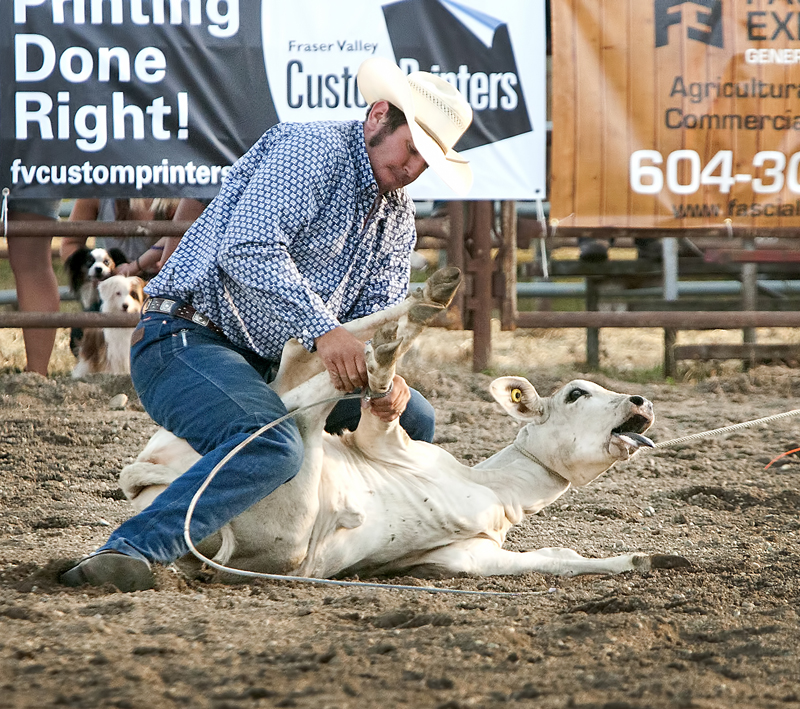
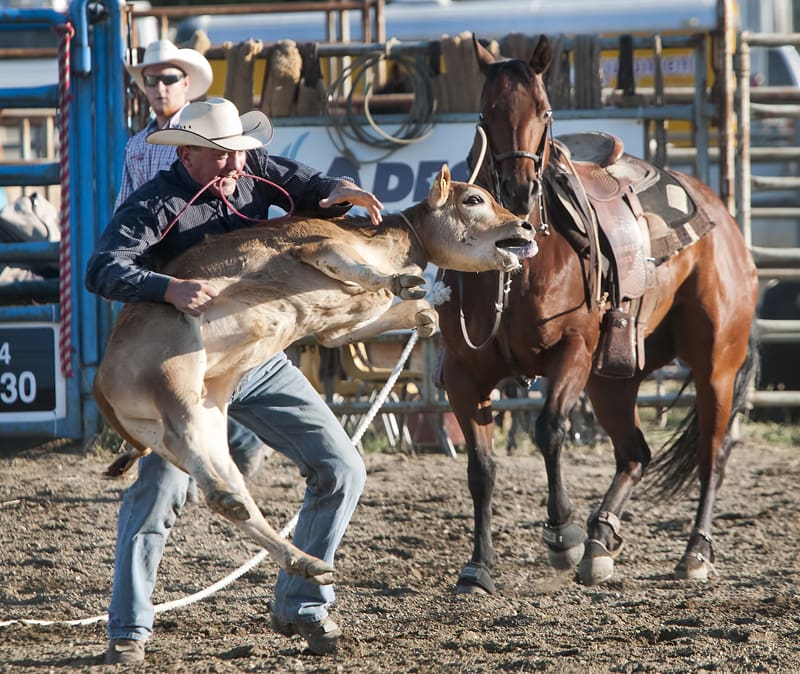
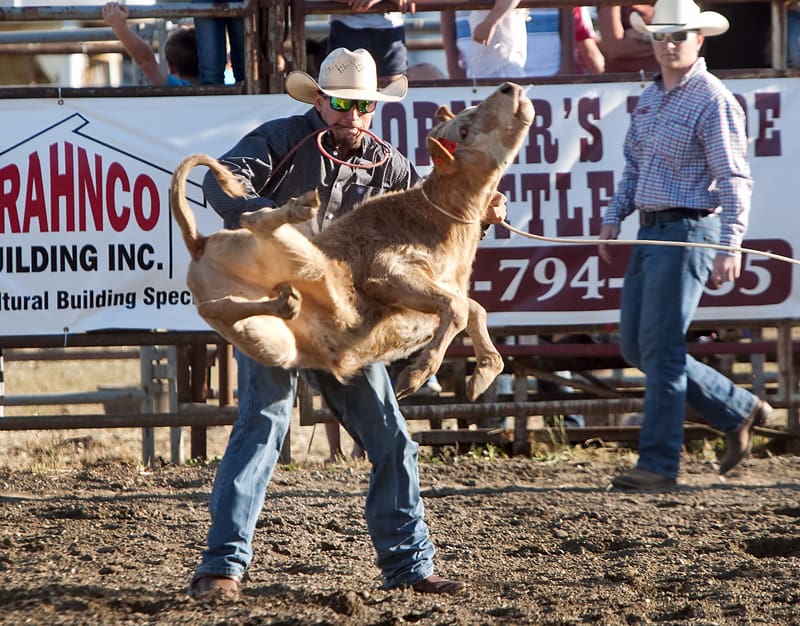
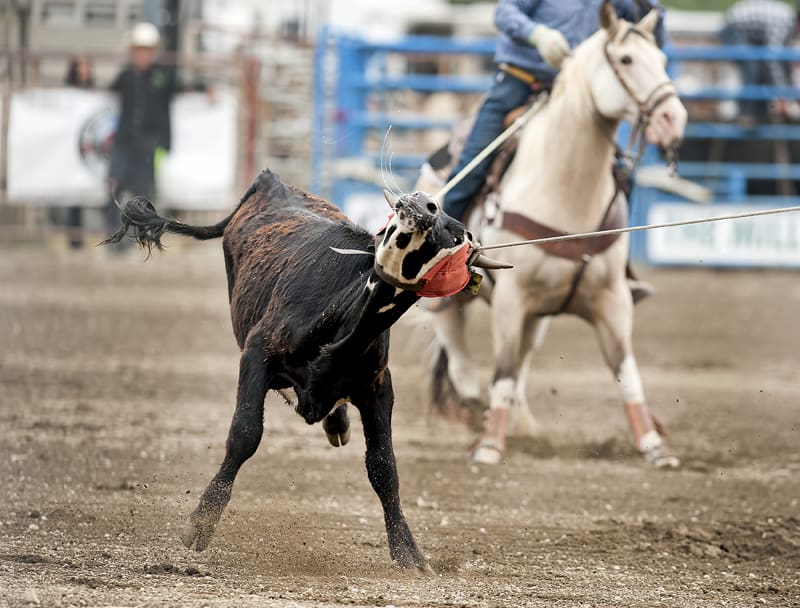
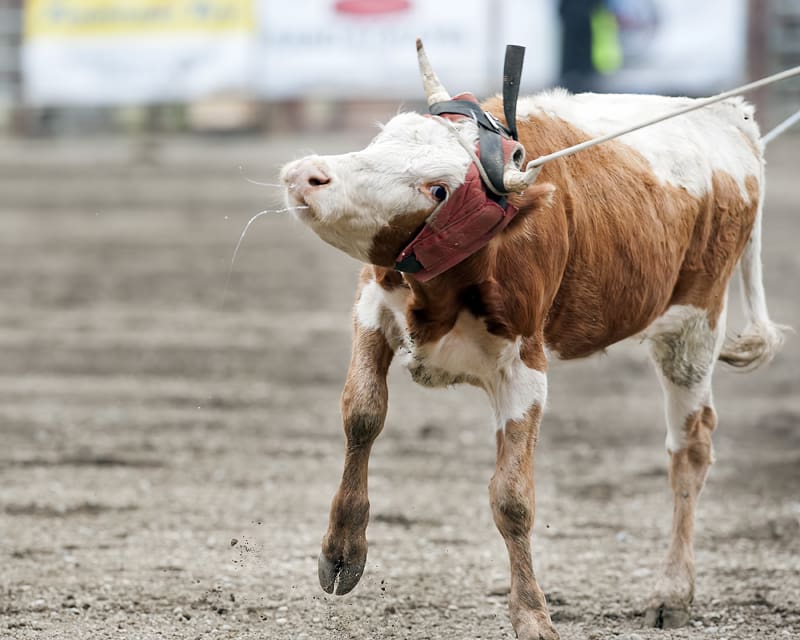
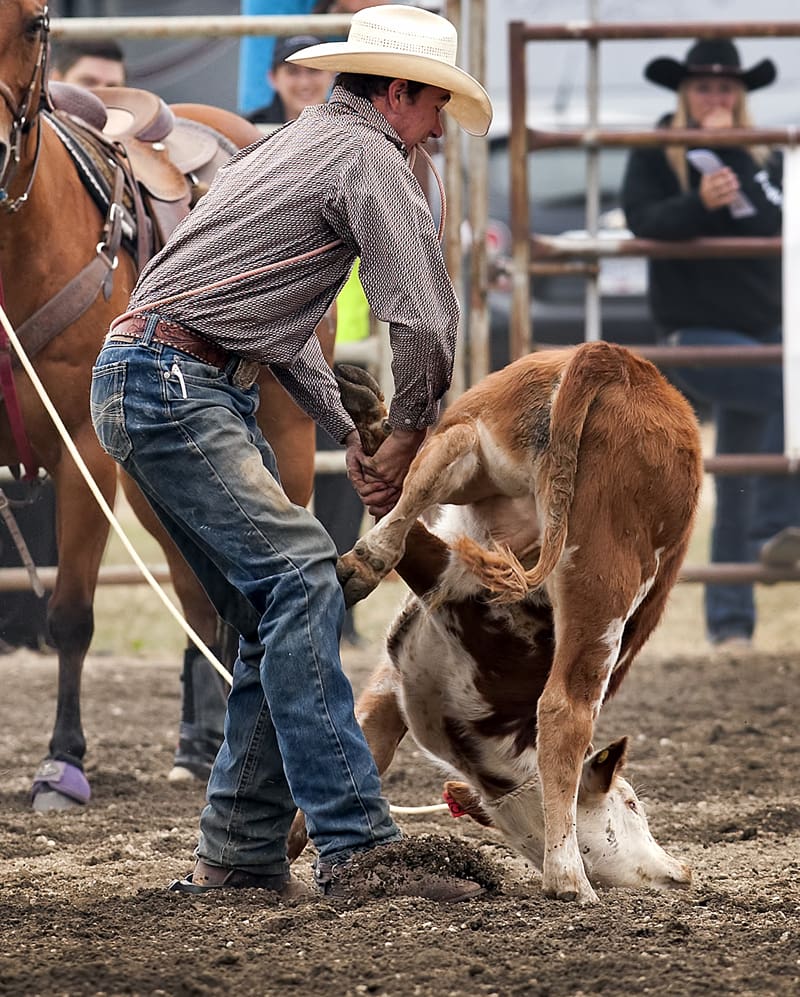
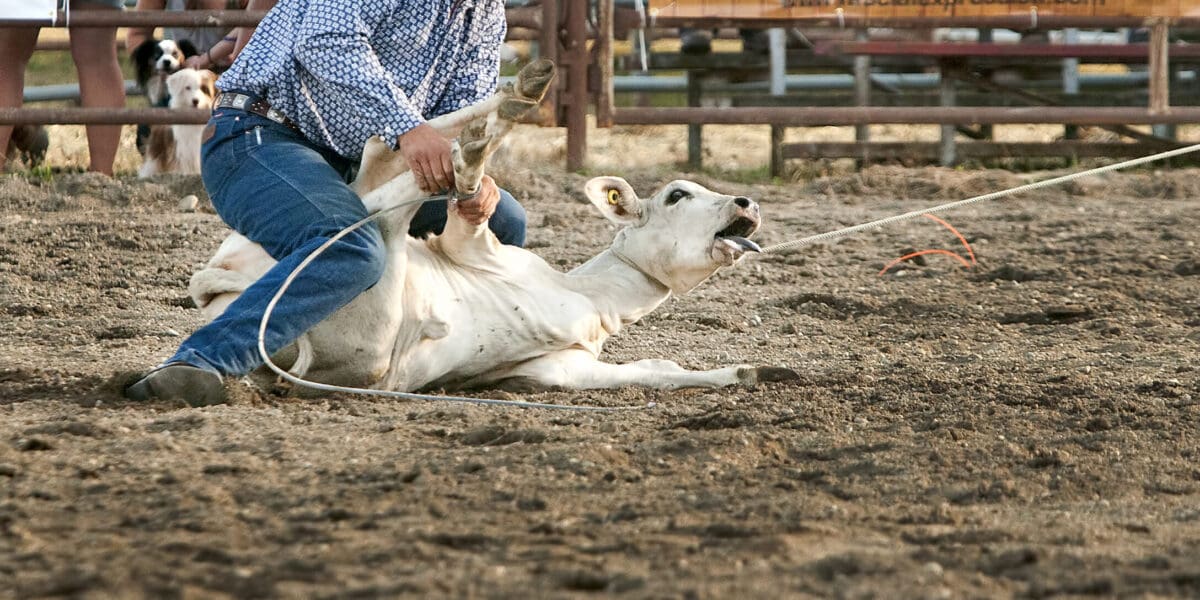
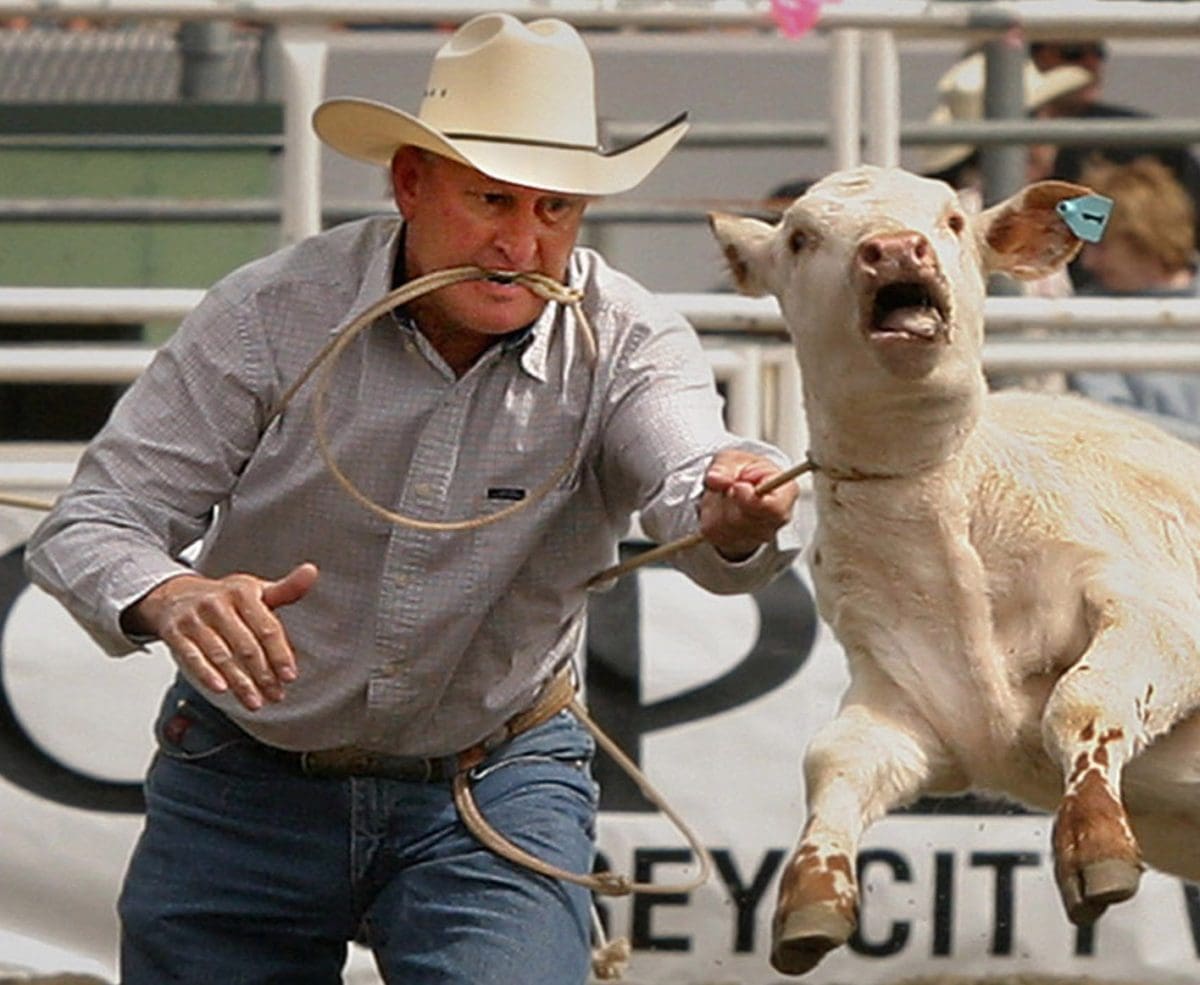
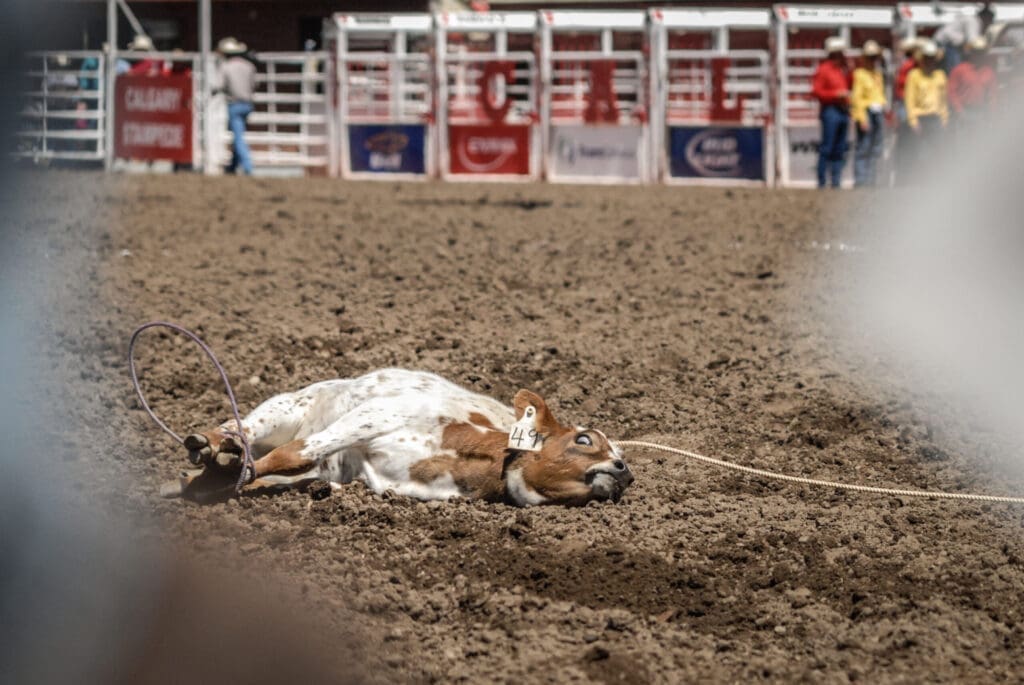
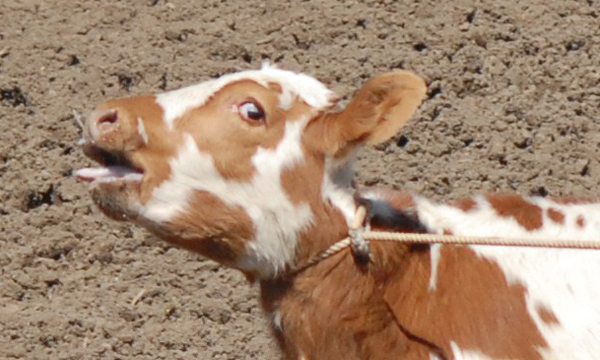
Perhaps the most obviously cruel event is calf roping (also known as tie-down roping), where a calf who is just three months old—long before the age she should even be weaned from her mother—is tormented or “goaded” in a chute leading from a holding pen to the rodeo arena, so that she bursts out at a high speed as soon as the gate opens. Then, as she runs into a ring at around 27 miles per hour, the confused calf is roped around the neck by a rider and jerked to a sudden stop. The rider will then jump to the ground and quickly tie three of the calf’s legs together as she struggles to break free.

Animals used for calf roping, steer wrestling, and team roping can and have sustained injuries during these events that cost them their lives.

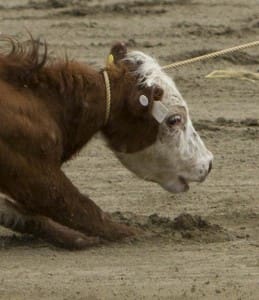
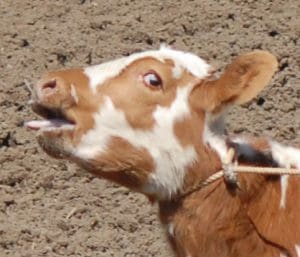
Photos of the events make it clear that these animals also experience pain and stress while being roped and roughly handled. Recent research into calf roping has confirmed that calves show visible signs of anxiety and fear while being chased and have elevated levels of stress hormones after roping events.

Another major event at the Calgary Stampede is the chuckwagon races, which has been dubbed the “half mile of hell” by organizers and participants. The races involve several teams of horses pulling wagons in a figure eight course and racing down a track at high speed to the finish line. This dangerous event has caused more than 70 horse deaths since 1986—mainly due to crash injuries and heart attacks brought on by stress. Though the event has been cancelled this year due to COVID-19, organizers have announced a plan to resume the event in 2022.

Watch: The Chuckwagon races, the Calgary Stampede’s deadliest event

The Chuckwagon races: The Calgary Stampede’s deadliest event

These are the Rangeland Derby chuckwagon races, which have caused over 70 horse deaths since 1986.

What has been done to stop these events?

Thanks to the hard work of Vancouver Humane Society’s supporters and other animal rights advocates, some progress has been made in past years in an attempt to reduce animal injuries at the Calgary Stampede. The number of wagons in the chuckwagon races was reduced from four to three following the deaths of six horses in 2019; it remains to be seen whether this measure alone will make the “half mile of hell” any safer for horses.

Up to this point, progress toward making the Stampede more animal-friendly and family-friendly has been slow and hard-won. A serious change by the Calgary Stampede is long overdue to make this fair one that truly represents the values of Canadians.

What’s next?

The Vancouver Humane Society is calling on Calgary Stampede Interim CEO Dana Peers to remove three of the fair’s most inhumane rodeo events: calf roping, steer wrestling, and team roping. The cancellation of the 2021 chuckwagon races also offers an opportunity to employ an independent review by experts (i.e. veterinarians, animal behaviourists, equine specialists) to determine whether or not this event can be made safer in future years. If the Calgary Stampede wishes to be the “Greatest Outdoor Show on Earth”, it must stop causing animal suffering and leave these events where they belong: in the past.
Take action to end inhumane rodeo events!

This action has now ended

5,354 people used this tool to send an email to decision-makers. Thank you for taking action!

Categories
Opinion

GM Canada should stop sponsoring the Calgary Stampede chuckwagon race

Article originally published on Daily Hive.

The death of six horses in last year’s Calgary Stampede chuckwagon race may have marked a turning point in public support for the event, with even die-hard chuckwagon fans calling for change.

The key question, however, is whether corporate sponsors of the race will continue to support an event that attracts negative headlines and public outrage virtually every year.

More than 70 horses have died in the event since 1986 and none of the much-publicized safety initiatives, rule changes, and reforms announced by the Stampede has made any difference.

The horses keep on dying.

Yet, on March 19, Calgary will again host the annual GMC Rangeland Derby canvas auction, in which companies will bid to advertise on the tarps covering the chuckwagons that will compete in July’s races at the Stampede.

The bidding companies tend to be local, with many involved in construction or the oil and gas industry. With relatively strong local support for chuckwagon racing, the companies are unlikely to face consumer pressure to distance themselves from the event, despite the annual horse carnage.

But General Motors Canada, which is the title sponsor for the chuckwagon race, is a national and international brand. While associating that brand with the macho “half-mile of hell” might have made sense 30 year ago, does it still?

There have been clear signs that society is growing uncomfortable with the use of animals in entertainment: Ringling Bros. Circus has gone out of business, SeaWorld no longer features orca whale shows, and Canada has banned whale and dolphin captivity. And, according to a 2019 poll by Research Co., a majority of Canadians (59%) are opposed to rodeos.

Meanwhile, General Motors seems to be adopting a more progressive brand. In 2017, the company announced that “General Motors believes the future is all-electric,” ending its century-long relationship with gasoline and diesel. In addition, GM has launched a major “diversity and inclusion” initiative to increase the number of women and minorities it employs. If that’s a brand that’s looking to the future and aiming to broaden its appeal, where do chuckwagon races and dead horses fit?

Yet GM Canada continues to sponsor not only the Calgary Stampede chuckwagon race, but also a number of other races organized by the World Professional Chuckwagon Association (WPCA). Although media attention has focused on horse deaths at the Stampede, horses have also been killed at WPCA races in several prairie towns, including one in Medicine Hat in 2017, two in Bonnyville in 2012, and four in Grand Prairie in 2009.

Perhaps GM Canada believes the rugged machismo of chuckwagon racing will still resonate with some of its customers, making it worth associating with the event. But, brand values aside, there remains an ethical question: How can the company support an event that every year puts animals at undue risk of injury and death just to amuse a crowd?

While the Calgary Stampede and its supporters have ignored the arguments made by animal advocates against the chuckwagon race for decades, it is harder to ignore independent academic research that examines animal welfare in the race.

A 2017 study of the Stampede’s chuckwagon race by Professor Kevin Young at the University of Calgary concluded that “there are obvious and acknowledged examples of harm/abuse toward the animals involved.”

Professor Young also addressed the Stampede’s program of safety and rule changes, describing it as being “as much about marketing and public image as it is about animal safety, especially in the face of ongoing harm to horses.”

The study simply confirms what facts and common sense tells us: The chuckwagon race kills and injures horses for the sake of entertainment and the Stampede has failed to stop it.

There are good branding and marketing reasons for GM Canada to reconsider its sponsorship of chuckwagon racing, but the ethical case is even stronger.

They should do the right thing and stop supporting this gruesome spectacle.

Categories
Media Release

Most Canadians are against rodeo so why is it being celebrated at the Grey Cup?

Vancouver – The Vancouver Humane Society (VHS) is calling on the Canadian Football League (CFL) to cancel a rodeo being held as part of this year’s Grey Cup Festival in Calgary.  The call comes as a new poll shows that a majority of Canadians are opposed to rodeo. The poll, by Research Co., found that almost three-in-five Canadians (59%) are opposed to using animals in rodeos, with only 34 per cent in favour.  Even in Alberta, 49 per cent of residents oppose rodeo, according to the poll.

“The Grey Cup Festival is a national event, supposedly representing Canadian culture and values,” said VHS spokesperson Peter Fricker, “So why is the CFL including a rodeo, which most Canadians oppose?”

Fricker added that the public outrage at the deaths of six horses at this year’s Calgary Stampede and the Stampede’s long history of controversy over animal deaths and cruelty made it hard to understand why the CFL would associate itself with rodeo.

“It seems tone-deaf for the CFL to link Canadian football to rodeo at the league’s premiere event,” he said.

VHS has launched a campaign asking the public to urge the CFL to drop the rodeo from its Grey Cup plans.

-ends-

Categories
Opinion

It’s time to end rodeo cruelty in B.C.

Article originally published on Daily Hive.

Right here in British Columbia, in 2019, animals are being tormented and abused for the entertainment of a crowd.

In July, a rodeo stock contractor was photographed using an electric prod on bulls at the Quesnel Rodeo.  Last year, the same man was caught using a prod at the Chilliwack Fair rodeo.

While the use of electric prods on cattle is not illegal, the National Farm Animal Care Council’s Code of Practice for the Care and Handling of Beef Cattle states: “Electric prods must only be used to assist movement of cattle when animal or human safety is at risk or as a last resort when all other humane alternatives have failed and only when cattle have a clear path to move.”

Calf roping at Chilliwack Rodeo

If you used a prod to apply electric shocks to your dog you would likely face animal cruelty charges. Farm animals do not receive the same protection under the law, leaving bulls, calves and steers subject to abusive, coercive measures in rodeos.

The B.C. Rodeo Association has stated that it does not condone the use of electric cattle prods and that the matter will be dealt with according to its rules and regulations. To date, no penalty for use of the prod has been announced.

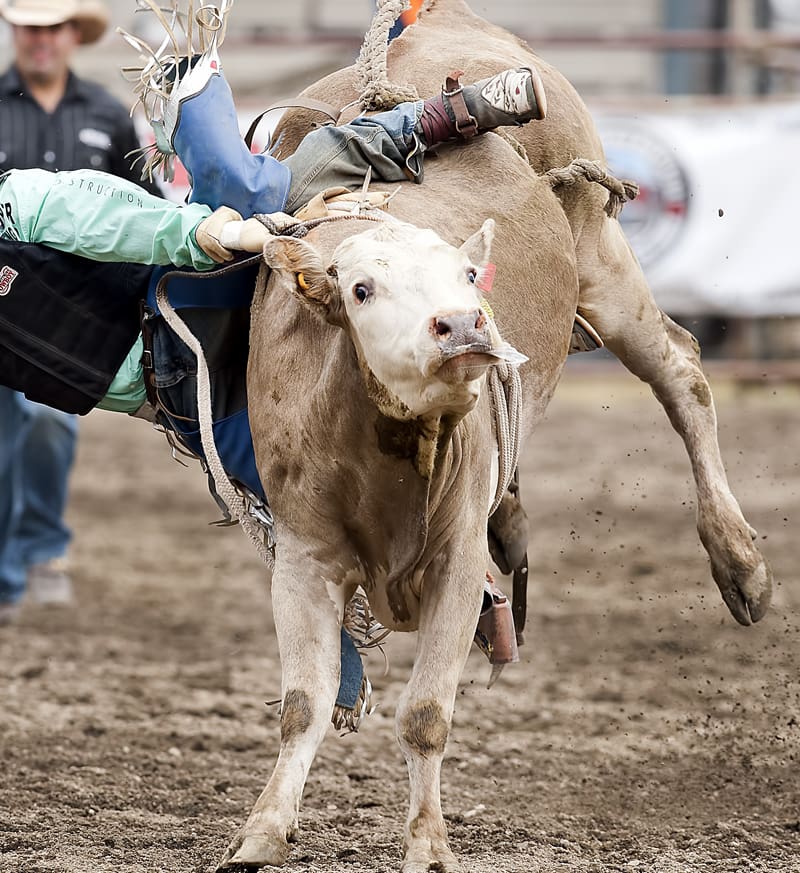
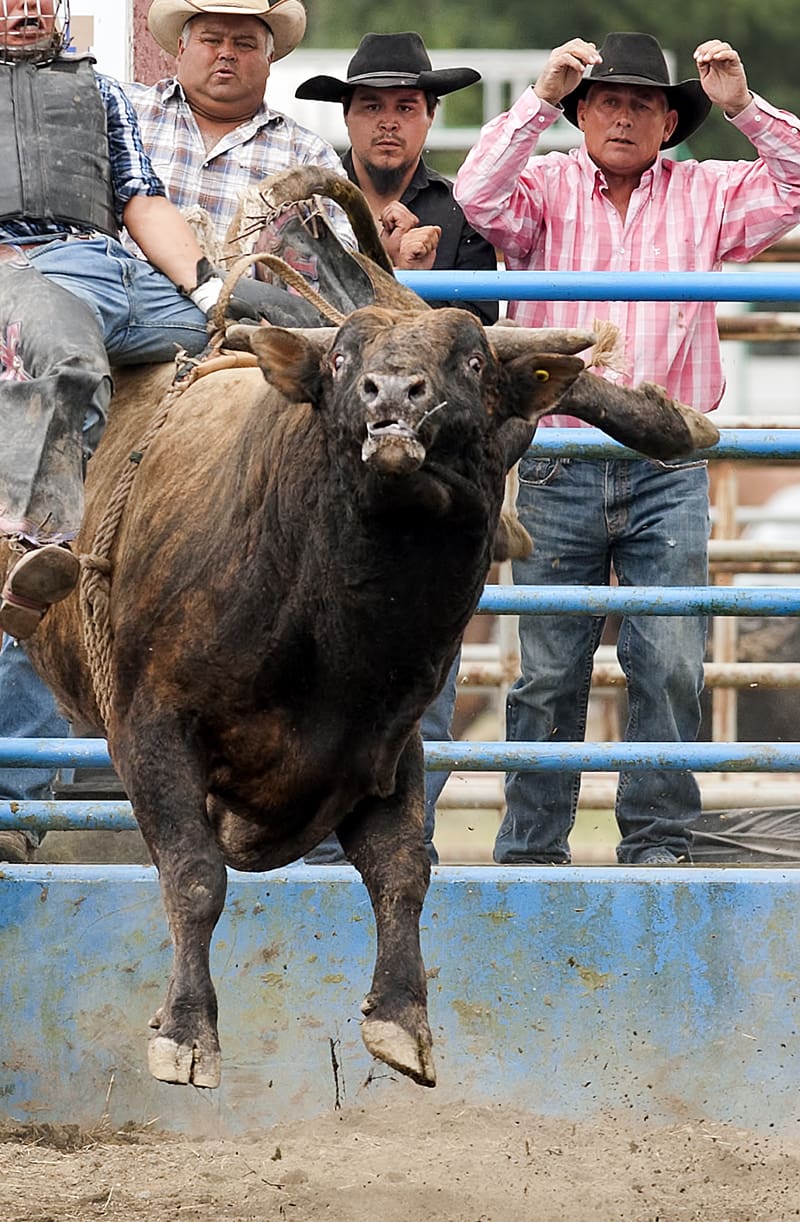
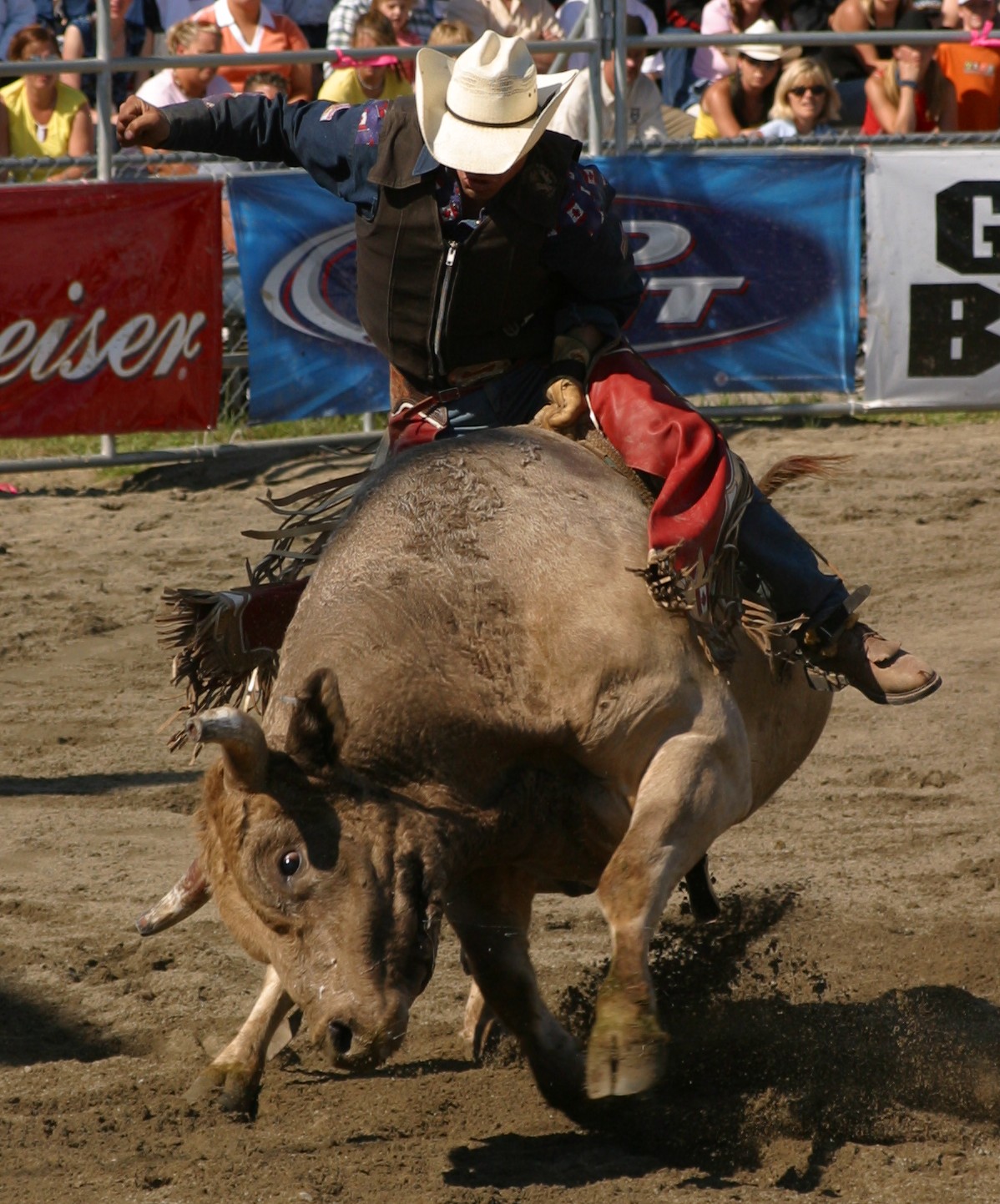
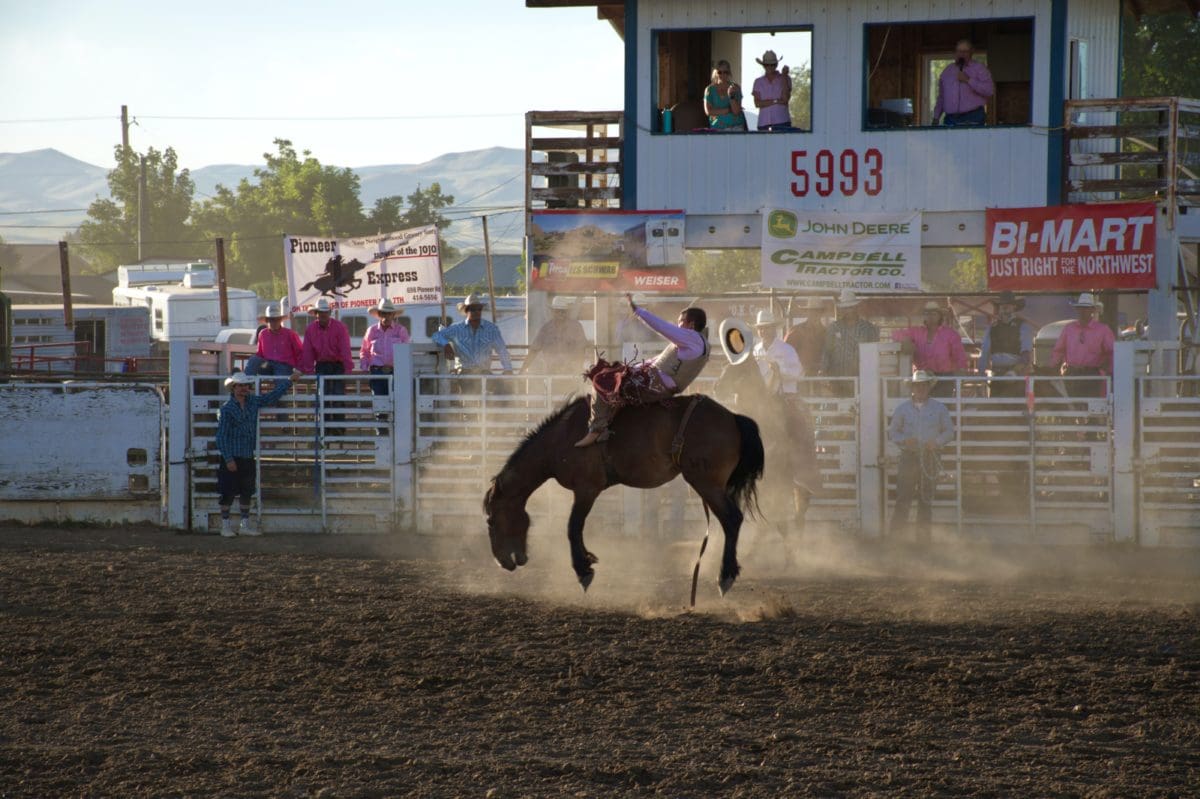
In the Quesnel and Chilliwack rodeos, the prods were being used in the bull-riding event: A bucking bull is released into the arena with an unwanted rider on its back to see if the rider can stay on for eight seconds. The rider wears spurs to grip the bull’s hide.  Just before the bull is released a “flank strap” is tightened around its hindquarters, which causes further stress to induce bucking. Electric shocks would only add to the distress the bull is already enduring.

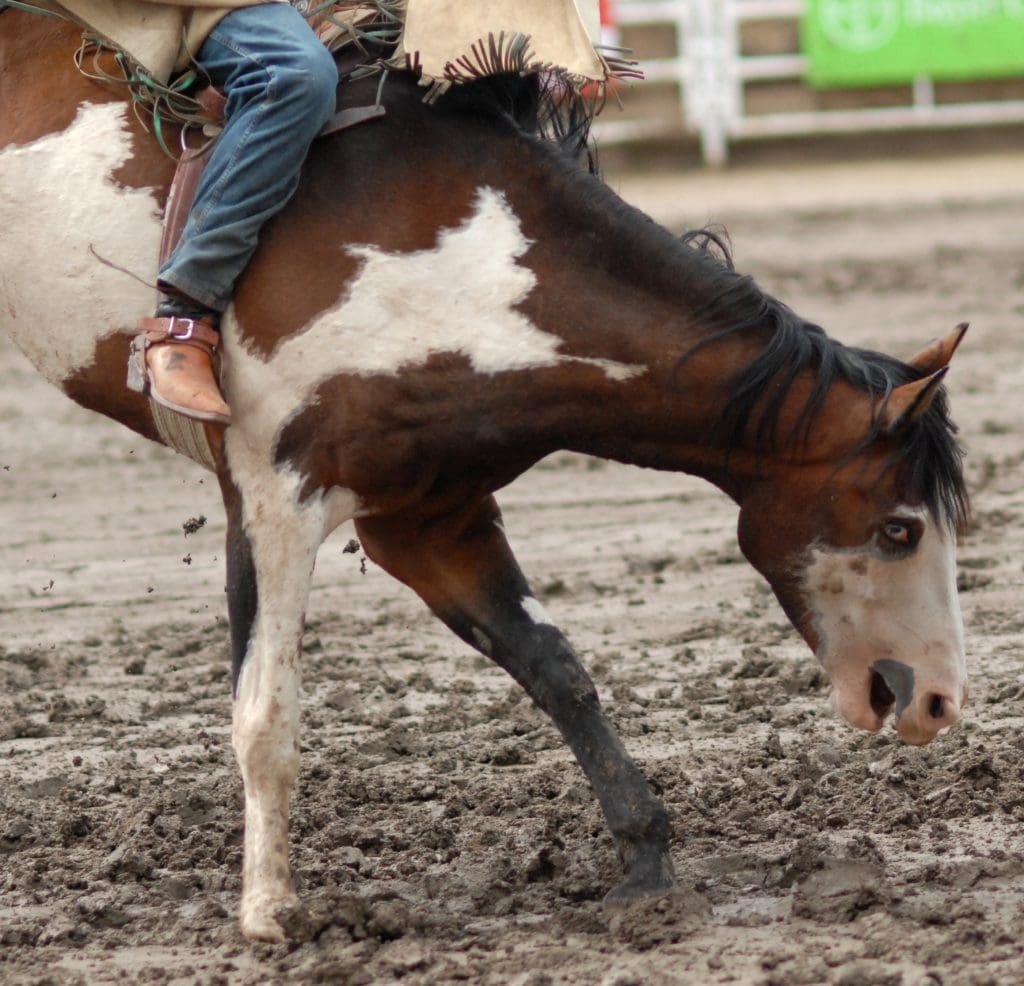
And it’s not just bulls that suffer. Three-month-old calves are chased across the arena, roped off their feet, picked up and slammed to the ground.  In the steer-wrestling event, the animal has its neck twisted until it is bent to the ground.  In team-roping, steers are roped by the head and hind legs, often stretching the animal off the ground. Flank straps and spurs are also used in the bucking horse events.

Rodeo supporters claim that the animals love what they do, but photos of animals at the Chilliwack Fair rodeo clearly show they are in distress while being forced to perform.  No animal would willingly participate in events that subject them to fear, pain and stress.

Virtually all mainstream animal welfare organizations oppose rodeo, including Humane Canada (which represents most Canadian SPCAs and humane societies) and the national SPCAs of the United States, Australia, New Zealand and South Africa. Polling shows that 63 per cent of B.C. residents are opposed to rodeo.

Chilliwack Rodeo / Vancouver Humane Society
Calf roping at Chilliwack Rodeo

The Chilliwack Fair rodeo (August 9-11) is the last full rodeo in the Lower Mainland. The Cloverdale Rodeo dropped half its events and the Abbotsford Rodeo closed after campaigns by the Vancouver Humane Society. The society is now campaigning for the Chilliwack Fair to drop the rodeo from its program of events.

As Cirque du Soleil has shown, it isn’t necessary to exploit animals to provide engaging entertainment.  Country fairs, including Chilliwack’s, can be successful without spectacles of animal suffering. Isn’t it time we consigned rodeo to history, along with bear-baiting and cock-fighting?

Isn’t it time we had cruelty-free entertainment, not only in Chilliwack but everywhere?

Categories
Opinion

Let’s put an end to events that torment animals

Article originally published in the Vancouver Sun.

Most people care about how kittens and puppies are treated, but how many people have empathy for a 2,000-pound bucking bull?

The rodeo and bull-riding industries say bulls are mean and “ornery” and, of course, dangerous. They also call the bulls “athletes” — as though bulls have chosen a career in sports in the same way a football player might. They say bulls are just doing what they love to do.

The truth, however, is a different story. Bull-riding events depend on unnatural, coercive and inhumane treatment of bulls.

First, the bulls are bred to buck — a fact bull-riding promoters commonly use to defend the “sport.” But this only means that bulls are bred to have a genetic predisposition to buck. And it doesn’t mean the animal will enjoy bucking. It’s equivalent to breeding dogs for aggression or fear or to have a sensitivity to some form of negative stimulus.

In bull-riding there’s plenty of negative stimulus to make the animal buck. It has an unwanted rider on its back, who is wearing spurs that grip the bull’s hide. Just before the bull is released into the arena a “flank strap” is tightened around its hindquarters, which further induces bucking.

The flank strap is much debated, with rodeo supporters arguing that it’s just a “signal” to the bull to start bucking or that it just makes the bull buck harder. At most, they say, it’s a mild irritant. In fact, just like the unwanted rider and the spurs, the flank strap is causing the bull distress. Consequently, it enters the arena bucking wildly. It wouldn’t behave so otherwise.

The B.C. Prevention of Cruelty to Animals Act states that: “A person responsible for an animal must not cause or permit the animal to be, or to continue to be, in distress.” However, livestock are effectively exempted from the act, if “the distress results from an activity that is carried out in accordance with reasonable and generally accepted practices of animal management that apply to the activity in which the person is engaged … ” 

The drafters of the act presumably had in mind agricultural practices such as branding cattle, which would be illegal if applied to dogs or cats. Until challenged in court, it seems rodeo events like bull-riding will qualify for the same exemption, despite having no agricultural purpose. Sadly, this means the bulls, calves and steers in rodeos don’t get the same legal protection from abuse as other animals.

Again, many will say: why care about bulls? They’re just livestock. Contrast this lack of public empathy with, say, captive whales or dolphins. For years, animal advocates and thousands of concerned citizens have rightly fought to end the keeping of cetaceans in marine parks and aquariums because it’s inhumane to hold them in tanks. The debate between pro and anti-captivity supporters has been fierce, with intense media attention about the issue.

But imagine if dolphin trainers applied deliberately stressful, physical methods — the equivalent of spurs and flank straps — to make the dolphins perform. There would be no debate. No civilized person would stand for it.

Some will argue: yes, but cetaceans are intelligent, beautiful and graceful, bulls not so much. But should we deny compassion and empathy to animals that are not as charismatic as others? As Jeremy Bentham reminded us, the only question that should matter is “can they suffer?”

On Sept. 15, Abbotsford’s Exhibition Park will host what has been billed as an “extreme-rodeo” event, featuring bull-riding, “extreme freestyle bullfighting” and “Mexican bull poker,” all of which involve stressing bulls to make them perform. Animal advocates are calling on Abbotsford city council, which owns the venue, to cancel the event.

The Chilliwack Fair rodeo (Aug. 10-12) also features bull-riding, along with controversial events such as calf-roping and steer-wrestling, which animal advocates are campaigning against.

All animals deserve our empathy and respect, even the strong and powerful.  Isn’t it time we abolished events that depend on the taunting and tormenting of animals to entertain us? The cities of Abbotsford and Chilliwack could make a bold stand for compassion and kindness toward animals by doing just that.

Categories
News/Blog

Another rodeo, another spectacle of cruelty

080716 - Chilliwack, BC Chung Chow photo Chilliwack Rodeo Calf roping

This is what happened to animals at the Chilliwack rodeo

The past weekend, the annual Chilliwack Fair’s rodeo once again saw animals tormented for the sake of entertainment – graphically illustrated in the photos below. It’s the last full rodeo left in the Lower Mainland and we’d like to see it end.  If you agree, please let the Chilliwack Fair know by sending them a polite email at info@chilliwackfair.com

VHS will be taking further actions in the coming weeks, including identifying sponsors.

Chilliwack Rodeo - Sunday


Chilliwack Rodeo


Chilliwack Rodeo


Chilliwack Rodeo - Sunday


Chilliwack Rodeo - Sunday


Chilliwack Rodeo - Sunday


Chilliwack Rodeo - Sunday


Chilliwack Rodeo - Sunday


Chilliwack Rodeo - Sunday


Chilliwack Rodeo - Sunday


Categories
News/Blog

Why is animal lover Jann Arden promoting the Calgary Stampede?

Bucking horse at Calgary Stampede. Photo: Jo-Anne McArthur

Let Jann Arden know that rodeo is cruel – see actions below.

Singer Jann Arden, long known as an animal lover, has been named as a joint-parade marshall for the Calgary Stampede parade, the event that kicks off the ten-day rodeo, fair and chuckwagon races.

The announcement is a surprise, given Arden’s previously stated opposition to the chuckwagon races, shown in this tweet from 2013:

J Arden tweet against chuckwagon race

Presumably, she is aware of the 65 horses that have died in the Stampede’s chuckwagon races since 1986? That includes 11 dead horses since the Stampede’s much-publicised new “safety measures” were implemented in 2011.

Arden’s decision is also surprising and disappointing given her support for animal causes, including opposition to the Alberta government’s cull of wild horses. Perhaps she isn’t aware that the Calgary Stampede also culls unwanted horses, as revealed by media in 2012.  As CTV News reported at the time, “For the first time, the Calgary Stampede is admitting that horses that don’t make the cut to compete in the famous rodeo are sent to an Alberta slaughterhouse for meat.”

In 2014, Arden described her opposition to the Alberta horse cull and her feelings about horses, stating:  “They just need to be treated with respect. I know there needs to be some sensibility, but why does the fucking solution have to always be killing something?”  Yet killing is the Stampede’s solution to unwanted bucking horses. Isn’t there a double-standard here?

Perhaps Arden is not aware of Stampede’s horse culling policy but is she also unaware of what happens to other rodeo animals?

DSC_0021Does she know that steers died in the Stampede rodeo’s steer-wrestling event in 2014 and 2013?
Steer-wrestling involves riders jumping onto steers and twisting their necks until they fall to the ground.  Both steers had to be euthanized because of neck injuries.

Steer-wrestling has nothing to do with real ranch work. It was invented for rodeo in the 1930s.  It’s just entertainment.

Perhaps Arden is unaware of the suffering of other rodeo animals such as the three-month-old calves that are chased, roped, thrown to the ground and tied up. Or the steers that are roped by the horns and hind legs and stretched off their feet. Or the bulls and bucking horses that are tormented into bucking by the flank strap tightened around their hindquarters.  And all these animals suffer for the mere amusement of a crowd.

Ad calfDoes Arden care that virtually all animal welfare agencies around the world are opposed to rodeos – organizations like the Canadian Federation of Humane Societies and the national SPCAs of the United States, Australia, New Zealand, South Africa and the UK.
And does she care that most of her fellow Canadians are opposed to rodeo, with a recent poll showing that only three-in-ten Canadians are in favour of using animals in rodeos?

Let Jann Arden know that rodeo is cruel

If you think Jann Arden needs to rethink her support of the Calgary Stampede, please let her know.

Below are some actions you can take to send her a message.

You can tweet one of the messages below by clicking on it. (You will need to be logged in to Twitter.):

Tweet: .@jannarden Please don’t support the Calgary Stampede rodeo & chucks. The Stampede culls unwanted bucking horses. Rodeo animals suffer!

Tweet: .@jannarden Surprised you are supporting the Calgary Stampede, which is known for animal cruelty. Please reconsider!

Tweet: .@jannarden As an animal lover aren’t you concerned about the treatment of horses and rodeo animals at Stampede? 65 dead horses since 1986!

Or simply compose your own tweet to her at @jannarden

You can politely comment on Jann Arden’s Facebook page.

Every time you take a stand for the animals it makes a difference.


Categories
News/Blog

Poll: Most Canadians oppose rodeo

So why does CBC keep broadcasting it?

The VHS has long criticized CBC Sports for broadcasting the Calgary Stampede rodeo.  The CBC has refused to end its coverage despite the clear evidence that animals suffer in rodeos.  They’ve stated that the Stampede is “a longstanding Canadian tradition and is popular with millions of Canadians across this country.”

Yet public polling over the years shows that a majority of Canadians are opposed to the use of animals in rodeos.

Public polling shows that a majority of Canadians are opposed to the use of animals in rodeo. Another poll that the VHS commissioned indicates that removal of the rodeo and chuckwagon events from the Calgary Stampede program would have virtually no impact on attendance rates and would bring in new crowds.

Calf roping event at The Calgary Stampede. Jo-Anne McArthur / We Animals Media.

During the 2015 Calgary Stampede, the VHS launched a petition calling on CBC to end its broadcast of the Stampede rodeo.  This petition was supported by 24,119 animal allies.

The VHS continues to call for an end to inhumane rodeo events and the deadly chuckwagon races at the Calgary Stampede.

Let CBC Sports know that you are among millions of Canadians opposed to rodeo – and you are in the majority. Tell them to stop putting cruelty on our television screens and calling it a sport.

Please support the Vancouver Humane Society’s continuing campaign against rodeo cruelty. Thanks to supporters, the VHS has been able to successfully advocate for a ban on rodeo in the City of Vancouver, District of North Vancouver, and Port Moody. The VHS and other organizations and advocates has also won victories against the Cloverdale Rodeo in Surrey and the Luxton Rodeo on Vancouver Island. Your donation will help the VHS continue this crucial work.

Donate to help end rodeo cruelty
More about rodeo & current rodeo actions
All animal advocacy actions
2022 Calgary Stampede poll
Categories
News/Blog

Why does CBC Sports broadcast animal cruelty at the Calgary Stampede?


Ad calf
Calf being roped at Calgary Stampede. Photo: Jo-Anne McArthur

Tell CBC to stop broadcasting violence toward animals. Sign our petition!

CBC Sports has confirmed to VHS that it will once again broadcast the Calgary Stampede’s rodeo and chuckwagon races in July.  Despite severe budget cuts to its sports coverage, the CBC apparently is keeping its rodeo coverage intact.

VHS has explained to CBC Sports executives that rodeo is considered inhumane by virtually all major animal welfare agencies, including the Canadian Federation of Humane Societies and the national SPCAs of the United States, Australia, New Zealand and the United Kingdom (where it has been outlawed since 1934).

We have pointed out the obvious fact that roping animals to a sudden halt or twisting their necks until they are bent to the ground will cause fear, pain and stress.  We have asked them how this could possibly be considered entertainment.

Calf face crop Rodeo-99

We have also noted that the CBC’s television coverage of calf-roping ensures that the camera pans away from the calf as it hits the end of the rope.  That way, viewers will never see the calf violently jerked off its feet.  If what happens to the calf is not fit for the general public to see, how can the CBC condone the event by covering it?

We sent CBC Sports a link to this video showing a bull being kicked in the head at the Stampede.  We had no reply. Meanwhile, animals continue to be tormented for the sake of entertainment at the Stampede, like these ponies. The CBC doesn’t seem to want to face the truth about rodeo.

We’re asking Canadians who care about animals to let CBC Sports know how they feel about the Calgary Stampede broadcasts.  Please take a minute to sign our petition calling on Trevor Pilling, Head of Programming at CBC Sports, to stop broadcasting rodeo animal cruelty at the Calgary Stampede. 

More information on our Calgary Stampede campaign page.

Please share this post!

Categories
News/Blog Uncategorized

Tormenting animals to make them buck

The rodeo industry likes to say that bucking bulls and horses only work a few seconds a year and otherwise lead pampered lives.  They also like to talk about the animals being “born to buck.”

But if you watch this video you’ll see that bucking bulls are tormented at a young age to “train” them to buck.   A metal weight (called a dummy) is placed on their backs and is only released when they buck their hardest.  The animals are clearly distressed and want the weight off their backs.  What animal wouldn’t?   Can you imagine doing this to dogs?  It’s only because we are conditioned to seeing livestock treated badly that there is no public outcry against such practices.  Yet cattle and horses, as prey animals, are especially likely to suffer fear and stress from such treatment.  And they are subjected to this distress for the trivial purpose of amusing humans (and to make money for a few of them).

It’s true that bucking bulls and horses are deliberately bred to have a genetic predisposition to buck.  But even with such a predisposition, it’s still necessary to torment them with “dummies.”   And even that’s not enough to ensure they buck for the crowds – there’s also the flank strap, which is tied around the animal’s hindquarters to cause further stress.  It’s only released when the animal stops bucking.

The whole bucking stock industry is designed to make animals behave unnaturally.  Is it not perverse that this industry, including the Calgary Stampede, strives to breed horses that no one can ride?  It’s the exact opposite of what real cowboys have historically sought to achieve.   That’s because rodeo has little to do with the genuine traditions of real ranching.  It is a circus and, like all circuses, it exists to exploit animals for the sake of entertainment.

And what happens to the animals that are not good enough for this circus? As we now know, there’s a good chance they’ll end up in the slaughterhouse.

More information on the Calgary Stampede.