Categories
Opinion

It’s time to stop using taxpayer money to fund inhumane events

Article originally published in The Daily Hive.

On Thursday, the Government of British Columbia announced new funding for fairs, festivals, and events; but the inclusion of one controversial and inhumane type of event is raising eyebrows among animal advocates. 

According to a press release from the Ministry of Tourism, Arts, Culture and Sport, the Province will provide $30 million to support B.C.-based events, including sporting events, arts and culture events, community celebrations, agricultural fairs, and one baffling choice: rodeos. 

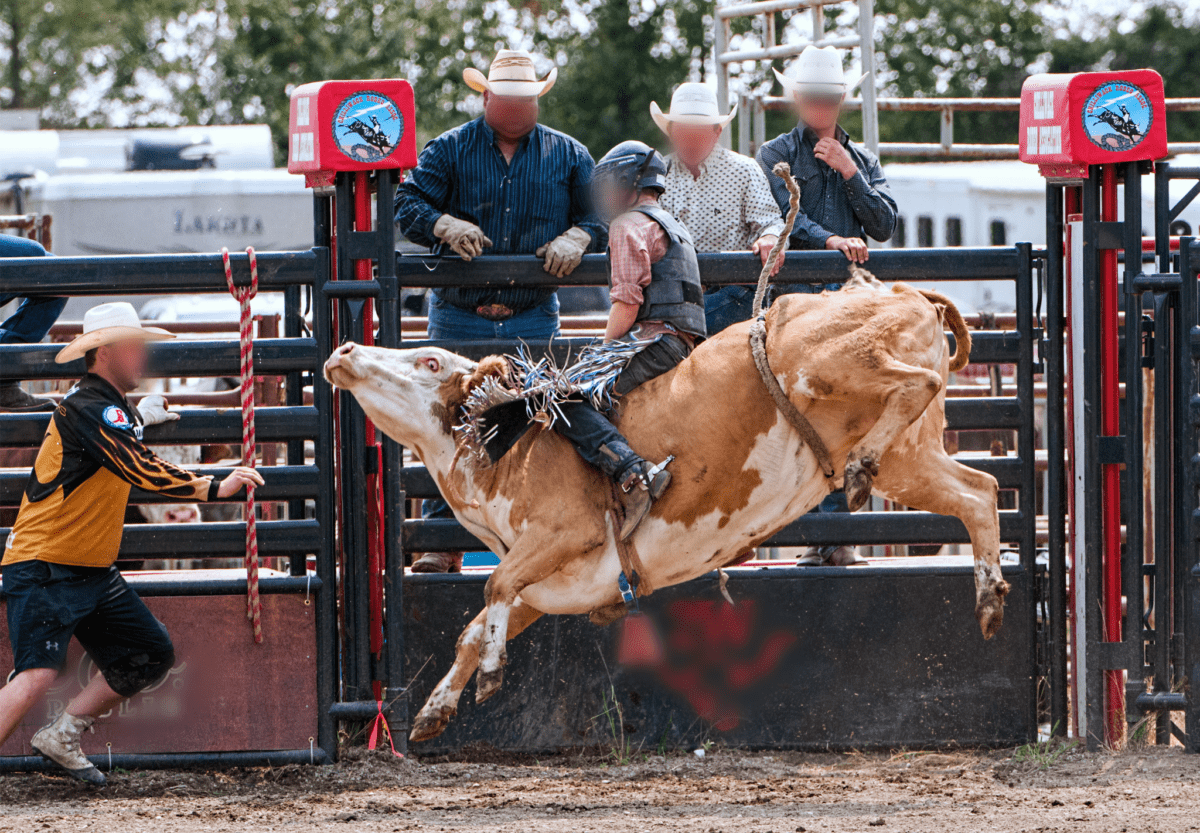
Rodeos are the subject of growing criticism in British Columbia and around the world; and it’s easy to see why. Rodeo events cause unnecessary pain, fear, and stress to animals, both at the event and in countless practice sessions, all for a few moments of so-called entertainment.  

To provoke the “performance” behaviours seen from animals in rodeos such as running and bucking, handlers and riders deliberately agitate these sensitive prey animals by pulling their ears, twisting their tails, and using uncomfortable tools like flank straps and spurs. Video footage released by the Vancouver Humane Society (VHS) reveals a number of recurring welfare concerns at some of B.C.’s most recent rodeo events in Chilliwack and Langley Township. 

What happened at this year’s Chilliwack and Langley rodeos

The return of the Chilliwack rodeo this year, along with a controversial new rodeo held in Langley Township, has raised concerns about the well-being and welfare of animals made to perform in rodeo events. Video footage taken at both rodeos this summer shows stressed and frightened animals being roughly handled and deliberately agitated into fleeing and bucking.

Meanwhile, evidence of poor welfare practices in rodeo continue to stack up. A new study was published just one month ago on the stress caused by calf roping (also called tie-down roping), a controversial event which takes place annually at rodeos in B.C. Concerns raised in the study include the risk of injury to young calves “such as damage to the windpipe from the lasso, bruising and broken ribs from being violently yanked off their feet and being forced to the ground, and choking from the tightened rope around their neck.” The study concluded that calves exhibited signs of distress across every phase of the calf roping event, from being chased, lassoed and caught, to when they were released.  

Unlike human athletes, animals used in rodeo cannot decide whether or not to participate. If given the choice, there’s no doubt they would opt out of being roped, wrestled, and roughly handled. 

The use of taxpayer dollars to fund these inhumane events is especially bewildering given the widespread dissent to the practice. Recent polling shows that only 26% of British Columbians are in favour of using animals in rodeo and a whopping 64% are opposed; the remainder are undecided. As a whole, our society is placing increasing value in treating animals with care and respect. 

Amongst governing bodies apparently more in tune with community values, the growing awareness around animal sentience is inspiring a shift away from this type of animal exploitation for the sake of public entertainment. The City of Vancouver and the District of North Vancouver have already implemented a ban on rodeo events, as have the United Kingdom, the Netherlands, and a host of municipalities and regions worldwide. The Cloverdale Rodeo dropped four of its most concerning events after the death of a calf in 2007, and soon afterwards, the Luxton Rodeo near Victoria and the Abbotsford Rodeo were cancelled in 2015 and 2016, respectively.  

It is difficult to see the Province’s announcement of rodeo funding as anything but a confident stride into the wrong side of history. That is why a new campaign from the VHS is calling on the Province to direct funding toward family-friendly community events, rather than rodeo events. 

With a myriad of positive events that could use funds to reinvigorate the tourism sector and celebrate culture, community, and compassion, it would be incredibly disappointing for the Province to sink funding into a cruel and outdated practice that, as the majority of British Columbians agree, is better left in the past. 

Say no to funding rodeo cruelty
Categories
Opinion

Why hasn’t Canada stopped horses from being shipped to slaughter overseas?

Article originally published in The Daily Hive.

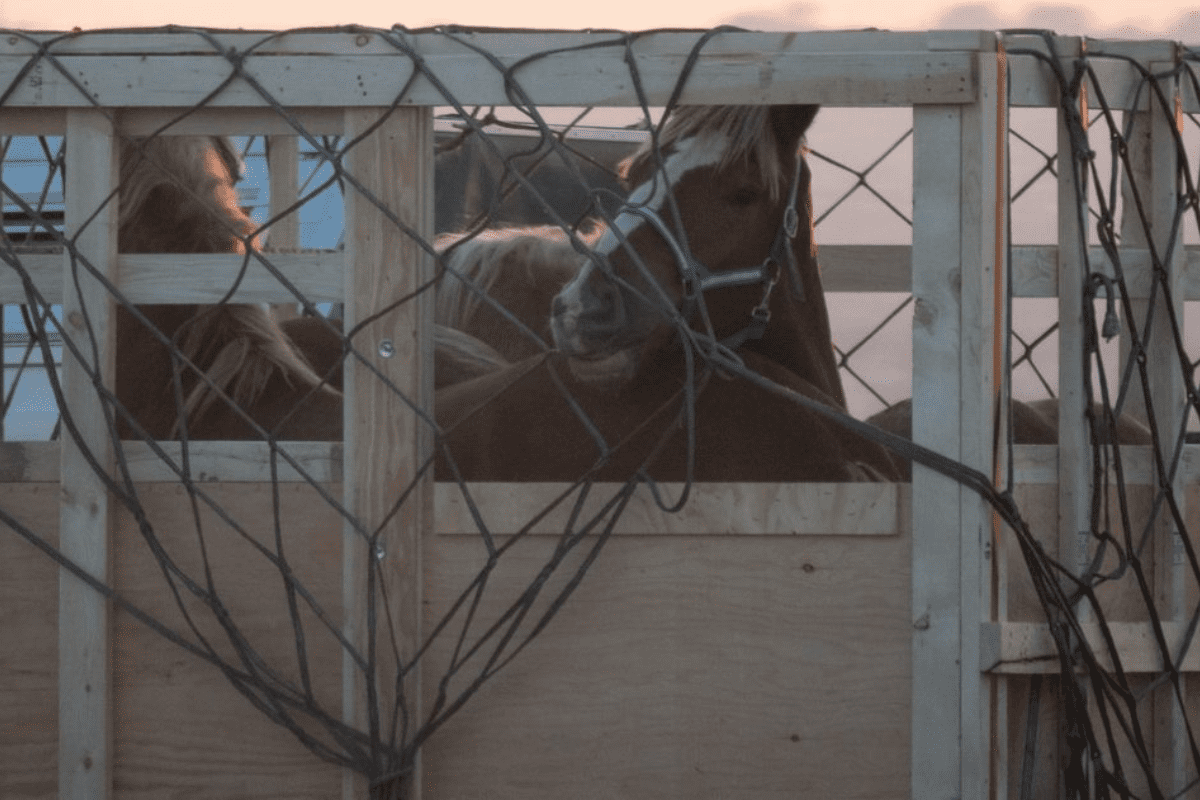
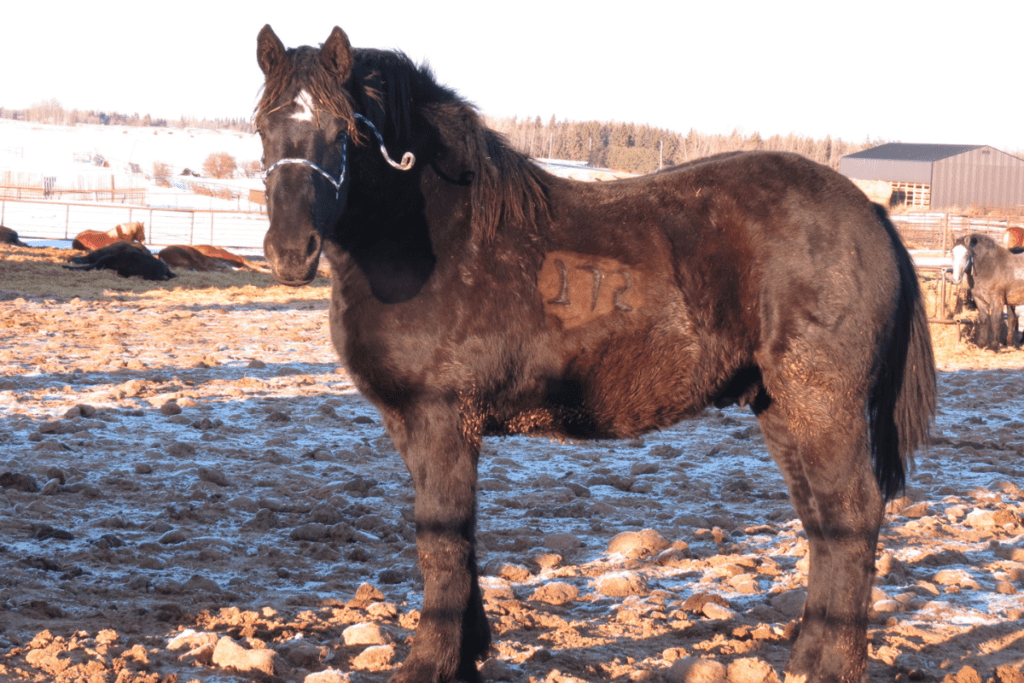
Sunday night on the cold tarmac of Winnipeg Airport, a gentle horse stood in a crate, waiting to be loaded onto an airplane. The horse had no name; he and the thousands of horses like him who are shipped out of Canada each year are known only by their identification numbers. He was one of more than 100 horses loaded onto a flight destined for Japan, headed an ocean away to be slaughtered for human consumption.

The flight took off 361 days after Prime Minister Trudeau directed the minister of agriculture to ban the live export of horses for slaughter in a mandate letter on December 16, 2021.

It has now been exactly a year since that letter was sent. Since then, no action has been taken, and the bodies of horses destined for slaughter have continued to pile up.

It’s impossible to know exactly what happened to the horse without a name – the Government of Canada has no jurisdiction over foreign slaughter practices after animals touch down in another country, out of the sight and mind of the many Canadians who consider them to be beloved companions. But we have a general idea of what happened to the horses on his flight.

Photo: Canadian Horse Defence Coalition

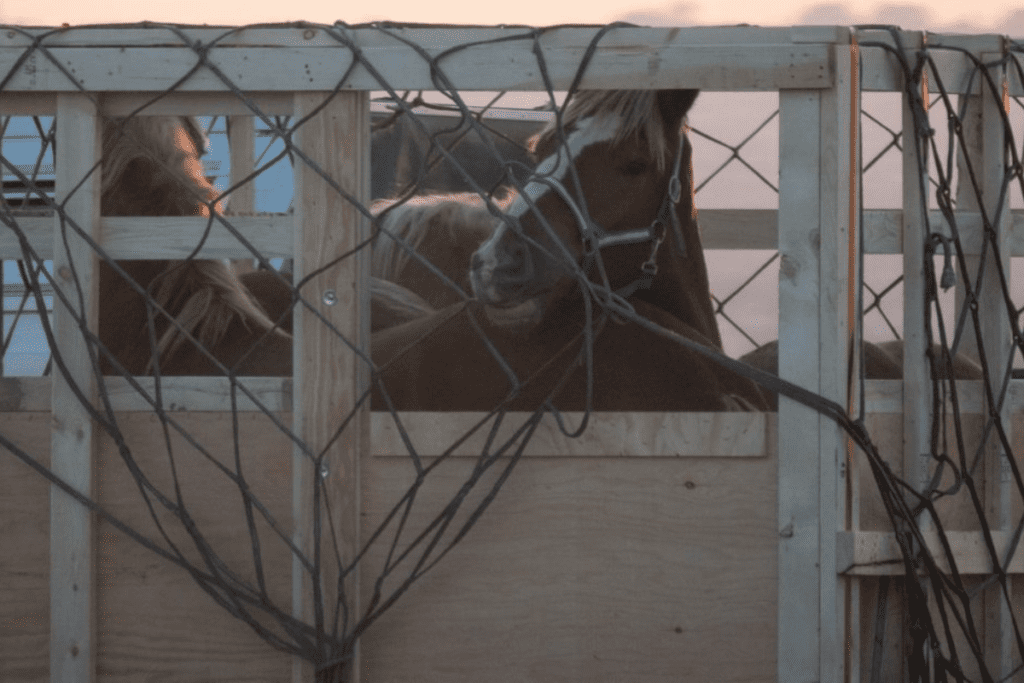
The journey from a Canadian feedlot where horses are raised to their final destination overseas can take up to 28 hours; a full day in which they are deprived of food, water, and rest. It’s common for three or four horses to make the journey cramped together in a single wooden crate, with their ears poking through the top slats.

Before 2020, regulations dictated that horses must be shipped in their own crates with adequate head clearance. After the Canadian Horse Defence Coalition (CHDC) took the Minister of Agriculture and the Canadian Food Inspection Agency (CFIA) to court over illegal breaches of transport regulations, the minister acted swiftly – not by changing the practices to meet animal welfare standards, but by changing the law to fit inhumane conditions.

“It is not acceptable to compromise horse welfare in favour of industry interests,” said CHDC President Sinikka Crosland. “Neither should the law be manipulated in order to meet those interests.”

Photo: Canadian Horse Defence Coalition

On noisy airplanes, these gentle herd animals with a strong fight or flight instinct go through a long journey of fear and stress. Some fall down upon takeoff or landing. A 2014 incident report indicated that a horse, who appeared agitated during loading, fell during takeoff and remained down during the flight. The horse thrashed and kicked through the crate, damaging the airplane and forcing an emergency landing. After landing, the horse was found dead in the crate, next to two other horses.

With last year’s mandate letter, our government acknowledged the need to put an end to the live export of horses for slaughter. Yet around 2,000 horses have been exported since the federal minister of agriculture was directed to end the practice.

Every month that the Ministry of Agriculture shirks the commitment outlined in its mandate letter, more horses suffer needlessly.

Thousands of Canadians have joined the movement, headed by advocates like the Canadian Horse Defence Coalition and Canadian singer-songwriter Jann Arden, calling for an end to the long and stressful transport journeys of horses being shipped to slaughter. With the recent launch of a new federal petition calling for the minister to finally end live horse export for slaughter, there is no doubt that many more voices will join the cry for justice.

Categories
Opinion

Wolf escapes highlight horrific issues plaguing Greater Vancouver Zoo

Article originally published in The Daily Hive.

Take action for animals in captivity

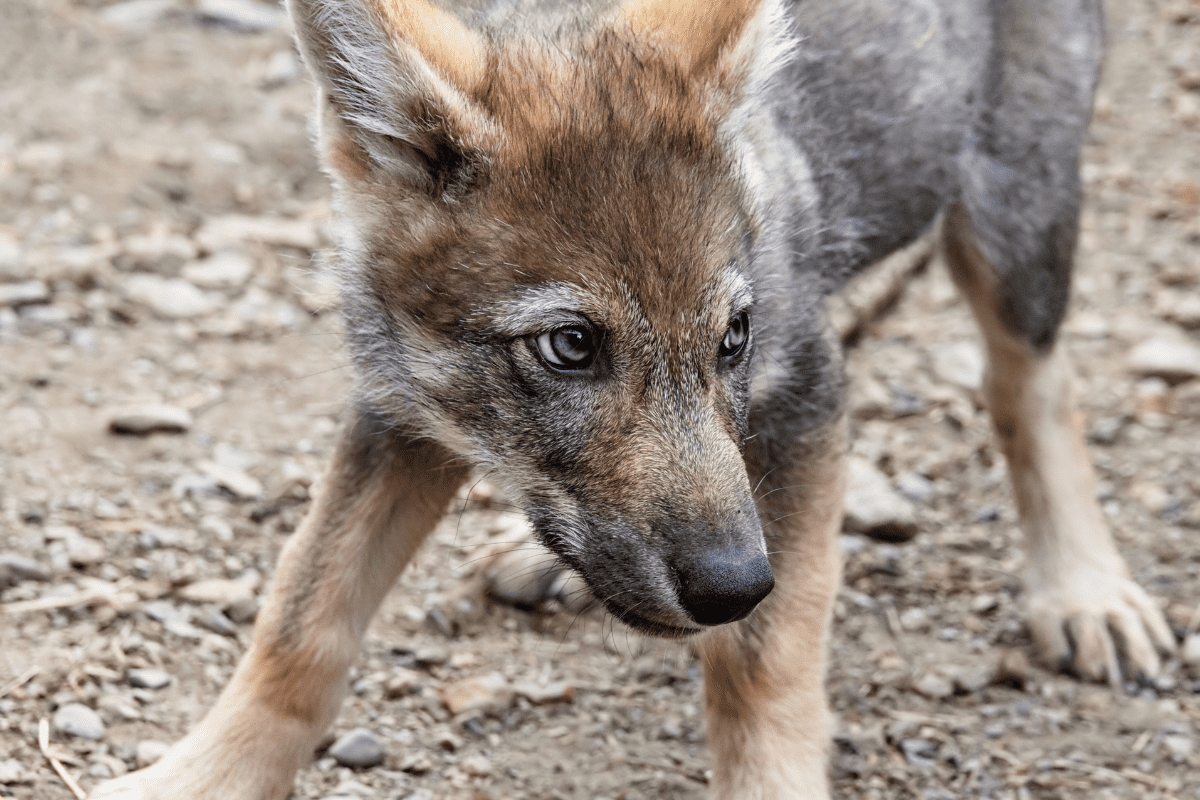
Animal lovers in B.C. are mourning the loss of Chia, a wolf who escaped from her enclosure at the Greater Vancouver Zoo Tuesday. Chia was tragically found dead on the side of the road yesterday.

Officials believe that Chia was hit by a car. And it’s known that animals raised in zoos for permanent captivity lack the survival skills of their wild counterparts. They do not recognize the dangers posed by cars on the road and are far more likely to associate human activity with food.

Chia’s sad ending is a devastating reminder of the concerns associated with keeping wild animals in captivity. Though zoo supporters will often claim that zoos breed animals in captivity for conservation purposes, captive-bred animals raised in unnatural zoo environments are not equipped to survive in the wild. And their survival in captivity, as it stands, can hardly be called living.

Walk through the zoo and you’ll see well-worn paths where animals like Hana the tiger spend their days pacing alongside the fences of their enclosures—as physically close to the free outside world as they’ll likely ever get. You’ll see a barren, concrete indoor pool where hippos Haben and Hazina can be found floating listlessly throughout the cold winter months. You’ll see giraffes repeatedly licking the bars of their enclosure. Abnormal, purposeless behaviours like this are common in captive animals who are unable to express their natural behaviours.

The Greater Vancouver Zoo has been aware of many animal welfare issues in their facility for years. The most recent report on conditions at the zoo, commissioned by the Vancouver Humane Society (VHS) and prepared by Zoocheck, raised alarms about a number of concerns.

Among them were concerns about the wolf enclosure’s small size and lack of complexity or enrichment. It was also recommended that the zoo stop breeding the wolves; yet young wolves including one-year old Tempest, who was also missing for several days, and six new cubs continue to be raised at the zoo for the entertainment of the public.

Unfortunately, the same issues raised in the report persist year after year, causing continued suffering to the many animals who are kept in captivity at the zoo.

High-profile incidents resulting in heightened public scrutiny of the zoo

In 2019, a 2-year-old child was bitten by a black bear after being able to enter an “unauthorized area.” The toddler had to be airlifted to hospital.

In 2020, the public raised concerns about an emaciated moose named Oakleaf, prompting an investigation by the BC SPCA. Oakleaf was then euthanized.

In 2021, a zoo employee was bitten when a jaguar climbed up a feeding chute. Rather than addressing the behavioural needs of this natural hunter and climber, the zoo welded bars to the bottom of the chute.

Just this year, the VHS filed a cruelty complaint with the BC SPCA after obtaining video footage of animals engaging in repetitive behaviours and in small, barren enclosures.

When will enough be enough?

This week’s tragic incident is the latest in a pattern of concerning incidents at the Greater Vancouver Zoo. But the series of high-profile cases that make it into the news are just the tip of the iceberg when compared with the monotonous, day-to-day suffering of the wild species confined to enclosures thousands of times smaller than their natural habitats.

If the Greater Vancouver Zoo refuses to make significant changes for the well-being of the animals they keep, a change must be made for them. That’s why the VHS is imploring provincial decision-makers to immediately address the outdated regulations around keeping, breeding, and transport of wild and exotic animals. Concerned citizens are encouraged to contact their MLAs now to protect wild animals from suffering in captivity.

How many more animals must we see put at risk, come to harm, and suffering at the zoo before change is made? For the sake of Chia and Tempest, Haben and Hazina, Hana and Oakleaf, and all the other wild animals who have not had their needs met in captivity, let’s hope we’ve reached our limit.

Categories
Media Release

One wolf lost life, another still missing after escape from Greater Vancouver Zoo

VANCOUVER, August 18, 2022 – The Vancouver Humane Society (VHS) was deeply saddened to hear of the death of Chia, one of the wolves who had escaped from the Greater Vancouver Zoo earlier this week, and is concerned about the well-being of the remaining wolf, Tempest, who is still missing.

This is another instance of an animal kept in captivity at the Greater Vancouver Zoo suffering, alongside several other incidents in recent years. Since 2019 alone, a child was bitten by a black bear, the public raised concerns about an emaciated moose who was then euthanized, and an employee was bitten by a jaguar. The Zoo was also the subject of a cruelty complaint submitted by the VHS earlier this year due to evidence of animals engaging in repetitive behaviours and in small, barren enclosures.

These situations reiterate the lack of adequate safety and protection of the animals at the Greater Vancouver Zoo, says VHS Campaign Director Emily Pickett.

“How many times are we going to have to see animals harmed, put at risk and suffering all for the sake of public entertainment?” Pickett asked.

The VHS has been calling on the Zoo to address the issues highlighted by these recent incidents and long-standing issues outlined in their previous reports. Zoo management did not respond to attempts to engage with them around the VHS’s and Zoocheck’s most recent report in 2019.

Since then, issues have continued to persist.

The VHS is calling on the provincial government to address the outdated regulations around wild and exotic animals in captivity. Specifically, the VHS is asking concerned citizens to get in touch with their MLAs this summer to let them know that the welfare of captive wild animals is a priority; legislative and regulatory change is needed.

– ends –

SOURCE Vancouver Humane Society

For more information, contact Emily Pickett: 604-416-2903, emily@vancouverhumanesociety.bc.ca

Related links:
https://vancouverhumanesociety.bc.ca/

Categories
News/Blog

Federal e-petition: Video surveillance in slaughterhouses

Update

Petition e-3961 is now closed. Please keep an eye on the VHS website for updates. Thank you for supporting transparency for farmed animals.

Animals suffer in slaughterhouses.

Animals in slaughterhouses face stress, fear, and pain, often after suffering through long transport journeys. Year after year, stories have emerged of horrific suffering in slaughterhouses; and the Canadian Food Inspection Agency (CFIA) has limited resources to monitor facilities across Canada.

This is why the Vancouver Humane Society, five other animal protection organizations, and the citizens of Canada are supporting a new official federal government petition to introduce video surveillance in federally regulated slaughterhouses. Surveillance would help to:

  • Address the most egregious cruelty farmed animals face at the end of their short lives
  • Improve compliance with cruelty laws
  • Provide transparency to Canadians who consume animal products about where their food comes from

Note: The petition closed August 24th, 2022.

See more campaigns
Categories
Media Release

The future of the Stampede is rodeo-free, according to polling of Calgary residents

VANCOUVER, July 27, 2022 – Removal of the rodeo and chuckwagon events from the Calgary Stampede program would have virtually no impact on attendance rates and would bring in new crowds, according to a Research Co. poll commissioned by the Vancouver Humane Society (VHS) during this year’s Stampede.

64% of Calgarians polled indicated that they had attended or were likely to attend the Stampede this year. When asked whether they would attend the Stampede if the rodeo and chuckwagon racing events were removed, 63% indicated they would be likely to attend.

“Until now, we’ve assumed that the Stampede has continued to host inhumane events out of financial motivation,” VHS Campaign Director Emily Pickett shared. “These poll results prove that removing the rodeo and chuckwagons would have little impact on visitor attendance.”

The polling results also indicated that the removal of controversial animal events would pique the interest of new crowds, with 24% of non-attendees from this year expressing interest in attending the Stampede without rodeo and chuckwagon events. Of these, the most prominent change was in the youngest group polled; 43% of non-attendees from this year aged 18-34 said they would be likely to attend the Stampede if the rodeo and chuckwagon races were removed.

“We have heard from many people who avoid the Stampede because of the rodeo and chuckwagon races. Dropping those events is a sustainable change that would attract new supporters and visitors to the Stampede,” Pickett noted.

The support for a rodeo- and chuckwagon-free Stampede draws attention to the 103 animals who have died at the Stampede since the VHS began tracking incidents in 1986, including a chuckwagon horse who was injured and consequently euthanized at this year’s event. The VHS filed cruelty complaints to the Calgary Humane Society regarding incidents captured in Sportsnet coverage of 2022 rodeo events.

“These high-risk and inhumane events draw growing public criticism year after year. It’s time for Stampede officials and Calgary City Council to remove these unnecessary events from the Stampede program.”

Pickett invited anyone wishing to learn more about the animal welfare issues surrounding rodeo to visit RodeoTruth.com, an informational website made in collaboration by the VHS and concerned Calgarians.

– ends –

SOURCE Vancouver Humane Society

For more information, contact Emily Pickett: 604-416-2903, emily@vancouverhumanesociety.bc.ca

Related links:

Take the #SayNoToRodeo pledge:

Categories
News/Blog

Podcast: Fish cruelty laws

All episodes

Fishes think, play, form relationships, and feel pain; yet they are often overlooked both in animal cruelty legislation and in public discussions of animal cruelty.

In this month’s episode of The Informed Animal Ally’s series on animal cruelty, Vancouver Humane Society Executive Director Amy Morris and Communications Director Chantelle Archambault discuss cruelty laws and practices related to fishes.

Note: Traditionally, “fishes” plural refers to the animals when there are multiple species. In this episode, the word is used to refer to any instance of multiple fish animals in recognition that each fish is an individual being.

Fish welfare legislation

A wild school of fishes in the ocean.

In general, fishes raised or caught for food are covered under the federal Fisheries Act in Canada. The act has been in place since 1868 to regulate fisheries and fish management, including protecting fishes and their habitats and preventing waterway pollution.

The law has gone through some amendments that weakened protections, but in 2019 it added new provisions that improved on the original Act. However, there is still a notable gap with regard to the welfare of fish.

The consideration for fish protection is mainly concerned with maintaining fish “stocks” as a resource, rather than protecting the welfare of fishes.

Many of the practices in “harvesting” fishes cause immense suffering. In fact, there don’t appear to be any laws that specifically outline the way fishes should be killed, which means there are no penalties for those who are fishing, or kill fishes, inhumanely.

Aquaculture (fish farming)

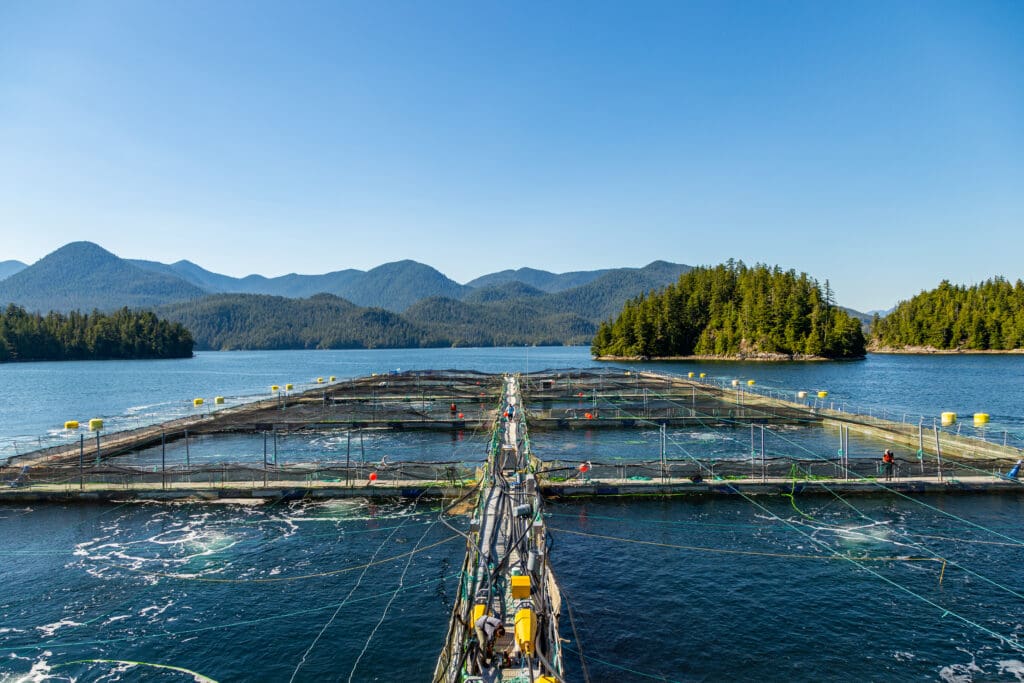
Aquaculture, or fish farming, is specifically included in amendments to the Fisheries Act.

Fish farms pose a major welfare problem for fishes, both those being farmed and those in surrounding waterways. Carnivorous farmed fishes like salmon, halibut, and tuna are fed diets made with fishmeal and fish oil made from smaller wild-caught fish. Open-net fish farms in particular are a major issue for surrounding fishes because they are placed in the water, allowing waste, disease, and chemicals to seep out into the surrounding ecosystem.

Fishes on farms are in kept in cramped, crowded conditions with no enrichment. According to a 2016 study by Royal Society Open Science, about a quarter of farmed fishes end up floating lifelessly at the top of their tanks, and they exhibit behaviours and brain chemistry that reflect stress and is reminiscent of the signs of depression that can be found in mammals.

Because so many fishes are stressed and in close quarters, they are very vulnerable to disease and parasites. Farms combat this by relying heavily on antibiotics. Not only can those antibiotics lead to drug-resistant infections in humans, but both the antibiotics and the parasites can make their way into surrounding water and impact wild fishes.

According to the First Nations Wild Salmon Alliance, the majority of First Nations in B.C. are opposed to open-net fish farms because of the impact of sea lice and viruses on wild fish. The federal government is currently working to phase out open-net fish farms in B.C. Bill C-258 passed the first reading in Parliament in March, which would amend “the Fisheries Act to prohibit finfish aquaculture for commercial purposes in Canadian fisheries waters off the Pacific Coast except when it is carried out in closed containment facilities”; essentially removing open net fish farms.

In BC, fish farms are managed under the Pacific Aquaculture Regulations.

Generally, like in B.C. and New Brunswick, specifics like “harvest” (slaughter) and habitat protection can be specified in the specific farm’s license rather than standardized in the regulations.

The National Farm Animal Care Council has a Code of Practice for the Care and Handling of Farmed Salmonids (salmon, trout, charr) as of 2021. One requirement in the Code is that “Methods of euthanasia, slaughter, and depopulation must be quick, cause minimal stress and pain, and result in rapid loss of consciousness followed by death without the fish regaining consciousness.” Electrical stunning is one of the allowed slaughter methods. The code acknowledges that the use of ice slurry (a combination of freezing and asphyxiation in non-oxygenated water mixed with ice) is not a quick or painless slaughter method, but it is still allowed for the next 2.5 years.

Industrial fishing

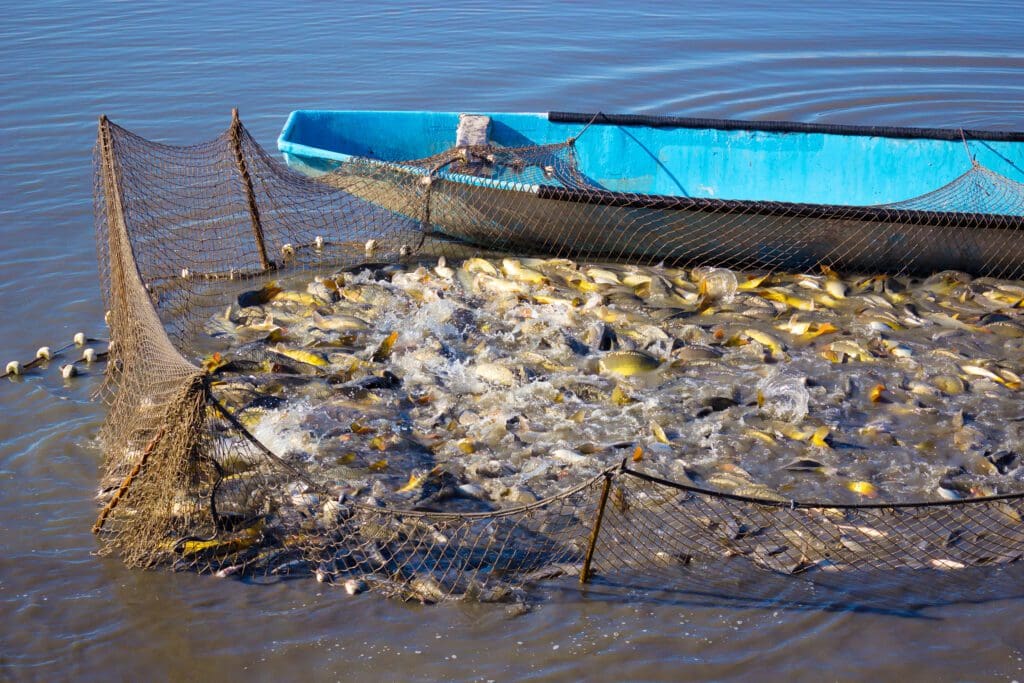
An industrial fishing net full of wild-caught fishes

Industrial fishing uses harmful methods that result in the mass deaths of fishes and bycatch (the accidental capture of non-target species like dolphins, sea turtles, and diving birds).

Two of the methods used in commercial fishing are:

Longlining: Boats use lines that can extend for up to 50 miles, with thousands of baited hooks branching off from the main line. In 2018, a fishing magazine reported that the Canadian government was supporting a shift to longlining, but the federal government released an action plan on reducing bycatch from longlining in 2019.

Bottom trawling: A large net with heavy weights is dragged across the seafloor, scooping up everything in its path and damaging sensitive marine habitats. Bottom trawling was banned in 2019 in Marine Protected Areas, which only make up about 6% of Canada’s marine areas.

Recreational fishing

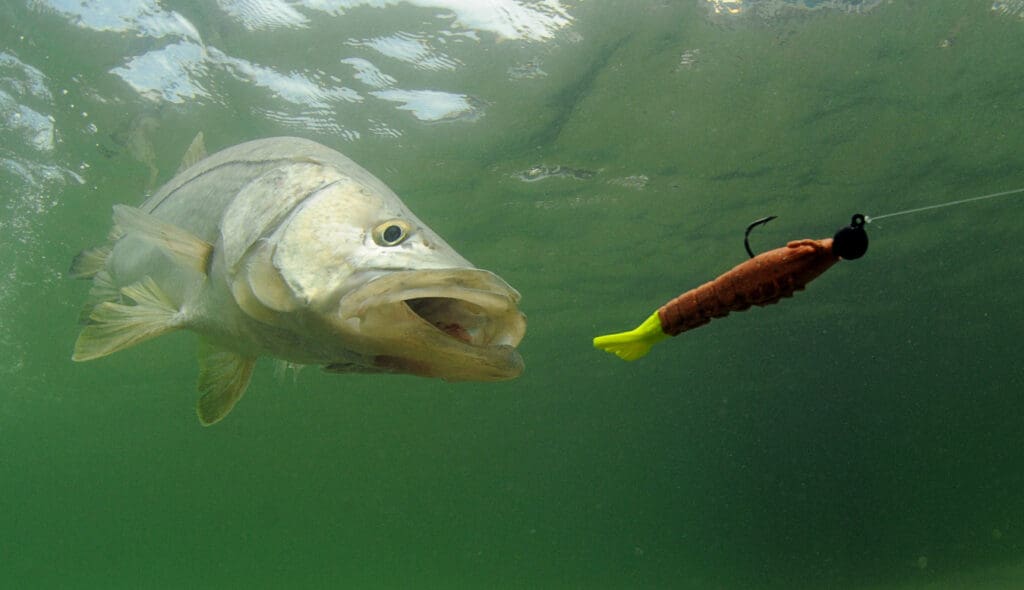
Fish approaching lure in the water

Even when fishes are released after being caught, the use of hooks causes pain and tissue damage. The change in pressure from pulling up some fishes out of the deep water results in barotrauma. For example, rockfish can experience barotrauma. Rockfish have a specialized gas filled sack that they use to control buoyancy. When they are reeled up and brought to the surface, they can’t release the necessary gases and this blows up their eyes, stomach and vent. If the fishes are quickly returned by a descender, they can survive, but in many cases they are just thrown back and continue to suffer or die from their injuries. There are no laws to prevent this, likely because they would be very difficult to enforce.

According to research, 18% of released fishes die of injuries and another 22% of the surviving fishes have their vision permanently impaired.

Recreational fishing and hunting organizations have admitted that they work to block cruelty legislation which would protect animals further.

Are fishes considered “animals” in law?

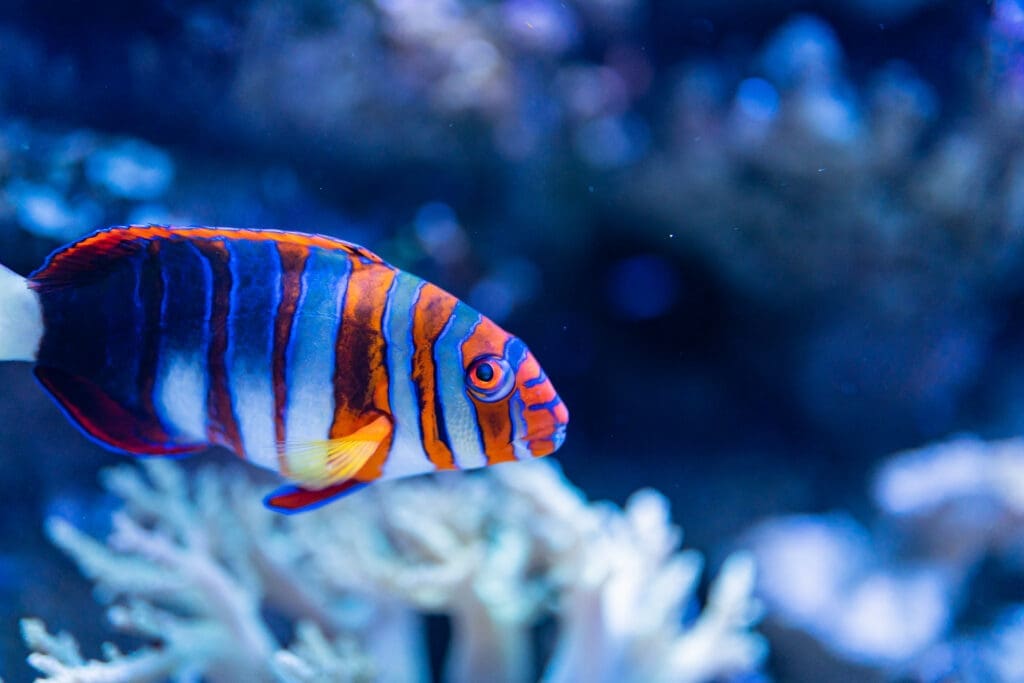
A wild tropical fish

In law, definitions matter quite a bit. Sometimes terms aren’t defined because they are seen as obvious. B.C.’s Prevention of Cruelty to Animals Act states, “This Act does not apply to wildlife, as defined in the Wildlife Act, that is not in captivity.” However, there is no definition of animal outlined in the act.

If an agency responsible for Prevention of Cruelty to animals received a complaint in regards to a fish in captivity, they would need to use the same criteria as they would with a dog to identify if the fish were in distress.

There are many thousands of animal species, and in some species it can be complicated to prove distress. In cases of fish, it would likely require a biologist who specializes in fish distress, and could require someone who is knowledgeable about a specific species. For example, in 2016, the BC SPCA investigated the death of a sturgeon after the fish was euthanized. The fish had come from a commercial farm and was seen floating along the top of the tank before being euthanized; sturgeon are naturally bottom feeders.

There do not appear to be any cases of animal cruelty to fishes in captivity that have made it to court. A case in the United States was dropped specifically because the definition of animal excluded fishes.

What you can do

The best way you can help decrease the demand for harmful fishing practices is by eating plant-based. Fishes are farmed in higher numbers than any other animal, so shifting away from animal products in your diet can save hundreds of fish lives every year. The greatest impact of cutting out fish-based foods from our diets comes from cutting out farmed fishes, because of the high-stress methods used throughout the fishes’ lives and their impact on wild fishes, followed by fishes caught in commercial fisheries.

Cutting out farmed meat and animal products also decreases the demand for industrial animal agriculture, which is a major source of water pollution from agricultural runoff. Agricultural runoff can lead to the overgrowth of algae, which then decomposes and depletes the water of oxygen. Fish, who cannot survive in oxygen-depleted water, either die or move elsewhere to compete for increasingly scarce territory and resources.

There’s also other small changes that everyone can make to protect fish habitats – fishes are heavily impacted by plastic pollution and rising water temperatures, so reducing your use of single-use plastics and decreasing your carbon emissions are ways you can help every day.

Advocating for an end to fishing subsidies by the government and for climate-friendly and plant-forward policies is a great way to effect systems-level change.

Learn more about fishes

Next episode

On August 30, the Vancouver Humane Society will be joined by animal law lawyer Rebeka Breder for a discussion on dangerous dog laws.

Categories
Opinion

Calgary Stampede-goers should skip deadly chuckwagon races

A version of this article originally published in The Daily Hive.

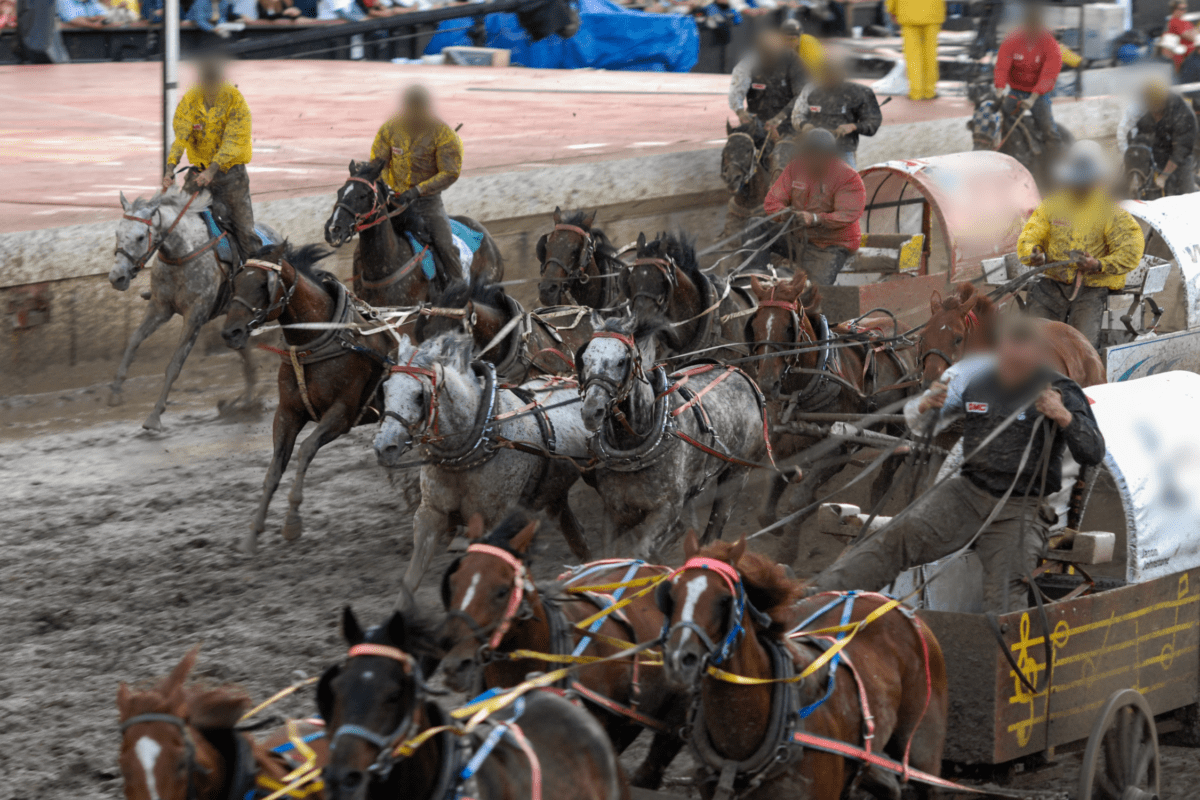
People from across Alberta and Canada are flocking to Calgary for the return of the Calgary Stampede, but the event’s program gives reason for pause. For the first time since 2019, the Stampede’s deadliest event is returning: the Rangeland Derby chuckwagon races.

It doesn’t take much to see through the thin veneer of the Stampede’s carefully crafted safety-first defenses to the inherent danger on which the races were built. The Calgary Stampede’s chuckwagon races continue to be the cause of near-annual horse deaths; more than 70 horses have been killed by the event since 1986. Risk is so intrinsic to the nature of the sport that the World Professional Chuckwagon Association openly deems it the Half-Mile of Hell.

The last time the races were held, six horses died. One incident, in which the death of a horse and the injuries of three more were ruled to be caused by driver error, resulted in the event’s first-ever driver disqualification and potential lifetime ban. That driver has since been reinstated and is now slotted to race in 2022 without missing a single year.

In 2021, Stampede organizers cancelled chuckwagon racing due to safety concerns over a lack of practice season. Some of the Stampede’s usual wagon drivers – who purport to have the best interest of their animals at heart – went on record slamming the unprecedented safety precaution.

Unsurprisingly, when a similar event went ahead in nearby Red Deer that season, a horse was injured and had to be put down.

Stampede organizers have had two years to reconsider the deadly sport – but instead of responding to public demands to remove the races, they made a minor rule change that decreases the number of wagons on the track from four to three.

This is unlikely to differ in impact from previous changes, which set a bleak precedent for the outcome we can expect.

In 2011, the Stampede dropped two outriders from the event, bringing the number of horses on the track down to two outriders per wagon in each heat instead of four. The following year, an outrider horse sustained severe injuries after crashing into an unexpectedly halted wagon in an incident that claimed the lives of three more horses.

The problems with the chuckwagon races cannot be solved with simple rule changes. The volume of horses on the track in each heat is indeed problematic, but the threat to the animals’ safety runs much deeper.

Without serious structural changes to the event, the races will always be at high speed and close proximity, running the risk of chain reaction incidents like the one seen in 2012. The races also continue to use thoroughbred racehorses, many of whom have broken their legs during the event. Animal scientist Temple Grandin has pointed to an inherent problem with the use of thoroughbreds as selective breeding for speed has weakened their legs.

Rather than addressing these serious issues, Stampede organizers have opted to bring back the event in full force.

It is worth noting that the return of the chuckwagon races is not for lack of alternative events. The Stampede has been called Canada’s largest arts festival, with visual arts having been incorporated since the event’s inception. The Stampede’s diverse range of music performances is estimated to draw more than 600,000 attendees each year.

With an array of safer options to truly celebrate the vibrant culture of Calgary, it is baffling to see the Stampede leaning back into an event that is as controversial as it is dangerous.

It is obvious that the much-needed shift away from the Half-Mile of Hell will not come from the common sense of the organizers, but from the pressure of the public. If Stampede goers do not wish to bear witness to possible deaths of horses, year after year, the choice is clear: skip the chucks.

Categories
News/Blog

Podcast: Farmed animal cruelty laws

All episodes

Industrial animal agriculture has been called the biggest animal welfare crisis on the planet, with more than 70 billion land animals killed for food each year.

The Sentience Institute estimates that 74% of farmed animals are currently on factory farms, which are characterized by large numbers of animals confined in cramped, barren and unnatural conditions. This episode of the Vancouver Humane Society’s podcast, The Informed Animal Ally, explores the practices and laws that impact the suffering of these animals throughout their lives.

Practices on farms

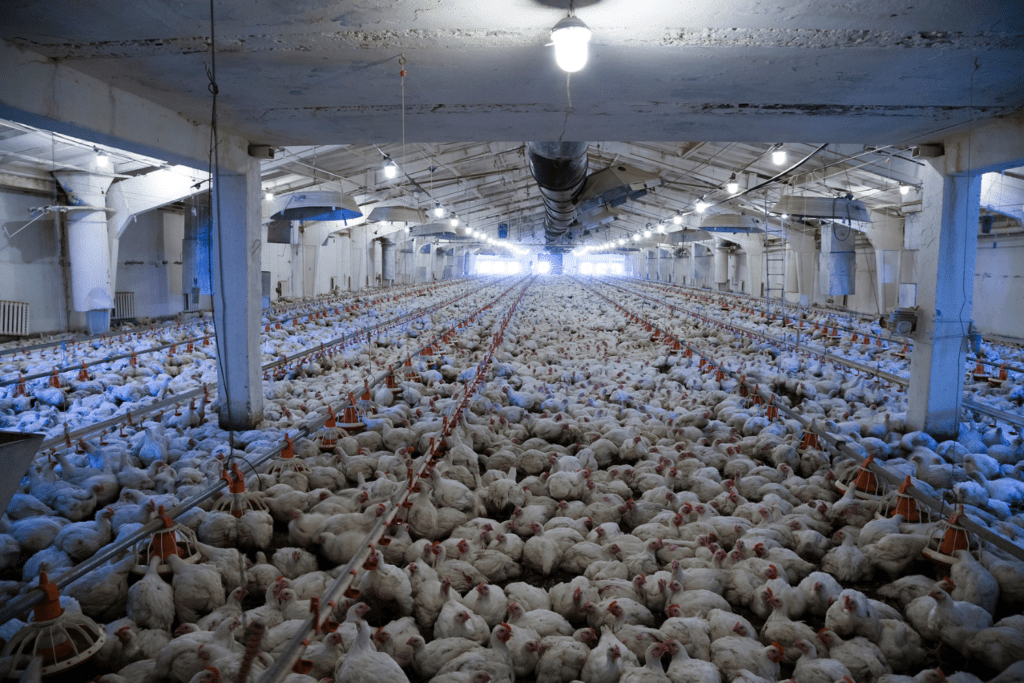
A long shot of a warehouse style barn crowded with broiler chickens raised for meat

The Canadian Criminal Code may apply to farmed animals—they include an offense for wilfully killing, maiming, wounding, poisoning animals—but only if there is no lawful excuse.

The National Farm Animal Care Council’s Codes of Practice outline the minimum generally accepted practices of animal management; practices within the codes would be considered a “lawful excuse” for causing suffering. In British Columbia, the Codes are incorporated into law as a means of defense for farmers even in cases when there is evidence of animal suffering.

Many practices we would consider essential to the welfare of animals are labelled in the Codes as “recommended practices” and not requirements. Even where there are requirements that help to protect welfare, there is no use of the codes for proactive enforcement by government.

Generally accepted practices can cause acute pain and prolonged suffering. For instance, the chicks of egg-laying hens are met with practices that cause immense suffering or death soon after birth.

  • Male chicks born from egg-laying hens are considered a byproduct because they do not grow as quickly as chickens bred for meat; they can be killed by being sent down a conveyor belt into a macerator, gassed, or suffocated in plastic bags.
  • Female chicks are prepared to be raised for egg-laying by being debeaked; the tip of the top part of their beak is cut off with a hot blade or laser without anesthetic. This mutilation is done to prevent hens from pecking each other and themselves in stressful close quarters rather than giving the hens more space and freedom.

This is just one of many examples of animals receiving a punishment or painful prevention for an undesired behaviour, rather than addressing the poor conditions that cause the behaviour.

You can learn more about generally accepted practices on farms by registering for free at the Animal Justice Academy and watching The State of Animals Used in the Food Industry: In-Depth with Geoff Regier.

Transportation

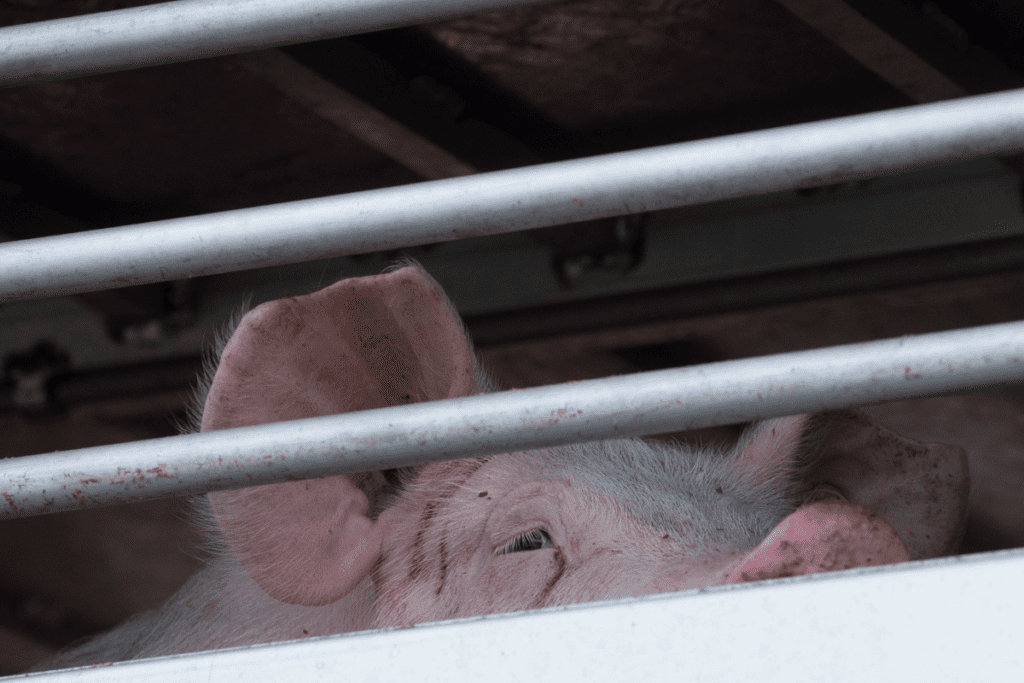
A pig seen through the bars of a transport truck

The Health of Animals Act regulates animal import and export, including transportation times.

There are very few farms with on-site slaughter facilities, which means most farmed animals must be transported before they are slaughtered.

The transport of animals is regulated federally by the Canadian Food Inspection Agency (CFIA), but the loading of the animals is considered provincial jurisdiction.

Allowed loading practices can cause serious harm to animals, as was evidenced in graphic footage captured on a B.C. egg farm. When animals arrive at the slaughter facility gravely injured or dead, no one is held accountable. Instead, the suffering can be deemed accidental because Codes of Practice were followed and CFIA veterinarians can deem it outside their jurisdiction because the harm happened before transport.

In February 2020, new transport requirements came into effect. Unfortunately, these laws had a negligible impact on the well-being of animals. The new regulations still lag behind other nations. Animals can be transported for long periods without food, water, or rest; they often arrive at slaughter facilities severely dehydrated, unable to stand, and surrounded by their own waste.

Slaughter

Even animals such as dairy cows and egg-laying hens, who are primarily used for the milk and eggs they produce while alive, are slaughtered at the end of their lives.

Slaughter is regulated federally through the Safe Food for Canadians Regulations. Though the federal government website claims to require “humane slaughter of food animals”, in reality animals are typically already stressed entering the facility and the slaughterhouse causes further fear and distress.

Laws require that animals are rendered unconscious before being bled. The methods through which this is done have varying degrees of effectiveness and varying degrees of pain. For instance, the gassing often used to render pigs unconscious causes distress. Lori Marino, a neuroscientist and expert in animal behaviour and intelligence, says that “Pigs are at least as cognitively aware as a monkey,” and that their squeals in the slaughterhouse are “distress calls”.

A study published in 2017 found that slaughterhouse workers—often vulnerable migrant workers—experience higher levels of stress than the general population.

Auction of farmed animals

Auctions of farmed animals are typically regulated by the provincial animal cruelty laws; however, there is not usually anyone monitoring them.

Often, there are animals sold at auction who are not in good condition.

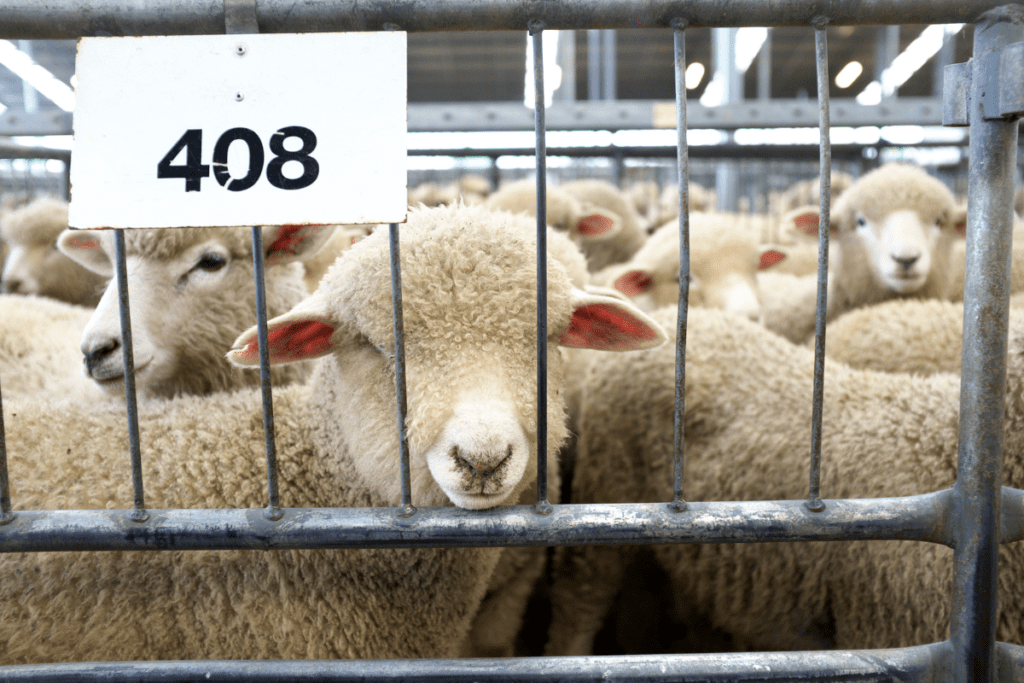
Auctions themselves are scary and overwhelming for farmed animals, as they are unfamiliar, loud, and involve a lot of uncomfortable and often cruel handling. Similarly to all other situations with little oversight, animal suffering is the norm.

Labelling of animal products

Very few terms used in the labelling of animal products are actually regulated.

All labels for animal meats where an animal production claim is made such as “organic”, “vegetable grain fed – no animal by-products” or “raised without antibiotics” must be registered with the CFIA.

“Nature” and “natural” are terms often misused on labels and in advertisements and have no meaning for animal well-being. “Organic” means that it follows the Canadian Organic Standards, which still allow painful procedures. However, advertising can be carefully written; is an animal raised by organic methods, or are they only fed an organic feed?

Terms that are not regulated include “grass-fed”, “grass-finished”, “free range”, and “free run”. Hens can be very crowded in barns of 25,000 that are free-range or free-run.

Subliminal messaging and imagery such as the use of the colour green, images of leaves and open pastures, and positive words such as “happy” can also influence the way consumers perceive the welfare of the animals. These are purely marketing tactics and do not reflect the state of the farms.

When it comes to nutrition claims, there are restrictions. However, many of the claims that are on animal products are not on plant products. For example, even though fruits and vegetables can give you much of the nutrition we require in our diets, there are often no labels on them at all because it isn’t legally required.

What you can do

If everyone on earth ate the average Canadian diet, we would need 1.3 earths for agricultural land alone. That huge demand is driving intensive agriculture to try to maximize the food output in the smallest possible space, leading to the most serious welfare concerns.

The best way to reduce the demand for animal agriculture is to start transitioning our consumption to more plant-based foods.

Every level of government and many other institutions like schools and businesses have climate commitments right now, and an important part of meeting those goals would be a shift away from animal agriculture and toward plant-forward policies and legislation.

For instance, the Canadian government currently subsidizes the private animal agriculture industry with millions of taxpayer dollars. Funding that currently props up the animal agriculture industry could be used to invest in sustainable plant-based agriculture and emerging technologies like lab-grown meat.

Governments can also help by improving animal protection laws to immediately address industrial animal agriculture, which produces more greenhouse gas emissions and uses intensive methods with some of the greatest animal welfare concerns.

If you’re interested in spreading the message about eating a plant-based diet, or if you’re thinking of trying more plant-based foods yourself, you can find recipes and tips on Vancouver Humane Society’s PlantUniversity platform.

Ag-gag laws

Ag-gag laws are anti-whistlerblower laws that apply within the agriculture industry. They can differ between provinces. They aim to prohibit the taking and sharing of footage of farm animal suffering, under the guise of biosecurity. However, ag-gag laws don’t have to be in place for law enforcement agencies to recommend charges against people who take undercover footage, or go onto farms for the sole purpose of exposing animal cruelty. Charges like “trespassing” and “mischief” are applied even when there are no ag-gag laws in place. A number of cases have been going to court in recent years.

To read industry’s perspective on these laws, check out this article from Canadian Poultry or this article from the Canadian Hog Journal.

To read animal advocates perspectives in more detail, you can read this article from the Animal Protection Party or this article from Animal Justice.

Right now, in B.C., 3 animal activists are facing charges for exposing suffering on a farm in Abbotsford, called the Excelsior 4.

Read op-ed on the Excelsior 4

Next episode

Keep an eye out on July 26 for the next episode of The Informed Animal Ally on fishes. Thank you for listening and thank you for reading.
Categories
Opinion

“No justice” for those who exposed animal cruelty at Abbotsford hog farm

Article originally published in The Daily Hive.

Today, the Excelsior 4 (now 3) begin their trial by jury for exposing animal cruelty at a hog farm in Abbotsford; but there is no justice in this case.

The story of the Excelsior 4 began in 2019, when dozens of animal activists documented the suffering of pigs at Excelsior Hog Farm, advocating for media cameras to be allowed on the farm. Their aim was simple: to show the public how much suffering goes into the meat products they can find neatly packaged on grocery store shelves.

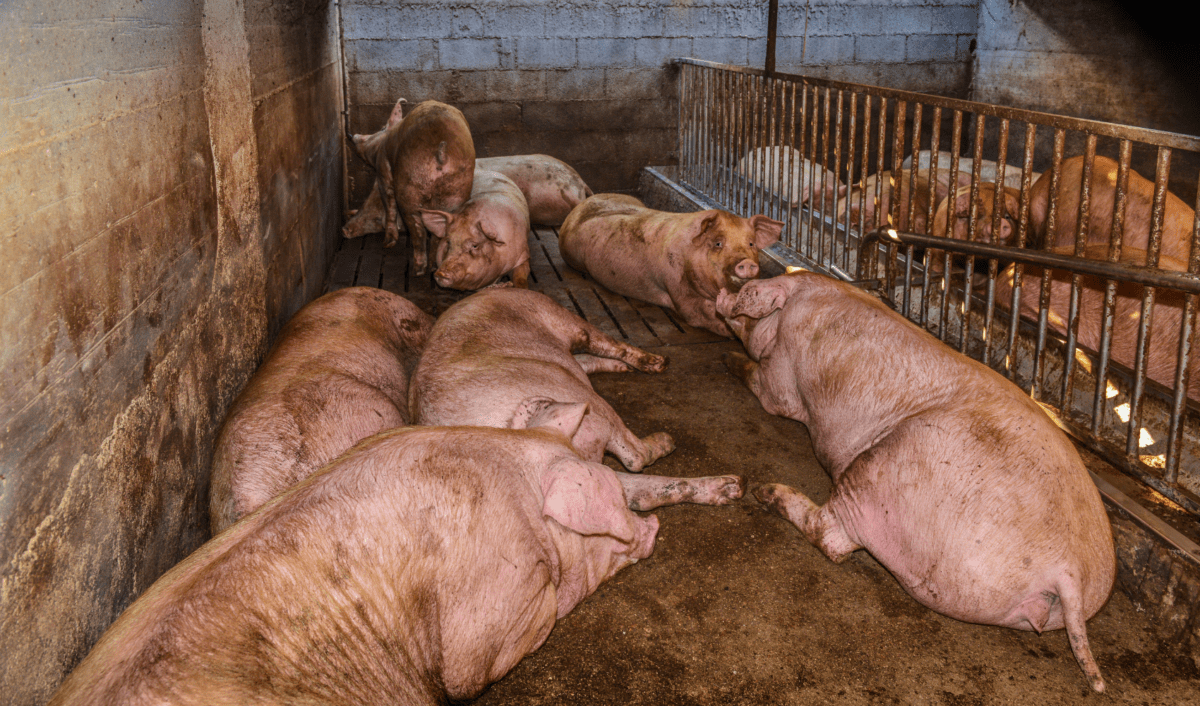
Footage recorded on the farm reveals a dire situation. In it, pigs can be seen crammed in crates barely larger than their bodies, unable to turn around. Some have bloody lacerations on their ears; some sport large growths around their eyes or abdomens; some struggle to stand on badly broken legs. Nursing mother pigs are separated by restrictive bars from their babies who languish, helpless and dying, on filthy floors. Anonymous staff shock the animals with what appears to be electric prods as they shy away, squealing, or cart dead piglets out of the barn in wheelbarrows.

In other videos, activists can be seen breaking down in tears as they document the bruised and bloodied bodies and broken spirits of animals widely understood to be as capable of learning and social behaviour as beloved family dogs.

Despite the overwhelming evidence of unimaginable suffering, Excelsior Hog Farm has still faced no legal repercussions in the three years since the footage was taken. The so-called justice system has instead targeted a small group of individuals who exposed this cruelty, known as the Excelsior 4.

One of the Excelsior 4, Geoff Regier, had charges stayed in pre-trial. The remaining three, Roy Sasano, Amy Soranno, and Nick Schafer, face a combined total of fourteen serious charges. If convicted, they could be looking at years in prison.

The fact that this case has proceeded to the trial stage while the perpetrators of egregious cruelty carry on free of consequences is a tragic testament to the priorities of the justice system. It is not on the side of the hundreds of millions of blameless animals who languish in illness and injury behind closed doors only to be slaughtered by gas, knife, or electrocution. It is certainly not on the side of the people expressing compassion for these defenseless animals. No; it is on the side of the corporate interests that perpetuate such inhumane treatment for the sake of the bottom line.

If the measure of a society truly is how we treat our most vulnerable members, where does this leave us?

The system has failed spectacularly in protecting any semblance of empathy for farmed animals and the humans who have tried to help them thus far. If we are to have any sense of justice in our society, the perpetrators of cruelty must be held accountable; and those who expose it must be celebrated, not punished.