2579 individuals used the quick action tool to send an email directly to decision-makers. Thanks to this strong push for action, the CFIA announced that enforcement of new regulations will begin on February 20, 2022. VHS will continue to monitor the situation and advocate for more protections for farmed animals.
Tell the federal government to adequately enforce the farmed animal transport regulations
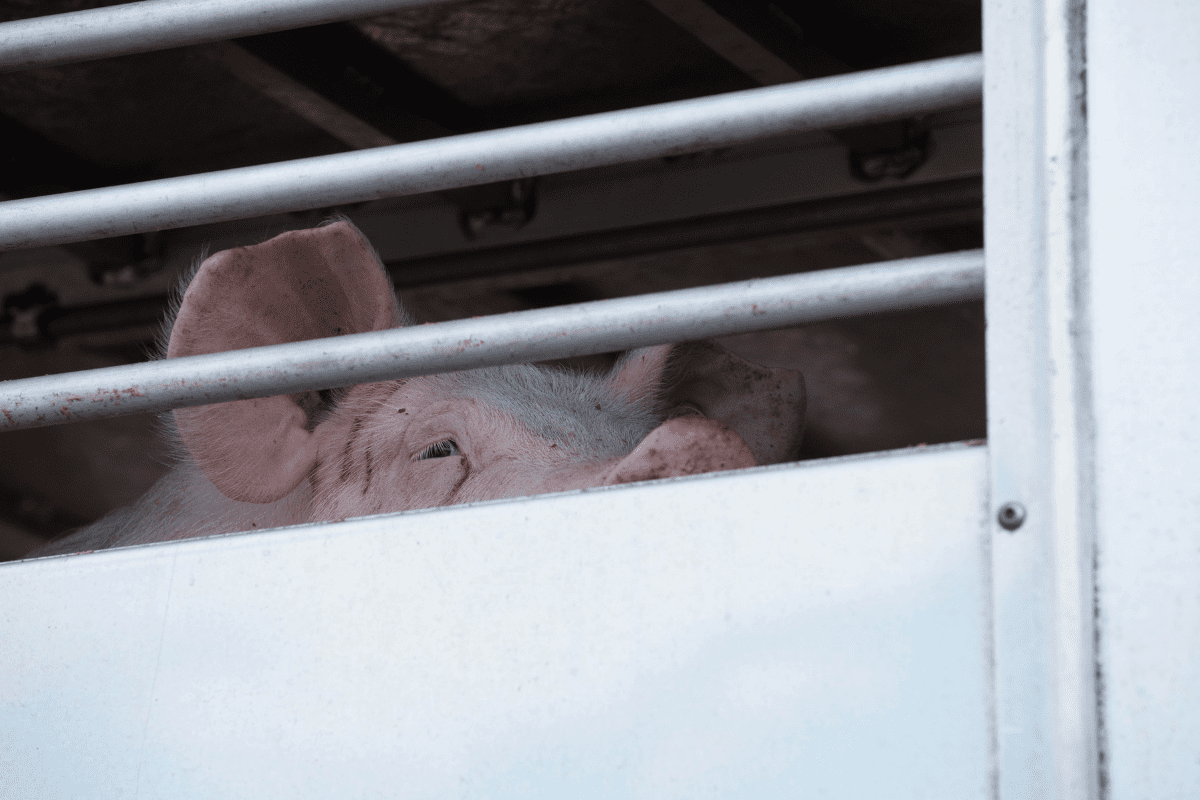
Farmed animals are among the most directly impacted by human activity, with more than 800 million land animals raised and killed for food every year in Canada. Transportation is one of the most stressful activities for farmed animals. Every year in Canada, approximately 14 million animals suffer injuries and 1.6 million die during transport journeys that are often long-distance and in extreme weather conditions.
In February 2019, the federal government announced updates to the farmed animal transport regulations, set to come into force a year later in February 2020. Unfortunately, the new regulations were hardly an improvement on the previous ones that had been in place since 1977. For example, only minor amendments were made to the food, water and rest (FWR) intervals for animals during transport.
Also concerning was the announcement that there would be a two-year delay (until February 2022) for full enforcement of the updated FWR intervals, including issuing large-scale fines, which is known to be the most effective form of enforcement when it comes to changing the actions of companies. This decision was intended to give the industry more time to adjust the shorter FWR intervals and to implement changes to infrastructure and marketing practices needed to meet the requirements. During this time, the Canadian Food Inspection Agency (CFIA) took a soft approach, focusing on educating people about the new requirements.
As the deadline for this two-year delay in full enforcement approaches, it is possible that further delays are being considered. Please join the VHS and other animal protection organizations and advocates in calling on the federal government to prioritize full enforcement of the farmed animal transport rules.
Take action
Please tell the Minister of Agriculture; the Minister of Health; and the President of the Canadian Food Inspection Agency to fully enforce the Transport of Animals regulations, including issuing appropriately sized fines.
This action has now ended
2579 people used this tool to send an email to decision-makers. Thank you for taking action!
4,279 individuals called on the Retail Council of Canada to keep its promise to move away from cruel gestation stalls. Please stay tuned for updates on this campaign and other efforts to address the suffering of farmed animals.
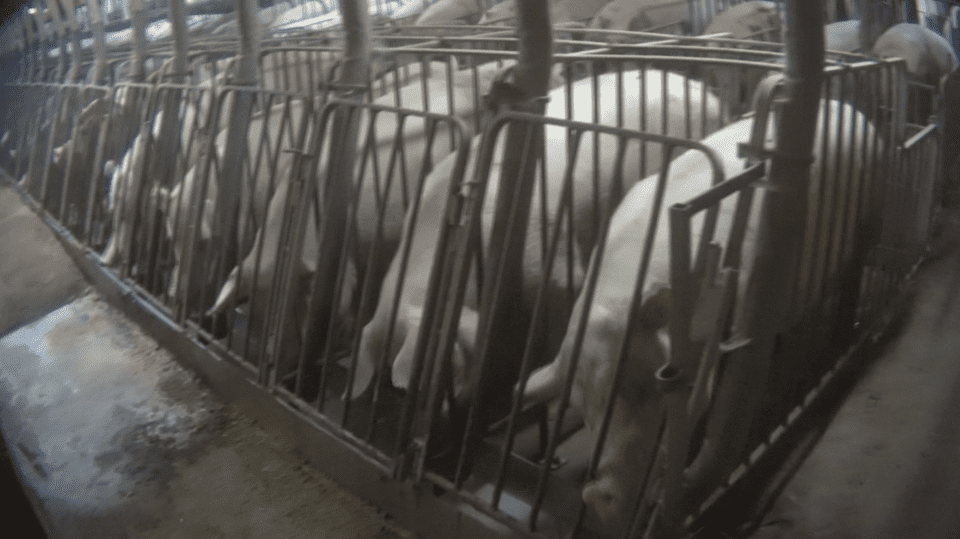
Canadians overwhelmingly oppose the common industry practice of confining pregnant pigs in what are known as “gestation stalls”. These individual stalls are so small that pigs are unable to even turn around or engage in any natural behaviours. Animal welfare scientists, veterinarians and other experts have described gestation stalls as one of the cruelest forms of animal confinement and the equivalent to living in an airline seat.
So it was welcome news when, in 2014, the Canadian pig farming industry committed in the Code of Practice for the Care and Handling of Pigs to end the continuous use of gestation stalls and transition to open housing by 2024. Similarly, the Retail Council of Canada, which represents grocery retailers in Canada, committed to “sourcing pork products from sows raised in alternative housing practices as defined in the updated Codes by the end of 2022”.
The industry gave themselves 10 years to transition from gestation stalls to open housing. Now, they are pushing for that deadline to be extended until 2029, which will result in hundreds of thousands of pregnant pigs continuing to suffer in barren, cramped gestation stalls.
Now, Animal Justice has released a new undercover investigation from a pig farm in Ontario. The disturbing footage revealed workers castrating and docking the tails of piglets without the use of painkillers; workers aggressively hitting pigs with plastic boards and jabbing them with pens; and filmed discussions indicating that pregnant pigs had been deprived of water for several days.
In addition to the cruel mistreatment captured, the footage also showcases the every day suffering of mother pigs who are kept confined in cramped gestation stalls. Concerningly, written statements from both farm management at Paragon Farms and Ontario Pork, which represents the province’s pork producers, state that they found no serious concerns after inspecting the farm.
The public can comment on the proposed amendments to the Code of Practice for the Care and Handling of Pigs, including calling for the industry to uphold its original commitment to transition to open housing by 2024, in an online survey. The deadline for comments is November 19th. The comment period is now closed.
Key messages for survey
*Please do not copy & paste the comments below, but use them as a guide for your own comments, as duplicate submissions will only count as one submission.
Section 1.1.2 Gestating Gilts and Sows:
Oppose proposal to delay deadline of transitioning from gestation stalls to open housing. Original deadline of 2024 should be honoured.
Support proposal to close the loophole that would allow keeping pigs in stalls if they were given the opportunity to turn around, exercise periodically, or other means of freedom of movement.
Oppose allowing pigs to still be kept in stalls for up to 35 days after last date of breeding. Must move away from gestation stalls entirely, due to mental and physical suffering they cause.
The codes should also ban any new stalls from being added to farms. New farms/renovations should offer alternative housing.
Section 1.1.6 – Boars
Oppose delay in transitioning to open housing (2024 to 2029).
Support proposal to close the loophole that would allow keeping boars in stalls if they were given the opportunity to turn around, exercise periodically, or other means of freedom of movement.
Section 1.2.1 – Sow space allowance
Space allowances should be increased to the maximum listed.
Section 3.4.1 – Recognizing sickness behaviour
Support proposal that all stockpersons must be knowledgeable in pig behaviour and signs of illness, injury and disease.
Section 4.2 – Stockmanship
Support proposal that handlers must be competent in low-stress handling and different housing systems (including group housing).
Electric prods must be prohibited.
General comments on amendments
Farrowing crates should be banned, due to being a form of extreme confinement that restricts normal behaviour and causes distress. Other options that permit more freedom must be prioritized.
Painful procedures should be banned (eg. castration, tail-docking, ear-notching, teeth-clipping) due to welfare concerns. Alternative, humane management practices should be prioritized. Environmental enrichment must be required to help address the root causes of stress and poor welfare.
Enforcement and oversight must be done by an outside third party, independent of industry. Inspections of farms must happen regularly (not just in response to cruelty reports) and must be unannounced, with results made publicly available.
Use our email tool below to ask that the Retail Council of Canada and its grocery members honour their promise to move away from sourcing pork products from mother pigs kept in gestation stalls by 2022.
This action has now ended
4,279 people used this tool to send an email to decision-makers. Thank you for taking action!