Use your voice to help animals this October with the VHS Animal Welfare Local Election Guide
The Vancouver Humane Society (VHS) is encouraging voters to bring animal welfare into conversations with candidates in the lead-up to the 2026 local elections across British Columbia.
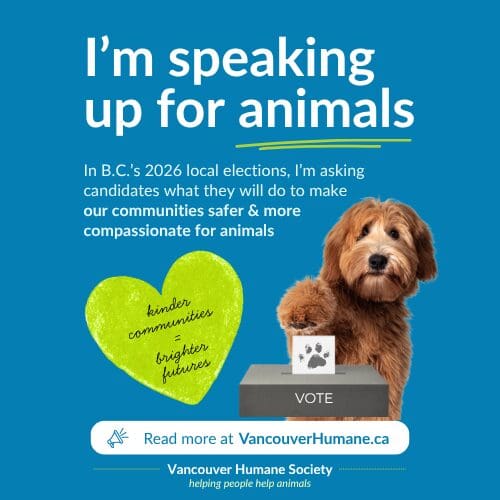
Use the VHS Animal Welfare Election Guide to engage with your candidates and discover what they will do to make our communities safer and more compassionate for animals.
Our approach is grounded in One Welfare; the understanding that the wellbeing of animals, people and the environment are interconnected.
Read through the key welfare issues and examples of local action.
Send a short, respectful message using the template below.
Track responses and share what you discover with your community & VHS.
You can make animal welfare part of the conversation about the future of our communities
On October 17, 2026, voters across B.C. will head to the polls to elect mayors, councillors, regional representatives and school trustees.
While local elections may focus on issues like housing, transportation, parks, and community safety, there is another important issue that deserves a place on the ballot: animal welfare.
Across B.C., many local governments have already taken action on animal welfare issues.
Some communities have introduced bylaws addressing animals used in entertainment, such as banning mobile live animal programs or rodeos, or have adopted policies that better protect companion animals, such as pet-friendly housing.
A quick note:
B.C. is also holding a provincial election shortly after the local elections.
This guide is specifically for the local elections and the candidates running for local government and school boards.
The VHS will continue engaging with the provincial government on animal welfare issues after the provincial election and sharing resources for VHS supporters to do the same.
Get election resources & updates delivered to your inbox!

1. Key animal welfare issues
Local governments make decisions every day that impact animals and the people who care about them. From bylaws regulating the use of animals in entertainment and pet ownership, to pet-friendly housing policies, parks management and local business regulations.
Some issues are especially relevant across B.C., while others have a particular connection to specific communities.
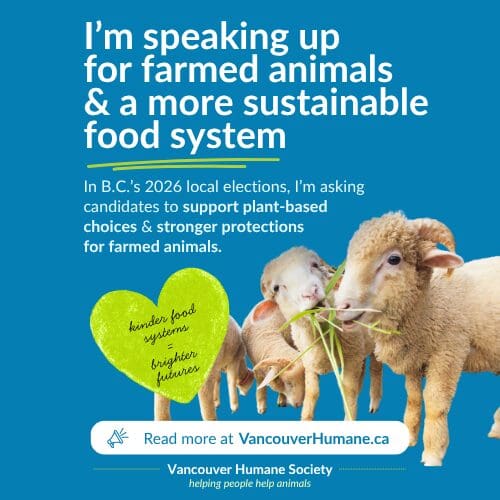
Support a shift away from factory farming, toward a more plant-based food system with stronger protections for farmed animals
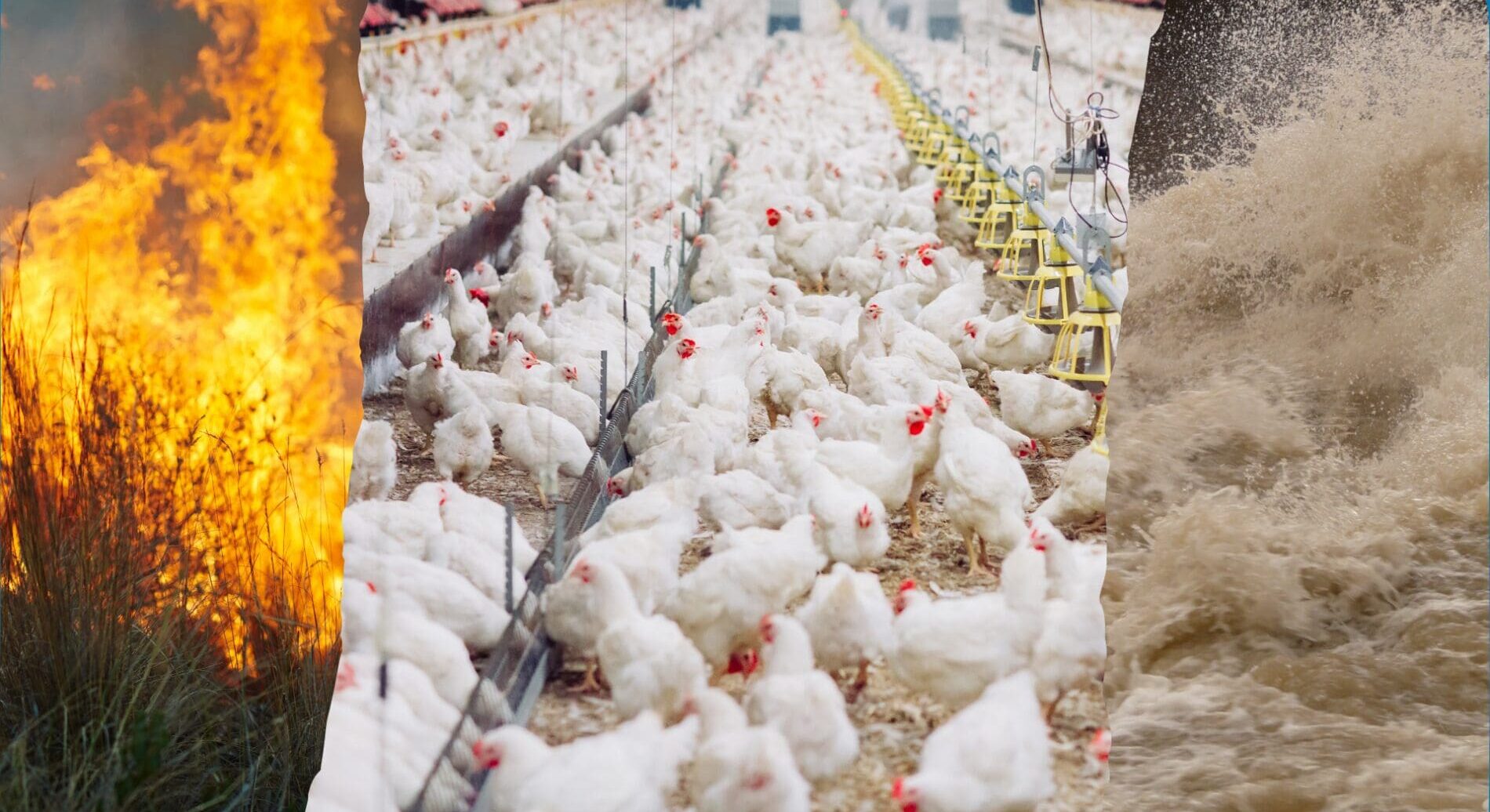
Local governments can help create healthier, more sustainable communities through policies that support plant-based food choices, stronger emergency planning and disaster response for farmed animals, and a transition away from intensive factory farming toward more diverse, sustainable, and locally focused agriculture.
Similarly, school board trustees can support school district policies and practices that prioritize plant-based food access in schools.
The City of Vancouver and the District of North Vancouver have incorporated plant-based food procurement policies.
The Squamish-Lillooet Regional District has adopted a comprehensive Agriculture Emergency Plan that includes a Commercial Livestock Relocation Guide and emergency support protocols.
Want to strengthen your message? Copy one of the examples above to show your candidate what other local governments are already doing.
Use or adapt these questions to start the conversation with candidates at the local government and school trustee level:
—and, if so, what specific measures would you support?
Support a shift away from entertainment that puts animals at risk toward humane, animal-free alternatives
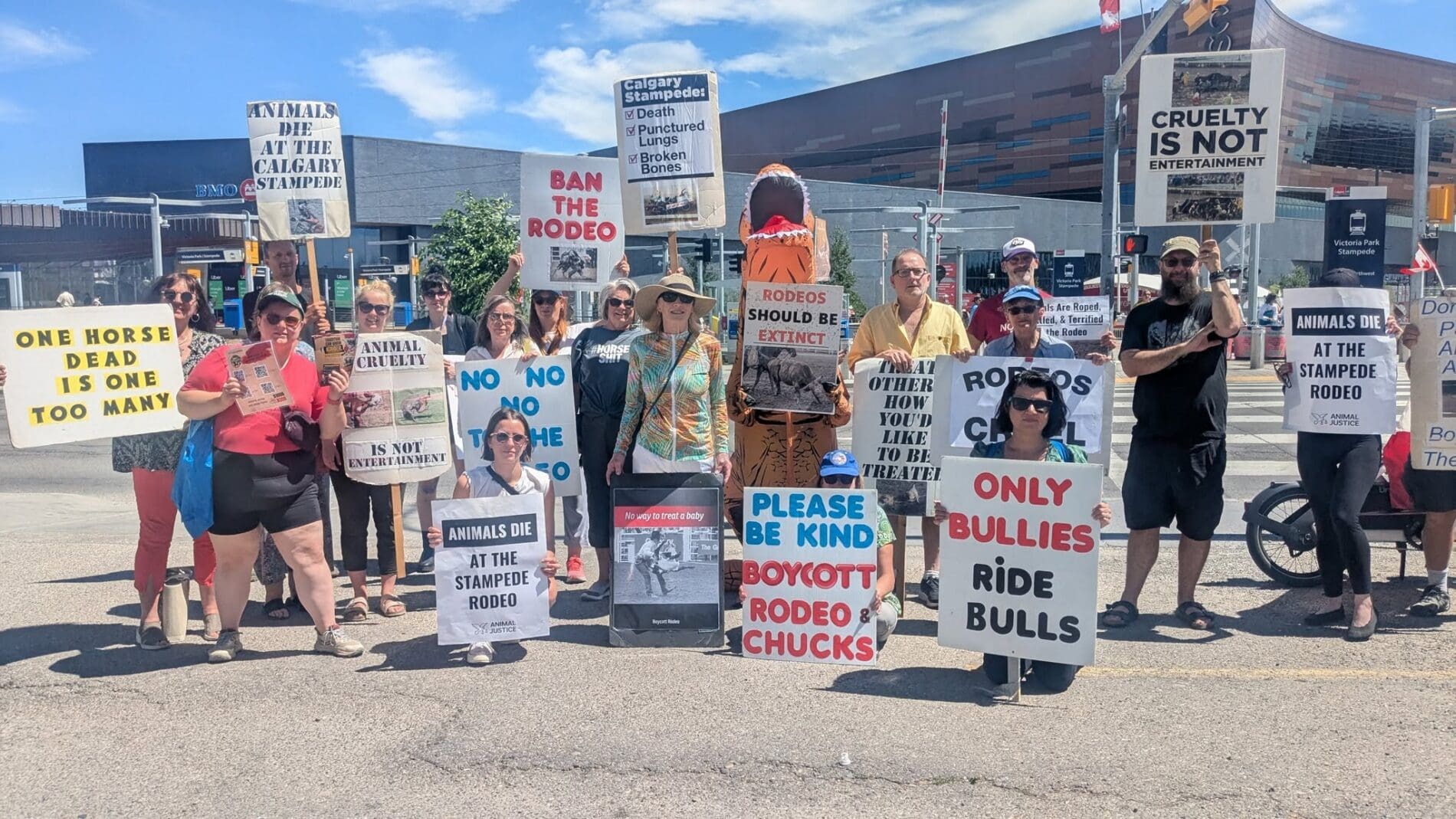
Animals should not be put at risk or subjected to fear, stress or suffering for entertainment. Local governments can take meaningful action towards protecting animals by prohibiting harmful events or activities at the community level.
Determine whether inhumane rodeo events or activities, such as roping, wrestling, and bucking events, are allowed to operate within the community or are supported financially through local policies and programs.
Determine whether MLAPs, such as exotic pet expos, travelling petting zoos, animal displays, and presentations, are allowed to operate. MLAPs increase the risks of zoonotic disease spread, cause animals unnecessary stress and risk of injury, and can contribute to environmental concerns if an exotic animal escapes.
Prohibit horse racing in communities where the horse racing industry is trying to revive the sport, particularly in Vancouver, the Lower Mainland, the Fraser Valley, and Osoyoos.
Prohibit the operation of horse carriages on busy, urban streets in communities where carriage rides operate, particularly in Victoria and Vancouver.
Examples of local action
The City of Vancouver, the District of North Vancouver, and Port Moody have all prohibited rodeo activities.
Castlegar introduced bylaws and licensing tools using a positive list of animals to regulate which are allowed to be kept in the community and under what circumstance.
Port Moody passed a corporate policy prohibiting mobile live animal programs on public and private property.
Want to strengthen your message? Copy one of the examples above to show your candidate what other local governments are already doing.
Ask candidates where they stand on the use of animals for entertainment, and what they would do to ensure animal welfare and public safety are protected.
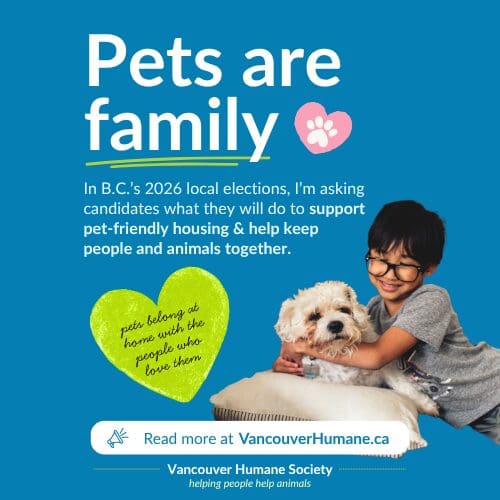
Support policies that help keep people and pets together, assist pet guardians in need and strengthen protections for animals sold in pet stores

For many people, pets are family.
Local policies can help make communities more welcoming and safer for people and their companion animals.
You can support this by advocating for pet-friendly housing and policies that reduce barriers for renters with pets, support for low-income pet guardians, and responsible regulation of the sale of live animals in pet stores.
Examples of local action
Vancouver has incorporated pet-friendly housing considerations into its Tenant Relocation and Protection Policy, including within development frameworks such as the Broadway Plan.
This shows how local housing policies can recognize the importance of keeping people and their pets together.
Richmond, Vancouver, New Westminster and Delta have all taken municipal action to restrict the sale of live animals in pet stores, showing how local governments can strengthen protections for animals sold commercially.
Want to strengthen your message? Copy one of the examples above to show your candidate what other local governments are already doing.
Ask candidates what they would do to make your community more pet-friendly, help keep people and their animals together, and strengthen support for pets and their guardians.
Share about this issue
2. Ask your candidates
There are lots of ways to raise animal welfare issues during a local election campaign.
Choose the approach that feels most comfortable for you.
NOTE – The button above will take you to an external web page – Civic Info BC
Navigate to your municipality to find your candidates contact details.
Use the template below to contact your local candidates by email, direct message or social media.
Choose one or more questions that matter most to you, then personalize the message with the candidate’s name, your community and the animal welfare issue you want to raise.
Tip: Keep your question concise, clear and respectful. Candidates receive many messages, and a focused question is more likely to get a useful response.
Dear (candidate name),
My name is (your name) and I live in (your community or neighbourhood).
As a resident and voter, animal welfare is one of my top priorities in this year’s local election. Decisions made at the local level have a real impact on animals. That is why I am reaching out to candidates to find out where they stand before I decide how to vote.
I would appreciate hearing your position on the topics below and how you would address them if elected.
(Add the animal welfare issues that matter most to you here. Consider providing some background information about the issue and then share your questions. You can copy the questions from the guide, or write your own in your own words.)
Thank you for your time, and for putting your name forward to serve our community. I look forward to hearing from you.
Sincerely,
(Your name)
(Your community/postal code)
Bring the top questions that matter to you to candidate forums, debates and community events.
Tip: Some audience questions are invited in real-time, whereas others ask you to submit your questions ahead of time.
If candidates or campaign volunteers come to your door, try asking one or two questions.
Tip: Not every candidate will be prepared to answer your question. Ask for their contact information so that you can follow up.
Share with candidates that animal welfare is a key election priority for you.
Constructive conversations can help people take animal welfare seriously.
Find out what they would actually do if elected.
Give them an opportunity to explain their position.
Their reasoning can be just as informative as their final position.
Don’t misrepresent or exaggerate a response.
3. Share what you learn
Your conversations with local candidates can help other voters, too. If a candidate gives you a positive or specific response, consider sharing it with your friends, family and community. You can say:
Here’s what I learned…
Candidate responses can help build a picture of the commitments being made across B.C. and help inform animal welfare advocacy following the election.
Forward us your responses ↓
Learn about the issues. Ask local candidates where they stand. Encourage them to make concrete commitments.
And together, we can build communities where animals, people, and the environment are safe and protected.
Authorized by Vancouver Humane Society, registered sponsor under LECFA, (604) 266-9744