
Bright aquariums filled with colourful fishes are often seen as calming, decorative additions to a home. But behind the glass is a reality that is far less visible.
Ornamental fishes are among the most widely kept exotic animals in the world, and often considered a ‘starter pet’, yet their welfare is frequently overlooked.
Share this post!
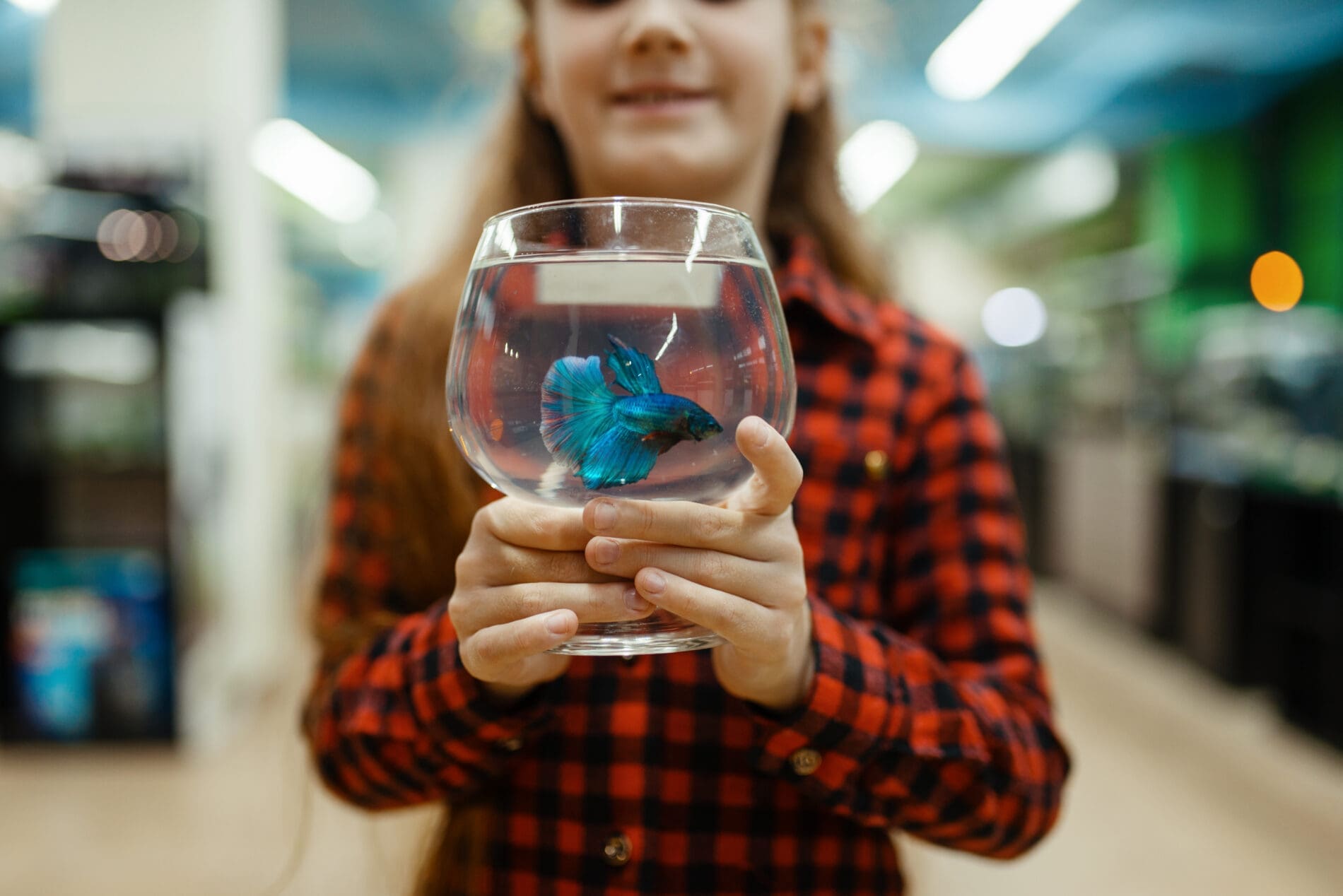
Where do ornamental fish come from?
The ornamental fish trade is a global industry involving thousands of species and billions of animals. One recent review estimates it includes close to 6,000 species and generates over $15 billion USD annually. Common species that many are familiar with include Goldfish, Bettas, and Tetras.
Many of us have seen fish in pet stores, carnivals, and homes, but how many of us know where they actually come from?
Wild caught or bred in captivity
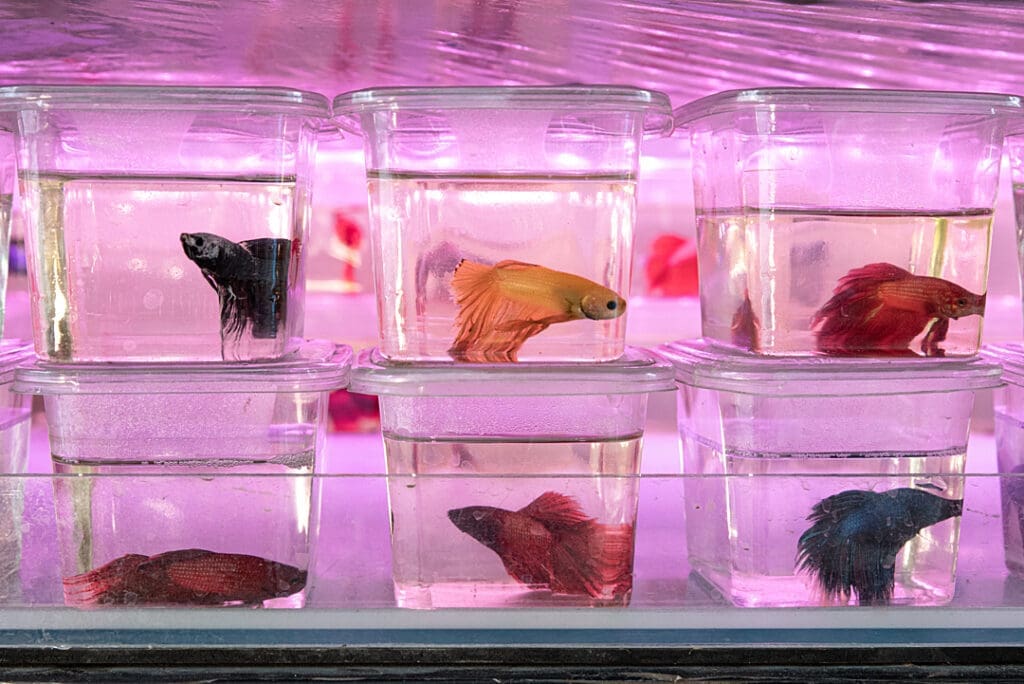
Transported to stores
Fish are then transported to be purchased by customers to places like pet stores or hobbyists.
Most will die during transit
It is estimated that over 90% of fish will die during transportation, and a large proportion will be discarded for issues that customers find unattractive, such as wounds or a sickly appearance.
Waiting on store shelves
The survivors will be stored in holding tanks until they are purchased.
Living in a tank until death
Their final stage of life is often in a customer’s home aquarium, where they live until death.
What’s often overlooked
At each stage, they can face significant stressors such as overcrowding, handling, and poor water conditions.
Despite the scale of this industry, it remains relatively under-regulated compared to other sectors involving companion animals. Weak oversight and gaps in legislation continue to leave fish vulnerable to poor welfare conditions.
Fish are sentient, often misunderstood, animals
Scientific evidence shows that fish are sentient. They can experience pain, form memories, and display complex social behaviours.
Yet fish are still widely perceived as low-maintenance pets, or even as decoration. This misunderstanding has serious consequences for their welfare. When their needs are underestimated, they are more likely to be impulsively purchased or kept in environments that compromise their health and well-being.
Life in a tank is more complex than it looks
Unlike many other companion animals, fish live entirely within aquatic environments constructed and maintained by humans. This makes water quality one of the most critical factors in their welfare.
In their natural habitats, fish have expansive space and enriched ecosystems that are often difficult to replicate in captive environments. Properly caring for fish can be intensive, making the myth that they are easy to care for ‘starter pets’ particularly harmful.
Parameters like ammonia, nitrite, nitrate, pH, temperature, and oxygen levels must be carefully maintained. When these are not properly managed, fish can quickly experience stress, illness, and death.
Proper care also requires:
Many common health issues seen in ornamental fishes are directly linked to poor husbandry. From a veterinary perspective, treatment often depends on correcting the environment rather than simply administering medication. This requires ongoing knowledge and commitment from caregivers, something many are not prepared for when they first acquire fish.
There are barriers to veterinary care
Even when problems are recognized, access to veterinary care can be limited. Aquatic medicine is a specialized and relatively niche area, and many general veterinarians are not equipped to treat fish patients.
This creates a difficult situation. Fish may suffer from preventable conditions, while caregivers struggle to find guidance or support.
At the same time, the sheer diversity of species in the trade makes it challenging to develop consistent care standards. Different species have different environmental and social needs, and many are unlikely to have those needs fully met in typical home aquariums.
A welfare issue we can no longer ignore
The ornamental fish trade highlights a broader issue in how animals are perceived and treated. When animals are seen primarily for their appearance or being easy to care for, their needs can be overlooked.
Fish are sentient individuals capable of experiencing stress and suffering. Their welfare matters, both in the conditions they are kept in and in the systems that bring them into our homes.
Here’s what can you do to help!
Improving the lives of ornamental fish takes all of us!
Educate yourself & others
If you choose to purchase fish, learn about their complex welfare and husbandry needs, and about veterinary care options near you.
Educate others on the welfare needs of fish so they can make informed decisions before purchasing animals.
Local advocacy
Talk to pet stores and local representatives in your community to advocate against the sale of fish in pet stores or for improved welfare conditions.
Sign up to take action ↓
Sign up for our mailing list to be informed when opportunities to advocate for fish arise.
At VHS we believe all animals deserve care, respect, and consideration. That includes fish, whose needs may be less visible but are no less important. By looking beyond the surface, we can begin to change how ornamental fish are understood and treated and ensure their lives are more than something to look at.