Cover image: ‘Fear Factor: House of Fear.’ Photo by Serguei Bachlakov VIA RealityBlurred.com.
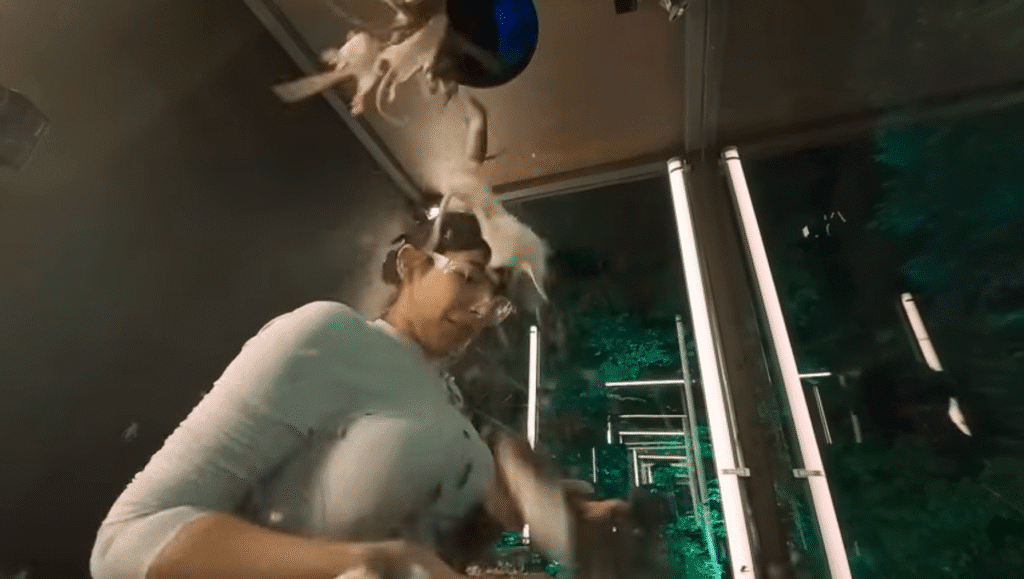
Game show contestants are covered in bugs while pigeons fall on them from above.
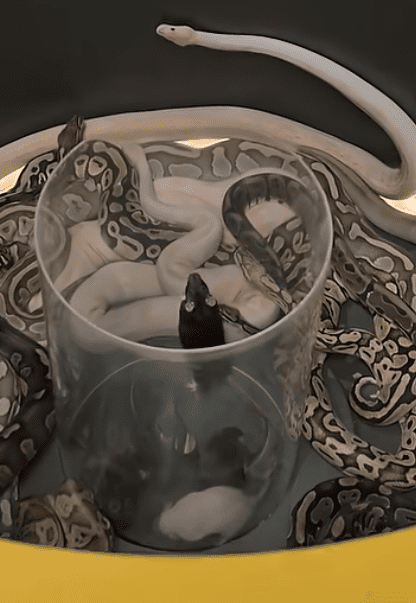
They crawl past a snake holding a dead rat in their mouth by the tail.
They dig through the entrails of dead animals.
They roughly grab invertebrates by the handful.
They are suspended in the air, picking up rats dangerously by their tails, accidentally dropping them into snake pits, and flinging them into a “safety” enclosure.
It seems like the television of a bygone era; the kind of show we could expect to see sitting around our slightly boxier television sets of the early 2000s. But these challenges are all part of the currently airing Fear Factor: House of Fear. The new series, which was filmed in Metro Vancouver and credits local animal handlers, uses animals in a way that is deeply troubling.
Fear Factor: House of Fear makes a spectacle out of animal suffering
In one challenge, contestants are locked into a clear box and covered in insects. Either rats, pigeons, crested geckos, or ball pythons are dropped onto them from above, followed by plastic balls that the contestants must open to reveal a code and escape the enclosure.
As the show title suggests, we see the contestants visibly afraid, fleeing out of the box as soon as they can, some still covered in animals. We see the animals falling and expressing signs of fear and stress: reptiles writhing after falling a considerable distance, rats defecating over each other and people; pigeons flapping their wings and smacking into the wall of the box. As a former pigeon researcher, I found the clearly agitated birds particularly difficult to watch, although all these species are sentient and capable of feeling pain and stress.
And then there are the things we don’t see. It is unclear how animals are housed above the enclosure or how long they may be left in containers before, during, and after filming. It’s also unclear how animals are removed from the contestants after they escape—whether a handler collects them, or the panicked contestants fling them off.
And of course, unlike the human contestants, the animals did not choose to be put in frightening situations.
Because these species are often thought of as “pests” and “vermin”, the average viewer may not consider their perspective. Others may assume that because the animals were on television, their treatment on- and off-camera was humane. We may be so accustomed to seeing the “No animals were harmed” disclaimer at the end of tv and film productions that many might assume it’s a requirement. But is it?
Does seeing animals on TV mean “no animals were harmed”?
“No animals were harmed during the making of this film” is a product of collaboration between filmmakers and the American Humane Society. The disclaimer is provided to productions involving animals that meet certain criteria.
These guidelines are not legally mandatory for all productions. They include things like discouraging the use of glass panes around birds, ensuring that multiple reptiles are accustomed to each other if they are in a scene together to protect their safety, and that all physical and emotional discomfort of any kind is to be strictly avoided.
The disclaimer is notably absent from Fear Factor: House of Fear. The show does not appear on the American Humane Society’s current list of certified “No animals were harmed” productions.
Moving past inhumane “entertainment”
The 2000s version of Fear Factor was born out of a different cultural atmosphere. Once-popular shows based on mockery like The Biggest Loser, The Swan, andTeen Mom are now often dissected for their concerning themes. As we progress culturally, we must continue to be critical of the media shown to us and advocate for better treatment of both animals and people.
Unfortunately, because the actual events depicted in the currently airing Fear Factor: House of Fear revival show were filmed months ago, they cannot be prevented. However, we can do better in the future. By refusing to engage with media that harms animals, we can send a strong message to production companies that profiting off of fear and harm is no longer acceptable.
The VHS and advocates are calling for change
The Vancouver Humane Society has reached out to all relevant decision-makers to call for accountability and protection for animals. These are:
- The BC SPCA: The VHS has submitted a cruelty complaint to the BC SPCA, the only animal welfare organization in B.C. with the authority to investigate complaints of animal abuse or neglect under the provincial Prevention of Cruelty to Animals Act. The BC SPCA is unable to comment on ongoing investigations. We will be sure to share any updates as soon as we are able.
- Canadian Broadcast Standards Council (CBSC): The CBSC deals with complaints and questions from the public about the programming of private broadcasters in Canada. In response to our initial complaint, the VHS received an inadequate response from the shows Canadian broadcaster, Bell Media (CTV), and submitted a ruling request. We await a response to this request, which could take up to four months.
- Bell Media (CTV): The VHS urged the show’s Canadian broadcaster to stop airing the program, which features improper and inhumane handling of animals.
- Endemol Shine North America: The VHS also submitted a complaint to the production company of Fear Factor: House of Fear regarding the show’s treatment of animals.
- B.C. Government: The VHS has contacted provincial decision-makers to call for greater protections for animals used in entertainment such as television productions filmed in the province.
Many supporters have also submitted additional complaints to these decision-makers.
Share this post on:
Facebook | Instagram
A new Fear Factor: House of Fear special is set to air in May. For updates, including learning about additional actions as they come up, follow the VHS on social media, subscribe for email notifications, or check back on our website.