Image: Jo-Anne McArthur \ We Animals Media
- A new peer-reviewed study adds to the growing body of evidence that calf-roping puts young animals through fear and stress.
- The study analyzed video footage of calves confined in chutes before being released into the arena for calf-roping events in Australia.
- The findings are deeply concerning: every calf observed showed at least one behaviour associated with a negative emotional state, such as fear or stress.
Share this post!
“Welfare concerns begin while calves are still confined in the chute”
Calf-roping, also called tie-down roping, involves a young calf being released from a chute, chased by a rider on horseback, roped around the neck, stopped abruptly, forced to the ground, and tied by the legs.
Animal welfare concerns have long focused on the risk of stress, pain, and injury during the event itself. This study shows that welfare concerns begin even earlier, while calves are still confined in the chute.
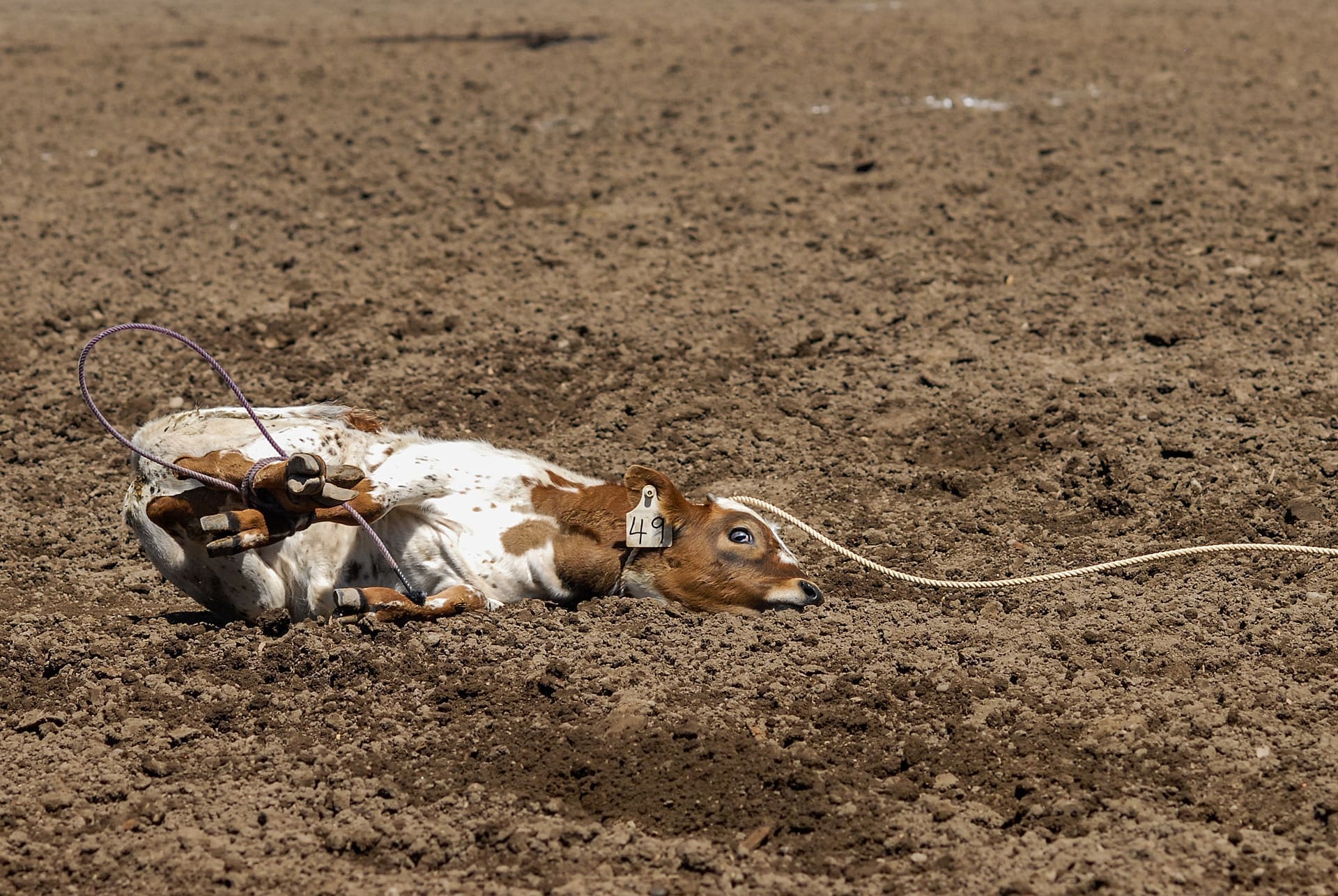
Researchers reviewed clips of 31 calves
Some were held in the chute for shorter periods, 28 to 51 seconds, while others were held longer, 52 to 166 seconds. They recorded visible behaviours using an assessment tool known as an ethogram.
“Red flag” behaviours included:
The study found that calves held for longer periods showed more frequent red flag behaviours. These included more mouth opening, sticking out their tongues, rearing, and escape attempts.
Inherently inhumane practices
The researchers concluded that calves experience fear and stress while confined in the chute before release, and that longer confinement was associated with increased signs of stress.
These findings matter because they challenge the idea that rodeo events can be made humane through minor rule changes or handling adjustments. Even before the event started, calves were already showing signs of stress.
Help more animal lovers learn about this opportunity.
Share this graphic on your social media and encourage others to write to their decision-makers.
Causing stress in animals should not be entertainment
The study also notes that calves in rodeo settings may be exposed to multiple stressors, including separation from other calves, confinement, loud noises, sudden movements, close contact with handlers, and the inability to escape.
Calves are young, vulnerable animals. Their fear and stress should not be dismissed as part of a show. The findings of this study support what animal welfare advocates have been stating for years: animals should not be used as tools for entertainment.
You can read the full study here.
What you can do to help
The VHS continues to call for an end to inhumane and high-risk rodeo events and for stronger protections for animals in entertainment. You can help by using the quick action tool and sending a message to government decision-makers, taking the ‘Say No to Rodeo’ pledge and encouraging friends and family not to attend rodeo events, and sharing this post!
Share this post!