In summary:
- On many large-scale farms, tens of thousands of animals may be housed in a single facility.
- During a fast-moving barn fire, wildfire, extreme heat event, flood, or power failure, there may be no practical way to move every animal to safety.
- Approximately 165,000 chickens died in a recent Abbotsford barn fire. Weeks later, at least 20,000 pigs died in a fire at an industrial farm in southern Ontario.
- Current industry codes of practice generally call for farms to have emergency plans, but do not require proof that those plans can protect every animal.
TAKE ACTION: Sign now to call on the B.C. government to strengthen protections for farmed animals before the next disaster strikes.
Share this post!
A tragedy and a warning
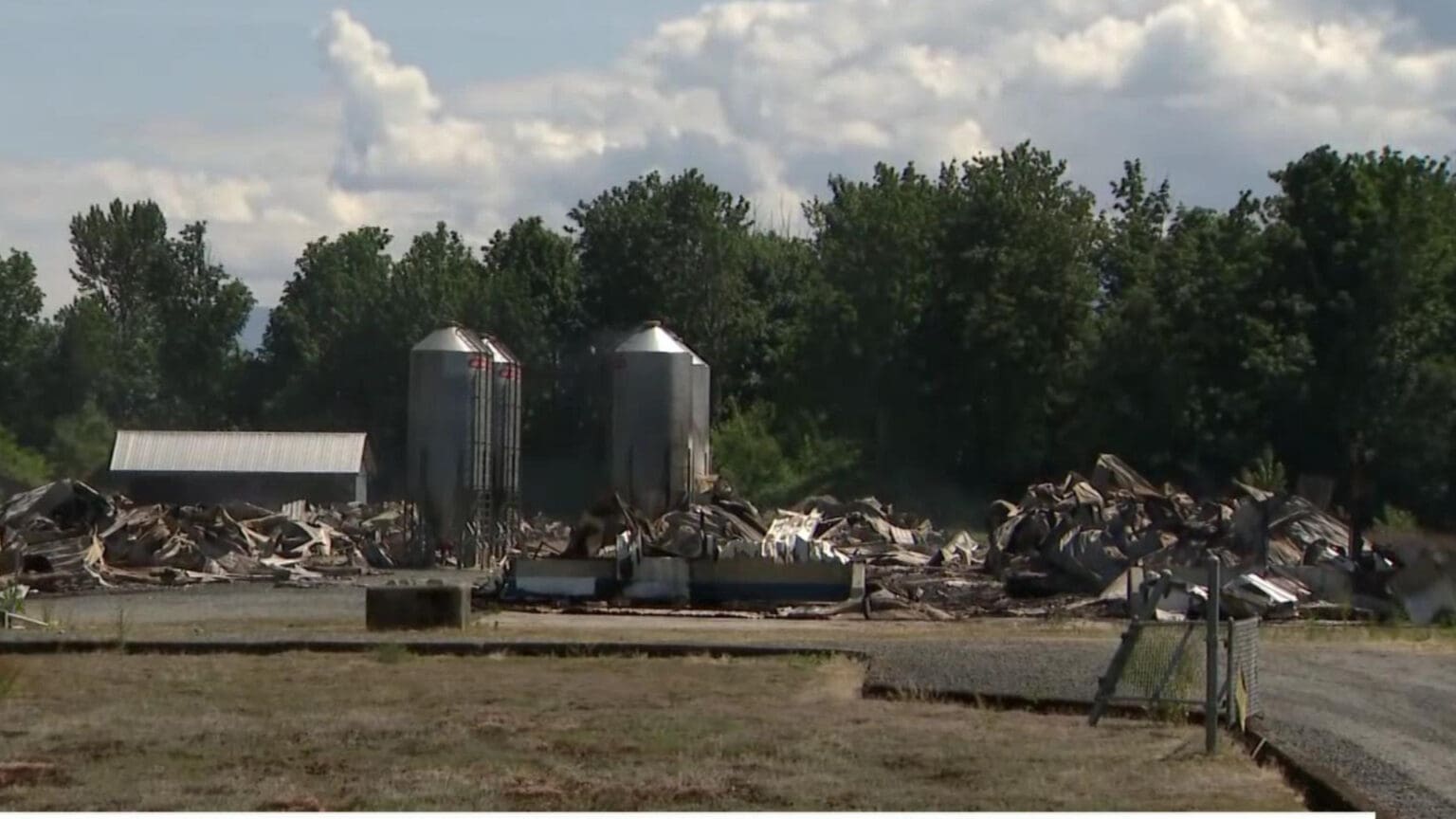
On May 21, 2026, approximately 165,000 chickens died when three poultry barns caught fire in Abbotsford.
Each chicken was a sentient animal capable of feeling fear, pain and stress. Confined inside the barns, they had no way to escape.
This was a devastating tragedy.
It was also a warning about a system that confines enormous numbers of animals in facilities where evacuation are virtually impossible.
Why large-scale evacuation may be impossible
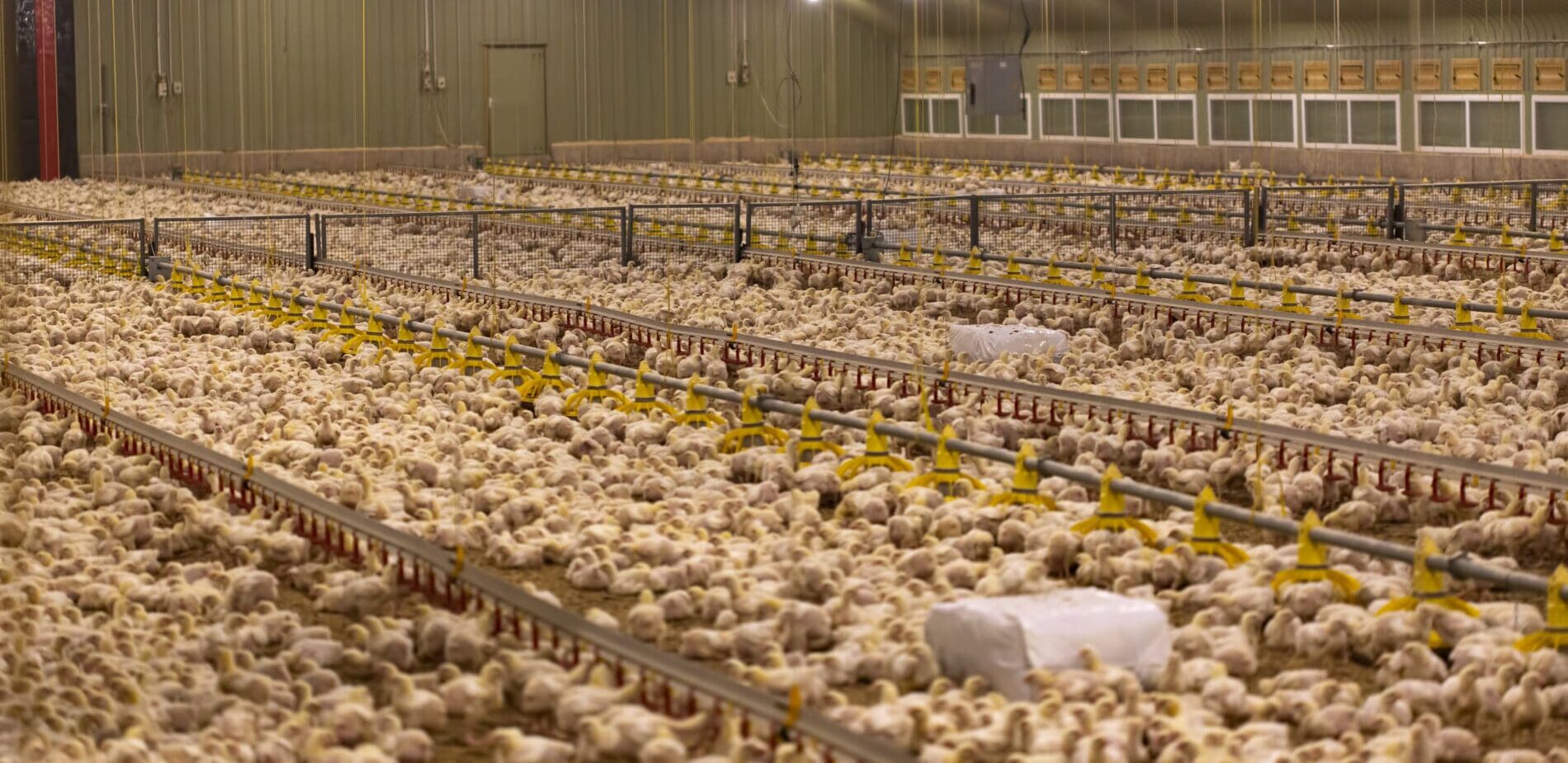
Evacuating a farm is not as simple as opening a barn door.
Animals must be caught or gathered, safely handled and loaded into suitable crates or trailers. They must then be transported somewhere with enough space, food, water and shelter.
This can require trained workers, specialized equipment, available vehicles and drivers, safe and accessible roads, veterinarians, backup power and fuel, and suitable places to house the animals.
Nearby farms may already be full, affected by the same emergency or unable to accept animals because of disease and biosecurity concerns.
During a regional disaster, many farms may need the same trailers, workers, roads, and receiving sites at the same time.
For a barn holding tens of thousands of chickens, hundreds of cattle, or thousands of pigs, there may be no workable way to move every animal within minutes, or even hours.
This has already happened
The Abbotsford fire was not an isolated example.
In July 2026, at least 20,000 pigs died in a fire at a large industrial farm near Simcoe, Ontario. The fire spread through a facility covering about 200,000 square feet.
The scale of these fires makes the problem painfully clear. When tens of thousands of animals are confined inside one facility, there may be no practical way to reach and rescue them.
B.C.’s 2021 disasters exposed the same problem on an even larger scale.
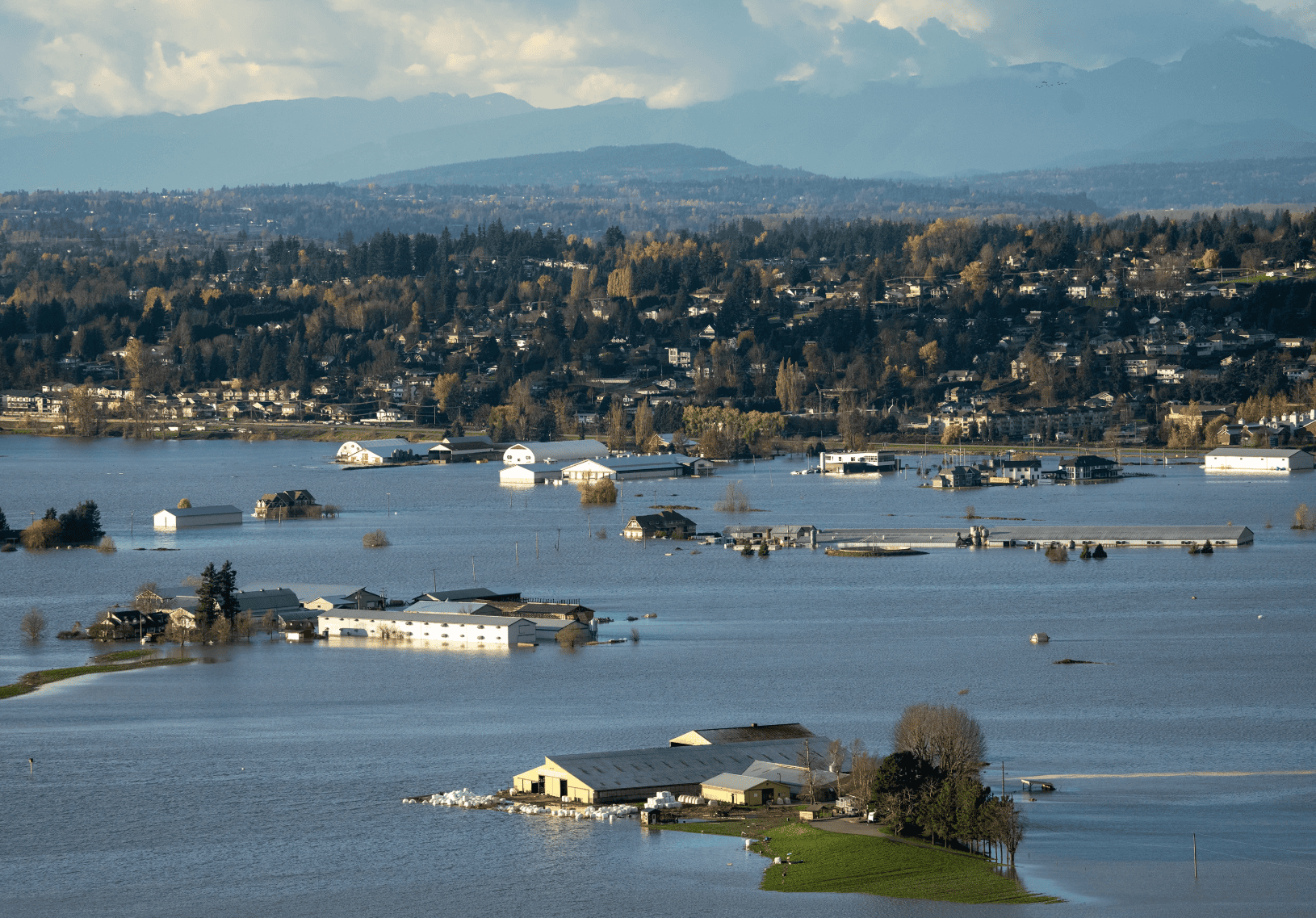
During the floods in the Sumas Prairie, rising water covered farms and roads, cutting off access to animals. Approximately 630,000 chickens, 12,000 pigs and 450 cows died.
Some farmers moved animals to higher ground or other facilities. In many cases, however, water rose too quickly, roads became impassable, or there was nowhere available to take them.
That same year, more than 650,000 farmed birds died during B.C.’s extreme heat dome. Many were confined in barns that depended on mechanical ventilation and cooling.
Barn fires, floods, wildfires, extreme heat and power failures are different emergencies. They reveal the same systemic risk: enormous numbers of animals are being kept in conditions where their lives depend on buildings, roads, equipment and emergency systems that can fail.
Climate change is increasing the risk
B.C. is facing more frequent and severe heat, wildfire, flood and smoke events. These emergencies can develop quickly and affect entire regions at once.
Large-scale animal deaths also carry wider costs. Emergency responders may be placed in dangerous conditions. Farmers and workers experience serious emotional and financial harm. Communities face the costs of emergency response, rebuilding, and the disposal of thousands of animal bodies. Floodwater can carry manure, fuel and other contaminants into homes, waterways and surrounding land.
As the risks grow, relying on individual farms to solve this problem on their own is not enough.
B.C. has an opportunity to act
In 2024, B.C.’s Farmed Animal Welfare Advisory Committee released a report recommending major changes to the province’s farmed animal welfare framework.
The recommendations included:
These recommendations are an important starting point. However, the B.C. government has not publicly provided a clear plan or timeline for implementing them.
Take action for farmed animals
Farmed animals deserve stronger protections before disaster strikes.
The VHS is calling on the B.C. government to move forward with meaningful changes through the Farmed Animal Welfare Framework review, including:
When thousands of animals cannot be evacuated, the system needs to change.