The VHS is celebrating an important step forward for animals in British Columbia.
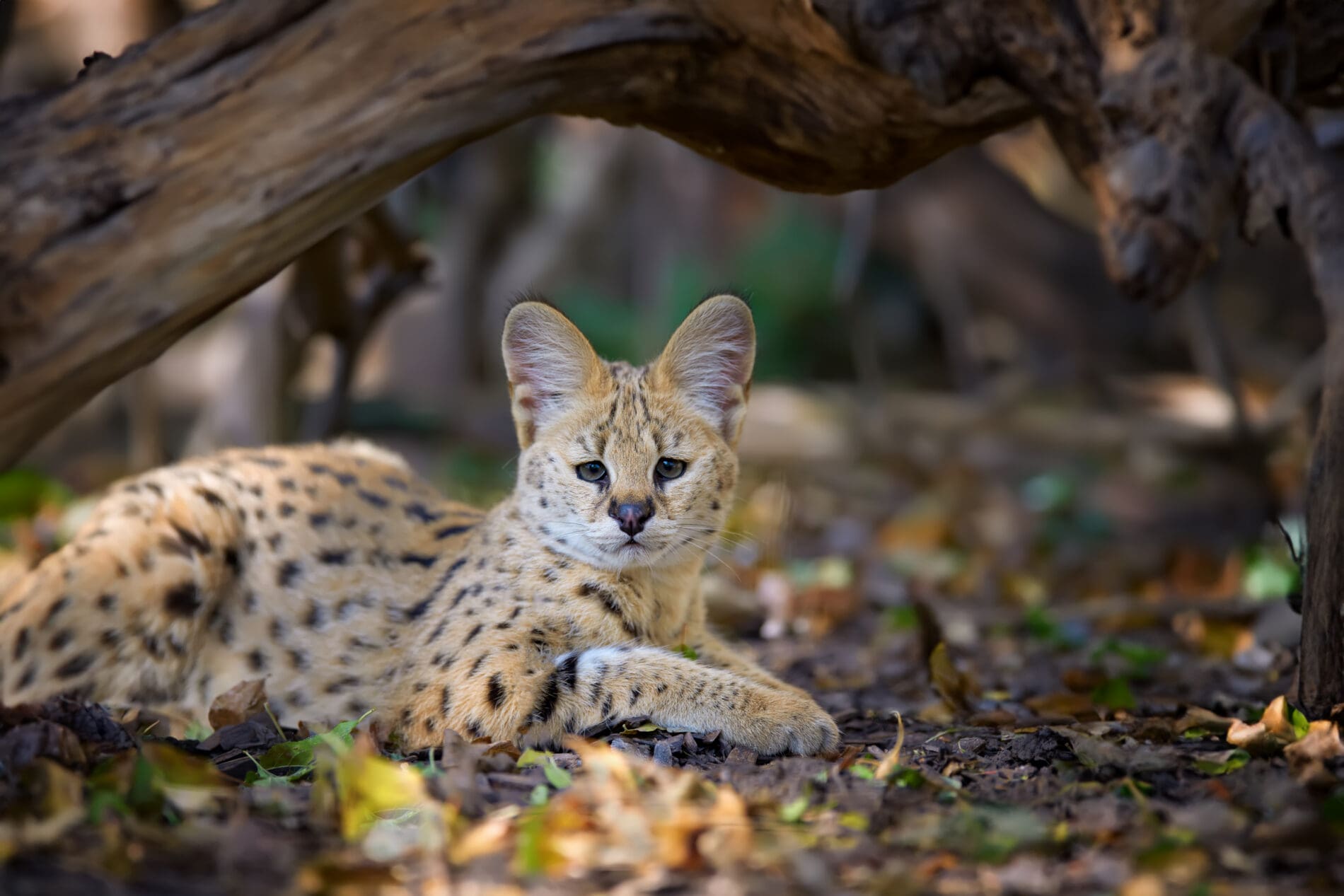
The provincial government has announced a ban on the breeding, sale, public display, and future private ownership of exotic cat species such as servals, caracals, leopard cats, ocelots and others.
This progress would not have been possible without compassionate people like you.
Over the past year, the VHS and supporters spoke up for animals by contacting decision makers and participating in a public consultation on a proposal to ban exotic cats. Your voices helped show the province that British Columbians want stronger protections for wild animals.
Share this post!
Why don’t exotic cats belong in homes?
Exotic cats are wild animals with complex physical and behavioural needs that cannot be met in a household environment. Even when bred in captivity, they retain the instincts and behaviours of their wild counterparts.
- They are driven to roam, climb, hunt, and defend territory. Confinement in homes can lead to severe stress, behavioural problems, and poor health.
- Exotic cats require specialized diets and veterinary care that are not widely available.
- Servals and caracals can weigh up to 40 pounds and have a bite force far stronger than a domestic cat. When exotic cats escape or are released they can harm other animals and pose risks to the community.
For these reasons, exotic cats experience poor welfare when kept as pets and can create risks for people, other animals, and local ecosystems.
What do the new rules mean?
Under the planned changes to the Controlled Alien Species Regulation (CASR), all exotic cat species will be prohibited in the future. Breeding, selling, or acquiring new exotic cats will no longer be allowed.
Animals already in private homes will be permitted to stay with their current guardians for the remainder of their lives, provided that guardians obtain a permit and follow basic care and safety requirements.
This change is designed to ensure that no more exotic cats are brought into captivity as pets where their needs cannot be met.
A meaningful step, with more work ahead
While this ban is an important step for advancing animal welfare, many other exotic species continue to be kept as pets in B.C. despite facing similar welfare concerns.
The VHS is encouraging the provincial government to go further by adopting an evidence-based positive list system for exotic animals. Instead of a long list of banned species, a positive list allows only animals that are proven suitable as pets based on animal welfare, public health, safety, and environmental criteria.
Municipal leaders across British Columbia have already called for stronger action through a Union of BC Municipalities (UBCM) Resolution NR75, which urges the province to strengthen provincial rules for exotic animals.
The VHS applauds the provincial government for taking this important step towards advancing animal welfare by banning exotic cat ownership and hopes to see more positive changes.
When people speak up for animals, change happens!
Thank you for helping make the exotic cat ban possible by standing up for animals who cannot speak for themselves.