“Veterinary social work is about walking alongside guardians through some of the most stressful and emotional times in their lives.”
In this episode of The Informed Animal Ally, we explore the growing field of veterinary social work — where human services and animal welfare meet. Dawn Campbell, a veterinary social worker with the Vancouver Humane Society, shares how supporting people through their bond with their pets can lead to more compassionate, inclusive systems of care. Together, we discuss how this approach helps ensure no one has to choose between their own wellbeing and their animal’s.
Note: This written discussion has been edited for length.
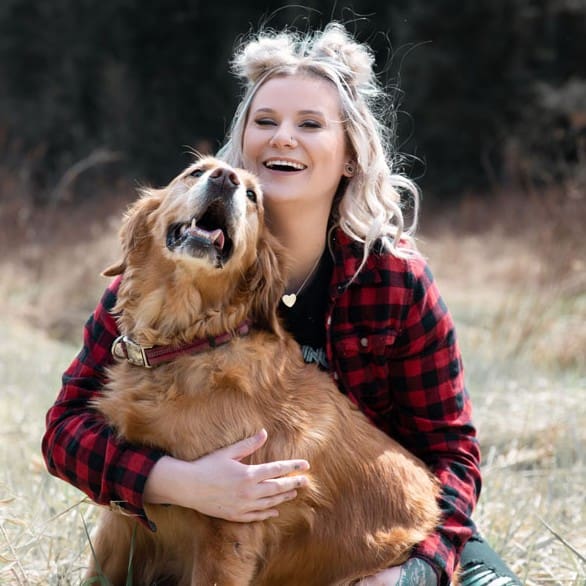
Featured Guest: Dawn Campbell
Veterinary Social Worker, Vancouver Humane Society
Dawn is a registered social worker who joined the Vancouver Humane Society in 2024 as a Veterinary Social Worker for the McVitie Fund. She holds a degree in Social Work from the University of Victoria and has additional specialized training in grief and loss, pet loss support, and counselling. With a wealth of experience in social services and animal care, Dawn is deeply passionate about bridging the gaps between social work and animal services.
- The role of reconciliation in social work
- What is veterinary social work?
- A typical day for a veterinary social worker
- Bridging the gap between human and animal services
- Billy Bob's story
- Dawn's journey into veterinary social work
- Addressing systemic service gaps
- How collaboration makes a difference
- How the field is evolving in Canada
- Where veterinary social work is heading
- How you can help
The role of reconciliation in social work

Dawn: I wanted to start by situating myself and acknowledging the land that I work and live on. I am a settler on the unceded territories of the q̓ʷɑ:n̓ƛ̓ən̓ (Kwantlen), q̓ic̓əy̓ (Katzie), Máthxwi (Matsqui), and se’mya’me (Semiahmoo) First Nations.
For me, a land acknowledgement is not about a quick statement at the beginning of a meeting. It’s about accountability. It means recognizing my responsibilities and committing to building daily, respectful and reciprocal relationships with Indigenous peoples.
What this means is looking honestly at my role in my social work profession and how it has played a role in upholding colonial policies and causing deep harm, and as a social worker, having to carry that history with me, and then also having to resist falling into fragility or defensiveness when confronted with it.
For me, that’s about consistent reflexivity, asking how my whiteness shapes the way I show up in spaces, how it impacts my perspective, and how others experience me because of it.
Part of that accountability also includes action, whether that means engaging in mutual aid or continuing to learn about Canada’s colonial past and its ongoing impacts.
The Truth and Reconciliation Commission’s 94 Calls to Action give us a roadmap and I encourage everyone to read them and find ways to situate themselves in their personal and professional lives.
This isn’t just a recognition, it’s about accountability. It’s about learning, it’s about respect, and it’s about striving to change harmful systems.
Chantelle: I really appreciate that because what we’re gonna be talking about today is a system that’s striving to make things more fair and just and inclusive for all people.
What is veterinary social work?
Chantelle: I would love to start with a backgrounder on the topic of veterinary social work.
For people who aren’t familiar with it, could you tell us what veterinary social work is and how it differs and aligns with other types of social work?
Dawn: Yeah, so essentially it’s social work in animal spaces. But if we wanted to go a little bit deeper, the term veterinary social work was developed by Elizabeth Strand at the University of Tennessee in 2002 when she also founded the first Center for Veterinary Social Work.
The program at the University of Tennessee focuses on four core areas:
- The link between human and animal violence;
- Grief and loss;
- Animal assisted interactions; and
- Compassion fatigue management.
So that’s the formal scope that veterinary social work focuses on, at least in this specific program.
But I do really like the definition that was brought forward in a webinar that was hosted by the Vancouver Humane Society. Veterinary social work was described as an area of social work practice that attends to the human needs that arise at the intersection of veterinary medicine and social work.
I think like that definition really stuck out to me because it was very simple, it was very broad, and that is really where we’re at is at that intersection.
This might look different depending on where it happens. It could be in a veterinary clinic, it could be in a community outreach program. It could be in a humane society. The shape of the work is determined really on the community needs, the setting and even the species involved.
I think that the values at the heart of this work mirror a lot of the social work values: the inherent worth and dignity of all beings, including animals.
And it’s also preventative work, so that could be offering grief support, advocacy, and connection before crises deepen.
Chantelle: Oh, that’s fantastic. I was originally involved with the webinar that we ran in 2023 about veterinary social work. A panelist described it as the same as other types of social work in a different setting.
It sounds like that’s very much in line with how you view it as well.
Dawn: Yeah, for sure. I totally agree. I think that social work can be in any space. So we can label this as veterinary social work, or we could just label it as social work because it’s just social work in an animal space and in an animal related context.
It overlaps with so many things, like I said, including crisis work, counselling, group facilitation, and even forensic (criminal justice) social work.
It’s really just meeting people where they’re at. And with this specifically, it’s when their relationship with their animal is at stake.
A typical day for a veterinary social worker

Chantelle: Yeah, absolutely. You work with the McVitie program, so everyone accessing the McVitie program services is basically in a state of very heightened emotional crisis.
People are concerned for the lives of their pets, their family members, their best friends. So they’re coming in, they’re stressed, they’re worried, they’re needing support and help, and they don’t have the funds to meet the needs of their animal that they care so much about.
It’s so important that we can support both the animals and the people who care about them.
I would love to hear about what a typical day looks like for you as a veterinary social worker in this context.
Supporting animal guardians through a pet’s medical emergency
Dawn: Yeah. As mentioned earlier, I work with the Vancouver Humane Society’s McVitie Fund team.
I assist with the operations of that program, and that can look different day to day.
Often, like you mentioned, we’re hearing from pet guardians whose animals are facing life-threatening emergencies. This could be anything from being hit by a car to maybe a cat in diabetic shock or a severe flea infestation. And so they’re already dealing with the stress and emotional toll that comes with seeing their animal in distress.
On top of that, many of these guardians are already navigating financial hardship, housing insecurity, and other barriers.
We’re helping them figure out what we can do funding wise. It is a veterinary assistance fund, but it’s not just about the money that we can provide to them for their animals to get veterinary care. It’s also about supporting the guardian emotionally.
Because this animal is in crisis, the person is too, and they don’t know what the outcome is going to be.
Collaborating with support workers
Dawn: Sometimes it’s not a guardian that reaches out to us directly. It can be a social service worker, it could be an outreach worker, a case manager who is applying for veterinary funds on behalf of their client.
What I’ve done in those cases is collaborating with the staff, resource sharing so that their clients—not only that client that they’re applying for, but for their other clients with pets—what’s in the community that can help for future care, like pet food.
And it’s about offering emotional support to the staff as well. Because I have found, and this is from my own other professional experience of working in the field, that these staff members are deeply attached to these pets also.
And so it’s supporting them through this process as well. You’re holding many hands.
Some days it’s grief support when the outcomes aren’t what they hoped. Other days it’s celebrating when a guardian’s pet gets to come home and they get the care that they need. We get wonderful feedback from people, very appreciative of our time and our resource.
Advocating on behalf of animal guardians
Dawn: So it could be crisis intervention, case management, advocacy.
I’ve advocated on behalf of a client with vet clinics on trying to get our funds spread a little further.
And at the heart of it really, it’s really just listening and recognizing that pets are a part of the family system.
Bridging the gap between human and animal services
Chantelle: You mentioned that a lot of people who access services for their animals are also facing their own complex challenges and they need services or they use other services for themselves as well.
How does veterinary social work help to bridge that gap between animal services and human services, and how does that improve outcomes for the animals?
Dawn: I think there’s a lot of work to be done. There are so many gaps in the system, whether an animal is involved or not.
I think that what I’ve taken away as a veterinary social worker, as well as also having worked in the social services field for quite a while now, is that one of the most powerful things is how pets can be the key to connection.
If you ask them about their dog, everything changes.
Building rapport is not always easy, and people who have experienced trauma who have been excluded or mistreated by systems may not want to engage. But if you ask them about their dog, everything changes. Their face lights up. Their pet is their whole world.
There’s been so many moments where someone wasn’t interested in talking about their situation, but the second you ask about their animal, everything shifts. Even if it’s as simple as helping them get food for their pet.
Once that trust is there, it opens up and you can start discussing about their own needs.
Supporting someone through their bond with their pet can be the foundation of broader healing.
I think that, not only is that what the work of veterinary social workers are doing, it’s something that can be done by people who are working in animal welfare agencies, in vet clinics, in social service agencies.
They can see that is a way in, and I think that can start breaking down the walls that are separating our agencies. And we can start bridging to one another. I think that’s like a good starting point and having conversations like these for sure.
Chantelle: Absolutely.
I feel like that’s such a universal experience for people who work with both animals and humans. That is almost the exact thing that we heard from last month’s guest, Jesse from Atira Women’s Resource Centre. She said that speaking with someone about their pet is such an amazing foot in the door to build a really strong connection with that person, be able to connect with them on other resources for themselves.
Dawn: Yeah, I mean when you think about it, if you’re out for a walk and who are you more likely to go up? The person who’s walking their dog or the person who doesn’t have a dog?
Billy Bob’s story
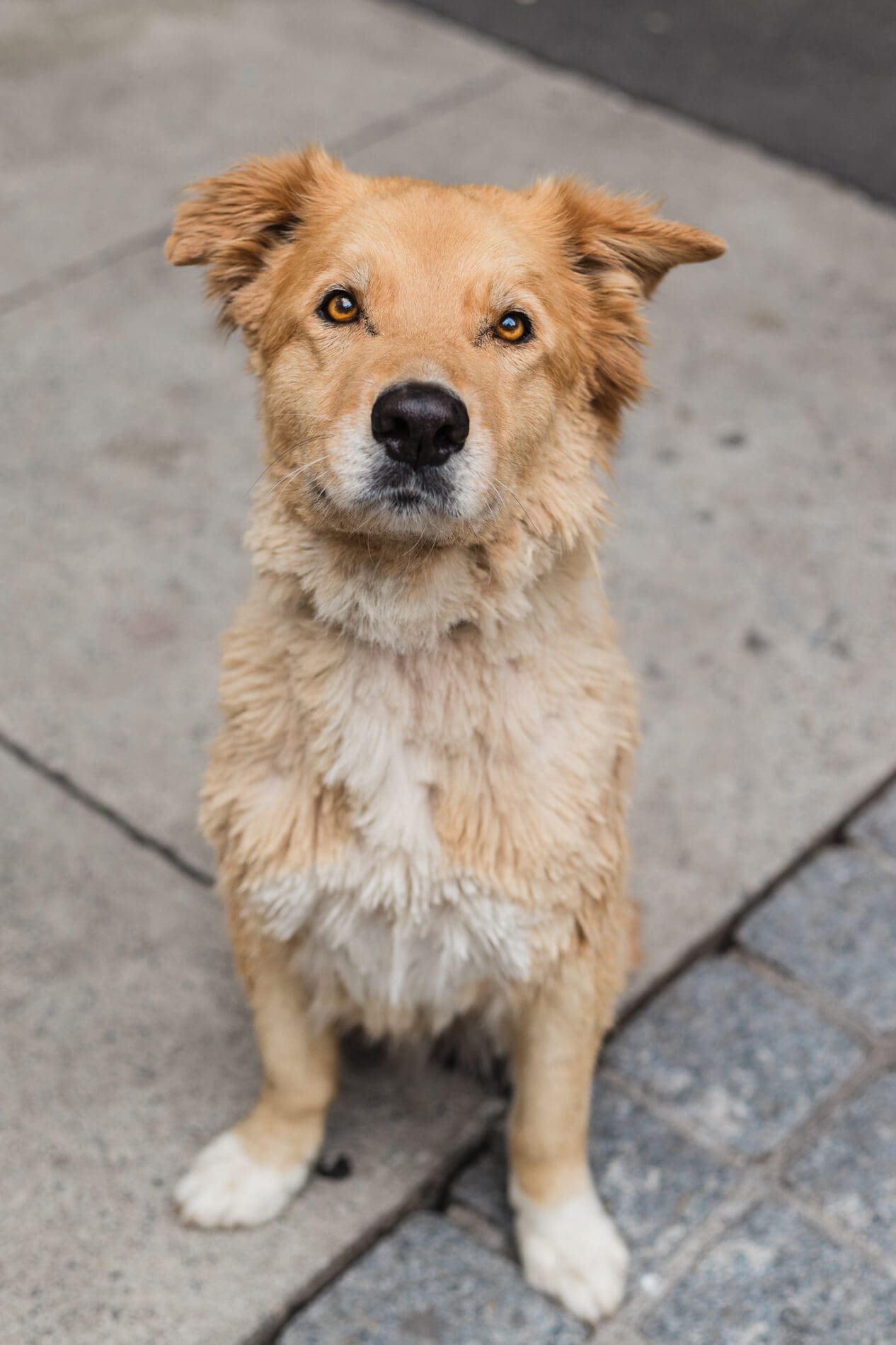
Chantelle: Could you walk us through a case where you supported an animal and their guardian?
Dawn: Yeah. This one is always one that will stay with me. Billy Bob is very close to my heart.
I had known this dog, Billy Bob for a few years. He and his guardian had been through quite a bit of hardship living on the street.
This was before I joined the Vancouver Humane Society, and I was working downtown Eastside in a supportive housing building. Billy Bob, a senior dog, had developed a large mass along the left side of his abdomen, just behind his front leg.
It was causing a lot of discomfort and was really affecting his quality of life. You could see that there was a significant change in his energy. Something was wrong.
His guardian, Duffy, had been quite worried for some time and didn’t know what to do. He didn’t have the financial resources to get Billy in.
I had applied for funds through the McVitie program.
I remember the moment, when we get the initial funds were approved. And I remember telling him. The relief in his voice was unforgettable. I remember him saying it was like winning the lottery.
We had that moment and I remember having that moment with my coworkers also about agreeing that, how often do we get to say yes to something?
This is somebody who has been entrenched in homelessness, and stigmatized and discriminated against for it. And to be able to be like, Hey, we’re gonna get, we’re gonna get your dog to the vet. We’re gonna figure out what’s going on.
When we brought him to the vet it was clear that the best course of action was to remove the mass completely. It was very big. It was like the size of a grapefruit, if not bigger, and it was posing a real threat to Billy’s life and it was gonna be a lot more money than $500. And we were able to get additional funding from the McVitie program, and that surgery saved Billy’s life. It really did.
After they had sent tests off for that mass, it had shown that it was a low grade cancer and that added another year and a bit to Billy’s life.
Billy got to be there for Duffy when Duffy passed in the hospital.
We would’ve never have been able to have that if we hadn’t gotten Billy in and taken care of.
For me, that really highlights what veterinary social work is about—what social work or helping people in general is about.
It’s not just about the medical care for an animal, it’s about walking alongside the guardian through what can be one of the most stressful and emotional times in their life.
We thought we were gonna lose Billy, and if we hadn’t gotten that surgery, we would’ve been looking at end of life care.
It also shows that supporting people and their pets happens in old spaces, not just in formal animal welfare settings. And it’s a reminder that being resourceful on behalf of your clients can make a difference between life and death for an animal and hope or despair for their guardian.
The McVitie Fund is a small fund, and being able to access it makes a really huge difference in people’s lives.
Chantelle: Connecting with guardians directly as well, I know people in the program, yourself included, get those stories directly every day.
I remember a conversation where our other colleague Ishtmeet shared in our team group chat she had just got off the phone with a guardian. And she had been able to approve funding for the guardian’s dog. As she was hanging up, the guardian said with a shake in their voice, oh baby, you’re gonna be okay.
It’s such an impactful thing in people’s lives, and I’m so grateful that we have donors who are able to contribute to this fund and make it possible.
Dawn’s journey into veterinary social work

Chantelle: Can you share a little bit about your own journey into this field and what drew you to the intersection of human and animal wellbeing?
Dawn: I mean, I could go way back to teen years and tell you that I wanted to be a vet tech and I volunteered in a vet clinic. I volunteered for Langley Animal Protection Society. I grew up on a farm. I was like obsessed. I was like, I am going to work with animals. That’s my dream.
And then things changed and I came onto a path of social services and working with people, and then somehow I came back to animals and people.
But I’ll be honest, I didn’t know that veterinary social work existed until I was in my fourth year of my social work degree. By then I was already working in the social services field for quite some time and I kept seeing the same thing over and over again in my work, which was that people with pets were falling through the cracks.
Their pets were rarely considered when supports were put in place.
So when I was doing some research around where I would wanted to do my fourth year of practicum placement and I had no idea, that’s when I stumbled across veterinary social work and started to learn more about it.
After doing some research finding out that there was no placements available in Western Canada, I advocated to create my own.
My field coordinator for the practicum approached the Vancouver Humane Society. And you guys were very open to the idea. That’s how I came into doing a practicum with the Vancouver Humane Society—just the openness and willingness from VHS and from my university to take on an unconventional practicum placement.
And then at the end of the practicum, I was graciously offered a job, and now I’m here and I have so many goals and dreams of how I want to see this expand, how I want to see veterinary social work expand here in Western Canada.
And so that’s the most recent part of the journey, but ultimately it was about seeing the consistent gap in the system of pets and people being left behind basically, and having to choose.
It was really hard to see, and I was just like, there’s something that needs to be done and I’m gonna do it.
Addressing systemic service gaps
Chantelle: I understand it’s really important to be able to address those gaps and not let people and animals fall through the cracks. How does this approach address systemic service gaps, especially for marginalized communities in their companion animals?
Dawn: What I see happening in social work in these spaces is really addressing policies and procedures through education.
As an example, many shelters and housing programs don’t allow pets, and the ones that do, there’s no policies or procedures in place on how to support people who own pets, and how to handle the pets. And staff are often not trained from a strengths-based approach that addresses both the wellbeing and the safety of the animal and the person.
Because of this, people often avoid accessing services altogether. And I think that is a place where veterinary social work can really come in and address that.
Not only are social workers in general trained in strength-based approaches, but the animal piece of it is working with organizations to create policies, procedures, and training education for staff and so that everyone is supported.
Another way we can address this is acknowledging the fact that people facing hardship and homelessness are especially stigmatized for having a pet.
I’ve had countless conversations where people have been said, if someone can’t house themselves, they shouldn’t have an animal. But hardship does not mean someone can’t be a good guardian. I’ve seen so many people put their animals’ needs before their own.
I also think that it’s important to recognize that neglect and abuse happen in all kinds of settings. It happens in farms, zoos, family homes. Much of it is hidden. Yet when someone living on the street has a pet, people are quick to assume neglect.
What that tells me is that the problem isn’t actually with abuse. It’s with visibility. And when visibility is punished, it becomes discrimination against structurally excluded or disenfranchised population.
And so I think that in veterinary social work, social work in general, we can raise that awareness. We can challenge those belief systems and that stigma and say that everyone is deserving.
I wanted to also mention that veterinary care is very expensive to everyone. We have people applying to our program that have high income, and that just shows how inaccessible veterinary care has become.
And that’s for many reasons. There is a veterinarian shortage happening, the staff shortages are happening in Canada. There’s emotional distress, compassion fatigue, burnout, wages. There’s many things that are contributing to the inaccessibility to veterinary care. It’s not just the cost of it. There’s other factors as well, and so I think that we can address those pieces.
How collaboration makes a difference

Chantelle: You mentioned earlier some ways that veterinary social work is collaborative with other sectors.
Such an important part of the work is to collaborate with other sectors like public health, social services, other animal services. Can you talk about that kind of collaboration and how working with other sectors approaches a guardian’s challenges and needs in a more holistic way?
Dawn: Social workers in general thrive on collaboration. We are connectors to various stakeholders, including housing providers, social service agencies, healthcare services.
From the lens of a veterinary social worker, we’re looking at connecting with humane societies, with veterinarians, and helping see where pets fit into the bigger picture in how supporting animals also strengthens human wellbeing.
We see this work happening from other organizations, such as Community Veterinary outreach, Paws for Hope, and Atira. They don’t have social workers on staff in those programs per se, but they are practicing social work principles by meeting people where they’re at and supporting both human and animal needs.
And so we’re seeing the collaboration happening and the partnerships being created in community. Continuing that is making sure that we are putting the community’s needs first and coming in from a place of listening and supporting what’s already working.
Chantelle: I love that concept of meeting people where they’re at.
Dawn: It’s a harm reduction approach. It’s such a powerful concept. It’s coming in with putting the person first, not coming in with an agenda. Not coming in with the answers. Not being like, I’m the expert in your life.
They’re the experts in their lives.
Chantelle: Yeah. Everyone’s coming to the program from a different place, and there’s going to be a different solution that makes sense for each person’s situation.
Dawn: Exactly. Just to add onto that piece, animal welfare is moving away from saviorism and charity, and shifting the lens to solidarity and mutual aid. Really recognizing that resilience and love and connection are things that we need to amplify over struggle. Struggle is very important to recognize, but we have to look at these other things as well.
How the field is evolving in Canada

Chantelle: As you mentioned, the concept of meeting human service needs and animal service needs together is not at all new.
People have been working with both humans and animals for many decades. Like you said, the term veterinary social work was coined in 2002, so more than two decades ago. How has the field evolved since then, and what’s unique about how it’s growing in Canada today?
Dawn: I think that, like we’d mentioned earlier in the US veterinary social work became more established through the University of Tennessee’s program, whereas in Canada, we’re still shaping what it looks like.
As I mentioned, that there are organizations who are leading the way in this, and they’re doing the work that’s deeply aligned with social work practice, and really addressing housing and health needs alongside animal care.
We’re also seeing, on an academic level, veterinary colleges offering veterinary social work services. This is introducing veterinary students to social work early in their training.
And it means clients and staff and teaching hospitals are being supported.
We’re seeing organizations like the Toronto Humane Society, who has developed a structured social work program and offers a social work practicum placement there, and their team provides crisis support, grief processing, service navigation, advocacy and leadership.
On a national level, Humane Canada is doing incredible work to integrate one health and one welfare approaches. These frameworks recognize that human health, animal health, and environmental health that are interconnected.
We’re building something unique that reflects what our own communities and systems and priorities.
Chantelle: You mentioned so many of the organizations that I wanted to flag as well. We both brought up the veterinary social work webinar a while ago that the VHS put on in 2023.
We had three different veterinary social workers on that panel that are from other organizations and clinics that are leading the way. Natalie Cruz from the webinar was the first veterinary social worker in BC at Boundary Bay Veterinary Specialty Hospital.
We had on Erin Wasson from the Western College of Veterinary Medicine who’s been such a trailblazer getting this field on the radar in Canada and introduced veterinary social work into the school in Saskatchewan.
We had Dylan Dodson from the Toronto Humane Society. As you mentioned, they’re doing great work.
Where veterinary social work is heading
Chantelle: This is such a subjective question, but I’d love to get your take on it. Where do you see the field heading in the next five to ten years, and what is needed to support that growth?
Dawn: I see it playing a major role in shaping policy and training across social service sectors.
As I mentioned before, there’s not a lot of guidance on how staff in the social services sector can support their clients who have pets. I think that partnerships with social service agencies are a real tipping point. I think that when housing programs, food banks, and health services integrate pets into their models, we’ll start to really see systemic change.
I also see this field adopting a true social model of care for animals just like we do with humans, and recognizing structural barriers, not just individual failures.
I think that anti-racism and cultural humility is also very crucial. Veterinary colleges are already embedding equity into their training, raising awareness about the human-animal bond and the importance of inclusion.
I think that we are starting to reframe how we support staff. So instead of relying only on compassion fatigue, we need to recognize empathetic distress, which is a very real emotional toll of caring deeply, day after day. I see that in the animal welfare field and in the social services field, where there’s this push for self-care.
Burnout and compassion fatigue are considered an individual problem when in reality it’s a structural problem. It’s a systemic problem. So shifting that to better support staff in both sectors. I think that work is being done; we’re recognizing it and it’s happening.
I think that we’ll see more support in remote and northern communities and Indigenous communities in ways that are sustainable and culturally safe. That means not coming in and telling communities what to do, but really coming in and listening and allowing knowledge keepers and community members to identify what their need is. And our role is to stand alongside them and support sustainably and build solutions together.
Some of the most transformative organizations are already modeling this approach. And I believe this is where some of the most transformative work will happen in the next decade.
One last piece would be dismantling the silos that we’re currently in on both sides. I think that we are treating both sectors as separate worlds, and we’re not; we are overlapping every day. I think that the future of veterinary social work is breaking down those walls and creating integrated, holistic systems of care.
How you can help
Chantelle: We always like to end off by giving our audience something that they can do to take action.
Say if someone works or volunteers with animals, where would you recommend that they get started to learn about resources like a veterinary social work program that may be available in their community, which they could refer people to?
Dawn: That’s a really great question, because I think the resources are out there, but they’re still very few and far between.
A good educational piece on learning more about the field or becoming more involved is watching the webinars like the one that the Vancouver Humane Society did, as well as the Canadian Association of Social Work. They did a webinar back at the beginning of this year on the expanding role of veterinary social work in Canada.
Looking into what Humane Canada is doing and going to their conferences is a really great way to not only network, but learn more about what everyone is doing.
There’s this thought that you have to get specialized training to be a veterinary social worker. You don’t. Like I said at the beginning, this is social work in animal spaces. If you’re a registered social worker and you have a passion to work with animals and to support people and their pets, that’s it.
There’s courses. I took an animal welfare certificate course through the Thompson Rivers University. It’s an online certificate. I really liked the course.
Those are some ways of networking. Or just being persistent, reaching out to organizations and seeing what kind of social work they’re doing, seeing what social work programs they’re running.
As a closing, at the heart of all this is that I believe animal welfare is a social service, and I think it should be funded as such.
We already see animals showing up in family law with custody agreements for pets. We’re seeing how housing policies impact whether people can keep their animals. And we know about the violence link, the clear relationship between animal abuse and interpersonal violence.
These are all social issues.
They’re not separate. Supporting animals is supporting people. If there can be any takeaway today, I think that it would be that it’s a social service. No one should ever have to choose between their own wellbeing and their pet.